
Pestilence - Official Website
Consuming Impulse |
Netherlands
 |
|---|
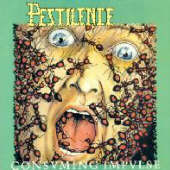

Type: Full-Length
Release Date: December 25th, 1989
Label: Roadrunner Records
Genre: Death, Thrash
1.
Deep
2.
Pitiless
3.
Forgotten Hopes
4.
Destiny Is Dead
5.
Make It Right (F.F.S.)
6.
One Last Goodbye
7.
Parisienne Moonlight
8.
Judgement
9.
Don't Look Too Far
10.
Emotional Winter
11.
Wings Of God
12.
Anyone, Anywhere
13.
2000 & Gone
1.
Ila Youm Eddine
2.
Secrets
3.
El Djamra
4.
Elixir
5.
Empire Of Ibliss
6.
L’kahf
7.
Chapter XIII
8.
El Litham
1.
Dehydrated
2.
Process Of Suffocation
3.
Suspended Animation
4.
The Trauma
5.
Chronic Infection
6.
Out Of The Body
7.
Echoes Of Death
8.
Deify Thy Master
9.
Proliferous Souls
10.
Reduce To Ashes
Review by El Viejo on March 29, 2020.
Listening to Litham's Dhal Ennar made me realize how much potential there is in innovating with traditional regional sounds, and how it’s so important for any genre to make a substantial difference and evolution on it. While the production of this record is below average, the guitars sound like they went through an NES sound chip, the instruments are totally unbalanced in the mix of this production with the bass drum much louder than the toms, ride cymbal sounds like hitting a tin can of beans, and the vocals extremely loud for their own good. Nonetheless composition wise this album is totally original, and I don't know what to expect in every part of it in very good ways.
This is not an easy to listen to album by all means, as it needs an open minded listener to go through every aspect of this originality, simplicity and complexity mixed at the same time.
The structure of the songs are vernacular and eclectic, sometimes bit of a mish mash (but is totally forgivable due to the experimental nature of this record) with non-generic rhythms that make me wonder what style are they playing, and this is something that many bands nowadays should take notice of. It has almost a dancing rhythm to it, instead of a monotonous head banging all over. It sounds primitive, dark and extremely creative, especially for the year this was recorded. There is something from early Morbid Angel if I can compare it to something, with its awesome guitar solos that has a lot of psychedelic rock from the 60s-70s. The mixture of black shrieks and death growls with oriental rhythms and even clean vocals on the mix makes this more than spectacular and i miss this band already knowing it disbanded so long ago.
The lyrics also manage to stand out, with verses in Arabic, and also English but with regional subjects and ways of expression. The creativity here again shows, and it delivers. The vocal patterns are unorthodox, beautiful when clean vocals hit, and terrifying when harsh does.
Extremely recommended hidden gem from Algeria, that makes me respect every aspect of this beautifully crafted experiment and album. This should be on lists of 'must listen' everywhere for any aspiring metal artists as this was one of the first metal bands from this country and manages to deliver a solid piece of music history. Again, the production may be bad, but can be totally forgiven in this case as under this lays the treasure it is below. This could easily evolve in a new style of metal to explore and can't praise enough the effort from this band.
Rating: 9.5 out of 10
1.83kReview by Vanass on March 29, 2020.
Litham is an Algerian progressive death metal band with various influences of North African folk music. Dhal Ennar is their only full-length album and one of those records that I can safely say is underrated beyond any understanding.
It is quite surprising when you hear this album for the first time; the first thing you hear is an exotic slow melody inspired by Arabic folk music and covered by a catchy drumbeat, proving that this album is not your usual bloody and brutal death metal. All songs are very well structured but just don't fit into the usual extreme metal landscape, but that's where the charm of the obscure comes from.
Many riffs seem to be influenced by Death and a few thrashier parts are noticeable. Yacine and Lamine, who are responsible for this great work on the guitars, implemented some quite interesting ideas, which are still quite recognizable despite the somewhat raw production. The structures are simply praiseworthy and despite the fact that melodic, progressive mid-range riffs have some fast and aggressive parts built into the catchy melodies, which at certain points sound like Megadeth on steroids. One feature that makes this album very likable is that the songs get better and better the further you listen to it; the structures become more complex, the riffs get faster and the atmosphere develops in a darker direction.
I can't imagine what a hard time the drummer must have had when he tried to find a style that suited the progressive and folk elements, but he mastered it incredibly well. When you hear the first beat of the first track 'Ila Youm Eddine' you know immediately that you will hear a drummer of high caliber. His best work, and my favorite piece of the album, is most likely 'El Djamra', the song's sound is integrated into the rest of the album, but closer to classic old school death metal; Sabri, the drummer, proved his ability to play blasting parts at any time and dictate the rhythm.
The bass and vocals were done by Redouane; the bass sound is not necessarily impressive, but still well done and stays in the rhythm all the time. The vocals, on the other hand, are impressive. All the clean vocals were used wisely and put into a more narrative role than into active singing. Among the harsh vocals, there was deep growling, high-pitched "goblin" vocals and even some pig squeals on the last pieces. Some of their strength may have been lost due to the production quality, but it doesn't take much imagination to combine the vocals with the music, which was a pleasant addition to the already impressive instrumental performance.
The lyrics focus mainly on the dark sides of life and would probably be provocative if presented to a larger part of the conservative Algerian population. Nevertheless, no extremes are aimed for, the main tone is not radical and there are no very direct attacks on the existing structures. Although I would not describe the texts as something of great artistic value, they are quite interesting because of the way of thinking they represent and the fact that they are an outlet for negativity or personal fascination.
All in all, I would definitely recommend this album if you are a fan of obscure and original sounds. The disappointing thing about this album is that the band split up and we will never hear how they would have developed or how they would sound with a better production quality. Nevertheless, this is a great early progressive death metal album, and before any more time is wasted reading this review, I would recommend that you start listening to this thing.
Rating: 9.5 out of 10
1.83kReview by El Viejo on March 29, 2020.
Listening to Litham's Dhal Ennar made me realize how much potential there is in innovating with traditional regional sounds, and how it’s so important for any genre to make a substantial difference and evolution on it. While the production of this record is below average, the guitars sound like they went through an NES sound chip, the instruments are totally unbalanced in the mix of this production with the bass drum much louder than the toms, ride cymbal sounds like hitting a tin can of beans, and the vocals extremely loud for their own good. Nonetheless composition wise this album is totally original, and I don't know what to expect in every part of it in very good ways.
This is not an easy to listen to album by all means, as it needs an open minded listener to go through every aspect of this originality, simplicity and complexity mixed at the same time.
The structure of the songs are vernacular and eclectic, sometimes bit of a mish mash (but is totally forgivable due to the experimental nature of this record) with non-generic rhythms that make me wonder what style are they playing, and this is something that many bands nowadays should take notice of. It has almost a dancing rhythm to it, instead of a monotonous head banging all over. It sounds primitive, dark and extremely creative, especially for the year this was recorded. There is something from early Morbid Angel if I can compare it to something, with its awesome guitar solos that has a lot of psychedelic rock from the 60s-70s. The mixture of black shrieks and death growls with oriental rhythms and even clean vocals on the mix makes this more than spectacular and i miss this band already knowing it disbanded so long ago.
The lyrics also manage to stand out, with verses in Arabic, and also English but with regional subjects and ways of expression. The creativity here again shows, and it delivers. The vocal patterns are unorthodox, beautiful when clean vocals hit, and terrifying when harsh does.
Extremely recommended hidden gem from Algeria, that makes me respect every aspect of this beautifully crafted experiment and album. This should be on lists of 'must listen' everywhere for any aspiring metal artists as this was one of the first metal bands from this country and manages to deliver a solid piece of music history. Again, the production may be bad, but can be totally forgiven in this case as under this lays the treasure it is below. This could easily evolve in a new style of metal to explore and can't praise enough the effort from this band.
Rating: 9.5 out of 10
1.83kReview by Vanass on March 29, 2020.
Litham is an Algerian progressive death metal band with various influences of North African folk music. Dhal Ennar is their only full-length album and one of those records that I can safely say is underrated beyond any understanding.
It is quite surprising when you hear this album for the first time; the first thing you hear is an exotic slow melody inspired by Arabic folk music and covered by a catchy drumbeat, proving that this album is not your usual bloody and brutal death metal. All songs are very well structured but just don't fit into the usual extreme metal landscape, but that's where the charm of the obscure comes from.
Many riffs seem to be influenced by Death and a few thrashier parts are noticeable. Yacine and Lamine, who are responsible for this great work on the guitars, implemented some quite interesting ideas, which are still quite recognizable despite the somewhat raw production. The structures are simply praiseworthy and despite the fact that melodic, progressive mid-range riffs have some fast and aggressive parts built into the catchy melodies, which at certain points sound like Megadeth on steroids. One feature that makes this album very likable is that the songs get better and better the further you listen to it; the structures become more complex, the riffs get faster and the atmosphere develops in a darker direction.
I can't imagine what a hard time the drummer must have had when he tried to find a style that suited the progressive and folk elements, but he mastered it incredibly well. When you hear the first beat of the first track 'Ila Youm Eddine' you know immediately that you will hear a drummer of high caliber. His best work, and my favorite piece of the album, is most likely 'El Djamra', the song's sound is integrated into the rest of the album, but closer to classic old school death metal; Sabri, the drummer, proved his ability to play blasting parts at any time and dictate the rhythm.
The bass and vocals were done by Redouane; the bass sound is not necessarily impressive, but still well done and stays in the rhythm all the time. The vocals, on the other hand, are impressive. All the clean vocals were used wisely and put into a more narrative role than into active singing. Among the harsh vocals, there was deep growling, high-pitched "goblin" vocals and even some pig squeals on the last pieces. Some of their strength may have been lost due to the production quality, but it doesn't take much imagination to combine the vocals with the music, which was a pleasant addition to the already impressive instrumental performance.
The lyrics focus mainly on the dark sides of life and would probably be provocative if presented to a larger part of the conservative Algerian population. Nevertheless, no extremes are aimed for, the main tone is not radical and there are no very direct attacks on the existing structures. Although I would not describe the texts as something of great artistic value, they are quite interesting because of the way of thinking they represent and the fact that they are an outlet for negativity or personal fascination.
All in all, I would definitely recommend this album if you are a fan of obscure and original sounds. The disappointing thing about this album is that the band split up and we will never hear how they would have developed or how they would sound with a better production quality. Nevertheless, this is a great early progressive death metal album, and before any more time is wasted reading this review, I would recommend that you start listening to this thing.
Rating: 9.5 out of 10
1.83kReview by El Viejo on March 29, 2020.
Listening to Litham's Dhal Ennar made me realize how much potential there is in innovating with traditional regional sounds, and how it’s so important for any genre to make a substantial difference and evolution on it. While the production of this record is below average, the guitars sound like they went through an NES sound chip, the instruments are totally unbalanced in the mix of this production with the bass drum much louder than the toms, ride cymbal sounds like hitting a tin can of beans, and the vocals extremely loud for their own good. Nonetheless composition wise this album is totally original, and I don't know what to expect in every part of it in very good ways.
This is not an easy to listen to album by all means, as it needs an open minded listener to go through every aspect of this originality, simplicity and complexity mixed at the same time.
The structure of the songs are vernacular and eclectic, sometimes bit of a mish mash (but is totally forgivable due to the experimental nature of this record) with non-generic rhythms that make me wonder what style are they playing, and this is something that many bands nowadays should take notice of. It has almost a dancing rhythm to it, instead of a monotonous head banging all over. It sounds primitive, dark and extremely creative, especially for the year this was recorded. There is something from early Morbid Angel if I can compare it to something, with its awesome guitar solos that has a lot of psychedelic rock from the 60s-70s. The mixture of black shrieks and death growls with oriental rhythms and even clean vocals on the mix makes this more than spectacular and i miss this band already knowing it disbanded so long ago.
The lyrics also manage to stand out, with verses in Arabic, and also English but with regional subjects and ways of expression. The creativity here again shows, and it delivers. The vocal patterns are unorthodox, beautiful when clean vocals hit, and terrifying when harsh does.
Extremely recommended hidden gem from Algeria, that makes me respect every aspect of this beautifully crafted experiment and album. This should be on lists of 'must listen' everywhere for any aspiring metal artists as this was one of the first metal bands from this country and manages to deliver a solid piece of music history. Again, the production may be bad, but can be totally forgiven in this case as under this lays the treasure it is below. This could easily evolve in a new style of metal to explore and can't praise enough the effort from this band.
Rating: 9.5 out of 10
1.83kReview by Vanass on March 29, 2020.
Litham is an Algerian progressive death metal band with various influences of North African folk music. Dhal Ennar is their only full-length album and one of those records that I can safely say is underrated beyond any understanding.
It is quite surprising when you hear this album for the first time; the first thing you hear is an exotic slow melody inspired by Arabic folk music and covered by a catchy drumbeat, proving that this album is not your usual bloody and brutal death metal. All songs are very well structured but just don't fit into the usual extreme metal landscape, but that's where the charm of the obscure comes from.
Many riffs seem to be influenced by Death and a few thrashier parts are noticeable. Yacine and Lamine, who are responsible for this great work on the guitars, implemented some quite interesting ideas, which are still quite recognizable despite the somewhat raw production. The structures are simply praiseworthy and despite the fact that melodic, progressive mid-range riffs have some fast and aggressive parts built into the catchy melodies, which at certain points sound like Megadeth on steroids. One feature that makes this album very likable is that the songs get better and better the further you listen to it; the structures become more complex, the riffs get faster and the atmosphere develops in a darker direction.
I can't imagine what a hard time the drummer must have had when he tried to find a style that suited the progressive and folk elements, but he mastered it incredibly well. When you hear the first beat of the first track 'Ila Youm Eddine' you know immediately that you will hear a drummer of high caliber. His best work, and my favorite piece of the album, is most likely 'El Djamra', the song's sound is integrated into the rest of the album, but closer to classic old school death metal; Sabri, the drummer, proved his ability to play blasting parts at any time and dictate the rhythm.
The bass and vocals were done by Redouane; the bass sound is not necessarily impressive, but still well done and stays in the rhythm all the time. The vocals, on the other hand, are impressive. All the clean vocals were used wisely and put into a more narrative role than into active singing. Among the harsh vocals, there was deep growling, high-pitched "goblin" vocals and even some pig squeals on the last pieces. Some of their strength may have been lost due to the production quality, but it doesn't take much imagination to combine the vocals with the music, which was a pleasant addition to the already impressive instrumental performance.
The lyrics focus mainly on the dark sides of life and would probably be provocative if presented to a larger part of the conservative Algerian population. Nevertheless, no extremes are aimed for, the main tone is not radical and there are no very direct attacks on the existing structures. Although I would not describe the texts as something of great artistic value, they are quite interesting because of the way of thinking they represent and the fact that they are an outlet for negativity or personal fascination.
All in all, I would definitely recommend this album if you are a fan of obscure and original sounds. The disappointing thing about this album is that the band split up and we will never hear how they would have developed or how they would sound with a better production quality. Nevertheless, this is a great early progressive death metal album, and before any more time is wasted reading this review, I would recommend that you start listening to this thing.
Rating: 9.5 out of 10
1.83kReview by El Viejo on March 29, 2020.
Listening to Litham's Dhal Ennar made me realize how much potential there is in innovating with traditional regional sounds, and how it’s so important for any genre to make a substantial difference and evolution on it. While the production of this record is below average, the guitars sound like they went through an NES sound chip, the instruments are totally unbalanced in the mix of this production with the bass drum much louder than the toms, ride cymbal sounds like hitting a tin can of beans, and the vocals extremely loud for their own good. Nonetheless composition wise this album is totally original, and I don't know what to expect in every part of it in very good ways.
This is not an easy to listen to album by all means, as it needs an open minded listener to go through every aspect of this originality, simplicity and complexity mixed at the same time.
The structure of the songs are vernacular and eclectic, sometimes bit of a mish mash (but is totally forgivable due to the experimental nature of this record) with non-generic rhythms that make me wonder what style are they playing, and this is something that many bands nowadays should take notice of. It has almost a dancing rhythm to it, instead of a monotonous head banging all over. It sounds primitive, dark and extremely creative, especially for the year this was recorded. There is something from early Morbid Angel if I can compare it to something, with its awesome guitar solos that has a lot of psychedelic rock from the 60s-70s. The mixture of black shrieks and death growls with oriental rhythms and even clean vocals on the mix makes this more than spectacular and i miss this band already knowing it disbanded so long ago.
The lyrics also manage to stand out, with verses in Arabic, and also English but with regional subjects and ways of expression. The creativity here again shows, and it delivers. The vocal patterns are unorthodox, beautiful when clean vocals hit, and terrifying when harsh does.
Extremely recommended hidden gem from Algeria, that makes me respect every aspect of this beautifully crafted experiment and album. This should be on lists of 'must listen' everywhere for any aspiring metal artists as this was one of the first metal bands from this country and manages to deliver a solid piece of music history. Again, the production may be bad, but can be totally forgiven in this case as under this lays the treasure it is below. This could easily evolve in a new style of metal to explore and can't praise enough the effort from this band.
Rating: 9.5 out of 10
1.83kReview by Vanass on March 29, 2020.
Litham is an Algerian progressive death metal band with various influences of North African folk music. Dhal Ennar is their only full-length album and one of those records that I can safely say is underrated beyond any understanding.
It is quite surprising when you hear this album for the first time; the first thing you hear is an exotic slow melody inspired by Arabic folk music and covered by a catchy drumbeat, proving that this album is not your usual bloody and brutal death metal. All songs are very well structured but just don't fit into the usual extreme metal landscape, but that's where the charm of the obscure comes from.
Many riffs seem to be influenced by Death and a few thrashier parts are noticeable. Yacine and Lamine, who are responsible for this great work on the guitars, implemented some quite interesting ideas, which are still quite recognizable despite the somewhat raw production. The structures are simply praiseworthy and despite the fact that melodic, progressive mid-range riffs have some fast and aggressive parts built into the catchy melodies, which at certain points sound like Megadeth on steroids. One feature that makes this album very likable is that the songs get better and better the further you listen to it; the structures become more complex, the riffs get faster and the atmosphere develops in a darker direction.
I can't imagine what a hard time the drummer must have had when he tried to find a style that suited the progressive and folk elements, but he mastered it incredibly well. When you hear the first beat of the first track 'Ila Youm Eddine' you know immediately that you will hear a drummer of high caliber. His best work, and my favorite piece of the album, is most likely 'El Djamra', the song's sound is integrated into the rest of the album, but closer to classic old school death metal; Sabri, the drummer, proved his ability to play blasting parts at any time and dictate the rhythm.
The bass and vocals were done by Redouane; the bass sound is not necessarily impressive, but still well done and stays in the rhythm all the time. The vocals, on the other hand, are impressive. All the clean vocals were used wisely and put into a more narrative role than into active singing. Among the harsh vocals, there was deep growling, high-pitched "goblin" vocals and even some pig squeals on the last pieces. Some of their strength may have been lost due to the production quality, but it doesn't take much imagination to combine the vocals with the music, which was a pleasant addition to the already impressive instrumental performance.
The lyrics focus mainly on the dark sides of life and would probably be provocative if presented to a larger part of the conservative Algerian population. Nevertheless, no extremes are aimed for, the main tone is not radical and there are no very direct attacks on the existing structures. Although I would not describe the texts as something of great artistic value, they are quite interesting because of the way of thinking they represent and the fact that they are an outlet for negativity or personal fascination.
All in all, I would definitely recommend this album if you are a fan of obscure and original sounds. The disappointing thing about this album is that the band split up and we will never hear how they would have developed or how they would sound with a better production quality. Nevertheless, this is a great early progressive death metal album, and before any more time is wasted reading this review, I would recommend that you start listening to this thing.
Rating: 9.5 out of 10
1.83kReview by Felix on December 9, 2019.
Today it is hard to believe, but old geezers like me can honestly assure you that there was a time when Pestilence released really good albums. Consuming Impulse, whose mix avoids serious defects, is among these works. I admit that it has never reached the status of the fantastic debut, at least in my opinion. Why? Well, the death metal elements have gained the upper hand, although there is still a remarkable quantum of thrash in the compositions. From this follows, to address painful subjects right at the beginning, that some tunes rather focus on death metal bluntness than on lacerating guitars. For example, the first two songs do not score with special compositional ideas. They celebrate a feast of brutality without keeping an eye on musical brilliance. Even the Slayer-like solo of the opener is going nowhere. Yet things get better, Pestilence are able to improve.
As soon as some effective riffs shape the songs, the Dutch crew reaches for the stars. The thundering drums guarantee a mostly hellish velocity and the hoarse growling of Mameli seems to originate from hell, too. "Out of the Body", for instance, shines with exciting leads after a short warm-up period. The guitars create an excellent flow with a tiny melodic touch, before lead vocalist van Drunen hogs the limelight. His brutal performance gives this song (as well as the other ones) a very harsh and craggy overall appearance. That's a fine fundament, even though rather atypical elements like the occasionally occurring spooky keyboard melody in "Echoes of Death" enrich the album. Speaking of this track, it is driven by powering guitars and, of course, straight and fast drums with the effect that the mix of melody and violence creates a special fascination. Moreover, the rarely interspersed melodic elements enrich the entire album.
Further highlights show the energy of the early Pestilence. The rabid and fast "Suspended Animation" serves as an example. I enjoy its very coherent main riff which leads to mercilessly straight verses and an equally straight chorus. Not to mention the fact that it is also equipped with a horrifying keyboard line. "The Trauma" with its somewhat weird chorus constitutes another track where drummer Marco Foddis seems to be under high pressure, because he thrashes his kit without remorse one more time. But he is also responsible for the majority of the appropriately apocalyptic lyrics. Pestilence's odyssey into obviously drug-imbued Spheres has not yet begun and uniqueness is an abstract term whose value is absolutely unknown. Thus, the dudes from the Netherlands are heading for complete devastation and the fact that some solos border on chaos appears only logical.
28 years after the release, it can no longer be overlooked that time has taken its toll. In 1989, this aggressive force left a huge impact and was nearly a gift of the Gods. But today, it can be deemed as a more than solid, but not overwhelming work with definitely more highlights than lowlights. This is no accusation. Senile geezers like me know that there is no chance to ignore time. To grow older is nothing for cowards.
Rating: 7.7 out of 10
1.83kReview by Felix on December 9, 2019.
Today it is hard to believe, but old geezers like me can honestly assure you that there was a time when Pestilence released really good albums. Consuming Impulse, whose mix avoids serious defects, is among these works. I admit that it has never reached the status of the fantastic debut, at least in my opinion. Why? Well, the death metal elements have gained the upper hand, although there is still a remarkable quantum of thrash in the compositions. From this follows, to address painful subjects right at the beginning, that some tunes rather focus on death metal bluntness than on lacerating guitars. For example, the first two songs do not score with special compositional ideas. They celebrate a feast of brutality without keeping an eye on musical brilliance. Even the Slayer-like solo of the opener is going nowhere. Yet things get better, Pestilence are able to improve.
As soon as some effective riffs shape the songs, the Dutch crew reaches for the stars. The thundering drums guarantee a mostly hellish velocity and the hoarse growling of Mameli seems to originate from hell, too. "Out of the Body", for instance, shines with exciting leads after a short warm-up period. The guitars create an excellent flow with a tiny melodic touch, before lead vocalist van Drunen hogs the limelight. His brutal performance gives this song (as well as the other ones) a very harsh and craggy overall appearance. That's a fine fundament, even though rather atypical elements like the occasionally occurring spooky keyboard melody in "Echoes of Death" enrich the album. Speaking of this track, it is driven by powering guitars and, of course, straight and fast drums with the effect that the mix of melody and violence creates a special fascination. Moreover, the rarely interspersed melodic elements enrich the entire album.
Further highlights show the energy of the early Pestilence. The rabid and fast "Suspended Animation" serves as an example. I enjoy its very coherent main riff which leads to mercilessly straight verses and an equally straight chorus. Not to mention the fact that it is also equipped with a horrifying keyboard line. "The Trauma" with its somewhat weird chorus constitutes another track where drummer Marco Foddis seems to be under high pressure, because he thrashes his kit without remorse one more time. But he is also responsible for the majority of the appropriately apocalyptic lyrics. Pestilence's odyssey into obviously drug-imbued Spheres has not yet begun and uniqueness is an abstract term whose value is absolutely unknown. Thus, the dudes from the Netherlands are heading for complete devastation and the fact that some solos border on chaos appears only logical.
28 years after the release, it can no longer be overlooked that time has taken its toll. In 1989, this aggressive force left a huge impact and was nearly a gift of the Gods. But today, it can be deemed as a more than solid, but not overwhelming work with definitely more highlights than lowlights. This is no accusation. Senile geezers like me know that there is no chance to ignore time. To grow older is nothing for cowards.
Rating: 7.7 out of 10
1.83k