
Necrophobic - Official Website - Interview
The Nocturnal Silence |
Sweden
 |
|---|
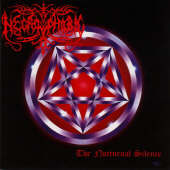

Type: Full-Length
Release Date: August 2nd, 1993
Label: Black Mark Production
Genre: Black, Death
1.
Grace Of The Past
2.
Clavis Inferni
3.
As Stars Collide
4.
Stormcrow
5.
Shadows Of The Brightest Night
6.
Mirrors Of A Thousand Lakes
7.
Cast In Stone
8.
Nordanvind
9.
In The Twilight Grey
10.
Ascension (Episode Four)
1.
The Slaughter Of Baby Jesus
3.
I Strike With Wrath
4.
Age Of Chaos
5.
Bloodshed Eyes
6.
The Crossing
7.
Eternal Winter
8.
Death Immaculate
9.
Sitra Ahra
10.
Serpents (Beneath The Forest Of The Dead)
11.
Black Hate
12.
Hrimthursum
1.
Womb Of Lilithu
3.
Astaroth
4.
Furfur
5.
Black Night Raven
6.
The Necromancer
7.
Marquis Phenex
8.
Asmodee
9.
Marchosias
10.
Matanbuchus
11.
Paimon
12.
Opium Black
13.
Infinite Infernalis
14.
Amdusias
1.
Awakening…
2.
Before The Dawn
3.
Unholy Prophecies
4.
The Nocturnal Silence
5.
Shadows Of The Moon
6.
The Ancients' Gate
7.
Sacrificial Rites
8.
Father Of Creation
9.
Where Sinners Burn
Review by Sam on February 14, 2026.
As one who is educated in, but not necessarily a fan of black metal, these Swedes offer just the right amount of the obsidian subgenre to augment their leanings toward death metal. The vocals of Anders Strokirk are an ideal blend of the two genres; not too blackened, not too deathly. His voice should appeal to fans of either genre. Regardless of how this band is classified, its primary focus is easily observed: these dudes are evil fucks.
Named for Slayer’s notoriously fastest song ever, 'Necrophobic' is not obsessed with blazing tempos. Most of the material here dwells in a mid-tempo 4/4 or 6/8 meter, the latter of which I have always felt lends itself to the expression of darkness and iniquity rather naturally. Must be the six count that allows for that inherent compatibility. However, the most wicked track to be had here, the infernal formation known as 'The Ancients Gate', sticks primarily to natural time but offers death metal degeneracy in the form of vocals that have been pitch-shifted toward the abyss, a la early Entombed or Dismember. These guys set out to create a darker form of death metal than was available at the time, and with this debut, they have achieved that goal admirably.
There are no blast beats to be found here, and that’s fine by me. Blasting, though indisputably ferocious and intense, can sometimes become a crutch for bands to lean on during bouts of writer’s block or creative bankruptcy. Drummer and main man Joakim Sterner does do a lot of "Beneath The Remains" and "Arise" type thrashing, along with some slightly unbalanced double bassing, which adds an element of charm to The Nocturnal Silence. Oftentimes throughout this record, lead guitar stylings hearken notably to the two aforementioned pillars of Swedish death metal. A previous reviewer referred to the cover art as lazy, and while it is pretty simplistic, I find it to be striking: a gleaming metallic pentagram gets the point across succinctly. Also, good on Necrophobic for sticking with its original logo throughout its long existence. I have a soft spot for the symmetrical, hand-drawn logos of old. And this one is perfectly legible.
The synthesizer intro to album opener 'Awakening…' is an obvious nod to Entombed, and it is sure to put a grin on the face of the Tall Man. Sterner makes his mission statement known right out of the gate, declaring, “I’m no longer a victim of god.” The haunting chorus is delivered in a 6/8 mid-tempo phrasing, the correct vehicle for these sadistic intentions. Despite the band’s moniker, there is really no similarity to Slayer to be experienced here, other than the blasphemy of the lyrical content. These Swedish gentlemen sound much more similar to their countrymen in their musical presentation. Many of these songs end with the subtle, sinister whisperings of satanic verse. Dechristianize yourself, indeed. The title track stands out with its eerie, clean guitar intro that morphs into beefy power chords and heavy floor toms underneath. The poetry of this tune suggests a strong affinity for their black metal cousins, but the maleficent lead guitar work is rooted in definitive death.
The main thing to remember when discussing a hybrid such as Necrophobic is that either subgenre can be traced back to thrash. Back in 1989, when this ensemble came into being, death and black metal were still in their respective infancies, and thrash was the style that reigned supreme. The factor that unites all three of these forms of metal, and in my opinion, should be the common ground throughout all of heavy metal is, in a word, evil. This unifying characteristic is available in spades throughout the duration of The Nocturnal Silence.
Rating: 8.5 out of 10 Unholy Prophecies
1.39kReview by Sam on February 14, 2026.
As one who is educated in, but not necessarily a fan of black metal, these Swedes offer just the right amount of the obsidian subgenre to augment their leanings toward death metal. The vocals of Anders Strokirk are an ideal blend of the two genres; not too blackened, not too deathly. His voice should appeal to fans of either genre. Regardless of how this band is classified, its primary focus is easily observed: these dudes are evil fucks.
Named for Slayer’s notoriously fastest song ever, 'Necrophobic' is not obsessed with blazing tempos. Most of the material here dwells in a mid-tempo 4/4 or 6/8 meter, the latter of which I have always felt lends itself to the expression of darkness and iniquity rather naturally. Must be the six count that allows for that inherent compatibility. However, the most wicked track to be had here, the infernal formation known as 'The Ancients Gate', sticks primarily to natural time but offers death metal degeneracy in the form of vocals that have been pitch-shifted toward the abyss, a la early Entombed or Dismember. These guys set out to create a darker form of death metal than was available at the time, and with this debut, they have achieved that goal admirably.
There are no blast beats to be found here, and that’s fine by me. Blasting, though indisputably ferocious and intense, can sometimes become a crutch for bands to lean on during bouts of writer’s block or creative bankruptcy. Drummer and main man Joakim Sterner does do a lot of "Beneath The Remains" and "Arise" type thrashing, along with some slightly unbalanced double bassing, which adds an element of charm to The Nocturnal Silence. Oftentimes throughout this record, lead guitar stylings hearken notably to the two aforementioned pillars of Swedish death metal. A previous reviewer referred to the cover art as lazy, and while it is pretty simplistic, I find it to be striking: a gleaming metallic pentagram gets the point across succinctly. Also, good on Necrophobic for sticking with its original logo throughout its long existence. I have a soft spot for the symmetrical, hand-drawn logos of old. And this one is perfectly legible.
The synthesizer intro to album opener 'Awakening…' is an obvious nod to Entombed, and it is sure to put a grin on the face of the Tall Man. Sterner makes his mission statement known right out of the gate, declaring, “I’m no longer a victim of god.” The haunting chorus is delivered in a 6/8 mid-tempo phrasing, the correct vehicle for these sadistic intentions. Despite the band’s moniker, there is really no similarity to Slayer to be experienced here, other than the blasphemy of the lyrical content. These Swedish gentlemen sound much more similar to their countrymen in their musical presentation. Many of these songs end with the subtle, sinister whisperings of satanic verse. Dechristianize yourself, indeed. The title track stands out with its eerie, clean guitar intro that morphs into beefy power chords and heavy floor toms underneath. The poetry of this tune suggests a strong affinity for their black metal cousins, but the maleficent lead guitar work is rooted in definitive death.
The main thing to remember when discussing a hybrid such as Necrophobic is that either subgenre can be traced back to thrash. Back in 1989, when this ensemble came into being, death and black metal were still in their respective infancies, and thrash was the style that reigned supreme. The factor that unites all three of these forms of metal, and in my opinion, should be the common ground throughout all of heavy metal is, in a word, evil. This unifying characteristic is available in spades throughout the duration of The Nocturnal Silence.
Rating: 8.5 out of 10 Unholy Prophecies
1.39kReview by Felix on November 11, 2019.
Investigative journalists have revealed that Necrophobic's rehearsal room was bugged at the time of the creation of Womb of Lilithu. Here is an exclusive excerpt. "The last album was absolutely perfect. How can we go on now?" - "Well, if we cannot increase quality, we still can increase quantity." - "Good idea!" - "So, let's go home and beat our wives and children." - "Great idea! It's overdue!" - "Hey, Tobbe, this was just a joke. Tobbe, do you hear me? Tobbe?"
Tobbe Sidegård, lead vocalist and quarrelsome husband, was already on his way and didn't hear his band mates, but that's not my subject today. The focus is put on Womb of Lilithu, an album that generates mixed feelings. On the one hand, Necrophobic show their entire experience and present dark harmonies in abundance. On the other hand, something deep in me tells me that they can do it better. Death to All, the masterpiece of 2009, overshadows the here presented work. I know that it is hard to believe, but already the first regular song after the intro, namely "Splendour Nigri Solis" suffers from verses that lack of inspiration. Fortunately, this kind of shortcoming remains almost an isolated case. In any case, the world has heard thousands of much worse songs, but this mid-tempo piece scores only with its solo and the fairly demonic background choirs. Necrophobic shy away from crossing the border to insanity, but exactly this action made songs such as "Revelation 666" so extremely fantastic.
The further songs demonstrate that Necrophobic are still able to read their compass. However, there is a small number of exceptions. Angry eruptions (so far, so good) are combined with rather soft and melodic fragments which could have been the harbingers of Watain's last work (not so good). "The Mild Hunt" (don't know exactly its name) showed a new, pretty stupid face of Watain and a certain number of parts, especially the first verse of "Opium Black", the dreamy solo of "Marchosias" and the piano intro and outro of "Infinite Infernalis", are heading for new groups of customers as well, but fortunately to a lesser extent. By the way, Watain are listed on Necrophobic's homepage under the headline "Similar artists on tour", while I am writing this review. But in fact, this does not indicate any similarity between Watain and Necrophobic. Kampfar also show up in this list (and this leaves me slightly confused).
In view of these medium-sized deficiencies, the quality of the best, flawless tracks become obvious and cannot be overlooked. "Furfur", for example, is like a devilish drilling tool that penetrates deeper and deeper into the listener's mind. The spurring main riff reflects the blazing fires of hell and the atmosphere of this song is truly satanic. Further tunes leave a strong impression, yet it is a fact that the Swedes mostly do not drive full speed ahead. Instead, they intoxicate themselves with the excessive use of background choirs while delivering rather controlled detonations than unleashed forces. It must be mentioned in every Necrophobic review anew that the band has enormous song-writing skills and I assume an outstanding degree of musicianship. In view of the constantly changing line-ups, the consistency of the band is amazing. Nevertheless, the extra portion of apocalyptic brilliance which made Death to All to a gargantuan milestone of the genre, is missing. Sidegård's voice sounds as vicious as ever, the leads and riffs mirror the band's in-depth grasp of sonic obscurity and hundreds of competitors would give all that they have got for such a precise, ingenious production. But when push comes to shove, I always prefer to listen to their album from 2009 (and I do not need much time to make my decision).
Without being lame, Womb of Lilithu emphasizes the desperate yet majestic side of Necrophobic. It develops an unfathomable depth in its best moments, and it does not lack of drama. For instance, "The Necromancer" relies on a very efficient construction. The interaction of Spartan verses and the opulent chorus does not fail to have its intended effect on the listener. I could mention further examples, but I hope the stylistic approach and the strengths of the album have become clear. Thus, I really can recommend this album with a clear conscience, but I cannot label it as an immaculate masterpiece. However, there are bigger problems in life. Feel free and ask Tobbe for details.
Rating: 8 out of 10
1.39k