
Necrophobic - Official Website - Interview
Womb Of Lilithu |
Sweden
 |
|---|
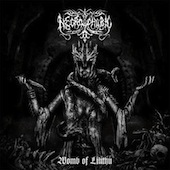

Type: Full-Length
Release Date: October 25th, 2013
Label: Season Of Mist
Genre: Black, Death
1.
Truths Of The Unknown
2.
Prog Thrashing Death
3.
A Dismal Beyond
4.
Infected Skull
5.
Enthralled In Lunacy Abyss
6.
Compassion Dies
1.
Grace Of The Past
2.
Clavis Inferni
3.
As Stars Collide
4.
Stormcrow
5.
Shadows Of The Brightest Night
6.
Mirrors Of A Thousand Lakes
7.
Cast In Stone
8.
Nordanvind
9.
In The Twilight Grey
10.
Ascension (Episode Four)
1.
Womb Of Lilithu
3.
Astaroth
4.
Furfur
5.
Black Night Raven
6.
The Necromancer
7.
Marquis Phenex
8.
Asmodee
9.
Marchosias
10.
Matanbuchus
11.
Paimon
12.
Opium Black
13.
Infinite Infernalis
14.
Amdusias
Review by Felix on October 13, 2020.
Band? Institution? Legend? Decide for yourself, but one thing is for sure: Necrophobic do not need to fear any competitor. Since aeons and as mentioned already in a previous review, the Swedish throne of black death metal is fiercely contested, but Dark Funeral are always sleeping too long (one album in the last ten years!), Marduk have many brilliant works, but also a few less strong outputs and Eurynomos or Possession are great, but not Swedish. So maybe it’s Necrophobic who are one step ahead of their brothers in spirit? We do not need to find the ultimate answer to this question, let’s just put the spotlight on the different facets of the five-piece, for example…
…their line-up. It has been more or less stable since the overwhelming Mark of the Necrogram. Only the man at the bass guitar is new and Allan Lundholm fits neatly into the formation. Of course, we can miss Alexander Friberg who has been part of Necrophobic already on their masterpiece Death to All. Yet it is of higher relevance that main composer Sebastian Ramstedt still stands firmly on the navigation bridge. The man who has already written almost the entire album from 2018 guarantees a high standard and a close connection between Dawn of the Damned and its older brother. Nevertheless, there is a surprising element concerning the contributors of the brand new album. Necrophobic invited Destruction’s Schmier to shout some lines of the closer. Honestly, I am astonished. It feels like Bayern München, the European football kings of 2020, asks a player of my favourite team (FSV Frankfurt, fourth-class, it’s truly sad!) to join their team. I mean, does anybody remember the last strong full-length of Destruction? Once they were kings, but everything they released after “All Hell Breaks Loose” was mediocre or worse. Inter alia the track list of their recent live album indicates that this formation lives in the past. Necrophobic is the exact opposite. The Swedes release new classics with nearly every new album. Dawn of the Damned marks no exception to this rule. (And only to stay fair: Schmier performs well here and naturally he delivers some high-pitched screams. Nevertheless, it’s the fiendish charisma of Anders Strokirk that fits perfectly with the music of this black death bastard.)
…the wickedness of their material. Necrophobic have always optimized their sound in order to combine pure evil with a gargantuan musicality. There is not the smallest tinge of thoughtlessness or even stupidity in their compositions. Everything sounds unholy yet smooth at the same time, vehement yet sublime, ruthless yet mature. Perhaps Ramstedt and his colleagues are not among the most spontaneous bands of the universe, but they are also light years away from an academic approach. Moreover, their wicked songs have almost magical powers – as soon as I hear them, they seem to become a part of me. A very little part I cannot see or touch but feel. I am not able to write music, but otherwise I would try to compose exactly the kind of terrifying sound Necrophobic create with great ease. Their best songs unleash all demons I know in music. No doubt, this quintet guides you safely to the godless core of (extreme) metal.
…the songs themselves. Where to begin? Well,'Mirror Black' fascinates with its howling guitars that make not only sensitive persons shiver – and its merciless “Fall… fall… fall… fall” echoes embody pure cruelty. Songs like the title track or 'Darkness Be My Guide' stand in the tradition of killers such as 'Sacrosanct' or 'Crown of Horns'. They are characterised by their ingenious flow and their strict, sparks-flying velocity. But of course, they are not one-dimensional. Necrophobic master the art to integrate less neck-breaking sections without hurting the violent aura of these eruptions in any way. By contrast, 'Tartarian Winds' marches stoically through mid-tempo regions and its guitar work flirts with the charm and the riffing of “Blood Fire Death” (the title track) or “Enter the Eternal Fire” – of course without being a stale copy of these classics. Its predominantly less rapid approach is not at the expense of the song’s heaviness. Quite the opposite: it develops an abysmal, enigmatic depth. And of course I cannot write this review without mentioning the two monumental tracks which cross the seven minutes mark. 'The Infernal Depths of Eternity' holds many speedy sections, while 'The Return of a Long Lost Soul' shows a more epic side of Necrophobic’s art. But the best is: both are simply excellent. Yet I could mention each and every track, even the stage-setting intro; all pieces add value to Dawn of the Damned. Or to express it with the words of a good friend of mine: “there is no bad surprise, just quality.” I totally agree.
…the production. Do I really need to emphasize that it is immaculate? Fredrik Folkare has done a great job again. He was already responsible for the sound of Mark of the Necrogram and I guess he left the studio after the recordings in 2018 were very satisfied, because the mix of Dawn of the Damned lies in close proximity to that of its predecessor. Furthermore, the album spreads identical vibes. Right here and right now is the moment for some grumpy clowns to stand up and to moan about stagnation. Dear clowns, you are just assholes. Let me explain. Folkare saw obviously no reason to change the perfect sound and I am glad that he did not seek new ways as an end in itself. This dude was a good guitarist on Womb of Lilithu, but he is an outstanding sound engineer.
…the stamina of the band. Nine albums in 27 years speak a clear language, but this is just a quantity key figure. More important is that the Swedes still act absolutely authentic after all these years and the leather and spikes appearance of the long-haired envoys of darkness underlines their integrity impressively. Okay, drummer Joakim Sterner is bald, but he is the only constant in the history of the band and therefore he is at least long-haired in a figurative sense. Hairy matters aside, what can we call Necrophobic? It’s surely not “just another band”, but it is also no institution and even the word legend seems too small for them. So let’s just use their name. Necrophobic – these eleven letters stand for themselves and they alone make clear that we are listening to the elite of the elite.
Rating: 9.4 out of 10
1.73kReview by Felix on October 13, 2020.
Band? Institution? Legend? Decide for yourself, but one thing is for sure: Necrophobic do not need to fear any competitor. Since aeons and as mentioned already in a previous review, the Swedish throne of black death metal is fiercely contested, but Dark Funeral are always sleeping too long (one album in the last ten years!), Marduk have many brilliant works, but also a few less strong outputs and Eurynomos or Possession are great, but not Swedish. So maybe it’s Necrophobic who are one step ahead of their brothers in spirit? We do not need to find the ultimate answer to this question, let’s just put the spotlight on the different facets of the five-piece, for example…
…their line-up. It has been more or less stable since the overwhelming Mark of the Necrogram. Only the man at the bass guitar is new and Allan Lundholm fits neatly into the formation. Of course, we can miss Alexander Friberg who has been part of Necrophobic already on their masterpiece Death to All. Yet it is of higher relevance that main composer Sebastian Ramstedt still stands firmly on the navigation bridge. The man who has already written almost the entire album from 2018 guarantees a high standard and a close connection between Dawn of the Damned and its older brother. Nevertheless, there is a surprising element concerning the contributors of the brand new album. Necrophobic invited Destruction’s Schmier to shout some lines of the closer. Honestly, I am astonished. It feels like Bayern München, the European football kings of 2020, asks a player of my favourite team (FSV Frankfurt, fourth-class, it’s truly sad!) to join their team. I mean, does anybody remember the last strong full-length of Destruction? Once they were kings, but everything they released after “All Hell Breaks Loose” was mediocre or worse. Inter alia the track list of their recent live album indicates that this formation lives in the past. Necrophobic is the exact opposite. The Swedes release new classics with nearly every new album. Dawn of the Damned marks no exception to this rule. (And only to stay fair: Schmier performs well here and naturally he delivers some high-pitched screams. Nevertheless, it’s the fiendish charisma of Anders Strokirk that fits perfectly with the music of this black death bastard.)
…the wickedness of their material. Necrophobic have always optimized their sound in order to combine pure evil with a gargantuan musicality. There is not the smallest tinge of thoughtlessness or even stupidity in their compositions. Everything sounds unholy yet smooth at the same time, vehement yet sublime, ruthless yet mature. Perhaps Ramstedt and his colleagues are not among the most spontaneous bands of the universe, but they are also light years away from an academic approach. Moreover, their wicked songs have almost magical powers – as soon as I hear them, they seem to become a part of me. A very little part I cannot see or touch but feel. I am not able to write music, but otherwise I would try to compose exactly the kind of terrifying sound Necrophobic create with great ease. Their best songs unleash all demons I know in music. No doubt, this quintet guides you safely to the godless core of (extreme) metal.
…the songs themselves. Where to begin? Well,'Mirror Black' fascinates with its howling guitars that make not only sensitive persons shiver – and its merciless “Fall… fall… fall… fall” echoes embody pure cruelty. Songs like the title track or 'Darkness Be My Guide' stand in the tradition of killers such as 'Sacrosanct' or 'Crown of Horns'. They are characterised by their ingenious flow and their strict, sparks-flying velocity. But of course, they are not one-dimensional. Necrophobic master the art to integrate less neck-breaking sections without hurting the violent aura of these eruptions in any way. By contrast, 'Tartarian Winds' marches stoically through mid-tempo regions and its guitar work flirts with the charm and the riffing of “Blood Fire Death” (the title track) or “Enter the Eternal Fire” – of course without being a stale copy of these classics. Its predominantly less rapid approach is not at the expense of the song’s heaviness. Quite the opposite: it develops an abysmal, enigmatic depth. And of course I cannot write this review without mentioning the two monumental tracks which cross the seven minutes mark. 'The Infernal Depths of Eternity' holds many speedy sections, while 'The Return of a Long Lost Soul' shows a more epic side of Necrophobic’s art. But the best is: both are simply excellent. Yet I could mention each and every track, even the stage-setting intro; all pieces add value to Dawn of the Damned. Or to express it with the words of a good friend of mine: “there is no bad surprise, just quality.” I totally agree.
…the production. Do I really need to emphasize that it is immaculate? Fredrik Folkare has done a great job again. He was already responsible for the sound of Mark of the Necrogram and I guess he left the studio after the recordings in 2018 were very satisfied, because the mix of Dawn of the Damned lies in close proximity to that of its predecessor. Furthermore, the album spreads identical vibes. Right here and right now is the moment for some grumpy clowns to stand up and to moan about stagnation. Dear clowns, you are just assholes. Let me explain. Folkare saw obviously no reason to change the perfect sound and I am glad that he did not seek new ways as an end in itself. This dude was a good guitarist on Womb of Lilithu, but he is an outstanding sound engineer.
…the stamina of the band. Nine albums in 27 years speak a clear language, but this is just a quantity key figure. More important is that the Swedes still act absolutely authentic after all these years and the leather and spikes appearance of the long-haired envoys of darkness underlines their integrity impressively. Okay, drummer Joakim Sterner is bald, but he is the only constant in the history of the band and therefore he is at least long-haired in a figurative sense. Hairy matters aside, what can we call Necrophobic? It’s surely not “just another band”, but it is also no institution and even the word legend seems too small for them. So let’s just use their name. Necrophobic – these eleven letters stand for themselves and they alone make clear that we are listening to the elite of the elite.
Rating: 9.4 out of 10
1.73kReview by Felix on November 11, 2019.
Investigative journalists have revealed that Necrophobic's rehearsal room was bugged at the time of the creation of Womb of Lilithu. Here is an exclusive excerpt. "The last album was absolutely perfect. How can we go on now?" - "Well, if we cannot increase quality, we still can increase quantity." - "Good idea!" - "So, let's go home and beat our wives and children." - "Great idea! It's overdue!" - "Hey, Tobbe, this was just a joke. Tobbe, do you hear me? Tobbe?"
Tobbe Sidegård, lead vocalist and quarrelsome husband, was already on his way and didn't hear his band mates, but that's not my subject today. The focus is put on Womb of Lilithu, an album that generates mixed feelings. On the one hand, Necrophobic show their entire experience and present dark harmonies in abundance. On the other hand, something deep in me tells me that they can do it better. Death to All, the masterpiece of 2009, overshadows the here presented work. I know that it is hard to believe, but already the first regular song after the intro, namely "Splendour Nigri Solis" suffers from verses that lack of inspiration. Fortunately, this kind of shortcoming remains almost an isolated case. In any case, the world has heard thousands of much worse songs, but this mid-tempo piece scores only with its solo and the fairly demonic background choirs. Necrophobic shy away from crossing the border to insanity, but exactly this action made songs such as "Revelation 666" so extremely fantastic.
The further songs demonstrate that Necrophobic are still able to read their compass. However, there is a small number of exceptions. Angry eruptions (so far, so good) are combined with rather soft and melodic fragments which could have been the harbingers of Watain's last work (not so good). "The Mild Hunt" (don't know exactly its name) showed a new, pretty stupid face of Watain and a certain number of parts, especially the first verse of "Opium Black", the dreamy solo of "Marchosias" and the piano intro and outro of "Infinite Infernalis", are heading for new groups of customers as well, but fortunately to a lesser extent. By the way, Watain are listed on Necrophobic's homepage under the headline "Similar artists on tour", while I am writing this review. But in fact, this does not indicate any similarity between Watain and Necrophobic. Kampfar also show up in this list (and this leaves me slightly confused).
In view of these medium-sized deficiencies, the quality of the best, flawless tracks become obvious and cannot be overlooked. "Furfur", for example, is like a devilish drilling tool that penetrates deeper and deeper into the listener's mind. The spurring main riff reflects the blazing fires of hell and the atmosphere of this song is truly satanic. Further tunes leave a strong impression, yet it is a fact that the Swedes mostly do not drive full speed ahead. Instead, they intoxicate themselves with the excessive use of background choirs while delivering rather controlled detonations than unleashed forces. It must be mentioned in every Necrophobic review anew that the band has enormous song-writing skills and I assume an outstanding degree of musicianship. In view of the constantly changing line-ups, the consistency of the band is amazing. Nevertheless, the extra portion of apocalyptic brilliance which made Death to All to a gargantuan milestone of the genre, is missing. Sidegård's voice sounds as vicious as ever, the leads and riffs mirror the band's in-depth grasp of sonic obscurity and hundreds of competitors would give all that they have got for such a precise, ingenious production. But when push comes to shove, I always prefer to listen to their album from 2009 (and I do not need much time to make my decision).
Without being lame, Womb of Lilithu emphasizes the desperate yet majestic side of Necrophobic. It develops an unfathomable depth in its best moments, and it does not lack of drama. For instance, "The Necromancer" relies on a very efficient construction. The interaction of Spartan verses and the opulent chorus does not fail to have its intended effect on the listener. I could mention further examples, but I hope the stylistic approach and the strengths of the album have become clear. Thus, I really can recommend this album with a clear conscience, but I cannot label it as an immaculate masterpiece. However, there are bigger problems in life. Feel free and ask Tobbe for details.
Rating: 8 out of 10
1.73kReview by Felix on March 26, 2024.
I don’t think that there exists such thing as a national character. Nevertheless I am convinced that the creator of Earth did not spread humour in big portions over Scandinavia. Otherwise there would not be this gigantic horde of black and death metal musicians who hail from the Northern end of the Old World. But no rule without exception, Necrophobic obviously belong to the more humorous guys. I have realized this in view of the advance tracks they released for In The Twilight Grey. Usually, we can be sure that the songs which should make us believe that they announce a gargantuan milestone of any band are among the three best tracks of the following full-lengths. But the pretty generic 'Stormcrow' with its nearly mediocre chorus and the pretty powerless centre part and especially the relatively harmless, somehow almost inadequately bombastic 'As Stars Collide' march to a different drummer. To me, they appeared like the harbinger of a medium-sized disappointment. Let me say it unambiguously: 'Stormcrow' is still a 7 out of 10 and 'As Stars Collide' deserves a 6.5 – but come on, we are speaking about Necrophobic, the legend that has given us divine gifts like 'Mirror Black', 'Sacrosanct' or 'Revelation 666', to name just a few examples.
But don’t panic, Necrophobic – and here I come back to the topic humour – just had fun confusing their followers. In The Twilight Grey does not disappoint, because there are a couple of excellent songs; they only have other titles than the aforementioned tracks. Anyway, before I try to describe the highlights as good as I can, I want to underline the very positive fact that the quintet has not changed its general approach. Haunting melodies are surrounded by vehement outbursts and the charismatic, little confidence inspiring voice of Anders Strokirk. One might think: okay, that’s fine, but other, stylistically comparable bands trust more or less the same recipe. I agree, but due to whatever reasons, Necrophobic’s music embodies a diabolic elegance which is second to none. Perhaps main composer Sebastian Ramstedt’s musical feeling is outstanding, maybe there is a special chemistry when these dudes come together, maybe it is the fact that they do not use primitive shock effects or overly raw elements. Anyway, In The Twilight Grey is another album that represents the devil in his deluxe edition. This lad is not interested in shedding hectolitres of blood, he kills softly with an actually gentle smile. And naturally he profits from a very good production. The voice and the guitars appear flawlessly in my humble opinion. Especially the guitar sound finds the perfect place between morbid beauty and metallic aggression. Thus, it is only a minor detail that the drums of the only constant member of the band, Joakim Sterner, were allocated in the back rows. Sometimes they drown in the inferno of the six strings. In particular the double bass becomes a victim of the guitar dominance. But once again, this does not mean that I have a serious problem with the mix. It’s just not as perfect as the best songs of the Swedes, that’s all.
Speaking of good songs, In The Twilight Grey enters its most exciting, completely fascinating and most gloomy section with the first tones of 'Shadows Of The Brightest Night'. The piece lets the listener walk on the edge of the abyss, always in danger of falling in the next second. Naturally I prefer its intensive high speed outbursts, but the entire track is a monument of dark grace. This song is the entry to a really hellish trip. Next stop: 'Mirrors Of A Thousand Lakes'. It does not have the overwhelming morbidity of the 'Mirror Black', it is not among the fastest eruptions of the formation and its solo houses almost dreamy tones. Nevertheless, the dudes have opened the door to the darkest corner of their souls again and the result is great. 'Cast In Stone' does not only present a great solo. It is a mix of strict high speed parts and 'Tartarian Winds' heaviness, while the lyrics of 'Nordanvind' speak for themselves: “Carry my dreams in your storms...the bells will ring, let the northern sky sing”. I don’t think that I have a better description for this atmospherically dense song. Be that as it may, the best is yet to come. The title track heralds the Apocalypse with its fiery verses before it comes to a more harmonic chorus. The song grows and it embraces the listener violently with its cataclysmic vibrations. It is impressive to experience once again that ultimate intensity and a fine sense for harmonies are not mutually exclusive in the world of Necrophobic.
The evil outburst called 'Clavis Inferni' is the only track which is able to compete with the songs on the positions from five to nine. Motivated by a strictly hammering snare drum, the song jumps head first into devastating guitar leads. Of course, Necrophobic vary the tempo in this sombre ambassador of Satan too. Nevertheless, it is one of the more powerful ones her. Maybe this is the (very) little problem of In The Twilight Grey: the red-hot inferno of some of their former, most violent songs, does not occur very often here. But for example the beginning and the end of 'Clavis Inferni' make clear that even the musically most competent band is well advised to put the focus on sheer aggression from time to time. By contrast, the opener (stormy sections, but a relatively lame part in its centre) is good, but not phenomenal. Maybe it has the potential to grow, but up to now it does not stand out and honestly, I thought that a murderous introduction is always an advisable thing. However, perhaps the selection of 'Grace Of The Past' for the first position just mirrors the strange humour of Necrophobic once more.
Rating: 8.6 out of 10
1.73kReview by Vladimir on March 22, 2024.
There are a handful of bands whose game still remains strong even after 3 decades of their existence, without their creativity fading away and without their impact diminishing throughout time. In the Swedish metal scene, anything is possible to be everlasting as long as the commitment and effort doesn’t go to waste. Such is the case with the highly influential and brilliant black/death metal band Necrophobic, a band with such a strong reputation that doesn't have a single bad album in their entire discography, and yet they are still creating the same kind of magic that is just as fresh and satisfying as it was on their previous releases. Their last two albums Mark Of The Necrogram and Dawn Of The Damned were met with positive reviews from fans and critics, with both albums considered to be to be equally great and faithful to the band’s legacy. On March 15th, 2024, Necrophobic returned with their tenth full-length album In The Twilight Grey, marking their official third album with Anders Strokirk on vocals since his return in 2017 and the official first album with longtime session bassist Tobias Christiansson, who is now a full-time member of the band. Although their three previously released singles successfully managed to raise expectations and tease the upcoming album, the important question still remains: is it worth entering this realm entirely covered in twilight grey? Let’s find out....
Not a second of introduction or preparation and the album already starts off very strong with the first track 'Grace Of The Past' which is a good album opener that shows a great deal of promise that this will indeed be an authentic Necrophobic experience. From the very get-go you will be instantly welcomed by a plethora of badass riffs with plenty of tremolo picking, kick ass drumming by Joakim and harsh vocals of Anders Strokirk, that altogether dominate and burn like hellfire. What this album promises a lot is that there will be some awesome memorable bangers, some of which will leave the biggest impression. Perhaps the best example among those outstanding bangers is the phenomenal third track 'As Stars Collide', and I think it could easily be considered one of Necrophobic’s best songs with Anders Strokirk since 'Tsar Bomba'. The following track 'Stormcrow', which is yet another outstanding banger on this album, is somewhat of a nice stylistic hybrid with a bit melody, combining the band’s more death metal focused material that was on Nocturnal Silence with their finest blackened death metal moments from the later works such as Death To All and Mark Of The Necrogram. If you were on the lookout for some slightly more atmospheric moments on this album, don’t worry, because we’ve got those in here as well. The ominous 'Shadows Of The Brightest Night' and the epic 'Nordanvind' further expand this journey by making it more engaging, while also adding some elements of musical suspense. Throughout the entire album it’s non-stop banging and musical mayhem that turns everything to dust, building up to the grand finale of the album with the closing track 'Ascension (Episode Four)', that is an epic conclusion to the album, as well as a nice nod to their previous episodes 'Venaesectio', 'Descension' and 'Nifelhel' from Darkside in 1997.
As is the case with many of the band’s previous albums, they always make the songwriting feel dynamic and interesting, with plenty of moments that border with death metal, thrash metal and a bit of heavy metal, especially when it comes to the effective use of melody. Those who are familiar with the band’s signature sound and style will certainly not be disappointed with what this album has to offer, because it has everything that a Necrophobic fan such as myself would expect, down to every last bit. Overall, every song is packed with furious energy and some moments on this album feel like the entire band was super jacked on steroids while recording that they had to flex all their muscles without pulling back. You can simply tell that these guys were very enthusiastic and highly inspired during the making of the new album, as well as when they were recording it. Every riff, every bassline, every blast beat, every solo and every chorus in here is nothing but pure energy that obviously comes from the heart, without anything in their music or playing that could be considered untrue or forced in a desperate attempt to please the audience. The band gave their absolute 110% on this album and then added the “Midas Touch” by turning every idea into gold. Even when Necrophobic introduces some slower/mid-tempo moments in their songs, they can still make it sound heavy and evil at the same time, without breaking away from their established musical flow. Speaking of the overall musical flow, what I always loved about the band is that they always remained very faithful to their foundation, and here we see their stylistic consistency throughout the entire album being put to a good use and proving that they don’t need any fancy tricks or studio magic to make it as authentic as possible. The album flows so smoothly from section to section and from one track to another, even with their rich and dynamic songwriting that broadens the musical horizon. The album artwork by Jens Rydén (Thyrfing, ex-Naglfar) nicely depicts the musical essence of In The Twilight Grey album in physical form, which truly can’t be better depicted than a merciless reaper who turns all living things into ash as the hourglass on his enormous chain is ticking. As for the album’s sound production, it was once again done by Fredrik Folkare, and it is just as excellent as it was on all their previous releases starting from Hrimthursum in 2006, doing great justice to the band’s musical output and their signature sound.
For a long time since I’ve known them, Necrophobic has been one of those bands that has always been the definition of “true extreme metal for truly extreme metal fans”, while also being one of the bands that has never ever let me down with any of their previous albums. Even if I have enjoyed some of their albums less than others, I would still end up appreciating those works much later on, because I can still love it for what it is and enjoy it more than what many other bands, old or new, are doing at the moment. In the case of their new album In The Twilight Grey, they prove that they can still carry on and keep the everlasting flame burning for ages, gathering hordes of new fans to join them and march with pride under the mark of the Necrogram. It’s truly a magnificent album that succeeded to please the fan within me and exceed all my expectations. As a band who always sticks to their roots, never sold out for a wider audience and continued to produce such excellent material, I think that this album deserves to be rated a maximum 10 out of 10 for being an extraordinary piece of art. Let this album be an example that they have once again expanded their everlasting legacy for the world of black and death metal.
Rating: 10 out of 10
1.73kReview by Michael on March 3, 2024.
The tenth full-length album by Swedish death/black metal legends comes with a cover from a new artist and with it they discontinued their interesting approach of visiting the Devil's Church. This time the cover reminds me more of “Paradise Lost” by the epic metal guys Cirith Ungol (no surprise with that title) but does this mean that Necrophobic have changed their style?
Well, generally not. They still have this rousing, highly catchy death/black metal mélange they did on their previous albums (okay, let's just forget Womb Of Lilithu which was, although not really bad, some kind of low light in their discography) that is based on the guitar work and the compositions by Sebastian Ramstedt who has become a real freak when it comes to guitar play and everything around the instrument. Anders Strokirks’́ vocals sound as frosty, sinister and powerful as ever but there’s also another little nuance to his performance. In some songs like the opener 'Grace Of The Past' he sometimes snorts out the words so that in my head manifests the picture of a fire breathing demon. This creates a very dark and evil atmosphere and is a stylistic device that works as great as hell, so to speak. And coming back to the guitar work on In The Twilight Grey, there is more classical heavy metal embedded into the songs than ever before. Whoever knows the guys, won't be too surprised because they have a huge penchant for classic heavy metal stuff from the 80s and so this is a logical step to incorporate some of these inspirations into their own music. This makes the songs much more diverse in comparison to their previous releases and with this they also offer a bigger target to attack. I can also imagine that some die-hard, trve death-black metal fans will have some issues with this more progressive songwriting because of not being 100% death-black. But in some moments there are also some more Bathory-like elements in so that the songs get a more blackish touch and like Joakim Sterner told me in the interview we did lately, with a track like 'Ascension (Episode Four)' they also go back into their past, namely to Darkside back from 1997.
I guess, one should review each of the ten songs to describe the album in full detail but this would burst the frame here, so I'll mention just a few to put into words how diverse In The Twilight Grey is. Let's start with 'As Stars Collide'. This is one of the most melodic and epic tracks Necrophobic ever did. The song is kept in a slow mid-tempo range with a repetitive chorus and galloping pace and reminds me pretty much of the Viking-era by the already mentioned Swedish black metal legend. 'Clavis Inferni' is a fast and furious death metal stomper with some more punkish vibes in the drumming. The chorus again is very catchy and stressed out by some fantastic and melodic guitar leads. Also the breaks incorporated are very intelligent and surprising. 'Shadows Of The Brightest Night' is one of my personal highlights, especially because of these palm-muted picks in the guitar play which is something they didn't use before. The song creates a very dense and threatening atmosphere and works out best in the dark (of course). And finally “Stromcrow” which was already released as first single in 2023 already is a typical Necrophobic death-black inferno again with a cool catchy chorus and an outstanding bridge part which has become super epic. This one will probably become a must-have when it comes to live shows.
So you can probably read in my words that the album has become a very interesting thing which wants to be discovered. In some parts it might be a little bit tricky to get access to it but like Joakim said, it's a “grower”.
Rating: 10 out of 10 Stormcrows
1.73k