Dark Funeral - Official Website - News


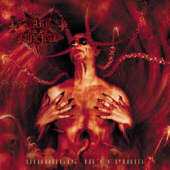
Diabolis Interium

Sweden Country of Origin: Sweden

1. The Arrival Of Satan's Empire
2. Hail Murder
3. Goddess Of Sodomy
4. Diabolis Interium
5. An Apprentice Of Satan
6. Thus I Have Spoken
7. Armageddon Finally Comes
8. Heart Of Ice

Review by Jophelerx on July 29, 2024.

The self-proclaimed godfathers of "epic progressive" metal music, Dark Quarterer are often overlooked within the epic metal scene in favor of American groups like Manowar and Manilla Road - whose importance to the genre, was of course, immense. However, Dark Quarterer's impact was also notable, giving rise to the modern Italian and Greek scene, which is where the style is most commonly played in the 21st century. To be fair, many of these modern bands seem more influenced by Manilla Road, but Dark Quarterer were at least one of the first such Mediterranean epic metal acts, and they really had their own sound, taking cues from classical music and progressive rock but pushing that fusion in a more muscular, guitar-oriented direction, seeming to stumble into the genre of "metal" almost by accident, parallel to groups like Judas Priest or Iron Maiden without really showing much influence from within the genre. More than anything, this feels like a band that wanted to play a neoclassical, thinking man's music, but just decided to put it through the filter of a rock band, with the musicians playing guitar and bass underneath the traditional, soaring vocals, rather than anything orchestral.

While the album, the first from the band, wasn't released until 1987, it really feels like something that could have been written in the 70s, with the metal riffing being quite primitive and often doomy - clearly this was post-Sabbath, but there's none of the rough-and-ready speed metal sound of Motorhead or Priest, nor the punch dual-guitar harmonies of the NWOBHM, to be heard here. More, this is basic, often proto-metallish riffing with the fancy guitar wizardry happening with the neoclassical leads. There are cases, like in the middle of "Colossus of Argil," where the band opts for a more traditional rock/metal riff structure, but even then the vocals make things feel a bit different than what we were used to hearing from a metal album in the mid 80s. Vocalist Gianni Nepi has a fantastic set of pipes, but he basically always goes for a more melodic, traditionally classical performance - not quite full on operatic, but close, not really adding any grit or aggression to his voice but very good at conveying emotion, and fitting in well with the complex classical noodling on the guitar. If anything else of the era, this sounds most similar to something like Candlemass' Epicus Doomicus Metallicus, though this is a bit faster and far less gloomy.

Structurally, there are definitely some more "progressive" ideas on display here - few of these tracks follow the traditional rock "verse/chorus/verse/chorus" format, and the songs definitely tend to be longer than one would expect at the time for a heavy metal album, with the epic magnum opus "Colossus of Argil" clocking in at over ten minutes and nothing here under the six-minute mark. As such, it's hard to call a lot of these songs "catchy" in the traditional sense, as they're not really going for immediate hooks but rather, they're intent on creating an overall atmosphere from the various pieces and melodies they put together. Nowhere is this more evident than in "Gates of Hell," which opens with an ominous instrumental passage and slowly builds up, adding some interesting bass and guitar harmonies that don't really create a memorable melody on their own, but provide a great background for the vocals and help to slowly increase the epic feeling and intensity of the music, and in this they succeed brilliantly. The guitar soloing towards the end of the track is a high point for me, but overall these guys definitely seem to have more of a classical mentality in their songwriting choices, creating sections more as "movements" than as verses or choruses or bridges, and at the time this was a pretty revolutionary concept to bring to metal, which a lot of progressive metal has continued to do in the intervening decades.

Despite being their first album, the consistent quality here is quite impressive - the band pioneered a style and managed to make the album all killer, no filler anyway, though given that the band had been around in some incarnation since 1974 there may have been a lot of culling and refining going on behind the scenes, with the final product being their debut full-length. Still, the band clearly had a sense for what works and what doesn't, and each songs stays fresh and interesting despite being on the longer side. Ideas are never milked for too long, but rather the band's progressive leanings allow them to keep introducing new things or at least to give a new spin on their ideas at some point so that there's always a sense of movement and dynamism to everything. It's a truly ambitious work composed solely of multi-part epics - not all of them attempt to reach the glorious heights that "Colossus of Argil," does, sure, but there's always a sense of things building on themselves to reach for greater heights, and the band is never afraid to try new things, adding multi-tracked "ooohs" and "aaahs" from Nepi at times, or at others going for long instrumental pieces where he barely contributes - in fact, "The Ambush" is entirely instrumental, yet it works wonderfully, feeling fully fleshed out and retaining the band's sense of grandiosity, rather than just serving as a guitar showcase as such tracks often do in metal.

Really, the only minor complaint here is the production, which is a bit muddy and has the guitars sounding rather thin in places - particularly compared to the band's followup album The Etruscan Prophecy, which sounds crystal clear, but it's far from unlistenable or even really unpleasant, merely a bit rough around the edges. "The Entity" perhaps suffers the most in this regard, as it often has multiple guitar parts overlapping, and things can get a bit jumbled, but it's still a fantastic track, and the band's sense of songwriting shines through beautifully here, the ups and downs serving as perfect complements to one other, the band pulling back to focus on heartfelt, sorrowful vocals from Nepi at times and just overall crafting a story that's full of interesting, memorable textures and relatable moods and feelings in a way that's both complex and intellectual yet at once engaging and entertaining, and in places feels like the pinnacle of the album, certainly at least rivaling the mighty "Colossus of Argil." The title track actually feels closest to more of a traditional rock song, with an intro that could have come from a Pink Floyd record, though the sense of progression and movement in the song structure is still present. The guitar work doesn't stray too far from what a lot of the 70s progressive rock bands were doing, though with a bit of a neoclassical filter. The band wouldn't sound out of place playing this material if they opened for someone like Rush or Blue Oyster Cult, though Gianni Nepi certainly stands out with his nasally emotive wailing.

My version includes the bonus track "Lady Scolopendra," which isn't bad but has significantly worse production than the rest of the album, feeling like an early demo track that never made it into any of the more polished or professional mixing sessions. It's a nice extra, but the extremely rough sound makes it difficult to get the most out of the sort of complex soundscapes that Dark Quarterer weaves with its multiple layers of melodies. Overall, this album is very, very strong, and provides a foundation for future epic metal, as well as showing that classical music has a place in metal and can teach us new ways to utilize heavy guitar music (others, like Yngwie, had already flirted with this concept, but not in a way that was as fleshed out or fully reconciled). It also anticipates Adarmelch's Irae Melanox, another classic which came out a year later and has received a bit more attention overall, perhaps due to being an early progressive power metal release, and this also utilized many ideas from classical music. While Dark Quarterer might turn off those looking for something more accessible, or interested in a faster, more muscular sound, the ambition and complexity on display here is second to none, and more importantly, incorporated into incredible songwriting and an inimitable performance from the great Gianni Nepi which transform this into a truly breathtaking experience and one that's absolutely essential for any fan of metal with a more epic scope or a more thoughtful, intellectual focus.

Rating: 9.5 out of 10

   270

Review by Jack on November 28, 2001.

Symphonic/synthetic black metal used to be all the rage in the years gone by, your Dimmu Borgir’s and Old Man’s Child’s would play all the catchy bopping metal that our sisters could appreciate. Then as of late, each of these sympho/syntho bands decided that they wanted to be the biggest fish in the pond and went to radical extremes to create a unique and ultimately removed standard in black metal thoroughfare. This is all well and good, but it leaves some of the consumers with a craving for good and solid sympho/syntho black metal from yesteryears. Be thankful for Dark Funeral, they provide that trip down memory lane with their unashamed brand of hyper-speed black music.

If the year was between 1996-1998, Dark Funeral probably would not be receiving such a favorable review. But here we sit; near the end of 2001, and “Diabolis Interium” is such a solid and all round album that it is really hard to fault. Dark Funeral know their limits and they stick by them. Dark Funeral with “Diabolis Interium” do not try and create an album that incorporates every know element of metal from the past thirty years into to one big mess. They adhere with the well-known elements of black metal and make black metal like it should be.

The only slur on “Diabolis Interium” is the usage of the Satan metaphors and lyrics... they have been done to death and then through hell too. But it doesn’t really make that much of difference for Dark Funeral as they play such a great form of black metal.

Dark Funeral with “Diabolis Interium” do not deliver a lasting impression, like a boxer that is able to go the full twelve rounds; but instead gives a short, sharp jab to the sternum that leaves a different sort of impression, one that is not of anguish or boredom, but instead the sort like “hey that was a fun trip, have to do it again sometime”. It is a very short 36 minute album, that is clocked in at the right time and does not bore the listener like some other epic black metal bands. Dark Funeral do what they do and they do it well, then they leave. No room for commercialisation or crap like that. A band true to the black metal game.

Bottom Line: No need for ridiculous originality here folks, Dark Funeral go about their tunes with style and precision well, telling us that the black metal scene is still live and kicking.

Categorical Rating Breakdown

Originality: 5
Musicianship: 8
Atmosphere: 7
Production: 8
Overall: 8

Rating: 7.2 out of 10

   270