
Prieuré - Official Website
Oceans Above |
France
 |
|---|
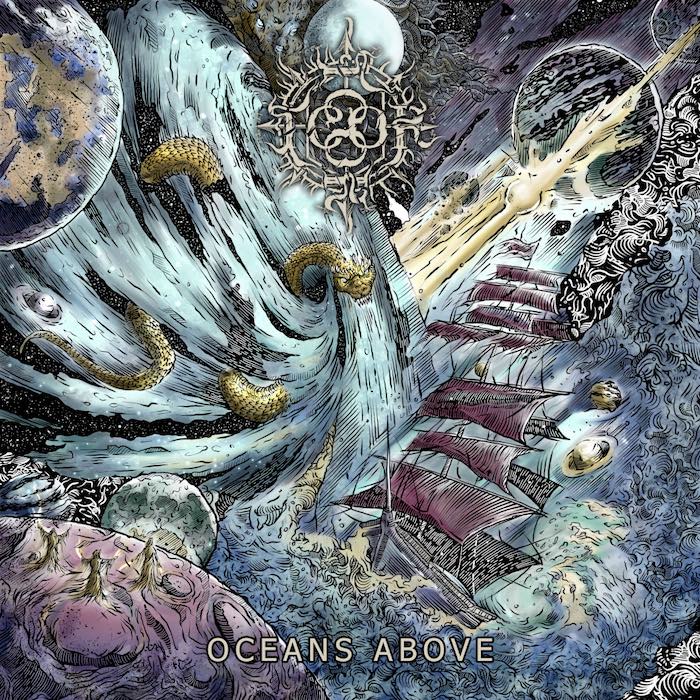

Buy on: Bandcamp
Type: Full-Length
Release Date: January 1st, 2024
Label: Independent
Genre: Black, Death
1.
Stavelot 1597
2.
Rome 897
1.
Sen Dzirdēju, Nu Ieraugu
2.
Zobena Dziesma
3.
Pārkiuns Vede Vedekļeņu
4.
Gatavs Biju Karavīrs
5.
Apkārt Kalnu Gāju
6.
Prūšu Meita Karā Jāja
7.
Aiziedams Pērkons Grauda
8.
Sidrabiņa Upe Tek
9.
Migla, Migla, Rasa, Rasa
10.
Zirgi Zviedza
11.
Kur Tu Jāsi Bāleliņi?
12.
Zviegtin' Zviedza Kara Zirgi
13.
O Kai Saulute Tekejo
1.
Living Fleshthrone
2.
Traitors To Mankind
3.
Graveyard Of Disgust
4.
Bleeding Thougths
5.
Under The Spell
6.
Visions Of Carnage
7.
Crawling In Blood And Puke
8.
Bitter Days
9.
Death Inquisition
10.
Flames Of Baal
Review by Nathan on January 10, 2022.
Long ago (well, like 15 years), I was partaking in an art class at my elementary school. Watercolour painting, to be more specific. Anyone who has worked with watercolours knows that they can be a finicky bitch - one wrong stroke or a wet brush means the paint starts to run all over the page, and it’s near-impossible to undo the damage once it’s laid down to paper. I never understood why they let kids work with something that limits your ability to detail at first, but I get it now thanks to this fateful day.
The task that afternoon was to paint a tree in a landscape. Nothing especially difficult, but it proved quite a struggle to me due to the dissatisfaction I had with the brown tones I was mixing for my tree trunk. This led me to have to re-paint the tree several times. In my haste and frustration with it, the truck started to get bigger and looked more bloated, so I added some extra foliage to the tree to compensate and try and make it more proportional. That just made it look worse, so I tried to paint over some of the edges using the background colour....long story short, it turned into a complete fucking mess and taught me the most important lesson of watercolour painting: sometimes, the wisest decision you can make is to put down the paintbrush and stop adding more details.
Why do I tell you this story today? Well, apparently, that’s something that Nile never learned, because they just do not know when to fucking stop. and In Their Darkened Shrines is the album where the excess and complexity mutates and blossoms, resulting in the most bloated, contrived and nonsensical album of the band’s career.
One of the most frustrating features of this album is that a lot of the riffs are good in isolation, especially the more technical and involved fretwork, which benefits from the extra notes. Even though a lot of them are buried in the mud of the guitar tone, you can still feel how they’ve been enhanced and developed from the stems of the previous two albums. There’s several moments on this album that I start to get excited, bob my head a bit, even question if I’m being too harsh in my assessment of this album - it is Nile, after all, I think most of their stuff is great and their idea is cool, and this is the most fleshed out their concept has sounded since their inception.
Unfortunately, you can’t write a song by stapling a bunch of hypothetically cool parts together - they need to connect into one another. Nile can’t get more than two minutes before an ill-fitting drum fill jumbles the mix or the riff literally stops dead and grinds all the momentum to a halt. If the quality of an album was based on how quickly a song can make you bored after sounding intriguing for the first 30 seconds, In Their Darkened Shrines would be the greatest work of all time. This album is so good at shooting itself in the foot it seems like it’s by design. Each song begins with you moderately interested in the concept and riffing style only to convolute its way into leaving you completely apathetic. I’m not sure what the underlying reason for it is - I don’t think it’s even that Karl Sanders doesn’t know how to write songs, he just never seems to know when to cut out an idea. Combine that with the over-indulgent drum performance and additional guitar and vocal contributions from Dallas Toler-Wade adding yet another cook in the kitchen, and the album is left with nothing to ground itself.
Tony Laureano’s drumming, as I’ve hinted at a bit earlier, is no bueno. He took all the masturbatory over-indulgence and “do a fill every 10 seconds and then some” tendencies that were starting to creep into Pete Hammoura’s work and turned the knobs to full blast, not to mention he seemed to have inherited Hammoura’s inability to carry a slow song. Some people consider him the best drummer Nile’s ever had (well, I saw it in a couple YouTube comments, which isn’t really a reliable source, but still, someone’s gotta think it somewhere). To me, he just underscores all the qualities that can make Nile boring and frustrating. I can’t say much else about it, it sucks, doesn’t fit the music, and magnifies the problems Black Seeds Of Vengeance had as a result.
When you look up the Wikipedia article for In Their Darkened Shrines, a sentence in the very first paragraph - one of the only statements about the album - states that “in addition to this being Nile’s longest studio albums, it features their longest song at 18 minutes in length”. That may be the most succinct, accurate summation of an album on that site. In Their Darkened Shrines just feels fucking long. Every single riff and progression is repeated two to three more times than it needs to be. Because the ambient sections are never quite lengthy enough to give you the chance to zone out to them, and the death metal parts are jagged and intricate enough to require your full attention, this album falls into a no-man’s land of being simultaneously overstimulating and boring. After a promising first few steps out of the gate, Nile nearly ventured too far up their own asshole and almost completely relegated themselves to obscurity with this, the nadir of Nile’s career.
I’m writing this in 2021, so we all know how this story turns out - they’re about to get their shit together and turn it around, and they’re gonna do it soon...
Rating: 2.8 out of 10
1.34kReview by Yener on July 29, 2019.
Formed back in the mid-90's in South Carolina, Nile continues to progress in their sound and style. This is their third album (following Amongst the Catacombs of Nephren-Ka and Black Seeds of Vengeance) and the band continues with their no nonsense, intense death metal. Those who had the pleasure of witnessing their first two albums (or their spectacular demo, In the Beginning) will be sure to enjoy this onslaught of vicious death metal.
The band waste no time and kick in with 'The Blessed Dead' and it's amazing to hear how much better the band actually sound in terms of songwriting and instrumentation. The guitar tones are lethal, and new drummer Tony Laureano (formerly of Angelcorpse) just tears his kit apart. Tony was actually the first thing to capture my attention, because it's almost impossible not to hear the guy just slamming away on his skins. His performance is nothing short of spectacular, and the riffs unleashed by Karl Sanders and Dallas Toler-Wade are devastating.
'Execration Text' is up next, and I simply fell in love with this song the second I heard it. I couldn't believe my ears as the second riff in the song is simply surreal. In fact, all of the riffs are killer-highly melodic and extremely technical. Dallas Toler-Wade is responsible for this beautiful piece of metal as he wrote the music for it, and it's amazing to see how well he's adapted to the Nile approach. Outstanding from start to finish, this song will leave you begging for more. Thankfully, you'll only have to beg for about two seconds...
Track three on the album 'Sarcophagus' sees the pace slow down considerably, with the band exploring furthermore with slower, more grind rhythms. The vocals are the highlight in this song, as all three vocalists demonstrate their skills. Speaking of which, former lead vocalist Chief Spires has been replaced by Jon Vesano, who also took up bass duties for the band. He's not as powerful as Karl, and he doesn't even come close to Dallas' inhuman approach, but he still does a fine job. The song ends with some cool Egyptian melodies and some excellent double-bass work from Tony Laureano.
A short but insane drum intro sets the pace for track four 'Kheftiu Asar Butchiu', which I consider to be the finest song in Nile's history. The guitars slam you from left to right, up and down, and the drumming will have you picking your jaw up from the floor. This song is 3 minutes and 52 seconds of pure ass kicking death metal. In my 12 years of listening to this genre of music, never have I witnessed such a high level of pain delivered in just one song. The vocal tradeoffs are outstanding, the drum work is the best you could ever wish to hear, and the riffs are simply mesmerizing. My favorite section in this song is probably the breakdown, in which Tony shows us what most drummers tend to overlook when sitting behind the kit-cymbals. The cymbal work here is simply beautiful, and the build up to the horrific outro is spectacular, with all three vocalists singing 'Kheftiu Asar Butchiu' in unison. It feels like you're left alone to meet your death in one of the abandoned pyramids. Hats off to Karl Sanders for writing what I consider to be one of the best songs in the history of death metal. Hell, no one even comes close to this one...
How many of you out there have heard a 12-minute epic death metal song? Not too many of you I would guess, as I can't recall anyone doing such a thing before. 'Unas, Slayer of the Gods' was my first time too, and man, this song has unbelievable written all over it. A sweet acoustic intro is the first thing come out of your speakers, and just when you're caught in the beauty of it all, insane blast beats and furious riffs come blazing towards you like napalm flame. It's like being caught with your pants down. This song has so many different sections that I'm not even going to try to go over them all, you have to hear it for yourself to believe it. There is one thing that I will say, however-the horn section in the song is brilliant. Tony Laureano delivers a stunning kick drum solo in the breakdown and.. ah, I should just skip to track six, which is called 'Churning the Maelstrom', which is exactly what the band does. Nothing too special here, just outstanding death metal from start to finish, with an equally outstanding guitar solo.
'I Whisper in the Ear of the Dead' is quite possibly the most haunting song on the album. Slow and brutal is the formula here, with the band expanding their Egyptian approach even further. The Egyptian sounds that the band come up with are pretty amazing, as they make all of them themselves. Karl Sanders sounds like a demon from the underworld-his vocals are so low that chances are dogs probably hear it better than we do. My favorite vocalist in Nile is without a doubt Dallas, for the man has awesome strength and agility. But there is something about Karl's vocals that are hard to pass by-deep and powerful, the air rushing through his lungs creates a very horrific effect when used in slower songs.
Track eight 'Wind of Horus' is another highlight. Kicking in with creepy guitars and cymbal work, this song sets the mood for ancient Egypt perfectly. Another signature Dallas riff follows the intro, and all hell breaks loose in a furious onslaught of metal. Tony does a fine job of handling such a complex song, but it's the riffs that propel this machine of malice. Here we witness some of the best riffs in Nile's history, and the riff right before the melodic breakdown is one of the best I've ever heard in my life. All in all, another blinder from Nile.
Now this is where the album gets into some really interesting territory. 'In Their Darkened Shrines' consists of four songs, the first being 'Hall of Saurian Entombment', an instrumental piece. This can hardly be considered new for Nile, but everything is done so well, and the atmosphere created is so perfect that the song (almost five minutes in length) doesn't come across as boring or dull and sets the mood for track ten flawlessly. 'Invocation to Seditious Heresy' is another gem penned by Dallas Toler-Wade. It is a fine song in every aspect, with riffs that hammer you up and down. Tony Laureano does the business from behind the kit in the most genuine way-like I said before, it's nearly impossible not to hear the guy as he can capture your attention whenever he feels like it.
'Destruction of the Temple of the Enemies of Ra' starts with a vortex of haunting noises and voices. Tony is the first member to kick in with a brief drum solo, and when the rest of the band enters you should really duck for cover. It's so easy to feel the madness and panic the band wanted to create here as you can literally feel massive stone blocks crumbling on top of you. The riffs delivered in this pulverizing piece of beautiful noise are top notch to say the least and combined with the unholy vocals of Dallas and Karl, they gain more definition and presence.
Not many bands sit down and think enough on how to end their albums. Nile is an exception. Without saying too much, 'Ruins' simply could not have been written any better than this. A slow instrumental piece with a fabulous guitar melody does the job perfectly for what I consider to be the best instrumental piece that the boys have ever written.
There you have it. Be sure not to miss this album, as it's guaranteed to leave you wanting more and more. Addicting from start to finish, I must have listened to the album over 200 times and I am nowhere near being sick of it. Most recent death metal releases simply lack power and aggression. There's enough power here to shake the very calcium off of your bones.
Rating: 10 out of 10
1.34kReview by Allan on August 17, 2002.
In the year 2000, Nile’s sophomore effort “Black Seeds of Vengeance” woke up the slumbering death metal scene with their revitalizing insight into the music. It caught the attention of fans and critics alike, and they were instantly put upon a pedestal to be worshipped by some, and cast down up by very few others. Nile was put into a position in which they must construct a third album that would live up to the high expectations set by not only themselves, but the demand of the listeners. Even with line-up changes Nile managed to stay level headed about their situation and their efforts resulted in “In Their Darkened Shrines”. It just so happens that Nile’s third album surpassed those demands and turned out to be what is the best album of their career.
‘The Blessed Dead’ kicks off the album, followed by ‘Execration’ for what are two songs that the experienced Nile fan is no stranger too. The difference between these classic Nile songs and material that predates “In Their Darkened Shrines” is that Nile has improved. The performance by the band itself is nothing short of amazing, the atmosphere is more complete, the emotions are flooding the listeners ears quicker than ever, and the intentions of Nile are far more clear than ever before.
The great thing about Nile though, as shown best during “Black Seeds of Vengeance”, is that they were interested in traveling into lengthy song arrangements, and more importantly the slower, more atmospheric side of things. ‘Stones of Sorrow’ and ‘To Dream of Ur’ were two witnesses to this fact, and on “In Their Darkened Shrines” the band resurrects the style of those songs into different areas all over the album. Shortly into the album we’re introduced to ‘Sarcophagus’. It sweeps along like sand over the desert hills with its crushing rhythms and slithering tempo, clouding you in a depressive cloud of unmerciful guitars, subtle synths, and intense drumming. This experience is implored upon once again by the nearly twelve-minute death metal opus ‘Unas, Slayer of the Gods’. It’s truly a shining moment in Nile’s lifespan, and easily one of the best songs that they’ve ever conspired. Drifting out of your speakers at first with calming acoustic guitar, Nile indulge themselves in an epic musical landscape with drumming that’s all over the board and rhythms that drive down heavily. Leave it to Nile to bring in a segment wrought with tribal drumming like thunder from the sky and war horns cutting through the dense air like a knife, like a warning to a town that they’re under attack. Then, like a deer caught in a car’s headlights you’re unsuspectingly lost in a whirlwind of guitar solos that are just as monolithic as the rest of the song. Nile’s travels into the tombs of atmospheric death metal have earned them the rights to say they’ve accomplished yet another feat.
As a band Nile have drastically improved in their song writing. They don’t rely on chanting that goes on for minutes or samples that can be found on their previous outings to inflict their atmosphere, emotions, and mood. On “In Their Darkened Shrines”, the actual material itself is what creates that Egyptian feel. Both the rhythm and leads on the four-part title track instantly fill the mind with thoughts of enchanted hallways of golden brick that make up tombs full of ancient lore and mystique. The drumming and horns on the first part, ‘Hall of Saurian Entombment’, create a visionary make-up of townsfolk being enslaved to a point where they are driven to near collapse. Part II ‘Invocation to Seditious Heresy’ leads on with aggressive death metal that is without the synths or horns on overdrive, yet still manages to keep that unique feel flowing solely from the drumming and guitars. The last two parts (‘Destruction of the Temple of the Enemies of Ra’, ‘Ruins’) take wind the album down, particularly ‘Ruins’, which acts as a tribe celebrating their domination of an enemy deep into the night.
Bottom Line: “In Their Darkened Shrines” is without a doubt Nile’s finest hour yet. Any recognition Nile will undoubtedly receive as they have in the past has truly been earned here, not just drawn in because of novelty. Nile has succeeded in everyway that they could have and “In Their Darkened Shrines” is a testament to that.
Categorical Rating Breakdown
Musicianship: 9
Atmosphere: 9.5
Production: 9.5
Originality: 9
Overall: 9
Rating: 9.2 out of 10
Review by Felix on January 6, 2024.
The Baltic area is more or less a blank spot on my metal map. An album of Luctus from Lithuania stands on my shelf and I am a proud owner of the works of Skyforger, the metallic emissaries of their Latvian fatherland. But that's it and I did not know any band from Estonia, until Tankist contacted me. It was a matter of honour for me to give these thrashers a chance. First things first, they have already created an almost unique style. Their kind of thrash metal does not lack of surprising, sometimes weird breaks. Any form of commercialism does not play a role. Tankist walk their own way and this approach deserves praise, although the results are very different, at least from my point of view.
Don't let the puerile artwork put you off. Tankist's music does not show signs of childishness. The guys do not put the focus on record-breaking speed or brutality as a value in itself. They rather keep an eye on the creation of guitar performances that have an effect. For example, the beginning of "Mortuary" is stuffed with oppressive leads and aggressive riffs which do not lack of pressure. The restlessness of the boys leads to very individual song patterns. Sometimes the old maxim "less (variety) would have been more" comes to my mind, because some good ideas are silting up. "Deadeye", for instance, appears almost as a cacophony of strange guitar lines. Nevertheless, I respect the fact that the newcomers are not afraid of these comparatively sophisticated structures. Too bad that there exists another problem. The creator of the dissonant guitar solos does obviously not know the meaning of the term "coherence". Most of the solo excursions hurt the overall impression of the songs, sometimes more, sometimes less. This is a pity, because strong and attacking riffs like that at the beginning of "At the Gate" actually build a good fundament for the tracks.
In alignment with the song structures, the lead vocals do not fail to offer a good degree of variety. Aggressive shouting and relatively clean vocals show up during the opener and set the frame for the following tunes. It is obvious that the band does not lack of ambitions and enthusiasm, but the compositional skills leave room for optimization. Anyway, the foundation has been laid. Each and every song offers at least a few original riffs and therefore it will be interesting to see what happens next. If the band puts the focus on conclusive songs with some more or less catchy parts - on "Be Offended", especially the chorus of "At the Gate" shows that they are fortunately not immune against catchiness - without neglecting its slightly progressive approach, the next release will possibly be very amazing. This applies particularly when the prospective output is also equipped with a more than solid and well balanced production. Hopefully this is the case, because the stormy Baltics needs more aspiring metal formations.
Rating: 6.5 out of 10
1.34kReview by Felix on January 6, 2024.
The Baltic area is more or less a blank spot on my metal map. An album of Luctus from Lithuania stands on my shelf and I am a proud owner of the works of Skyforger, the metallic emissaries of their Latvian fatherland. But that's it and I did not know any band from Estonia, until Tankist contacted me. It was a matter of honour for me to give these thrashers a chance. First things first, they have already created an almost unique style. Their kind of thrash metal does not lack of surprising, sometimes weird breaks. Any form of commercialism does not play a role. Tankist walk their own way and this approach deserves praise, although the results are very different, at least from my point of view.
Don't let the puerile artwork put you off. Tankist's music does not show signs of childishness. The guys do not put the focus on record-breaking speed or brutality as a value in itself. They rather keep an eye on the creation of guitar performances that have an effect. For example, the beginning of "Mortuary" is stuffed with oppressive leads and aggressive riffs which do not lack of pressure. The restlessness of the boys leads to very individual song patterns. Sometimes the old maxim "less (variety) would have been more" comes to my mind, because some good ideas are silting up. "Deadeye", for instance, appears almost as a cacophony of strange guitar lines. Nevertheless, I respect the fact that the newcomers are not afraid of these comparatively sophisticated structures. Too bad that there exists another problem. The creator of the dissonant guitar solos does obviously not know the meaning of the term "coherence". Most of the solo excursions hurt the overall impression of the songs, sometimes more, sometimes less. This is a pity, because strong and attacking riffs like that at the beginning of "At the Gate" actually build a good fundament for the tracks.
In alignment with the song structures, the lead vocals do not fail to offer a good degree of variety. Aggressive shouting and relatively clean vocals show up during the opener and set the frame for the following tunes. It is obvious that the band does not lack of ambitions and enthusiasm, but the compositional skills leave room for optimization. Anyway, the foundation has been laid. Each and every song offers at least a few original riffs and therefore it will be interesting to see what happens next. If the band puts the focus on conclusive songs with some more or less catchy parts - on "Be Offended", especially the chorus of "At the Gate" shows that they are fortunately not immune against catchiness - without neglecting its slightly progressive approach, the next release will possibly be very amazing. This applies particularly when the prospective output is also equipped with a more than solid and well balanced production. Hopefully this is the case, because the stormy Baltics needs more aspiring metal formations.
Rating: 6.5 out of 10
1.34kReview by Felix on January 20, 2024.
It was the last thing I expected to happen, but I bought an album full of folk music. Latvian folk music. Too bad that I forgot to gather information about this release before I ordered "Zobena Dziesma". The album has nothing in common with Skyforger's other full-lengths, because metallic elements are completely missing. People who like the more or less traditional songs of Korpiklaani may have an affinity for folkloric songs and therefore they might be able to like the melancholic tunes of "Zobena Dziesma" as well. But I don't think so. Perhaps fans of medieval music will find a new treasure when listening to this work, but once again, I don't think so.
Generally speaking, the polyphonic vocals are expressionless and the melodies sound, well, very Latvian. Yet the main shortcoming is that the flutes, the jaw harps, the acoustic guitars and all the other instruments, that the musicians use so carefully, do not generate any kind of atmosphere. No camp fire is kindled, no heroes ride through the dark forests and the sword - "Zobena Dziesma" means "Sword Song" - remains in the scabbard. The only atmospheric element is constituted by the great artwork.
The booklet tells us that Skyforger "are not a professional folk group". I am not surprised. Many parts of the album are free from any instrumentations. These sections sound terrible. I just hear bearded men - and, even worse, I see them before my inner eye - that mumble archaic wisdoms in a language I do not understand. The eleventh track also features female vocals and I must face the truth: the pits of hell are bottomless. Okay, I do not rule out that the songs create moments of magic, but only Latvian ears are able to realize this enchantment. "Migla, migla, rasa, rasa" takes the bun. Listen to its metallic version, released on "Thunderforge", and than compare it with the here presented design. Depth, power and expressiveness are gone. And it goes without saying that the clean production of "Zobena Dziesma" does not possess a grain of metal.
It is no crime to be a patriot, but this does not give you the license to declare war on clueless metalheads by releasing such an album. Five percent for the patriotic intention, five percent for the artwork and two percent for the music, but this is just because I am very generous today. Or, to be fair, this is because I have no doubt that the likable band has put heart and soul into this record. Nevertheless, it's a waste of time for ordinary, slightly narrow-minded metal freaks. Love your country, but please express your love in another way.
Rating: 1.2 out of 10
1.34kReview by Mladen on December 8, 2023.
Back in the day, and we're talking about a very distant, Pagan age, there were quite a few things we miss today. The bond with Nature was one. The facts that the length of the blade you were allowed to carry wasn't determined by law, and one horsepower was all you needed to look cool are some of the others. And Christians? Really, who were they? Some strange men speaking a strange language and trying to make you become one of them. All you had to know was what you parents told you about strangers: that you have to beware of them.
What we have today, but wasn't around back then, was distortion. Let's not discuss whether it's a good or a bad thing, but before the Gods invented the mighty Pedal many of today's noises weren't around anyway, so there was no need to fight them with a stronger weapon. Voices and a few non-digital instruments were all you had. All you needed, as well. Also, they were easy to carry into war.
Zobena Dziesma was originally released in 2003, as Skyforger's (acoustic) interpretation of the songs of their Latvian forefathers. Some of them are songs of war and mythology, folk songs that have been sung through generations, and are still enjoyed today. Some are re-worked songs from the three previous Skyforger albums.
Recorded with the support of Culture Capital Foundation of Latvia, and featuring six guest musicians and vocalists, Zobena Dziesma is a coherent piece of work with no pretentiousness about it. Just fifteen concise, evocative, poignant and tremendously anthemic pieces of art sounding like... well, there's nothing to say about the sound, really. The recording is so great that it feels like the band is simultaneously right here and somewhere else, in a forest, by the campfire, near the battlefield, before or after war, anywhere under a clear, unpolluted sky between now and a thousand years ago.
My version of Zobena Dziesma comes re-released by Skyforger themselves, with two bonus tracks (originally there were thirteen). Once the listener gets used to the melodies, of which some are quite unusual and not associated with what one might hear in his own country, there is still a story and a feeling behind every one of them. The title track evokes a dance around the fire, slowly increasing in speed. "Perkons Brought the Bride" brings some ancient vocal harmonies you've never heard — but, once absorbed, be ready to start humming any of them when you least expect it.
The galloping feeling of "Ready to be a Warrior" shows how to create heaviness out of just voices, a stellar flute melody and something that sounds like a cello but probably has a weird Latvian name. It's probably useless to describe each and every song, the beauty and the eternity of every one of them — after all, they were remembered for so many years, and it's almost as if you can imagine generations of fathers teaching their sons how to sing and play them.
Out of the two new tracks, one is called "A Crested Bird Sings" and the local funeral band better start learning Latvian, to have it ready for me. The other one is a complete version of "Usins Rides Over the Hill," part of which you've heard in the intro to Thunderforge. Also, if you're into Skyforger, you've already heard "Oh Fog, oh Dew," and "Neighed the Battle Horses" — but you haven't heard them done like this.
Speaking of Usins, Perkons and a number of others, you can read the explanations of some Latvian deities and festivities in the booklet, as well as correct translations of all the songs to English. Reading those, Zobena Dziesma just gets better. Damn, while the "ethnic" songs in my country just go on about working in the field, getting laid and singing about how lovely their villages are and washing their laundry by the river, these people have battle horses and thunder gods — and when they ask Perkons where they can wash the cloak stained with their enemy's blood, he tells them that it'll be destroyed in the war, anyway.
You can't miss with this one. Anyone into genuine folk, ethnic or ambient music will thoroughly enjoy it, and a Skyforger fan who doesn't "get" Zobena Dziesma never understood what Skyforger was about in the first place.
Rating: 9.5 out of 10
1.34kReview by Felix on January 20, 2024.
It was the last thing I expected to happen, but I bought an album full of folk music. Latvian folk music. Too bad that I forgot to gather information about this release before I ordered "Zobena Dziesma". The album has nothing in common with Skyforger's other full-lengths, because metallic elements are completely missing. People who like the more or less traditional songs of Korpiklaani may have an affinity for folkloric songs and therefore they might be able to like the melancholic tunes of "Zobena Dziesma" as well. But I don't think so. Perhaps fans of medieval music will find a new treasure when listening to this work, but once again, I don't think so.
Generally speaking, the polyphonic vocals are expressionless and the melodies sound, well, very Latvian. Yet the main shortcoming is that the flutes, the jaw harps, the acoustic guitars and all the other instruments, that the musicians use so carefully, do not generate any kind of atmosphere. No camp fire is kindled, no heroes ride through the dark forests and the sword - "Zobena Dziesma" means "Sword Song" - remains in the scabbard. The only atmospheric element is constituted by the great artwork.
The booklet tells us that Skyforger "are not a professional folk group". I am not surprised. Many parts of the album are free from any instrumentations. These sections sound terrible. I just hear bearded men - and, even worse, I see them before my inner eye - that mumble archaic wisdoms in a language I do not understand. The eleventh track also features female vocals and I must face the truth: the pits of hell are bottomless. Okay, I do not rule out that the songs create moments of magic, but only Latvian ears are able to realize this enchantment. "Migla, migla, rasa, rasa" takes the bun. Listen to its metallic version, released on "Thunderforge", and than compare it with the here presented design. Depth, power and expressiveness are gone. And it goes without saying that the clean production of "Zobena Dziesma" does not possess a grain of metal.
It is no crime to be a patriot, but this does not give you the license to declare war on clueless metalheads by releasing such an album. Five percent for the patriotic intention, five percent for the artwork and two percent for the music, but this is just because I am very generous today. Or, to be fair, this is because I have no doubt that the likable band has put heart and soul into this record. Nevertheless, it's a waste of time for ordinary, slightly narrow-minded metal freaks. Love your country, but please express your love in another way.
Rating: 1.2 out of 10
1.34kReview by Mladen on December 8, 2023.
Back in the day, and we're talking about a very distant, Pagan age, there were quite a few things we miss today. The bond with Nature was one. The facts that the length of the blade you were allowed to carry wasn't determined by law, and one horsepower was all you needed to look cool are some of the others. And Christians? Really, who were they? Some strange men speaking a strange language and trying to make you become one of them. All you had to know was what you parents told you about strangers: that you have to beware of them.
What we have today, but wasn't around back then, was distortion. Let's not discuss whether it's a good or a bad thing, but before the Gods invented the mighty Pedal many of today's noises weren't around anyway, so there was no need to fight them with a stronger weapon. Voices and a few non-digital instruments were all you had. All you needed, as well. Also, they were easy to carry into war.
Zobena Dziesma was originally released in 2003, as Skyforger's (acoustic) interpretation of the songs of their Latvian forefathers. Some of them are songs of war and mythology, folk songs that have been sung through generations, and are still enjoyed today. Some are re-worked songs from the three previous Skyforger albums.
Recorded with the support of Culture Capital Foundation of Latvia, and featuring six guest musicians and vocalists, Zobena Dziesma is a coherent piece of work with no pretentiousness about it. Just fifteen concise, evocative, poignant and tremendously anthemic pieces of art sounding like... well, there's nothing to say about the sound, really. The recording is so great that it feels like the band is simultaneously right here and somewhere else, in a forest, by the campfire, near the battlefield, before or after war, anywhere under a clear, unpolluted sky between now and a thousand years ago.
My version of Zobena Dziesma comes re-released by Skyforger themselves, with two bonus tracks (originally there were thirteen). Once the listener gets used to the melodies, of which some are quite unusual and not associated with what one might hear in his own country, there is still a story and a feeling behind every one of them. The title track evokes a dance around the fire, slowly increasing in speed. "Perkons Brought the Bride" brings some ancient vocal harmonies you've never heard — but, once absorbed, be ready to start humming any of them when you least expect it.
The galloping feeling of "Ready to be a Warrior" shows how to create heaviness out of just voices, a stellar flute melody and something that sounds like a cello but probably has a weird Latvian name. It's probably useless to describe each and every song, the beauty and the eternity of every one of them — after all, they were remembered for so many years, and it's almost as if you can imagine generations of fathers teaching their sons how to sing and play them.
Out of the two new tracks, one is called "A Crested Bird Sings" and the local funeral band better start learning Latvian, to have it ready for me. The other one is a complete version of "Usins Rides Over the Hill," part of which you've heard in the intro to Thunderforge. Also, if you're into Skyforger, you've already heard "Oh Fog, oh Dew," and "Neighed the Battle Horses" — but you haven't heard them done like this.
Speaking of Usins, Perkons and a number of others, you can read the explanations of some Latvian deities and festivities in the booklet, as well as correct translations of all the songs to English. Reading those, Zobena Dziesma just gets better. Damn, while the "ethnic" songs in my country just go on about working in the field, getting laid and singing about how lovely their villages are and washing their laundry by the river, these people have battle horses and thunder gods — and when they ask Perkons where they can wash the cloak stained with their enemy's blood, he tells them that it'll be destroyed in the war, anyway.
You can't miss with this one. Anyone into genuine folk, ethnic or ambient music will thoroughly enjoy it, and a Skyforger fan who doesn't "get" Zobena Dziesma never understood what Skyforger was about in the first place.
Rating: 9.5 out of 10
1.34kReview by Felix on January 20, 2024.
It was the last thing I expected to happen, but I bought an album full of folk music. Latvian folk music. Too bad that I forgot to gather information about this release before I ordered "Zobena Dziesma". The album has nothing in common with Skyforger's other full-lengths, because metallic elements are completely missing. People who like the more or less traditional songs of Korpiklaani may have an affinity for folkloric songs and therefore they might be able to like the melancholic tunes of "Zobena Dziesma" as well. But I don't think so. Perhaps fans of medieval music will find a new treasure when listening to this work, but once again, I don't think so.
Generally speaking, the polyphonic vocals are expressionless and the melodies sound, well, very Latvian. Yet the main shortcoming is that the flutes, the jaw harps, the acoustic guitars and all the other instruments, that the musicians use so carefully, do not generate any kind of atmosphere. No camp fire is kindled, no heroes ride through the dark forests and the sword - "Zobena Dziesma" means "Sword Song" - remains in the scabbard. The only atmospheric element is constituted by the great artwork.
The booklet tells us that Skyforger "are not a professional folk group". I am not surprised. Many parts of the album are free from any instrumentations. These sections sound terrible. I just hear bearded men - and, even worse, I see them before my inner eye - that mumble archaic wisdoms in a language I do not understand. The eleventh track also features female vocals and I must face the truth: the pits of hell are bottomless. Okay, I do not rule out that the songs create moments of magic, but only Latvian ears are able to realize this enchantment. "Migla, migla, rasa, rasa" takes the bun. Listen to its metallic version, released on "Thunderforge", and than compare it with the here presented design. Depth, power and expressiveness are gone. And it goes without saying that the clean production of "Zobena Dziesma" does not possess a grain of metal.
It is no crime to be a patriot, but this does not give you the license to declare war on clueless metalheads by releasing such an album. Five percent for the patriotic intention, five percent for the artwork and two percent for the music, but this is just because I am very generous today. Or, to be fair, this is because I have no doubt that the likable band has put heart and soul into this record. Nevertheless, it's a waste of time for ordinary, slightly narrow-minded metal freaks. Love your country, but please express your love in another way.
Rating: 1.2 out of 10
1.34kReview by Mladen on December 8, 2023.
Back in the day, and we're talking about a very distant, Pagan age, there were quite a few things we miss today. The bond with Nature was one. The facts that the length of the blade you were allowed to carry wasn't determined by law, and one horsepower was all you needed to look cool are some of the others. And Christians? Really, who were they? Some strange men speaking a strange language and trying to make you become one of them. All you had to know was what you parents told you about strangers: that you have to beware of them.
What we have today, but wasn't around back then, was distortion. Let's not discuss whether it's a good or a bad thing, but before the Gods invented the mighty Pedal many of today's noises weren't around anyway, so there was no need to fight them with a stronger weapon. Voices and a few non-digital instruments were all you had. All you needed, as well. Also, they were easy to carry into war.
Zobena Dziesma was originally released in 2003, as Skyforger's (acoustic) interpretation of the songs of their Latvian forefathers. Some of them are songs of war and mythology, folk songs that have been sung through generations, and are still enjoyed today. Some are re-worked songs from the three previous Skyforger albums.
Recorded with the support of Culture Capital Foundation of Latvia, and featuring six guest musicians and vocalists, Zobena Dziesma is a coherent piece of work with no pretentiousness about it. Just fifteen concise, evocative, poignant and tremendously anthemic pieces of art sounding like... well, there's nothing to say about the sound, really. The recording is so great that it feels like the band is simultaneously right here and somewhere else, in a forest, by the campfire, near the battlefield, before or after war, anywhere under a clear, unpolluted sky between now and a thousand years ago.
My version of Zobena Dziesma comes re-released by Skyforger themselves, with two bonus tracks (originally there were thirteen). Once the listener gets used to the melodies, of which some are quite unusual and not associated with what one might hear in his own country, there is still a story and a feeling behind every one of them. The title track evokes a dance around the fire, slowly increasing in speed. "Perkons Brought the Bride" brings some ancient vocal harmonies you've never heard — but, once absorbed, be ready to start humming any of them when you least expect it.
The galloping feeling of "Ready to be a Warrior" shows how to create heaviness out of just voices, a stellar flute melody and something that sounds like a cello but probably has a weird Latvian name. It's probably useless to describe each and every song, the beauty and the eternity of every one of them — after all, they were remembered for so many years, and it's almost as if you can imagine generations of fathers teaching their sons how to sing and play them.
Out of the two new tracks, one is called "A Crested Bird Sings" and the local funeral band better start learning Latvian, to have it ready for me. The other one is a complete version of "Usins Rides Over the Hill," part of which you've heard in the intro to Thunderforge. Also, if you're into Skyforger, you've already heard "Oh Fog, oh Dew," and "Neighed the Battle Horses" — but you haven't heard them done like this.
Speaking of Usins, Perkons and a number of others, you can read the explanations of some Latvian deities and festivities in the booklet, as well as correct translations of all the songs to English. Reading those, Zobena Dziesma just gets better. Damn, while the "ethnic" songs in my country just go on about working in the field, getting laid and singing about how lovely their villages are and washing their laundry by the river, these people have battle horses and thunder gods — and when they ask Perkons where they can wash the cloak stained with their enemy's blood, he tells them that it'll be destroyed in the war, anyway.
You can't miss with this one. Anyone into genuine folk, ethnic or ambient music will thoroughly enjoy it, and a Skyforger fan who doesn't "get" Zobena Dziesma never understood what Skyforger was about in the first place.
Rating: 9.5 out of 10
1.34kReview by Felix on January 6, 2024.
The Baltic area is more or less a blank spot on my metal map. An album of Luctus from Lithuania stands on my shelf and I am a proud owner of the works of Skyforger, the metallic emissaries of their Latvian fatherland. But that's it and I did not know any band from Estonia, until Tankist contacted me. It was a matter of honour for me to give these thrashers a chance. First things first, they have already created an almost unique style. Their kind of thrash metal does not lack of surprising, sometimes weird breaks. Any form of commercialism does not play a role. Tankist walk their own way and this approach deserves praise, although the results are very different, at least from my point of view.
Don't let the puerile artwork put you off. Tankist's music does not show signs of childishness. The guys do not put the focus on record-breaking speed or brutality as a value in itself. They rather keep an eye on the creation of guitar performances that have an effect. For example, the beginning of "Mortuary" is stuffed with oppressive leads and aggressive riffs which do not lack of pressure. The restlessness of the boys leads to very individual song patterns. Sometimes the old maxim "less (variety) would have been more" comes to my mind, because some good ideas are silting up. "Deadeye", for instance, appears almost as a cacophony of strange guitar lines. Nevertheless, I respect the fact that the newcomers are not afraid of these comparatively sophisticated structures. Too bad that there exists another problem. The creator of the dissonant guitar solos does obviously not know the meaning of the term "coherence". Most of the solo excursions hurt the overall impression of the songs, sometimes more, sometimes less. This is a pity, because strong and attacking riffs like that at the beginning of "At the Gate" actually build a good fundament for the tracks.
In alignment with the song structures, the lead vocals do not fail to offer a good degree of variety. Aggressive shouting and relatively clean vocals show up during the opener and set the frame for the following tunes. It is obvious that the band does not lack of ambitions and enthusiasm, but the compositional skills leave room for optimization. Anyway, the foundation has been laid. Each and every song offers at least a few original riffs and therefore it will be interesting to see what happens next. If the band puts the focus on conclusive songs with some more or less catchy parts - on "Be Offended", especially the chorus of "At the Gate" shows that they are fortunately not immune against catchiness - without neglecting its slightly progressive approach, the next release will possibly be very amazing. This applies particularly when the prospective output is also equipped with a more than solid and well balanced production. Hopefully this is the case, because the stormy Baltics needs more aspiring metal formations.
Rating: 6.5 out of 10
1.34kReview by Felix on January 6, 2024.
The Baltic area is more or less a blank spot on my metal map. An album of Luctus from Lithuania stands on my shelf and I am a proud owner of the works of Skyforger, the metallic emissaries of their Latvian fatherland. But that's it and I did not know any band from Estonia, until Tankist contacted me. It was a matter of honour for me to give these thrashers a chance. First things first, they have already created an almost unique style. Their kind of thrash metal does not lack of surprising, sometimes weird breaks. Any form of commercialism does not play a role. Tankist walk their own way and this approach deserves praise, although the results are very different, at least from my point of view.
Don't let the puerile artwork put you off. Tankist's music does not show signs of childishness. The guys do not put the focus on record-breaking speed or brutality as a value in itself. They rather keep an eye on the creation of guitar performances that have an effect. For example, the beginning of "Mortuary" is stuffed with oppressive leads and aggressive riffs which do not lack of pressure. The restlessness of the boys leads to very individual song patterns. Sometimes the old maxim "less (variety) would have been more" comes to my mind, because some good ideas are silting up. "Deadeye", for instance, appears almost as a cacophony of strange guitar lines. Nevertheless, I respect the fact that the newcomers are not afraid of these comparatively sophisticated structures. Too bad that there exists another problem. The creator of the dissonant guitar solos does obviously not know the meaning of the term "coherence". Most of the solo excursions hurt the overall impression of the songs, sometimes more, sometimes less. This is a pity, because strong and attacking riffs like that at the beginning of "At the Gate" actually build a good fundament for the tracks.
In alignment with the song structures, the lead vocals do not fail to offer a good degree of variety. Aggressive shouting and relatively clean vocals show up during the opener and set the frame for the following tunes. It is obvious that the band does not lack of ambitions and enthusiasm, but the compositional skills leave room for optimization. Anyway, the foundation has been laid. Each and every song offers at least a few original riffs and therefore it will be interesting to see what happens next. If the band puts the focus on conclusive songs with some more or less catchy parts - on "Be Offended", especially the chorus of "At the Gate" shows that they are fortunately not immune against catchiness - without neglecting its slightly progressive approach, the next release will possibly be very amazing. This applies particularly when the prospective output is also equipped with a more than solid and well balanced production. Hopefully this is the case, because the stormy Baltics needs more aspiring metal formations.
Rating: 6.5 out of 10
1.34kReview by Nathan on January 10, 2022.
Long ago (well, like 15 years), I was partaking in an art class at my elementary school. Watercolour painting, to be more specific. Anyone who has worked with watercolours knows that they can be a finicky bitch - one wrong stroke or a wet brush means the paint starts to run all over the page, and it’s near-impossible to undo the damage once it’s laid down to paper. I never understood why they let kids work with something that limits your ability to detail at first, but I get it now thanks to this fateful day.
The task that afternoon was to paint a tree in a landscape. Nothing especially difficult, but it proved quite a struggle to me due to the dissatisfaction I had with the brown tones I was mixing for my tree trunk. This led me to have to re-paint the tree several times. In my haste and frustration with it, the truck started to get bigger and looked more bloated, so I added some extra foliage to the tree to compensate and try and make it more proportional. That just made it look worse, so I tried to paint over some of the edges using the background colour....long story short, it turned into a complete fucking mess and taught me the most important lesson of watercolour painting: sometimes, the wisest decision you can make is to put down the paintbrush and stop adding more details.
Why do I tell you this story today? Well, apparently, that’s something that Nile never learned, because they just do not know when to fucking stop. and In Their Darkened Shrines is the album where the excess and complexity mutates and blossoms, resulting in the most bloated, contrived and nonsensical album of the band’s career.
One of the most frustrating features of this album is that a lot of the riffs are good in isolation, especially the more technical and involved fretwork, which benefits from the extra notes. Even though a lot of them are buried in the mud of the guitar tone, you can still feel how they’ve been enhanced and developed from the stems of the previous two albums. There’s several moments on this album that I start to get excited, bob my head a bit, even question if I’m being too harsh in my assessment of this album - it is Nile, after all, I think most of their stuff is great and their idea is cool, and this is the most fleshed out their concept has sounded since their inception.
Unfortunately, you can’t write a song by stapling a bunch of hypothetically cool parts together - they need to connect into one another. Nile can’t get more than two minutes before an ill-fitting drum fill jumbles the mix or the riff literally stops dead and grinds all the momentum to a halt. If the quality of an album was based on how quickly a song can make you bored after sounding intriguing for the first 30 seconds, In Their Darkened Shrines would be the greatest work of all time. This album is so good at shooting itself in the foot it seems like it’s by design. Each song begins with you moderately interested in the concept and riffing style only to convolute its way into leaving you completely apathetic. I’m not sure what the underlying reason for it is - I don’t think it’s even that Karl Sanders doesn’t know how to write songs, he just never seems to know when to cut out an idea. Combine that with the over-indulgent drum performance and additional guitar and vocal contributions from Dallas Toler-Wade adding yet another cook in the kitchen, and the album is left with nothing to ground itself.
Tony Laureano’s drumming, as I’ve hinted at a bit earlier, is no bueno. He took all the masturbatory over-indulgence and “do a fill every 10 seconds and then some” tendencies that were starting to creep into Pete Hammoura’s work and turned the knobs to full blast, not to mention he seemed to have inherited Hammoura’s inability to carry a slow song. Some people consider him the best drummer Nile’s ever had (well, I saw it in a couple YouTube comments, which isn’t really a reliable source, but still, someone’s gotta think it somewhere). To me, he just underscores all the qualities that can make Nile boring and frustrating. I can’t say much else about it, it sucks, doesn’t fit the music, and magnifies the problems Black Seeds Of Vengeance had as a result.
When you look up the Wikipedia article for In Their Darkened Shrines, a sentence in the very first paragraph - one of the only statements about the album - states that “in addition to this being Nile’s longest studio albums, it features their longest song at 18 minutes in length”. That may be the most succinct, accurate summation of an album on that site. In Their Darkened Shrines just feels fucking long. Every single riff and progression is repeated two to three more times than it needs to be. Because the ambient sections are never quite lengthy enough to give you the chance to zone out to them, and the death metal parts are jagged and intricate enough to require your full attention, this album falls into a no-man’s land of being simultaneously overstimulating and boring. After a promising first few steps out of the gate, Nile nearly ventured too far up their own asshole and almost completely relegated themselves to obscurity with this, the nadir of Nile’s career.
I’m writing this in 2021, so we all know how this story turns out - they’re about to get their shit together and turn it around, and they’re gonna do it soon...
Rating: 2.8 out of 10
1.34kReview by Yener on July 29, 2019.
Formed back in the mid-90's in South Carolina, Nile continues to progress in their sound and style. This is their third album (following Amongst the Catacombs of Nephren-Ka and Black Seeds of Vengeance) and the band continues with their no nonsense, intense death metal. Those who had the pleasure of witnessing their first two albums (or their spectacular demo, In the Beginning) will be sure to enjoy this onslaught of vicious death metal.
The band waste no time and kick in with 'The Blessed Dead' and it's amazing to hear how much better the band actually sound in terms of songwriting and instrumentation. The guitar tones are lethal, and new drummer Tony Laureano (formerly of Angelcorpse) just tears his kit apart. Tony was actually the first thing to capture my attention, because it's almost impossible not to hear the guy just slamming away on his skins. His performance is nothing short of spectacular, and the riffs unleashed by Karl Sanders and Dallas Toler-Wade are devastating.
'Execration Text' is up next, and I simply fell in love with this song the second I heard it. I couldn't believe my ears as the second riff in the song is simply surreal. In fact, all of the riffs are killer-highly melodic and extremely technical. Dallas Toler-Wade is responsible for this beautiful piece of metal as he wrote the music for it, and it's amazing to see how well he's adapted to the Nile approach. Outstanding from start to finish, this song will leave you begging for more. Thankfully, you'll only have to beg for about two seconds...
Track three on the album 'Sarcophagus' sees the pace slow down considerably, with the band exploring furthermore with slower, more grind rhythms. The vocals are the highlight in this song, as all three vocalists demonstrate their skills. Speaking of which, former lead vocalist Chief Spires has been replaced by Jon Vesano, who also took up bass duties for the band. He's not as powerful as Karl, and he doesn't even come close to Dallas' inhuman approach, but he still does a fine job. The song ends with some cool Egyptian melodies and some excellent double-bass work from Tony Laureano.
A short but insane drum intro sets the pace for track four 'Kheftiu Asar Butchiu', which I consider to be the finest song in Nile's history. The guitars slam you from left to right, up and down, and the drumming will have you picking your jaw up from the floor. This song is 3 minutes and 52 seconds of pure ass kicking death metal. In my 12 years of listening to this genre of music, never have I witnessed such a high level of pain delivered in just one song. The vocal tradeoffs are outstanding, the drum work is the best you could ever wish to hear, and the riffs are simply mesmerizing. My favorite section in this song is probably the breakdown, in which Tony shows us what most drummers tend to overlook when sitting behind the kit-cymbals. The cymbal work here is simply beautiful, and the build up to the horrific outro is spectacular, with all three vocalists singing 'Kheftiu Asar Butchiu' in unison. It feels like you're left alone to meet your death in one of the abandoned pyramids. Hats off to Karl Sanders for writing what I consider to be one of the best songs in the history of death metal. Hell, no one even comes close to this one...
How many of you out there have heard a 12-minute epic death metal song? Not too many of you I would guess, as I can't recall anyone doing such a thing before. 'Unas, Slayer of the Gods' was my first time too, and man, this song has unbelievable written all over it. A sweet acoustic intro is the first thing come out of your speakers, and just when you're caught in the beauty of it all, insane blast beats and furious riffs come blazing towards you like napalm flame. It's like being caught with your pants down. This song has so many different sections that I'm not even going to try to go over them all, you have to hear it for yourself to believe it. There is one thing that I will say, however-the horn section in the song is brilliant. Tony Laureano delivers a stunning kick drum solo in the breakdown and.. ah, I should just skip to track six, which is called 'Churning the Maelstrom', which is exactly what the band does. Nothing too special here, just outstanding death metal from start to finish, with an equally outstanding guitar solo.
'I Whisper in the Ear of the Dead' is quite possibly the most haunting song on the album. Slow and brutal is the formula here, with the band expanding their Egyptian approach even further. The Egyptian sounds that the band come up with are pretty amazing, as they make all of them themselves. Karl Sanders sounds like a demon from the underworld-his vocals are so low that chances are dogs probably hear it better than we do. My favorite vocalist in Nile is without a doubt Dallas, for the man has awesome strength and agility. But there is something about Karl's vocals that are hard to pass by-deep and powerful, the air rushing through his lungs creates a very horrific effect when used in slower songs.
Track eight 'Wind of Horus' is another highlight. Kicking in with creepy guitars and cymbal work, this song sets the mood for ancient Egypt perfectly. Another signature Dallas riff follows the intro, and all hell breaks loose in a furious onslaught of metal. Tony does a fine job of handling such a complex song, but it's the riffs that propel this machine of malice. Here we witness some of the best riffs in Nile's history, and the riff right before the melodic breakdown is one of the best I've ever heard in my life. All in all, another blinder from Nile.
Now this is where the album gets into some really interesting territory. 'In Their Darkened Shrines' consists of four songs, the first being 'Hall of Saurian Entombment', an instrumental piece. This can hardly be considered new for Nile, but everything is done so well, and the atmosphere created is so perfect that the song (almost five minutes in length) doesn't come across as boring or dull and sets the mood for track ten flawlessly. 'Invocation to Seditious Heresy' is another gem penned by Dallas Toler-Wade. It is a fine song in every aspect, with riffs that hammer you up and down. Tony Laureano does the business from behind the kit in the most genuine way-like I said before, it's nearly impossible not to hear the guy as he can capture your attention whenever he feels like it.
'Destruction of the Temple of the Enemies of Ra' starts with a vortex of haunting noises and voices. Tony is the first member to kick in with a brief drum solo, and when the rest of the band enters you should really duck for cover. It's so easy to feel the madness and panic the band wanted to create here as you can literally feel massive stone blocks crumbling on top of you. The riffs delivered in this pulverizing piece of beautiful noise are top notch to say the least and combined with the unholy vocals of Dallas and Karl, they gain more definition and presence.
Not many bands sit down and think enough on how to end their albums. Nile is an exception. Without saying too much, 'Ruins' simply could not have been written any better than this. A slow instrumental piece with a fabulous guitar melody does the job perfectly for what I consider to be the best instrumental piece that the boys have ever written.
There you have it. Be sure not to miss this album, as it's guaranteed to leave you wanting more and more. Addicting from start to finish, I must have listened to the album over 200 times and I am nowhere near being sick of it. Most recent death metal releases simply lack power and aggression. There's enough power here to shake the very calcium off of your bones.
Rating: 10 out of 10
1.34kReview by Allan on August 17, 2002.
In the year 2000, Nile’s sophomore effort “Black Seeds of Vengeance” woke up the slumbering death metal scene with their revitalizing insight into the music. It caught the attention of fans and critics alike, and they were instantly put upon a pedestal to be worshipped by some, and cast down up by very few others. Nile was put into a position in which they must construct a third album that would live up to the high expectations set by not only themselves, but the demand of the listeners. Even with line-up changes Nile managed to stay level headed about their situation and their efforts resulted in “In Their Darkened Shrines”. It just so happens that Nile’s third album surpassed those demands and turned out to be what is the best album of their career.
‘The Blessed Dead’ kicks off the album, followed by ‘Execration’ for what are two songs that the experienced Nile fan is no stranger too. The difference between these classic Nile songs and material that predates “In Their Darkened Shrines” is that Nile has improved. The performance by the band itself is nothing short of amazing, the atmosphere is more complete, the emotions are flooding the listeners ears quicker than ever, and the intentions of Nile are far more clear than ever before.
The great thing about Nile though, as shown best during “Black Seeds of Vengeance”, is that they were interested in traveling into lengthy song arrangements, and more importantly the slower, more atmospheric side of things. ‘Stones of Sorrow’ and ‘To Dream of Ur’ were two witnesses to this fact, and on “In Their Darkened Shrines” the band resurrects the style of those songs into different areas all over the album. Shortly into the album we’re introduced to ‘Sarcophagus’. It sweeps along like sand over the desert hills with its crushing rhythms and slithering tempo, clouding you in a depressive cloud of unmerciful guitars, subtle synths, and intense drumming. This experience is implored upon once again by the nearly twelve-minute death metal opus ‘Unas, Slayer of the Gods’. It’s truly a shining moment in Nile’s lifespan, and easily one of the best songs that they’ve ever conspired. Drifting out of your speakers at first with calming acoustic guitar, Nile indulge themselves in an epic musical landscape with drumming that’s all over the board and rhythms that drive down heavily. Leave it to Nile to bring in a segment wrought with tribal drumming like thunder from the sky and war horns cutting through the dense air like a knife, like a warning to a town that they’re under attack. Then, like a deer caught in a car’s headlights you’re unsuspectingly lost in a whirlwind of guitar solos that are just as monolithic as the rest of the song. Nile’s travels into the tombs of atmospheric death metal have earned them the rights to say they’ve accomplished yet another feat.
As a band Nile have drastically improved in their song writing. They don’t rely on chanting that goes on for minutes or samples that can be found on their previous outings to inflict their atmosphere, emotions, and mood. On “In Their Darkened Shrines”, the actual material itself is what creates that Egyptian feel. Both the rhythm and leads on the four-part title track instantly fill the mind with thoughts of enchanted hallways of golden brick that make up tombs full of ancient lore and mystique. The drumming and horns on the first part, ‘Hall of Saurian Entombment’, create a visionary make-up of townsfolk being enslaved to a point where they are driven to near collapse. Part II ‘Invocation to Seditious Heresy’ leads on with aggressive death metal that is without the synths or horns on overdrive, yet still manages to keep that unique feel flowing solely from the drumming and guitars. The last two parts (‘Destruction of the Temple of the Enemies of Ra’, ‘Ruins’) take wind the album down, particularly ‘Ruins’, which acts as a tribe celebrating their domination of an enemy deep into the night.
Bottom Line: “In Their Darkened Shrines” is without a doubt Nile’s finest hour yet. Any recognition Nile will undoubtedly receive as they have in the past has truly been earned here, not just drawn in because of novelty. Nile has succeeded in everyway that they could have and “In Their Darkened Shrines” is a testament to that.
Categorical Rating Breakdown
Musicianship: 9
Atmosphere: 9.5
Production: 9.5
Originality: 9
Overall: 9
Rating: 9.2 out of 10
Review by Felix on January 6, 2024.
The Baltic area is more or less a blank spot on my metal map. An album of Luctus from Lithuania stands on my shelf and I am a proud owner of the works of Skyforger, the metallic emissaries of their Latvian fatherland. But that's it and I did not know any band from Estonia, until Tankist contacted me. It was a matter of honour for me to give these thrashers a chance. First things first, they have already created an almost unique style. Their kind of thrash metal does not lack of surprising, sometimes weird breaks. Any form of commercialism does not play a role. Tankist walk their own way and this approach deserves praise, although the results are very different, at least from my point of view.
Don't let the puerile artwork put you off. Tankist's music does not show signs of childishness. The guys do not put the focus on record-breaking speed or brutality as a value in itself. They rather keep an eye on the creation of guitar performances that have an effect. For example, the beginning of "Mortuary" is stuffed with oppressive leads and aggressive riffs which do not lack of pressure. The restlessness of the boys leads to very individual song patterns. Sometimes the old maxim "less (variety) would have been more" comes to my mind, because some good ideas are silting up. "Deadeye", for instance, appears almost as a cacophony of strange guitar lines. Nevertheless, I respect the fact that the newcomers are not afraid of these comparatively sophisticated structures. Too bad that there exists another problem. The creator of the dissonant guitar solos does obviously not know the meaning of the term "coherence". Most of the solo excursions hurt the overall impression of the songs, sometimes more, sometimes less. This is a pity, because strong and attacking riffs like that at the beginning of "At the Gate" actually build a good fundament for the tracks.
In alignment with the song structures, the lead vocals do not fail to offer a good degree of variety. Aggressive shouting and relatively clean vocals show up during the opener and set the frame for the following tunes. It is obvious that the band does not lack of ambitions and enthusiasm, but the compositional skills leave room for optimization. Anyway, the foundation has been laid. Each and every song offers at least a few original riffs and therefore it will be interesting to see what happens next. If the band puts the focus on conclusive songs with some more or less catchy parts - on "Be Offended", especially the chorus of "At the Gate" shows that they are fortunately not immune against catchiness - without neglecting its slightly progressive approach, the next release will possibly be very amazing. This applies particularly when the prospective output is also equipped with a more than solid and well balanced production. Hopefully this is the case, because the stormy Baltics needs more aspiring metal formations.
Rating: 6.5 out of 10
1.34kReview by Felix on January 20, 2024.
It was the last thing I expected to happen, but I bought an album full of folk music. Latvian folk music. Too bad that I forgot to gather information about this release before I ordered "Zobena Dziesma". The album has nothing in common with Skyforger's other full-lengths, because metallic elements are completely missing. People who like the more or less traditional songs of Korpiklaani may have an affinity for folkloric songs and therefore they might be able to like the melancholic tunes of "Zobena Dziesma" as well. But I don't think so. Perhaps fans of medieval music will find a new treasure when listening to this work, but once again, I don't think so.
Generally speaking, the polyphonic vocals are expressionless and the melodies sound, well, very Latvian. Yet the main shortcoming is that the flutes, the jaw harps, the acoustic guitars and all the other instruments, that the musicians use so carefully, do not generate any kind of atmosphere. No camp fire is kindled, no heroes ride through the dark forests and the sword - "Zobena Dziesma" means "Sword Song" - remains in the scabbard. The only atmospheric element is constituted by the great artwork.
The booklet tells us that Skyforger "are not a professional folk group". I am not surprised. Many parts of the album are free from any instrumentations. These sections sound terrible. I just hear bearded men - and, even worse, I see them before my inner eye - that mumble archaic wisdoms in a language I do not understand. The eleventh track also features female vocals and I must face the truth: the pits of hell are bottomless. Okay, I do not rule out that the songs create moments of magic, but only Latvian ears are able to realize this enchantment. "Migla, migla, rasa, rasa" takes the bun. Listen to its metallic version, released on "Thunderforge", and than compare it with the here presented design. Depth, power and expressiveness are gone. And it goes without saying that the clean production of "Zobena Dziesma" does not possess a grain of metal.
It is no crime to be a patriot, but this does not give you the license to declare war on clueless metalheads by releasing such an album. Five percent for the patriotic intention, five percent for the artwork and two percent for the music, but this is just because I am very generous today. Or, to be fair, this is because I have no doubt that the likable band has put heart and soul into this record. Nevertheless, it's a waste of time for ordinary, slightly narrow-minded metal freaks. Love your country, but please express your love in another way.
Rating: 1.2 out of 10
1.34kReview by Mladen on December 8, 2023.
Back in the day, and we're talking about a very distant, Pagan age, there were quite a few things we miss today. The bond with Nature was one. The facts that the length of the blade you were allowed to carry wasn't determined by law, and one horsepower was all you needed to look cool are some of the others. And Christians? Really, who were they? Some strange men speaking a strange language and trying to make you become one of them. All you had to know was what you parents told you about strangers: that you have to beware of them.
What we have today, but wasn't around back then, was distortion. Let's not discuss whether it's a good or a bad thing, but before the Gods invented the mighty Pedal many of today's noises weren't around anyway, so there was no need to fight them with a stronger weapon. Voices and a few non-digital instruments were all you had. All you needed, as well. Also, they were easy to carry into war.
Zobena Dziesma was originally released in 2003, as Skyforger's (acoustic) interpretation of the songs of their Latvian forefathers. Some of them are songs of war and mythology, folk songs that have been sung through generations, and are still enjoyed today. Some are re-worked songs from the three previous Skyforger albums.
Recorded with the support of Culture Capital Foundation of Latvia, and featuring six guest musicians and vocalists, Zobena Dziesma is a coherent piece of work with no pretentiousness about it. Just fifteen concise, evocative, poignant and tremendously anthemic pieces of art sounding like... well, there's nothing to say about the sound, really. The recording is so great that it feels like the band is simultaneously right here and somewhere else, in a forest, by the campfire, near the battlefield, before or after war, anywhere under a clear, unpolluted sky between now and a thousand years ago.
My version of Zobena Dziesma comes re-released by Skyforger themselves, with two bonus tracks (originally there were thirteen). Once the listener gets used to the melodies, of which some are quite unusual and not associated with what one might hear in his own country, there is still a story and a feeling behind every one of them. The title track evokes a dance around the fire, slowly increasing in speed. "Perkons Brought the Bride" brings some ancient vocal harmonies you've never heard — but, once absorbed, be ready to start humming any of them when you least expect it.
The galloping feeling of "Ready to be a Warrior" shows how to create heaviness out of just voices, a stellar flute melody and something that sounds like a cello but probably has a weird Latvian name. It's probably useless to describe each and every song, the beauty and the eternity of every one of them — after all, they were remembered for so many years, and it's almost as if you can imagine generations of fathers teaching their sons how to sing and play them.
Out of the two new tracks, one is called "A Crested Bird Sings" and the local funeral band better start learning Latvian, to have it ready for me. The other one is a complete version of "Usins Rides Over the Hill," part of which you've heard in the intro to Thunderforge. Also, if you're into Skyforger, you've already heard "Oh Fog, oh Dew," and "Neighed the Battle Horses" — but you haven't heard them done like this.
Speaking of Usins, Perkons and a number of others, you can read the explanations of some Latvian deities and festivities in the booklet, as well as correct translations of all the songs to English. Reading those, Zobena Dziesma just gets better. Damn, while the "ethnic" songs in my country just go on about working in the field, getting laid and singing about how lovely their villages are and washing their laundry by the river, these people have battle horses and thunder gods — and when they ask Perkons where they can wash the cloak stained with their enemy's blood, he tells them that it'll be destroyed in the war, anyway.
You can't miss with this one. Anyone into genuine folk, ethnic or ambient music will thoroughly enjoy it, and a Skyforger fan who doesn't "get" Zobena Dziesma never understood what Skyforger was about in the first place.
Rating: 9.5 out of 10
1.34k