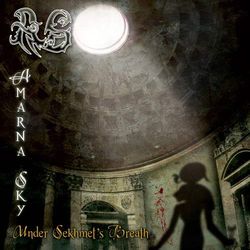
Amarna Sky - Official Website


Under Sekhmet's Breath

Brazil Country of Origin: Brazil

Under Sekhmet's Breath
Send eMail
Type: Full-Length
Release Date: December 19th, 2011
Label: Anubis Music
Genre: Doom
1. Crystalline Key
2. Thargelia
3. Of Gnosis And Agony
4. Between Terror And Erebus
5. Desert Twilight
1. Katana – The Moths And The Dragonflies/Katana – Mud
2. To Nanjing
4. Slaughter In The Desert Room
5. Through The Eyes Of The Killer – Filing Teeth
6. Katana – Death Of The Meaning Of Life
7. Tasered/Ice Cage
8. Goodbye Tina
9. Tasered/Removal
10. Stalin Strikes
11. Ten Thousand Cold Nights
12. Katana – Beheaded
1. Beneath The Seven Hators Gaze
2. The Last Scribe
3. Liturgy Of Power
4. Inseparable In Death
5. Resurrection
6. Sekhmet's Breath
7. Temple Of Iconoclast
8. Inner Flame
10. Rapture Of The Ethereal Gate (Pain Empire)
11. Beyond The Horizon (New Version)


Review by Faithless on September 27, 2020.

Coming from Prague, Czechia Voluptas strikes the catacombs of the underground with their debut full-length called Towards The Great White Nothing. Influenced by a bunch of different music genres and ideas, Voluptas, walks the thin line of traditional black metal sound and an experimental-adventurous trip; mixing sub-genres in a blender of dark psychedelia.

On one hand, the black metal innuendos that Voluptas uses to hit you in the face are the typical ones. For instance, fast tempos, shrieking vocal style, tremolo picking guitars, and some traces of raw/lo-fi production and recording values. What I mean by “some traces” of raw/lo-fi production in the album is that it is not as dirty sounding as other so-called “Trve Kvlt” bands. The black metal parts shown in the opening track 'Crystalline Key' successfully transmit an old school feeling of coldness and grimness in the European vein of bands like Darkthrone and early Ulver.

On the other hand, certain elements are more distinctive from doom bands. Slow chugs and crushing atmospheres. However, those mentioned elements are rather sporadic. For example, in the song, 'Thargelia' Voluptas briefly transforms into a doom band, showing low guttural vocals, dense guitar arpeggios, and an awe-inspiring atmosphere. Subsequently, the band comes back to their original black metal mode, leaving you hungry for more doom inspired passages. Towards The Great White Nothing sounds dark and dismal in general but the doom parts are just sprinkled here and there. The third song named 'Of Gnosis and Agony' changes gears into a more rhythmic, psychedelic, and punky approach. Nevertheless, the rawness of their sound prevails and serves as a common thread between the best of both worlds (traditional and experimental metal).

Then, 'Between Terror and Erebus' returns into the cold Norwegian forests of tremolo picking, raspy vocals, and blast-beats. The closing track 'Desert Twilight' takes from Norway to the Middle East in just seconds. The song starts with some psychedelic Eastern guitar chords that are hypnotic and repetitive, almost like getting you into a trance. Only to be interrupted by the deep gutturals of the singer that lead the song in a different direction again, they have summoned the doom again (just for few seconds but it was glorious). Ok, another shift of sound; now into some tasty black cold and eerie metal. I think this song was perfect to close the record because it mingles all the influences Voluptas brings to the table. The song is a 13 minutes trip into the main influences of the band and gives you a trip to the bowels of hell and back. They even included a saxophone by the end and some jazzy spooky sounds that seemed to go downwards into hell.

Coming back to the first paragraph, I think that Towards the Great White Nothing was a psychedelic trip of traditional black metal spiced up with some doom portions and freaky jazzy random noises. I appreciate the balls that these guys have to experiment with and let their influences take the lead of their music instead of just being a copycat band. However, I was begging for more doom passages to complement the obscurity of the record. The doom parts were rather limited to certain sections of the album and serve as an accessory instead of being more predominant. The same for the jazzy and spooky and experimental parts by the end of the record that even included a saxophone. This record positively surprised me and left me longing for more creative bands like Voluptas that separate themselves from the cattle of “Trve Kvlt” and dive into an adventurous approach. Recommended guys, go and check yourselves.

Rating: 8 out of 10

   958

Review by Faithless on September 27, 2020.

Coming from Prague, Czechia Voluptas strikes the catacombs of the underground with their debut full-length called Towards The Great White Nothing. Influenced by a bunch of different music genres and ideas, Voluptas, walks the thin line of traditional black metal sound and an experimental-adventurous trip; mixing sub-genres in a blender of dark psychedelia.

On one hand, the black metal innuendos that Voluptas uses to hit you in the face are the typical ones. For instance, fast tempos, shrieking vocal style, tremolo picking guitars, and some traces of raw/lo-fi production and recording values. What I mean by “some traces” of raw/lo-fi production in the album is that it is not as dirty sounding as other so-called “Trve Kvlt” bands. The black metal parts shown in the opening track 'Crystalline Key' successfully transmit an old school feeling of coldness and grimness in the European vein of bands like Darkthrone and early Ulver.

On the other hand, certain elements are more distinctive from doom bands. Slow chugs and crushing atmospheres. However, those mentioned elements are rather sporadic. For example, in the song, 'Thargelia' Voluptas briefly transforms into a doom band, showing low guttural vocals, dense guitar arpeggios, and an awe-inspiring atmosphere. Subsequently, the band comes back to their original black metal mode, leaving you hungry for more doom inspired passages. Towards The Great White Nothing sounds dark and dismal in general but the doom parts are just sprinkled here and there. The third song named 'Of Gnosis and Agony' changes gears into a more rhythmic, psychedelic, and punky approach. Nevertheless, the rawness of their sound prevails and serves as a common thread between the best of both worlds (traditional and experimental metal).

Then, 'Between Terror and Erebus' returns into the cold Norwegian forests of tremolo picking, raspy vocals, and blast-beats. The closing track 'Desert Twilight' takes from Norway to the Middle East in just seconds. The song starts with some psychedelic Eastern guitar chords that are hypnotic and repetitive, almost like getting you into a trance. Only to be interrupted by the deep gutturals of the singer that lead the song in a different direction again, they have summoned the doom again (just for few seconds but it was glorious). Ok, another shift of sound; now into some tasty black cold and eerie metal. I think this song was perfect to close the record because it mingles all the influences Voluptas brings to the table. The song is a 13 minutes trip into the main influences of the band and gives you a trip to the bowels of hell and back. They even included a saxophone by the end and some jazzy spooky sounds that seemed to go downwards into hell.

Coming back to the first paragraph, I think that Towards the Great White Nothing was a psychedelic trip of traditional black metal spiced up with some doom portions and freaky jazzy random noises. I appreciate the balls that these guys have to experiment with and let their influences take the lead of their music instead of just being a copycat band. However, I was begging for more doom passages to complement the obscurity of the record. The doom parts were rather limited to certain sections of the album and serve as an accessory instead of being more predominant. The same for the jazzy and spooky and experimental parts by the end of the record that even included a saxophone. This record positively surprised me and left me longing for more creative bands like Voluptas that separate themselves from the cattle of “Trve Kvlt” and dive into an adventurous approach. Recommended guys, go and check yourselves.

Rating: 8 out of 10

   958

Review by Yener on July 29, 2019.

Being a longtime fan of Nile, and Middle Eastern sounds and culture in general, it only made sense for me to review this album.

What we have here is Amarna Sky, a band hailing from Sao Paulo, Brazil. Not really the place you would expect for a band with tons of Eastern influences. That does not matter in the least though, as obviously music is universal. If anything, I think it’s really refreshing and of course very different from the other metal being produced in Brazil.

“Beneath the Seven Hators Gaze” opens up with a moody, dream like guitar sequence, which instantly got my nod of approval. Though intros like this are done to death and very cliché, if done correctly like it is here, the result is positive. Around a minute or so into the song, the guitars and drums kick in, giving us an important glimpse as to what the remainder of the album will sound like. The drums sound natural, which is a nice surprise, and the guitars sound beefy and thick. The song picks up pace, and again to my surprise, the track that follows it is not a flurry of notes or insanity, but quite subdued. So out comes “The Last Scribe”, growling, with a thick, doomy riff. What really caught me off guard, though, were the vocals. They’re clean! That’s right. The last thing I would have expected, to be honest. Once I got rid of the initial “whoah?”, I decided that you know what? This works. This really fucking works. And this guy can sing. Again, another breath of fresh air, as I was expecting deep, vicious growls. I’m glad the band didn’t play it safe and went for another route.

The riffs throughout the album are mostly simple, groovy doom riffs, but done well. Take the riff in “Liturgy of Power” and the main riff in “Temple of Iconoclast” – they are just ballsy, doom riffs with enough Middle Eastern fire to make them interesting. The latter song also has quite an incredible solo section, definitely worth checking out.

The most important aspect of this album to me is the atmosphere, which I greatly approve of. It sucks you right in and takes you on a musical journey that will detach you from the real world for almost an hour, as it should do. This is not without a few gripes, however. Sometimes, the album can get to be a tad repetitive. Maybe it’s because of the music I usually listen to (technical death or free form jazz), but sometimes things can drag on. There aren’t enough “gear changes” as I like to call them, and the metronome really doesn’t change throughout. While certainly interesting to listen to, I found that there aren’t enough “peaks and valleys” as a whole, so you really have to be in the proper mindset to listen to the album. It’s not a “go to” type of album at all. When thinking about it though, that’s not really too bad of a thing. This is definitely one of those albums which needs to be listened to from start to finish, without interruptions.

Probably my biggest critique regarding the album are the lyrics. My opinion is that if you use clean vocals (not that they don’t growl from time to time) your lyrics just gain that much more importance. A line like “Walking through the heat, of the desert sands” is simply not interesting enough and sounds a bit forced. A little more imagination could have been used for the lyrics throughout the album. 

The final aspect that makes this album stand out is the final track, “Beyond the Horizon”, featuring Karl Sanders of Nile. This is awesome for two reasons; the first is that Karl is a gracious guy to lay down two amazing (not to mention long) guitar solos for an up and coming band from Brazil. The second, it’s fucking Karl Sanders, and the leads he delivers here are pretty breath taking. His licks twist and turn like snakes, snapping, snarling, with massive bends and a fury of notes all weaved around the track perfectly. Also, a very thoughtful way to end this musical journey, so I tip my hat to the boys.

If you’re looking for some different, quality metal, you can do no wrong here. Everything is played well, with good, solid songwriting. It can get a bit repetitive at times, but trust me, there are certainly gems to be found here. And the blistering desert sun looks bright indeed for these guys in Sao Paulo.

Rating: 7.9 out of 10

   958

Review by Yener on July 29, 2019.

Being a longtime fan of Nile, and Middle Eastern sounds and culture in general, it only made sense for me to review this album.

What we have here is Amarna Sky, a band hailing from Sao Paulo, Brazil. Not really the place you would expect for a band with tons of Eastern influences. That does not matter in the least though, as obviously music is universal. If anything, I think it’s really refreshing and of course very different from the other metal being produced in Brazil.

“Beneath the Seven Hators Gaze” opens up with a moody, dream like guitar sequence, which instantly got my nod of approval. Though intros like this are done to death and very cliché, if done correctly like it is here, the result is positive. Around a minute or so into the song, the guitars and drums kick in, giving us an important glimpse as to what the remainder of the album will sound like. The drums sound natural, which is a nice surprise, and the guitars sound beefy and thick. The song picks up pace, and again to my surprise, the track that follows it is not a flurry of notes or insanity, but quite subdued. So out comes “The Last Scribe”, growling, with a thick, doomy riff. What really caught me off guard, though, were the vocals. They’re clean! That’s right. The last thing I would have expected, to be honest. Once I got rid of the initial “whoah?”, I decided that you know what? This works. This really fucking works. And this guy can sing. Again, another breath of fresh air, as I was expecting deep, vicious growls. I’m glad the band didn’t play it safe and went for another route.

The riffs throughout the album are mostly simple, groovy doom riffs, but done well. Take the riff in “Liturgy of Power” and the main riff in “Temple of Iconoclast” – they are just ballsy, doom riffs with enough Middle Eastern fire to make them interesting. The latter song also has quite an incredible solo section, definitely worth checking out.

The most important aspect of this album to me is the atmosphere, which I greatly approve of. It sucks you right in and takes you on a musical journey that will detach you from the real world for almost an hour, as it should do. This is not without a few gripes, however. Sometimes, the album can get to be a tad repetitive. Maybe it’s because of the music I usually listen to (technical death or free form jazz), but sometimes things can drag on. There aren’t enough “gear changes” as I like to call them, and the metronome really doesn’t change throughout. While certainly interesting to listen to, I found that there aren’t enough “peaks and valleys” as a whole, so you really have to be in the proper mindset to listen to the album. It’s not a “go to” type of album at all. When thinking about it though, that’s not really too bad of a thing. This is definitely one of those albums which needs to be listened to from start to finish, without interruptions.

Probably my biggest critique regarding the album are the lyrics. My opinion is that if you use clean vocals (not that they don’t growl from time to time) your lyrics just gain that much more importance. A line like “Walking through the heat, of the desert sands” is simply not interesting enough and sounds a bit forced. A little more imagination could have been used for the lyrics throughout the album. 

The final aspect that makes this album stand out is the final track, “Beyond the Horizon”, featuring Karl Sanders of Nile. This is awesome for two reasons; the first is that Karl is a gracious guy to lay down two amazing (not to mention long) guitar solos for an up and coming band from Brazil. The second, it’s fucking Karl Sanders, and the leads he delivers here are pretty breath taking. His licks twist and turn like snakes, snapping, snarling, with massive bends and a fury of notes all weaved around the track perfectly. Also, a very thoughtful way to end this musical journey, so I tip my hat to the boys.

If you’re looking for some different, quality metal, you can do no wrong here. Everything is played well, with good, solid songwriting. It can get a bit repetitive at times, but trust me, there are certainly gems to be found here. And the blistering desert sun looks bright indeed for these guys in Sao Paulo.

Rating: 7.9 out of 10

   958