
Afterbirth - Official Website
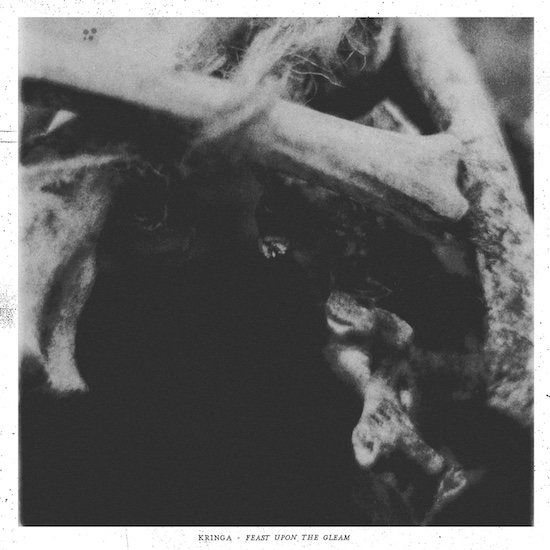
Feast Upon The Gleam |
United States
 |
|---|

Buy on: Bandcamp
Type: Full-Length
Release Date: August 21st, 2019
Label: Terratur Possessions
Genre: Black
2.
Spiritually Transmitted Disease
3.
Girl In Landscape
4.
Everything In Its Path
5.
Never Ending Teeth
6.
Minimum Safe Distance
7.
Rooms To Nowhere
8.
Swallowing Spiders
9.
Dreaming Astral Body
10.
Black Hole Kaleidoscope
11.
Four Dimensional Flesh
2.
Unwind The Gap Anew!
3.
To Sleep In Vermin Velvet
4.
Eroding Passage
5.
Cloak Of Unbound Fears
6.
Eyers Of Stone
Review by Faithless on June 28, 2020.
When you listen to the word brutal death metal, you picture bands like Devourment that move into the scene that depicts dimensions full of guts and gore, putrefaction, and degeneration. Putrefying vocals of almost unbearable noise that has been copied for thousands of bands all around the world. Most of the bands in the brutal death metal/slamming scene do not propose shit; they just replicate what the previous bands did and so on. However, I think Afterbirth with their latest record by the name of Four Dimensional Flesh is aiming to change some stereotypes in the brutal death metal scene.
Ok folks, as soon as the album starts your head is smashed by brutality mixed with complex rhythmic-groovy sections. These guys brew the brutal death metal with technique in their instruments, they are fast and relentless but there also moments to slow down and do the typical break downs that defined this sub-genre. It’s not a matter of showing off how fast they're; it’s a matter of delivering clear-cut execution, no fillers only killer tracks. All tracks are examples of the guttural performance but also shows tremendous control and vehemence to execute labyrinthine pieces of music. The concept shows layers of depth and does not just scratch the surface of the average brutal death metal band, both lyrically and musically. In my opinion, Four Dimensional Flesh is a more sophisticated and evolved version of your run of the mill brutal caveman band. For instance, take your time to read the lyrics and you will realize that they focus on science fiction, abstract and ethereal topics. Title tracks like 'Black Hole Kaleidoscope' and 'Rooms To Nowhere' are just some examples of the lyrical themes the band uses to escape from the gory images that seem to pollute the music environment.
I could evidence that Afterbirth spiced up their brutal death metal with some groovy tech-death moments. However, hold your horses, don't expect any Braindrill or Archspire moments here. Afterbirth does not want to say “hey, look at my 5-string bass or 8-string guitar”, these guys are brutal for real and express their musicianship through overwhelming instrumentation. I think they are more similar to the likes of Cephalic Carnage, Blood Incantation, and Suffocation. The production is crystal clear and allows you to hear every single bass line, cymbal hit, riff, or guitar distortion. Vocals are very guttural and gurgling during some moments. The singer offers a variety of vocal textures that are very ad-hoc for the intricate nature of the record. The tracks change gears between technical execution and contemplative landscapes of inner self paranoia. For example, there are some instrumental songs like 'Girl in Landscape' and 'Dreaming Astral Body' that serve as a primordial cement that links the album together and builds into a kind of mysterious mind-bending and oneiric time-traveling experience.
All things considered, 35 minutes is a very economical listen but believe me when I say that Afterbirth does not waste any note, every passage is made with an intention and I mean it. These guys are brutal for real and they can write memorable songs; and mixing the brutality with complexity ends up in an interesting experiment that worked out for me. The album offers different dimensions of ferocious sonic landscapes that refresh the scene and the subgenre, breaking stereotypes and archetypes previously established. I have to say that I enjoy bands like Devourment, Cannibal Corpse, or Disgorge but from time to time is good to get out of the cave and get into a spaceship.
Rating: 10 out of 10
1.41kReview by Felix on October 4, 2020.
A menacing tremolo picking opens Kringa’s first full-length. The band from Austria is back and it still celebrates pretty unorthodox black metal. On the one hand the lead singer is far away from the typical nagging, growling or commanding presentation that thousands of other front men of the genre offer. He combines a shouting, almost punk-like approach with a desperate undertone and this way of proceeding alone ensures an individual appearance. On the other hand the music has absolutely nothing in common with the simple song patterns punk is well known for. The playtime of 45 minutes and the number of tracks (six) indicates the complexity of the material. Almost any form of conventional structure is frowned upon and there is absolutely no sense in watching out for verse-chorus-verse schemes.
Kringa put a lot of parts together in order to construct complex monuments, but they understand to do it in a clever way and without destroying the flow of the single pieces. Naturally this is no easy listening music, yet the songs also do not suffer from inaccessibility. The guitar work is mostly fantastic, either galloping ('Eroding Passage') or dangerous ('As Kaleidoscope Patterns Arise'). It escorts the lead singer who is able to convey different (but always dark) moods. His charisma further enhances the strong instrumental performance. Okay, in a few moments the songs sound like their own live version, for example during the last minute of the aforementioned 'Eroding Passage'. The track meanders aimlessly until its end. But maybe this is just the sonic portrayal of the eroding passage? It doesn’t matter. All songs impress with their variety which is never at the expense of sinister vehemence or black spirituality. Of course, the band is also able to integrate relatively melodic sequences, but their main function is to express melancholy, sadness and loneliness.
Feast Upon The Gleam can rely on more than solid production. Sometimes the snare drum vanishes in the background in view of the dominant guitars, but that’s not a huge problem. Five or ten percent more transparency would have been helpful. Nevertheless, the songs have enough power to create a stimulating black metal scenario. Kringa paint very bleak and simultaneously very expressive pictures that develop their own kind of fascination. There are only very few sections that forget to cast a spell on the listener. Given this situation, two things must be mentioned. The popular form of (mostly Finnish) black metal is a fantastic form of art and Kringa’s music has not much in common with this more or less globally dominating approach. Yet regardless of their different understanding of the subgenre, the Austrian dudes have released an inspiring and temperamental album that spreads the pure mentality of black metal in a sophisticated manner. As long as the guys are able to keep the balance between slightly experimental sounds and thundering sections, they definitely enrich the worldwide scene.
Rating: 8.7 out of 10
1.41k