Immolation - Official Website - Interview - News
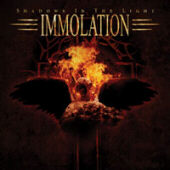
Shadows In The Light |
United States
![]() |
|---|
Review by Rosh on July 30, 2021.
The New York scene is frequently seen as pivotal in the development of technical and brutal death metal, and moreover, its brand of old school death metal was more readily detached from thrash than the Floridian variety. With that, it seems, comes a colder, more nihilistic approach as opposed to wrath and rage. Such descriptors are especially a dead ringer for the mighty Immolation, one of the most consistent and calculating purveyors of blasphemous death metal.
This band is accused far more rarely of being "edgy" than acts such as Deicide, since their lyrics, for all their irreverence, approach anti-religion from a more intellectual angle, bringing up real detriments to society that faith poses. Their heralded debut, 1991's Dawn Of Possession introduced this lyrical approach as well as a flat-out bizarre musical personality based in dissonance and foreboding atmosphere, driven by Robert Vigna's masterful guitarwork. Ross Dolan's vocals on that landmark release reflect the times, as although his vocals retained not a trace of thrash-derived shouting and were guttural, they were higher, and possessed more of a slithering quality, than his delivery on the subsequent Immolation albums. 1996's Here In After had significantly lower growls, but it was 1999's overlooked monolith Failures For Gods that not only saw Dolan realize his full potential for devastation, but also saw the band at their most aggressive yet, while retaining their dissonance.
This is not to say that I always reach for this release before the '96 one (though both slightly edge out Dawn for me), as Here In After's slower breaks and build-ups make it more of a thinking-time album than Failures For Gods. Nonetheless, Failures is extremely cold for the ceaseless destruction it offers, for instead of being as emotionally moving as its predecessor, it carries a more apathetic attitude, one that reflects the cover art - watching the suffering masses as opposed to being among them. The lyrics venture into more political territory than before, an avenue the band would venture down more later, but here it adds character and context to songs like opener 'Once Ordained' and the title track, the latter of which is quickly working its way up to usurp 'Nailed To Gold' as my favorite Immolation song. Concepts like corrupt politicians gaining their foothold through religion are a real concern and warrant the volatile "look how stupid you all were" type lyrics, enhanced with panicking, squealing riffs peppering the pre-chorus and chorus. Multi-sectional are the cuts on Failures For Gods despite their more continuous aggression, for the songs often double back for a second attack. The way 'No Jesus, No Beast' transitions to its not-so-subtle "...can you hear us? Death to Jesus!" bridge after the diatribes that are the first two verses and choruses is chilling every time, leading into it with a brooding riff that can obviously lead nowhere pleasant.
I suppose you could call this album a bit more "catchy" than its predecessors, but it's got more in common with being precise, sharp, and angular like the technical death metal Immolation influenced than anything resembling an attempt to be accessible. The verse of 'Unsaved' can perhaps be seen as the Mk. II version of the one from 'Those Left Behind' off the debut, this time offering a more ear-piercing groove, something Dolan's deeper vocals could be accredited for. On that same note, the chorus of 'God Made Filth' ("Writhing and crying, for a savior you're calling...") practically pierces the eardrums so hard they burst, something mirrored by the shrieking staccato riff that follows Dolan's lines. 'The Devil I Know' is a fairly predictable cut to conclude a more serious, bitter death metal album like this one, but it closes the album on a convincingly somber note, as I'm sure any metalhead could hear that outro solo alone and know it's to serve as the soundtrack for the flames totally engulfing the ruins created by whatever tracks preceded it.
Failures retains all but one member from before, and that's drummer Craig Smilowski, who's been replaced by the mildly more technical Alex Hernandez. Hernandez stayed with Immolation for the two albums following this one, but the production on Failures does him the most justice. Honestly, this drum sound is one thing that really keeps me coming back. Pummeling it is, but beyond that very obvious death metal adjective, it's just tasty. It gets on some people's nerves, and I can respect that, but no one can accuse it of being hollow or bland. I think it turns this into a steamroller of an album and gives it a leg up over every other Immolation album in the percussion department.
In the end, we've got one meaty album sandwiched between two classics, Here In After and Close To A World Below. Is it because a lot of people don't have a high enough threshold to tolerate that many helpings of no-nonsense death metal from one band, that this monolith gets forgotten about? That would be unfortunate, as they're missing out on one of death metals coldest. The more pressing question is, though, are people not already checking this one out if for no other reason than the gun shows on the cover art? The only failure here is that people are overlooking that kind of muscle tone.
Rating: 9.5 out of 10
519Review by Fran on July 30, 2021.
Failures For Gods is the name of Immolation’s third record, which came out after 11 years or so of spawning obscure death metal devoted to the vile and malicious. You can start seeing some glimpses of maturity in the band’s sound, this time songs got a little longer and even better coined composition wise. Their brutal onslaught remains fast and vicious as hell but there are some changes, like the incorporation of more slow and mid paced passages and some other gimmicks like the inclusion of some clean guitars in the title track, that slays as always. Something I like about Immolation’s music is precisely that it doesn’t rely on the defying guitar distortions to sound evil, if you take those melodies and play them clean they would still sound like the whispers from the left hand path, fucking satanic.
There’s also a change in the band’s line up. Alex Hernández replaced Craig Smilowski on the percussive duties, a bloody piece of a drummer too -maybe even a little better- especially in the cymbal work, both drummers have a remarkable speed on their feet and arms. His fills are brutal, and his double bass drum sounds right in your temple every strike after another. The drumming was recorded so neat and acoustic, not like todays over triggered productions, it sounds so natural… just the drum kit and the mics. Bass guitar gained more presence, but it is still relegated in the back row, vocals instead are perfectly recorded and Dolan’s blasphemies spitted right from the diaphragm, as Satan commands.
Other change I notice is the guitar tone, this time it is not as thin and acid as on their previous records, but it is more convincing and emphatic. This gives a whole new dimension in the weight of the band’s sound, already enriched with the heaviness of their low tuning and their special talent to summon melodies in the name of the cold and the dark. There are more dissonant chords than before melted in and between their riffs, and I feel a slight black metal influence in some other riffs here and there, especially because of the preference of using a chord-like stroke in the strings rather than the usual insanely fast tremolo palm muted picking they are known for. There are some slower heavy breakdowns too, where these elements start giving the band’s music a more abstract sense, because of the “abruptly interrupted” nature of the riffs, timed strangely. The slow drum beats also helps in the development of this feel, giving a nervous, tense and unpredictable shape to their hymns.
These differences in riffing are not present in every second of the album, which also features the usual fast and aggressive parade of pummeling metal of death Immolation never forgets. This album is an example of a band that has evolved in every effort but never forgets their roots, raw and evil death metal. Their new sense of measuring the song’s beat and emotions in a deeper and more meaningful way with more perspective in composition, is a testimony of that matter.
Rating: 9.3 out of 10
519Review by Fran on December 9, 2020.
Close to a World Below is the band’s fastest and most ambitious record, with a battering sound that threatens to demolish everything in his path. The drums are set loud enough to emphasize the accelerated violence of the music rather than its dark and evil side, carefully done without drowning the strings. Shadows in the Light is an attempt to go back to that reckless brutality; with the polished sound they gained on Unholy Cult. The result is satisfactory, this album is a turmoil of asphyxiating darkness and agitation. It is turbulent but also meticulous with the melodies and sometimes unpredictable, armed with odd timings and tempo changes that won’t necessarily dictate how you headbang to it. If you want “squared” music you should pick some noisy grind instead.
Shadows in the Light it's heavier than its last couple of predecessors but it doesn’t stand out just for the destructive riffs, their sinful nature is latent at any moment, this is one of Immolation’s darkest works too. Song structures dwell between occasional heavy breakdowns with high pitched harmonics and drum beats thought to go along with the riffs. Fast and full of anomalies but most of all frantic and malevolent riffs accompanied by relentless blast beats are present too, and so are those dense guitar melodies whose only purpose is to push fear and despair into the heart of men. The gifted soloing this couple of guitarists display is always worthy of a mention and in this offer solos are delivered accurately and sharply with psychotic precision and lead changes between them several times. After so many years of dealing with high quality death metal I can’t see this band recording a bad album… They have been constant and loyal to the genre’s pillars of evil and brutality but at the same time have always been trying to write more elaborated music album after album.
This album's principal theme is that those decorative and almost doom passages are used often. Shadows in the Light main dish is Immolation’s classic belligerent and blistering trademark riffs. Of all the albums that follow Unholy Cult this is their most angry record. It also fits the “new'' neat and organized sound they coined from that album perfectly, it kind of put things in order. Drumming has been one of Immolation’s strongest points now that riffs aren’t 100% of the time as complicated as they were in their first decade of breeding NYDM. It’s fucking meteoric, blastbeats when they need to speed up things a little and punishing double bass drums for the slower and heavier riffs. The cymbal work pulled out on this and every record is the finest on Immolation, take for example the break in the middle of 'Shadows in the Light' and how he closes the hi hat unexpectedly in between his patterns, the guy sure knows what he is doing and he’s a fucking beast, even better than former member Alex Hernández I dare to say. Vigna and Taylor dynamic duet on the 6 strings has now a more solid body since the distortion they discovered on Unholy Cult, another highlight to the band’s sound. Ross Dolan’s vocals seem to be timeless, his diaphragm isn’t aging and his growls are as deep and crackling as the first day. His hatred for the Judeo-Christian beliefs hasn’t diminished with the years I guess, he really means what he yells. In fact, as recording tools go more and more advanced we can hear with more fidelity his vocal prowess. His bass guitar is again below the layer of guitar tracks in the mix, you can’t hear it individually so well but unlike in their first records, you can at least feel it and hear how it gives more weight to the recording overall.
Rating: 9.4 out of 10
519