Cirith Ungol - Official Website - Interview


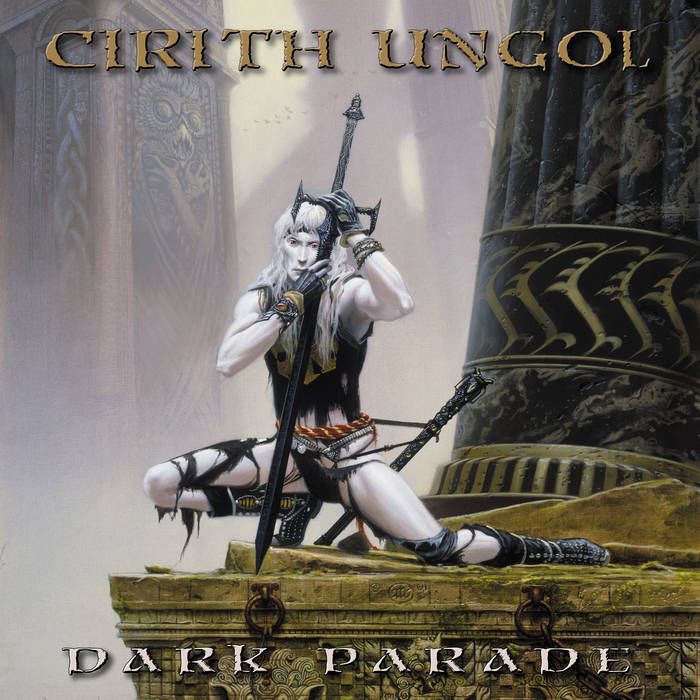
Dark Parade

United States Country of Origin: United States

1. Velocity (S.E.P.)
2. Relentless
3. Sailor On The Seas Of Fate
4. Sacrifice
5. Looking Glass
6. Dark Parade
7. Distant Shadows
8. Down Below


Review by Stellarium on April 4, 2024.

The English language is a detailed, beautiful, intricate gift to the art of communication, sometimes mastered and romanced by Maestros of Verbosity, and sometimes under-used and mis-represented by those who simply can't find enough words and diversity to speak their mind (of which this reviewer is deeply guilty).

Sometimes, there aren't even enough words and descriptors to even comprehend the feelings and emotions through such simple wordplay. Without the slightest shade of a doubt, this album is absolutely one of those moments where no words can document the absolute momentousness of the unfurling atmosphere before me.

"Tales" is littered with the kind of finesse that no group of musicians should be able to produce a mere three years into their inception. The Introduction is beautiful and very mysterious, carving both a sense of wonder and an eerie intrepidness. It seems to use a synthesizer to present a foggy-sounding motif, laced with female choral effects and bells. The tones and effects aren’t something I am able to place, but the mood on the opener is, and it genuinely sounds like the album art.

As openers go, you can do significantly worse than “Into Hiding”. It’s one of the last carryovers from the doom/death era, as it starts with a melodic guitar riff, before spiralling into Tomi’s trademarked growls. The chorus is ripe with clean vocal goodness, marking one of the groups live favourites to this very day. The juxtaposition between this and the catchy melody is notable as a suitable avatar for Amorphis’ sound, even 30 years along. The general formula of the above is the main crest that Amorphis proudly wear; often adding instruments to further the heaviness (or melody – delete as applicable) of the particular song. The formula doesn’t always work though as “First Doom” remains the sole track on here that hasn’t managed to cement itself into my heart. As great as it would be on albums prior, it doesn’t seem to fit here, forging a rare disconnect between story and listener.

Then we have other classics such as “Black Winter Day” and “Drowned Maid” which follow the well-trodden path of pacey, Indulgent melo-death with Atmosphere.The album is well remembered and well-loved for a variety of reasons (it’s rather rare for every track to be instantly recallable or at the very least, familiar) on hearing the first few notes. Rarer still is it for them to be looked upon with an overall fondness usually reserved for a happy childhood memory.

What truly, truly makes this album worthy of the Pantheon it finds itself on is the atmosphere, contributed largely towards by the production. The guitars are mixed perfectly, being fully audible and at centre stage, without the sacrifice of the supporting instrumentation. Every note of the bass is crystal clear and thunderous when it needs to be. The drums are pronounced and the three fully perform their roles as time and rhythm keepers flawlessly. Tomi’s vocals are also clear and stand out above all of the instruments without making any any into noisy spectators. The effects and at times unusual sounds push this album way out of the boundaries of any standard metal trope, and again, it has an uncanny knack of actually sounding like the album art does – mysterious, foggy, but inviting and otherworldly.

I also recommend the closer "Magic and Mayhem" for a perfect example of the albums flavour. An epic guitar lead plays throughout, recalling that Iron Butterfly classic whose name I forget. Once again, the unusual synth sound separates the intro and first few bars. As the song begins, it becomes a much heavier death metal piece, with doomy guitars and more death growls by Tomi. There's even a guitar "wah" every couple of bars which I don't recall hearing anywhere else in Amorphis' early catalogue.

However, not everything is idyllic and sensual. For some reason, the band decided to include a cover of "Light My Fire" by the Doors. It doesn't add anything to the zeitgeist of this release and quite frankly would be better as a B-side to an earlier or later single release. It's fine, I suppose, but just doesn't go with the rest of the album. I suppose if I am being critical, I can acknowledge that it gives the artists an extra opportunity to showcase their diverse array of influences and abilities.

The majesty of this album is a hill I will absolutely die on, not only securing a "comfy" sensation when listened to, but somehow improving on each listen, with every song giving up more of its secrets. Therefore, Amorphis' only true flirtation with melodic death metal has left so so many people wondering "What If?", but as we all know, this wasn't the path for Amorphis to continue down.

Definitely a case of "Smile, Because it Happened!". It even sounds like the album cover - so grab your Fishing Rods and your Wicker Hat as a calming, one-of-a-kind experience is located within this Pandora's Box. Instead of Cenobites, we get inspired and unique Metal, forged from the famous words of the hallowed Kalevala.

Rating: 9 out of 10

   1.50k

Review by Nathan on April 4, 2024.

I got into Amorphis backwards; I was first introduced to them a few odd years ago by the singles "House of Sleep" and "Silent Waters" and went from there. I still enjoy those songs (and the albums they're on) for what they are- straightforward pop-rock numbers with more sweet saccharine melodies and catchiness than is probably healthy to stomach. Whether or not the fact that their new era was my first exposure to the band should color what you think of my perception of the album is debatable, but it's worth mentioning nonetheless. Either way, perhaps it doesn't really matter where you start considering the fantastically varied nature of Amorphis' discography; there's just so many different styles and genres covered but, as cliched as it is, they all sound similar because all the albums incorporate that trademark Amorphis sound. That unique vibe this band gives off works well in certain contexts; the melodic death/doom setting seen on Tales from the Thousand Lakes is not one of those.

The year is 1994. Amorphis is on the heels of a musically solid (albeit lacking any standout qualities) release in The Karelian Isthmus but that was perhaps the only point in the band's history where they sounded fully comfortable playing heavy metal music; every subsequent release sounded like they were trying to distance themselves from the genre (but for some reason they always retained a small portion of it, even if the inclusion of it in a given song seemed arbitrary). Concurrently, death metal itself was having a bit of an identity crisis; Entombed just turned to beefy rock music with Wolverine Blues, Heartwork had been released and Slaughter of the Soul was on the near horizon. Melodic death metal was on its way to becoming A Thing, and this ending up laying down a lot of the groundwork for Finnish bands to come; more specifically, the melodic parts of the album still rooted in metal show a very strong connection with the more somber sections of melodic death/doom bands like Insomnium, Swallow the Sun et al. This is, in that sense, a genre-defining album; this is most certainly an album ahead of its time and a lot of this particular doomy melodic stuff on Tales from the Thousand Lakes hadn't quite been seen around yet and would end up being borrowed and incorporated by many others. The difference between this and later bands in this vein, though, is that for the aforementioned bands the style had already been established and as a concept was refined and cohesive; here, the seams are much more evident and the different styles at play within are like atoms, hovering near each other but never quite forming into a bonded molecule. It's very easy to dissect Tales from the Thousand Lakes in that sense to see exactly what makes up this melodic death/doom molecule; it's one part death metal, one part doom metal, and three parts meandering prog-rock styled melodies that would come into much fuller bloom over the next few albums. Here, where they are still behind what is for the most part a metal aesthetic, they sound horribly restricted and limp-wristed. The parts that most resemble melodic death metal in the leads and riffs are probably the weakest parts of the album overall; lacking the draw and accessibility of a good prog rock song as well as any of the punishing qualities of the death or doom metal as a result of being an insecure straddling of the two poles.

Part of the reason that the more melodic death/doom leaning songs like "Into Hiding" and "The Castaway" even being a formative example of the style can't get me going at all is because they're stitched into a horrendously assembled patchwork of more pure death and pure doom segments and songs as well as straight out upbeat rocking numbers like "In the Beginning". There's a lot of different styles being thrown into the mix suddenly and somewhat unpredictably, which I suppose is why people give this album the "progressive" tag from time to time but this is the worst kind of thing that gets dubbed as progressive- a mishmash of ideas scattered haphazardly with no real narrative tying them down. Some things work better than others ("In the Beginning" is an enjoyable tune at times even if it's really not on any deep level) and some songs such as "Magic and Mayhem" have a really nice groove that shows traces of their origins, but this is really the last time we get that true death/doom dirge sound in full form and it's only in bits and pieces. It's not quite as pummeling as it was in earlier years, either. The melodic-death-pseudo-prog that surrounds it doesn't make the listener juxtapose the two but rather notice the similarities as they're more alike than different, and it weakens the power of the death metal as a result. The production is rather thin and not really suitable for what they were trying to accomplish and the harsh vocals are reduced to a muddy gurgle that seems completely detached from everything going on around it, not really lining up with the music any way but rhythmically.

The album's structure and approach is further derailed by an additional couple of glaring and obvious flaws. The clean vocals are just...really bad. Noticeably warbly, nasally and just plain fucking weak. They're not used as frequently as they were on the album that followed, Elegy, and while I think Pasi Koskinen did cleans on that album they're equally awful; the only difference between that album and this one is on Elegy you're reminded of how bad they are all the time while Tales from the Thousand Lakes only brings it up occasionally at parties right when you're about to get with a girl. Both the clean vocals and the keyboards take the center stage of the music a few times here and there; a majority of the time they interrupt the flow of the album and are the shit thrown at the wall that didn't stick for Amorphis. The keyboard is on what, three tracks? It's just some bland, effortless sugary keyboard melodies included with no rhyme or reason as to their position and purpose in the song; that doesn't make a band "progressive" and I'm tired of that being the case with a lot of people. Melodic death metal bands are the most frequent offenders of this and I know these guys were one of the first ones to do it but being the first band to execute a bad idea isn't much to brag about, much less so when it ends up becoming a sort of stereotype of an entire fuckin' subgenre.

There's a couple dim spots of light resembling the band's golden oldies and most of the enjoyable parts of the album are the ones where they ditch the metal leanings and go super uplifting and accessible, showing the buried beginnings of their later career but this is an awfully constructed mess of an album with no idea what it wants to be. The good ideas don't work the way they should and they're surrounded by more bad ideas. Those bad ideas ended up being responsible for a lot of the trends in melodic death metal I cannot stand, and this album was the beginning of the low point of far and away the weakest point in this band's discography. If you're a fan of this album reading this, Tales from the Thousand Lakes, though ahead of its time, is an underachieving incoherent pile of consonant garbage and you should feel bad for liking it; for anyone new and unfamiliar to Amorphis' sound, start from either the latest or earliest points in the their discography; better to have your meat, potatoes, veggies and dessert eaten separately rather than to consume them as one big pile of unintelligible mush.

Rating: 1.9 out of 10

   1.50k

Review by Jack on August 16, 2001.

One of 1994’s finest masterpieces of metal “Tales from the Thousand Lakes” sees Amorphis incorporating elements of traditional heavy metal, doom, death metal and '70s progressive rock to craft a groundbreaking album in what became a stunning discography. Lyrical concepts from the Finnish national poem book, ‘The Kalevala’, helped establish the foundation of how “Tales from the Thousand Lakes” tempo would be orchestrated. Utilising strong keyboard sections, mixed with Amorphis’ strong Finnish history and folkish elements, they released a multi-metal genre, faceted album.

Tomi Koivusaari bellows his fierce death voice, (which has now been put down on the past Amorphis incantation, “Am Universum”), combined with some really catchy, folky clean vocals in and between lead guitar riffs by Esa Holopainen, (which also incidentally, are of an extreme catchy nature, overall this is a real catchy, melodic death album).

Amorphis can seem to do no wrong at all, although I really dig their latest stuff (“Am Universum” and “Tuonela”), their older stuff will always hold a special place deep inside me. “Tales...” best tracks are ‘Black Winter Day’, (the track your average metalhead knows Amorphis through) and ‘Forgotten Sunrise’. Ultimately Amorphis to me will always be known as “Tales from the Thousand Lakes”, no matter how many more ‘accessible’ albums they endeavour to produce. Whilst not being on par with more furious melodic death bands and albums, “Tales...” holds an alluring scent all of its own. A landmark album from a remarkable outift.

Bottom Line: For 1994, this stuff shredded, in our present day and present period of metal, the musicianship and quality of the record is still fucking good. Essential chapter in the ever-changing Amorphis saga.

Rating: 9 out of 10

   1.50k

Review by Vladimir on September 24, 2023.

If someone would have asked me what my favorite heavy metal band is, it would be hard to tell because there are so many names that come to mind, but I can guarantee you that one of them would certainly be the veterans of US heavy metal, Cirith Ungol. Many fans of epic heavy and doom metal regard Cirith Ungol to be a cult band, especially because they are one of the earliest heavy metal bands whose lyrical themes dabble in epic fantasy and science fiction. The band’s mostly known for their everlasting tradition of using Michael Whelan’s artwork depicting Elric of Melnibone from Michael Moorcock’s books, and so Elric would become and remain the band’s mascot ever since their debut album Frost And Fire. Of course, Cirith Ungol isn’t the only band that used Michael Whelan’s art or the only band that referenced Elric or anything else Michael Moorcock related. Many other bands have done the same before and afterwards, but another great example I could think of is the space rock band Hawkwind, who made an entire Elric of Melnibone themed album "The Chronicle Of The Black Sword" (1985), which I highly recommend that you check out. I remember Cirith Ungol as long as I could remember, ever since I discovered them through my longtime friends who are into oldschool heavy metal, but for some reason I didn’t get into them until some years later in 2019/2020, just before the release of their fifth album Forever Black. After all these years of listening and worshipping Cirith Ungol, I still wouldn’t be able to tell which is my favorite album because I personally love every one of them respectively. I adore Frost And Fire for its catchiness and energy, I love King Of The Dead for its raw and doomy atmosphere, I praise One Foot In Hell for its heaviness and aggression, I worship Paradise Lost for its powerful and epic songwriting and I bow down to Forever Black for marking the band’s epic return after more than 20 years. Simply put, Cirith Ungol is one of the greatest heavy metal bands of all time, period. Although I was amazed by their previous album Forever Black, little did I know that the recently announced follow-up album would be only a couple of months away, and I certainly had high hopes that the album would do more than just bring back Elric the White Wolf. The sixth album Dark Parade is set to be released on October 20th via Metal Blade Records, and I can definitely guarantee that this is one of the most anticipated heavy metal releases of the year. Enough of my fanboying, it’s time to follow the White Wolf on his perilous journey, where we shall once again behold the mighty runeblade Stormbringer and experience the wrath of Arioch and his Chaos Magick. 

Head start with the opener track 'Velocity (S.E.P.)' and we are instantly welcomed with the good old classic Cirith Ungol we know and love. The catchy heavy metal riffing, frequent guitar melodies and soloing, Tim Baker’s wicked singing voice and banging mid-tempo drums, all of these famous traits that dominated in the band’s discography before, also conquer every moment with all the might and glory on this album. By far one of the finest tunes on this album that perfectly demonstrates the band’s artistic capabilities, is the third track 'Sailor On The Seas Of Fate', which starts off with a beautiful acoustic intro before kicking in with epic and heavy riffing that nicely builds up the fast and kickass finale of the song. Other examples that provide great moments of instrumentation is the fifth track 'Looking Glass' for its frequent guitar solos on top of the excellent mid-tempo riffs, which altogether manage to further expand the band’s epic musical background and then some. All of the great things that you will experience from the start pay off wonderfully with the closing track 'Down Below', which won me over for its acoustic guitar sections that present a great beginning and an epic closure to the wickedness of Dark Parade

The band’s songwriting is top notch as always and they never disappoint, not by a longshot. In a world where songwriting from many classic heavy metal bands starts to show its age, Cirith Ungol is still as wild, heavy, loud and determined as they were in their youth. The riffs on this album are faithful to the band’s signature epic heavy/doom metal style, and although it is very oldschool and traditional, they manage to feel very fresh and modern despite the fact that we’re talking about a band who is over 50 years old. It is a sin to mention the best tracks on this album because they are all great songs with many stand out moments, but the best ones are definitely 'Velocity (S.E.P.)', 'Sailor On The Seas Of Fate', 'Sacrifice', 'Looking Glass', 'Distant Shadow' and 'Down Below'. Without a doubt, some of the biggest points next to the band’s always excellent and fresh songwriting, goes to Tim Baker’s singing voice which is still as fresh and powerful as it was 3-4 decades ago. I mentioned in one of my past reviews that it's seldom seen to have a heavy metal vocalist still pull it off with his or her performance at an older age, but in the case of Tim Baker, that badass voice of his still hasn’t aged and it’s a killer alright. The band once again uses the brilliant artwork of Michael Whelan for their album cover, this time being “Elric and The Sinking City”, which on its own is simply awesome and it fits perfectly with the chaotic nature of Dark Parade. As for the sound production, I simply have to adore how the album sounds strong and heavy, where everything is so well balanced and where every performance is pushed beyond their limits, and yet it’s not too clean or pristine for a modern record. 

So, was it any surprise that I ended up praising this album after all? I think that you already knew that this was going to be the final result since I am indeed in love with Cirith Ungol’s sound and style, and yet again the band proves that they are practically invincible. Dark Parade is indeed another great entry in the band’s discography, but on its own it is a powerful and passionate album that was forged by the great gods of heavy music who put blood and sweat in their work. The album is definitely an “all killer no filler”, but I think that isn’t really a big surprise because Cirith Ungol have always delivered and to make another great album certainly wasn’t hard for them to pull off. For longtime fans of this band, I highly suggest you be there when this album is unleashed into this world, because I can guarantee that the White Wolf will be the triumphant champion once again, and if you so dare to stand in his way, then your soul will serve as a fine feast to feed the hunger of the Stormbringer. 

Rating: 9.2 out of 10

   1.50k