
Aara - Official Website
Eiger |
Switzerland
 |
|---|

Buy on: Bandcamp
Type: Full-Length
Release Date: December 6th, 2024
Label: Debemur Morti Productions
Genre: Atmospheric, Black
1.
Die Das Wilde Wetter Fängt
2.
Senkrechte Welten
3.
Felsensang
4.
Todesbiwak
5.
Der Wahnsinn Dort Im Abgrund
6.
Zurück Zur Roten Fluh
7.
Grausig Ist Der Blick
8.
Alptraum
Review by SzejkElRopa on April 8, 2026.
With my "black metal life" lasting for about one-and-a-half years, I have developed a passion for mountain-themed black metal. This is thanks to the one I mentioned multiple times: one of the best albums I have ever heard, "Alpenpässe" by Minenwerfer. Other outputs by bands from other countries, such as "Halny" by Polish Zawrat, "Versunkenes Reich" by Mörkvind, or even "Der Wanderer im Riesengebirge," were albums I definitely enjoyed. Without a doubt, black metal and high altitudes go hand in hand. While many metalheads associate Switzerland with bands such as Celtic Frost, Samael, or Coroner, I couldn't think of a band that combines the coldness of the Alps and the metal genre that hails from there. A band like this is Aara, who definitely need to be more recognised in the underground scene.
What instantly brings attention from the very first seconds of the album, after the guitars kick in, is the oppressive atmosphere, created mostly by the wall of sound of guitars and drums. While at first I was so overwhelmed by the density of the sound, I quickly got used to it, since there was a bigger story to tell. The main emotions "Eiger" wants to convey are primarily hopelessness and resignation. This can be found in tracks such as "Senkrechte Welten", which shows the melancholic nature of this full-length with the melancholic guitar tone. On the other hand, "Felsensang" is a relentless attack with brutal drums and aggressive tremolo riffing. This is, frankly, one of the best, if not the best, songs on the album. It starts with a mid-paced twin guitar riff, which builds tension to the aforementioned attack. Despite its brutality, it is very memorable and doesn't make the album lose its atmosphere. Furthermore, the song switches between aggressive and more introspective, slower moments, so as to develop a full image of what the album is about. The usage of the acoustic guitar is also crucial in this album. Sometimes it shines through the wall of sound, and other times, it serves as an atmospheric break or introduction. The latter one can be found, for instance, in "Todesbiwak" - it stops the rapid pace of the album for a little bit, and definitely enriches the album. Other times, as in "Alptraum", the acoustic guitar can be heard alongside the wall of sound, evoking the feeling of sadness. On the whole, the album is undeniably emotive, giving a chance to reflect, but also to embrace the heaviness.
The riffing is mostly based on tremolo picking, and it stands out in the mix. The album is packed with well-crafted riffs, so I am unable to pick my favourite besides the aforementioned relentless one in "Felsensang". Maybe it could be the sinister attack at the beginning of "Grausig ist der Blick". Apart from traditional tremolo riffing, slower guitar pieces can be found in "Die das wilde Wetter fängt", and there are also heavier moments in "Der Wahnsinn dort im Abgrund", for example. This is, obviously, only a part of what this album offers, because there is no point in writing all the riffs in one review. Also, the drumwork stands out in the mix, and the drummer,- J -, should be praised for his work. Not only does he make aggressive drum fills or use cymbals in a very sophisticated way, but he also finds a way to contribute to the atmosphere in slower, introspective moments. Frankly, this is one of the better drumming performances I have heard in a while. The vocalist - Fluss - is a woman, which came as a surprise to me. Even though her shrieks are buried behind the wall of sound and, because of that, understanding any of the words is almost impossible, her screams create a desolate, unsettling feeling. The only thing I wish there was more of is the variety of her vocals. I'd like to hear her scream without the wall of sound. Maybe this happens on earlier Aara albums. On a side note, I wonder why two of the members are named Fluss and Berg ("River" and "Mountain" in German), and the drummer is simply J. What if he were named "Wind"?
The only thing I would like to criticise is the fact that after about 35-40 minutes, the songs become too similar to each other, and it is slightly hard to find a variety between certain songs, without getting to know them thoroughly. Their style becomes slightly tedious after the sixth song, and the album loses its momentum. While "Grausig ist der Blick" and "Alptraum" are very good songs, after listening to six similar others in a row, they might not hold the same amount of power. Because of that, I give "Eiger" 9.2/10. It is a truly remarkable, well-made album, and, as I said in the introduction, should find its place on the shelf of every atmospheric black metal fan who isn't scared of relentless attacks of guitars and drums.
Rating: 9.2 out of 10
823Review by Dominik on July 24, 2025.
Aara always reminded me of those people who used to add a couple of A's to their name just to appear first in the Yellow Pages. It's a name that feels slightly off, slightly intentional, and maybe just a little smug. Whatever the case, it worked, as they've earned themselves a front-row seat in my collection (which, of course, is catalogued alphabetically). Now, I don't know what "Aara" is supposed to mean. Depending on which corner of the internet you consult, etymological explanations tell you that it either stems from some aboriginal language or from Sanskrit. If the latter is true, it could mean "peaceful" or "calm". Which is either a deeply ironic joke for a black metal band or a case of completely missing the plot. Then again, maybe that contradiction is intentional and part of the charm. Or maybe I'm just overthinking things while staring at the wall. Probably that.
Aara appeared in 2019 more or less out of nowhere. "So Fallen Alle Tempel" ("All Temples Fall"), their debut, landed hard and stuck. It had that rare combination of intensity, atmosphere, and melodic clarity. Ever since then I've watched their trajectory like a concerned uncle, though each release that followed left me slightly underwhelmed. Not disappointed, just... unconvinced. Later works felt like they were trying too hard to outdo themselves. It was either too much layering, too much grandeur or not enough grounding. There was always something that kept me from fully getting into it, be it the sound or the sense of the band disappearing up its own mountain of ambition.
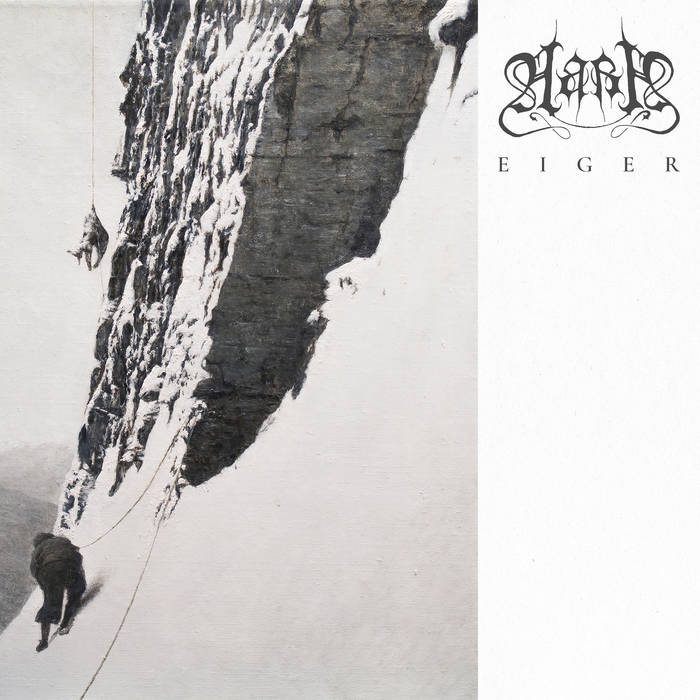
Then they dropped "Eiger". The cover alone made me sit up. A black-and-white photo, a mountain swallowed in snow — bleak, cold, and completely devoid of any modern gloss. It screamed man versus mountain, flesh versus frost, and all the beautiful futility in between. That's my kind of aesthetic. There's something about staring at a monochrome peak that brings out the romantic nihilist in me. Still, one swallow doesn't make a summer, and one good cover does not make a good album. The question is: will this one finally live up to its looks?
The short answer is "yes it does". The production on "Eiger" is the best the band has delivered so far. There is a nice balance between all instruments, nothing sticks out or is overproduced. There is no instruments fighting for dominance, no overblown effects, no amateurish mix that drowns the guitars in a fog of reverb. The sound is clear, full, and sharp. Thematically it is a compelling performance as well. The Eiger is a mountain in the Swiss part of the Alps. It is known for its challenging "Nordwand" ("North Face"), fittingly called the "Mordwand" ("Murderous Wall"). While the summit was first reached in 1858 via the West Flank, the North Face remained a formidable dare for decades. It became the site of numerous tragedies and thus earning its ominous nickname. The result: broken climbers, dead bodies and legends written in snow and frozen fingers. If that isn't the perfect prerequisite for a black metal album, then I don't know what it is.
Musically, this is Aara doing what they do best. The band weaves guitar lines into melodic spiderwebs of despair, sorrow and stubborn stoicism, held together by relentless drumming and that strangely regal atmosphere they always carry. There's a sense of vastness, of cold air and high altitude, running through every track, with the vocals echoing like desperate shouts against a cliff face. You can practically feel the wind cutting your face. What is absolutely fitting to what the lyrics try to convey: the fight of courageous men against a mountain that for years defied all efforts to be conquered.
"Felsensang" ("Song of the Rocks") is the first real standout. We find these urgent, near hypnotic, melodic guitar lines, a sense of rising panic, all supported by merciless blasts, but also a refreshing true metal riffing at times. That the band uses keys does not diminish the impact in the slightest. The spare use just underlines the song parts which demand a special accentuation rather than drowning the song in symphonic soup. And then there's the frontwoman Fluss. She might not be everyone's favorite vocalist, but her performance fits the material. Her shrieks aren't polished, and that's a good thing. They sound like something between a possessed banshee and someone actually freezing to death on a cliff. Very appropriate.
With "Der Wahnsinn Dort Im Abgrund" ("The Madness there in the Abyss") the album hits its strongest and cruelest stretch. It's the shortest, leanest and most immediate track. The melodies are razor-sharp, and the pacing is on point. You get a clear sense of isolation — the band masterfully translates the solitude of the mountaineer, hanging by a silken thread and a cold metal hook over a yawning abyss, into a fitting musical cloth. "Zurück Zur Roten Fluh" ("Back to the red Rock Face") demands more from the listener. The song shifts rapidly — blasting, then brooding, then blasting again. The guitars never let up, and that constant motion captures the tension of a failed climb perfectly. It's like an auditory rock face, which is treacherous, unpredictable, and worth every scraped nerve. "Eiger" is deeply tied to its lyrics, which may prove challenging for non-German speakers. But those willing to pick up an ice axe and dig into the meaning will find a layered, tragic, and remarkably human tale beneath the ice, which describes the failed attempt to conquer the mountain, forcing a retreat.
"Grausig Ist Der Blick" ("Gruesome is the Sight") continues this descent — musically and thematically. Here the mountaineers are facing hopelessness, snowstorms, and the final realization that they're not going to make it. The music turns from aggression to sadness, then back again, but not without a hint of grim beauty. The album doesn't end with heroism. The final track, "Alptraum" (Nightmare"), offers no resolution. There's no triumph here, no conquering the peak. It ends with the last man standing, waking up in this nightmare, knowing he's the only one left — and fading away quietly as the silence settles forever. The mountain wins. Of course it does.
This album is best experienced as a whole. The lyrics and music are working together to build the narrative. Here black metal is used as a medium for storytelling, not just soundtracking someone's vague misanthropy. It's a story of courage, failure, and the complete indifference of nature. It's the best Aara has sounded since their debut, and arguably their most cohesive work to date. Emotional without melodramatic and ambitious without collapsing under itself. Finally, an album that doesn't just scale the North Face but carves its name into it.
Rating: 8.4 out of 10, because climbing a mountain should hurt, and so should listening to it, at least just a little. On this album failure sounds noble and success would have ruined the mood anyway.
823