Kebabblast - Official Website
Grindfather, Pt. II |
Turkey
 |
|---|

Buy on: Bandcamp
Type: Full-Length
Release Date: November 21st, 2025
Label: Independent
Genre: Death, Grindcore
1.
Apitipik : Vers L'Orphelinat
2.
Harricana : La Soeur
3.
Kitcisakik : L'Brouillard
4.
L'Esprit D'Autrefois
5.
Spirit Lake : Le Cimetière Des Oubliés
6.
Apitipik : Les Murmures Enfouis
7.
Solitude
1.
Post-Kebabocalyptic Syndrome
2.
Anatolic Steroid
3.
Diabolic Diabetes
4.
Faster Than Your Mama's Lahmacun
5.
Napalm Espresso
6.
Grindfather x Groundmother
7.
Skeptophylaxy
8.
Mundane Dürdane
9.
Grindfather xxx Groundmother
10.
Ballet Of Ballots
11.
Lobotomy In 3/4 Time
12.
Meek Meet
13.
Grindfather Part-Ition
Review by Raphaël on October 8, 2023.
Prepare to enter a profoundly dark corner of Canadian history, where pure evil was manifesting on the daily, all in the name of civilizing. One of dehumanizing violence and control, a genocide that have only recently begun to show a pathway to healing. But, those wounds, those gaping wounds can only be treated summarily at best, or leave a giant open scar at worst. I’m obviously talking about the Canadian residential schools and the general treatment of indigenous people. For this, atmospheric black metal is the perfect artistic support to convey and express all of these dark emotions. Boréalys are: Abstrus on vocals and guitars and Julius on drums. It’s in 2019 that they were formed and they released a short EP at the end of 2020, giving us a taste of what they are able to do. So, Boréalys is back in 2023 with their first full-length, L’héritage, a truly moving album that, at times, expresses feelings of pure sadness, but is still in its own way, beautiful and majestic.
The album opens with, what is in my opinion one of the highlights, 'Apitipik : Vers l'orphelinat'. Just by the title alone you get a good idea of what you’re getting into, "Apitipik : towards the orphanage". The first thing you hear is a short audio clip of a TV report from what I guess is, in the 60s, casually talking about sending children away. The music suddenly starts right after. It’s a simple black metal riff with a midtempo drumbeat. Soon after, the vocals and the main riff start together and it is so powerful that it almost brought me to tears on my first listen. The vocals are pretty straightforward throughout the record but do an exceptional job in conveying feelings of pure sadness. It’s distant howling screams with a lot of reverb in the microphone, which gives the impression of a disembodied spirit screaming. And the riff! Oh my God that riff, a pretty simple succession of minor intervals that hits you right into the feels. And as if it wasn’t sad enough, those lyrics man! « Vers l'orphelinat, Dans l'antre de l'horreur, Où la hantise s'imprègne dans les murs …Loin des bras de leur mère, … Où leur langue ancestrale, ce péché savonné, Le triste sacrifice de leurs longs cheveux noirs, Laver à l'eau de javel pour les blanchir, De leur teinte foncée » if I do a rough translation: towards the orphanage, in the den of horror, where the haunting seeps into the walls, far from the arms of their mother, where their ancestral language, this sin, washed away with soap, the sad sacrifice of their long black hair, bleached to lighten their skin. The rest of the album is loosely the same recipe of at times sad, at times soaring and epic music but, always with those impactful lyrics. There is even a little history lesson with 'Spirit Lake: Le Cimetière Des Oubliés' which talks about the internment camp of Spirit Lake, in Abitibi-Témiscamingue, during World War I.
'Harricana : La Soeur' (the sister) is musically a bit less sad but lyrically, it is even worse than the first. The song starts kind of hopeful with sounds of children playing and the riff is more on the epic side of atmospheric black metal. It’s not long before the sadness kicks in with the changing riff. It’s a pretty straightforward atmospheric song with even an acoustic guitar break in the middle. It also contains what is, in my opinion, the most brutal part of the album. And not brutal in the traditional metal chugging riff way, but towards the end, you kind of hear, in the background, a girl moaning. But it sounds like a mix of moaning in pain and pleasure which is super unsettling when you read the lyrics that basically talks about and describe a sexual assault. Truly deep and dark dark stuff. The rest of the album continues with those themes of abuse, cultural and literal genocide: “Car le folklore des pauvres, 8000 ans à la dérive Sous la botte du roi, au nom de l'intégration“ 8000 years of folklore, drifting under the boot of the king in the name of integration. Musically, it stays in atmospheric black metal territories, sometimes accelerating a bit with kvlt and slow blastbeats. It’s the kind of album you can put on the background and do something else but it will still, periodically make you feel deep sadness.
We are truly blessed this year with great music made by indigenous people. Blackbraid immediately comes to mind when talking about indigenous black metal and there are certainly parallels to be made with Boréalys, both being atmospheric black metal, but where as Blackbraid focuses on indigenous folklore, using traditional indigenous instruments, Boréalys is much more stripped back, with a much rawer production and a more emotional feel. I think it’s an important part of history that is not talked about enough, that everybody needs to learn. Boréalys had the courage to make a beautiful and powerful piece of art, handling those subjects in a masterful way and it definitely won’t leave you indifferent!
Rating: 8 out of 10
278Review by Raphaël on October 8, 2023.
Prepare to enter a profoundly dark corner of Canadian history, where pure evil was manifesting on the daily, all in the name of civilizing. One of dehumanizing violence and control, a genocide that have only recently begun to show a pathway to healing. But, those wounds, those gaping wounds can only be treated summarily at best, or leave a giant open scar at worst. I’m obviously talking about the Canadian residential schools and the general treatment of indigenous people. For this, atmospheric black metal is the perfect artistic support to convey and express all of these dark emotions. Boréalys are: Abstrus on vocals and guitars and Julius on drums. It’s in 2019 that they were formed and they released a short EP at the end of 2020, giving us a taste of what they are able to do. So, Boréalys is back in 2023 with their first full-length, L’héritage, a truly moving album that, at times, expresses feelings of pure sadness, but is still in its own way, beautiful and majestic.
The album opens with, what is in my opinion one of the highlights, 'Apitipik : Vers l'orphelinat'. Just by the title alone you get a good idea of what you’re getting into, "Apitipik : towards the orphanage". The first thing you hear is a short audio clip of a TV report from what I guess is, in the 60s, casually talking about sending children away. The music suddenly starts right after. It’s a simple black metal riff with a midtempo drumbeat. Soon after, the vocals and the main riff start together and it is so powerful that it almost brought me to tears on my first listen. The vocals are pretty straightforward throughout the record but do an exceptional job in conveying feelings of pure sadness. It’s distant howling screams with a lot of reverb in the microphone, which gives the impression of a disembodied spirit screaming. And the riff! Oh my God that riff, a pretty simple succession of minor intervals that hits you right into the feels. And as if it wasn’t sad enough, those lyrics man! « Vers l'orphelinat, Dans l'antre de l'horreur, Où la hantise s'imprègne dans les murs …Loin des bras de leur mère, … Où leur langue ancestrale, ce péché savonné, Le triste sacrifice de leurs longs cheveux noirs, Laver à l'eau de javel pour les blanchir, De leur teinte foncée » if I do a rough translation: towards the orphanage, in the den of horror, where the haunting seeps into the walls, far from the arms of their mother, where their ancestral language, this sin, washed away with soap, the sad sacrifice of their long black hair, bleached to lighten their skin. The rest of the album is loosely the same recipe of at times sad, at times soaring and epic music but, always with those impactful lyrics. There is even a little history lesson with 'Spirit Lake: Le Cimetière Des Oubliés' which talks about the internment camp of Spirit Lake, in Abitibi-Témiscamingue, during World War I.
'Harricana : La Soeur' (the sister) is musically a bit less sad but lyrically, it is even worse than the first. The song starts kind of hopeful with sounds of children playing and the riff is more on the epic side of atmospheric black metal. It’s not long before the sadness kicks in with the changing riff. It’s a pretty straightforward atmospheric song with even an acoustic guitar break in the middle. It also contains what is, in my opinion, the most brutal part of the album. And not brutal in the traditional metal chugging riff way, but towards the end, you kind of hear, in the background, a girl moaning. But it sounds like a mix of moaning in pain and pleasure which is super unsettling when you read the lyrics that basically talks about and describe a sexual assault. Truly deep and dark dark stuff. The rest of the album continues with those themes of abuse, cultural and literal genocide: “Car le folklore des pauvres, 8000 ans à la dérive Sous la botte du roi, au nom de l'intégration“ 8000 years of folklore, drifting under the boot of the king in the name of integration. Musically, it stays in atmospheric black metal territories, sometimes accelerating a bit with kvlt and slow blastbeats. It’s the kind of album you can put on the background and do something else but it will still, periodically make you feel deep sadness.
We are truly blessed this year with great music made by indigenous people. Blackbraid immediately comes to mind when talking about indigenous black metal and there are certainly parallels to be made with Boréalys, both being atmospheric black metal, but where as Blackbraid focuses on indigenous folklore, using traditional indigenous instruments, Boréalys is much more stripped back, with a much rawer production and a more emotional feel. I think it’s an important part of history that is not talked about enough, that everybody needs to learn. Boréalys had the courage to make a beautiful and powerful piece of art, handling those subjects in a masterful way and it definitely won’t leave you indifferent!
Rating: 8 out of 10
278Review by Greg on December 19, 2025.
Just two months after the enjoyable Waltz In A Meat Grinder, the imponderable happened – Kebabblast find a vocalist. Just as a quick recap, the band's first instalment was the total opposite of an inept release, blending underground death metal with an uncanny penchant for lead melodies, which carried the music filling the void left by the vocals. Grindfather, Pt. II is the result of some further rehearsals with this third absolute madman, and I was curious to find out how the band intended to make space for him. Maybe a bit worried, actually. What are these, lyrics in English? Boo, sellouts!
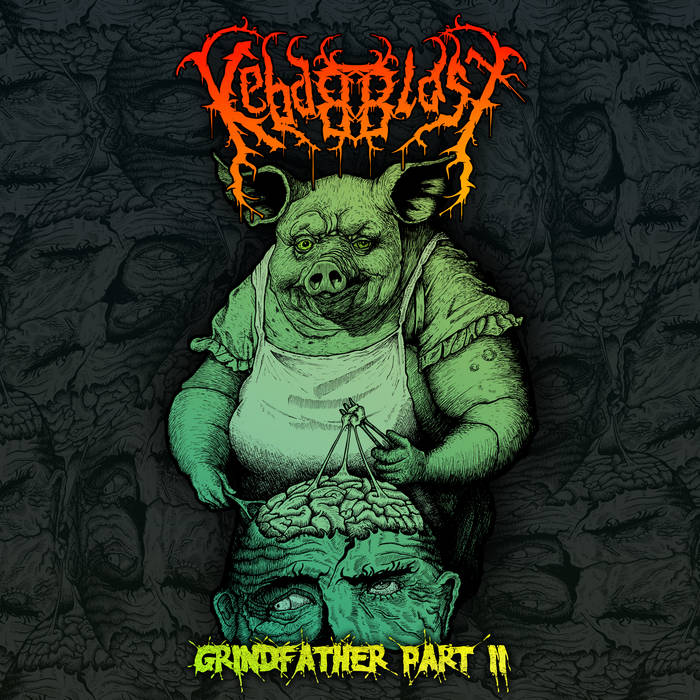
Now, seriously, whatever kind of mysterious aura Kebabblast had has been inevitably altered. The new guy employs an array of voices so wide that it's hard to believe it's a single person doing all the work – mainly a dual vocal style of both growls and screams, in true modern death fare, but also spicing things up with several other techniques, including pig squeals that, in light of the artwork, seem quite appropriate after all. He's certainly competent at what he does – I'd say he was chosen for this reason, after all – but it's also hard to call it a unique feature.
The real issue I have with Grindfather, Pt. II is somewhat obvious, though: the song lengths were left more or less unchanged, meaning that something needed to be axed – and, much to my disappointment, it was the guitars that were toned down. That is, the best part back then (okay, the best out of two instruments but anyway...). It's not like they disavowed everything, as 'Anatolic Steroid' or 'Faster Than Your Mama's Lahmacun' see the vocalist growling above one of those melodies, and it works a lot, but they're pretty much exceptions to the rule. Even the riffs, which were sometimes pretty good, mostly blend into the background, suffocated by the incessant vocals. Take 'Grindfather xxx Groundmother' or 'Ballet Of Ballots' as clear examples of this oversimplification – once you remove the growls and screams, you're left with little more than cavernous, brutal chugging which couldn't have managed to snatch a place in Waltz In A Meat Grinder's tracklist. The former is also notable for its final sample lasting for one full minute, which mostly frustrates me since I'm eager to understand what the character is laughing about with this much pleasure. The chunky riff set of 'Mundane Dürdane' and the two blasting loose cannons in the middle are some other modest points of interest.
Luckily, Grindfather, Pt. II is somewhat boosted by its finale, especially the pulverizing deathgrind number 'Meek Meat', with all its (numerous) tempo changes in their right place, and the slightly less ambitious 'Grindfather Part-Ition', ending on one of the band's, um, trademark melodic solos. That makes me build more anticipation for a future third Kebabblast album, which, on the upside, won't make me wait for much time, I guess. In the meantime, I'm getting hungry and who knows why I can only think of kebabs right now...
Rating: 6.5 out of 10
278