
Árstíðir Lífsins - Official Website
Hermalausaz |
International
 |
|---|

Buy on: Bandcamp
Type: EP
Release Date: December 21st, 2023
Label: Ván Records
Genre: Black, Pagan
1.
Ýrr
2.
Þistill
Review by Dominik on July 26, 2026.
I admit it: this one gave me quite a headache. Not because it's bad. Quite the opposite. But because I had no idea how to approach it. How do you review a release that calls itself an EP, contains two songs, runs for 43 minutes, and throws more twists and turns at you than your average Nordic crime thriller while changing direction more often than a politician caught in a scandal? There are probably two ways to tackle this. The first would be to dissect every section, analyze every lyrical reference, and pretend I possess the academic credentials necessary to explain every note and hidden meaning. The second would be to abandon all hope of intellectual superiority and simply describe what the music does to me and let my imagination do the heavy lifting. Since my formal musical education is roughly equivalent to that of an intoxicated sheep and considering that my expertise is developed to a level where you could probably throw your own father farther than my knowledge reaches, I'll go with the second option.
Árstíðir Lífsins is a German / Icelandic project, which haunts the scene since 2010. The genre tag “pagan black metal” is probably accurate, should you need a proper categorization before you start listening. However, though technically I could agree, practically it tells only part of the story and barely scratches the surface. The band combines raging black metal with more folkloric, sometimes even ritualistic parts. What strikes me is that the album always emanates atmospheric and even epic vibes without sacrificing on the intensity. Black metal rasping gives way to more narrative vocal approaches before circling back and eventually collapsing into Nordic chants. Everything is performed in Old Norse and modern Icelandic (at least according to what I have read in interviews with the band's mastermind). The result is music that feels deeply rooted in its cultural and geographical origins. Unfortunately, my command of both languages is limited to confidently mispronouncing the song titles, so it helps that the beautifully crafted inlay includes the English translations. This means for you that there is no excuse not to immerse yourself in the lyrics as well.
Of the two tracks, "Ýrr" (probably a yew (tree)) leaves the slightly stronger impression. The difference is not big, but the song feels more cohesive than its counterpart, and its twenty-two minutes pass surprisingly quickly. With Iceland still sitting on my bucket list to be visited, I can only try to compare my imagination of the country to the music. In my mind, this geography radiates a kind of rugged beauty while at the same time it reminds you that nature would happily kill you if given the opportunity. When I listen to this song, it feels like I am sitting alone on a three-thousand-year-old glacier. I am miles away from any civilization and contemplating where and when humanity took that wrong turn. The one that somehow gave us social media, reality TV, and people filming concerts through their phones instead of watching them.
Musically, the song is a maelstrom of emotions. One moment it gently caresses you with delicate acoustic passages. The next it aggressively pushes you face-first into the snow and leaves you there to reflect on mankind´s poor decisions. At times the occasional chanting adds melancholy and a sense of epic grandeur. One thing instantly became crystal clear for me: this is one of those releases which demands your full attention, a lot of patience, and a willingness to follow its winding path wherever it leads. There is simply too much happening beneath the surface to treat it as background music, and the nuances only reveal themselves the closer you listen.
The second song "Þistill" (“Thistle”) follows a similar blueprint. It presents some of the most ferocious and fastest moments on the release. If it lands slightly behind its sibling, it's only because a few passages feel stretched a little longer than necessary. There is a bit of fluff here and there. Then again, many bands would happily sacrifice a distant relative for the privilege of writing these supposedly weaker sections themselves.
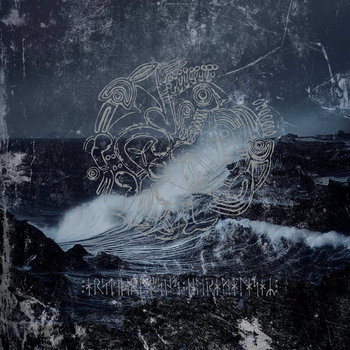
“Hermalausaz” is a gripping journey through old Nordic mythology and history. The amount of effort invested in this release is impossible to overlook. The production is excellent, giving every instrument the space it deserves. The artwork and presentation are stunning, and the lyrical concepts suggest a level of research and knowledge that goes well beyond simply quoting a few ancient texts for atmosphere. If I wanted to rate the effort alone, the score would easily climb into the nineties. But enjoying and admiring are not always the same thing. My issue is that I still prefer music that reveals itself a little more willingly. As much as I appreciate the way the music and lyrics tell a story together, “Hermalausaz” asks a lot of its listener. It requires concentration, tolerance, an eye for detail, and ideally a willingness to engage with the lyrical content alongside the music. This is not an album you casually throw on while vacuuming the living room unless your vacuuming routine somehow includes existential reflection and comparative mythology. I get it that for some people this is exactly what makes it exceptional. For me, it occasionally feels like being assigned homework by a particularly enthusiastic Viking. Those willing to fully immerse themselves in its world should probably add another ten points to my final score.
Rating: 8.2 out of 100, because brilliance and exhaustion are not mutually exclusive.
213