Arckanum - Official Website
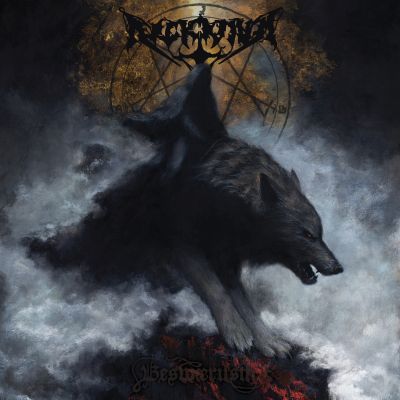
Beswærilsin |
Sweden
 |
|---|

Buy on: Bandcamp
Type: Full-Length
Release Date: October 31st, 2026
Genre: Black
1.
Untitled
1.
Mz Fianda Raþi - (Mz Fianda Rathi)
2.
Utgarþzeþer - (Utgarthzether)
3.
Wilianz Kniwer - (Wilianz Kniwer)
4.
Rymz Rand - (Rymz Rand)
5.
Gyghra Hirþi - (Gyghra Hirthi)
6.
Eldstenz Frø - (Eldstenz Fro)
7.
Wiþirskapit - (Withirskapit)
8.
Skæpna Ær Krigh - (Skaepna Aer Krigh)
9.
Anskoti - (Anskoti)
10.
Trulmoþir - (Trulmothir)
11.
Twæþursaspa - (Twaethursaspa)
Review by Norbert on November 14, 2026.
Burzum, Xasthur, Leviathan, Ildjarn, Paysage d’Hiver, Striborg, Judas Iscariot… The black metal underground has always attracted individuals convinced that they need nobody but themselves to bring their artistic vision to life. Sometimes it was about artistic independence, sometimes about deeply rooted misanthropy. After all, it's difficult to preach contempt for all of humanity while simultaneously trying to reach a compromise with your bass player. Each of these projects, however, created its own world. Burzum immersed itself in mythology and paganism, Xasthur and Leviathan explored various shades of psychological darkness, Ildjarn pushed musical primitivism to its absolute limits, Paysage d’Hiver wandered through landscapes of winter dreams, Striborg haunted the forests of Tasmania, while Judas Iscariot stubbornly cultivated the spirit of the Norwegian second wave on American soil, with a determination worthy of a better cause. And then there's Arckanum, a project founded in 1992 by Swede Johan Lahger, better known as Shamaatae. Here, black metal became part of a much larger undertaking involving Norse mythology, occultism, and personal magical practice.
The first three albums, Fran Marder (1995), Kostogher (1997), and Kampen (1998), are absolute classics of Swedish black metal. On these records, Shamaatae created his own instantly recognizable style, built around oddly structured melodies, almost march-like rhythms, and his distinctive, raspy vocals. Everything sounded archaic, wild, and untamed, as if the music had been created in some forgotten forest settlement whose inhabitants had decided that the Christianization of Scandinavia wasn't such a particularly good idea after all. The forest was not merely a backdrop here, either, but a place inhabited by primal forces older than human civilization itself. Over time, Shamaatae's interests took on a more clearly defined shape, focusing on Thursatrú, an esoteric current drawing on the Norse giants and an anti-cosmic vision of the world. In this worldview, the gods are not necessarily heroes, while the creation of the cosmos represents a restriction of the primordial chaos regarded as the source of power and spiritual liberation. Shamaatae developed these ideas in his books devoted to magic and the Gnostic concept of chaos. Sure, you might find the whole thing a little hard to take seriously, but it's difficult to deny the man's dedication. While many a black metal musician's involvement with occultism ends with an inverted cross and an appropriately gloomy promotional photo, Shamaatae has devoted a significant part of his life to it.
Subsequent albums, including Antikosmos, ÞÞÞÞÞÞÞÞÞÞÞ, and Helvítismyrkr, increasingly brought the music together with ritual symbolism. In 2017, Den Förstfödde was released, after which Shamaatae closed the Arckanum chapter, intending to concentrate on his spiritual practice. Nine albums, a quarter of a century of activity, and the end of the story. Or so it seemed, because apparently even in the world of anti-cosmic chaos, the word "definitive" doesn't carry much weight. After nine years of silence, the Swede has returned with a tenth album, Beswærilsin, released on October 31, 2026, through Darkness Shall Rise Productions. Eleven tracks, more than an hour of music, lyrics in archaic Swedish, ritualistic chants, sounds of nature, and black metal that still sounds as though civilization was a particularly unsuccessful experiment.
The opening track, 'Mz Fianda Raþi,' immediately leaves no doubt about who we're dealing with. Following a ceremonial introduction, the familiar riffs kick in, accompanied by drums and Shamaatae's raspy shriek. It's aggressive, but also surprisingly melodic, which, as it turns out, will prove to be both a strength and something of a problem with this album. 'Utgarþzeþer' offers an excellent combination of black metal fury and folk instrumentation, fortunately without turning into some kind of medieval fairground feast with a horned drinking mug of mead in hand. 'Eldstenz Frø' can deliver a proper beating before shifting into a heavy doom-laden march, while 'Skæpna Ær Krigh' demonstrates that Shamaatae can still come up with some impressive guitar motifs. There are also slower, more ceremonial compositions in which repetition and gradually building tension matter far more than speed or the number of blast beats per minute.
Shamaatae has always had a talent for creating evocative melodies, but on Beswærilsin, particularly during the first half of the album, he occasionally comes dangerously close to the point where melodies start sounding more like little tunes. It's not quite at the level of a folk metal festival, but at times things become decidedly too bouncy and catchy for my taste. I'm much more convinced by the longer, trance-like passages, where Arckanum approaches the hypnotic character of Burzum's "Hvis Lyset Tar Oss" and "Filosofem" era. Riffs repeated almost to the point of exhaustion, a monotonous rhythm, and tension slowly building over time – this is where Shamaatae's music works best for me. I have no problem with the ambient passages, sounds of nature, or extended ritualistic chants, either. Even the nearly seven-minute 'Gyghra Hirōi,' built around sparse bass sounds and the cawing of ravens, has its place here. After all, if you decide to listen to an Arckanumalbum<, you should be prepared for the fact that not everything will be geared towards the need to start pummeling the listener immediately.
These are precisely the passages that may divide listeners the most. Some will consider them unnecessary padding, while others will see them as the album's most important elements. However, it's difficult to judge Beswærilsin solely as a collection of black metal songs when Shamaatae has spent years treating music as part of his own magical practice. That doesn't mean, of course, that every bass note or the cawing of a raven should be interpreted as a revelation from Ginnungagap. It's more a matter of understanding that this album needs room to establish the right atmosphere. And when Shamaatae stops trying so hard to come up with catchy melodies and allows the music to flow at its own unhurried, gloomy pace, things get really fucking good.
Beswærilsin is no new Kostogher, nor does it measure up to Arckanum's legendary achievements from 1995–1998. Not every idea works, and some of the melodies could certainly use a little more restraint. But this is not a case of a musician reheating old riffs after deciding, years later, to remind the world that he still exists. Shamaatae continues to develop his own vision with unwavering consistency, showing little concern for whether anyone feels like listening to seven minutes of ravens cawing. And that's fucking great. Because although Beswærilsin is far from a flawless album, it provides convincing proof that something is still moving in the Swedish forests. And it's probably not a tourist looking for a signal.
Rating: 8.5 out of 10
610