
Falconer - Official Website
Northwind |
Sweden
 |
|---|
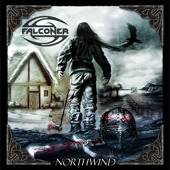

Type: Full-Length
Release Date: September 22nd, 2006
Label: Metal Blade Records
Genre: Folk, Power
1.
Northwind
2.
Waltz With The Dead
3.
Spirit Of The Hawk
4.
Legend And The Lore
5.
Catch The Shadows
6.
Tower Of The Queen
7.
Long Gone By
8.
Perjury And Sanctity
9.
Fairyland Fanfare
10.
Himmel Så Trind
11.
Blinded
12.
Home Of The Knave
13.
Black Tarn (Instrumental)
Review by Jophelerx on December 27, 2025.
Following two very strong, well-received albums with classically-trained, non-traditionally metal vocalist Mathias Blad, Stefan Weinerhall and co. decided to show him the door due to his unwillingness to quit his day job as a theatrical performer to tour full-time with the band. This is not unlike the situation US power metallers Fates Warning faced following the success of their first three albums with John Arch, ultimately leading them to switch gears, hiring Ray Alder and going full-on progressive metal, a decision which has had mixed reactions but ultimately led to an increase in the band's success and an eventual influx of fans. In Falconer's case, though, Blad's singular vocal style was a core part of Falconer's sound, and while his replacement, Kristoffer Gobel, is actually a fantastic vocalist with a great range and a lot of power and grit, the band faced something of an identity crisis during his brief stint with them. His first album, The Sceptre of Deception, felt similar to the first two albums musically, even featuring some vocals Mathias Blad recorded before leaving the band, leading to an inevitable comparison between the two vocalists, which was unfavorable for Gobel. On his second album, Grime and Grandeur, it seems the band realized they couldn't write material the same way for Gobel as they had for Blad, leading to a grittier, more aggressive album, which left the band rarely even sounding like Falconer at all. In a nutshell, the band couldn't win; Gobel was inherently worse performing the folky, melodic material the band was known for, but on material tailored to him, the band lost its identity entirely. I'm not sure how successful their tours with Gobel were in the two years he spent in the band, but obviously they weren't enough, because in 2005, by popular demand, Gobel was fired from the band and Blad made his triumphant return in Falconer's fifth studio album, 2006's Northwind.
I'd argue one of Northwind's strengths is that it boasts the band's strongest production at the time, sounding modern and polished enough to give it a refined, elegant atmosphere without sounding soggy or overproduced. Keyboard effects are used liberally and to great success; gone are the clicky drums of an album like Chapters from a Vale Forlorn, the guitars layer well with each other, and everything feels very balanced. The release also features some of the strongest material the band ever produced, and while none has quite had the last impact of a track like "The Clarion Call," I think numbers like the title track, "Catch the Shadows," and "Tower of the Queen" would easily make a top 15 Falconer playlist for me personally, perhaps even a top 10, and in the case of "Catch the Shadows," it's become a pretty fiercely beloved fan favorite that people still celebrate nearly 20 years later. Of course, not every track on the album is a well-known fan favorite, and at 14 tracks clocking in around 54 minutes, Northwind remains the longest album Falconer has ever released, meaning there had to be at least a couple of duds, right? Well, I think it depends on your definition of "dud." Certainly not every track is an A+, and like the self-titled album's "Per Tyrssons döttrar i Vänge" and Chapters from a Vale Forlorn's "We Sold Our Homesteads," it features an adapted Swedish folk song in "Himmel så trind." While I certainly respect the band paying homage to their national heritage, these tracks have never been my thing and always felt a bit out of place to me. Outside of this one, though, I enjoy every track on Northwind to some degree, which is a very solid track record given there are 13 other tracks, and is another reason this is my favorite Falconer record.
Opener "Northwind" has some of that Swedish folk atmosphere to it while still maintaining the band's sharp, punchy power metal core. Sung from the perspective of a nomadic Viking warrior, it certainly covers thematic material that was quite well-trod in metal by 2006, but it was one of the first instances of Falconer doing so, making it still feel fresh with its big, sweeping chorus replete with a big, anthemic string section, some cool, authentic-sounding traditional percussion and flute in the bridge, but enough driving metal riffage in the verses to keep things moving at a gallop and never feeling too indulgent with frills or fluff. "Waltz with the Dead" is definitely a step down, featuring a moderately generic main riff and some less inspired lyrics, more morbid and macabre than the band's usual fare that feel a bit forced, like they wanted to branch out but didn't really have the inspiration to take it all the way. The bones are there, though, and it's still an enjoyable time, thanks in large part to Blad's earnest conviction keeping your attention if nothing else. "Spirit of the Hawk" sets things back on track, with an unusually fast, even relentless pace that features some great guitar work from Weinerhall/Hedlund (both guitarists are listed as "lead" in the liner notes so it's hard to say who played what), with Blad admirably keeping up, though I do feel this kind of intensity might work better with a more intense vocalist, and it wouldn't surprise me to learn this track had originally been written with Kristoffer Gobel in mind, as the guitar work really overshadows Blad's performance on this one.
"Legend and the Lore" is a strange, half-interlude that does feature some cool musical ideas in the form of interplay between acoustic guitar and keyboard melodies, serving as a nice refresher that still fits the theme of the album, a la 90s Virgin Steele. Where it starts to feel a tad confused is when the electric guitar comes in, followed by a few vocal lines from Blad, making it feel like the song isn't sure whether it wants to be a mere accent or a full-blown Falconer track; I feel it's better as the former, and as such I think it would've worked better shaved down to a couple minutes without Blad. It's still decent, but probably my least favorite track on the album outside of "Himmel så trind." Of course, "Catch the Shadows" grabs you by the 'nads with its catchy, playful main riff, great layered vocals from Blad, and an epic chorus that's one of the best the band ever wrote and even features some cool drum parts from Kartsen Larsson. The interplay between the driving, staccato riffing and more melodic, soulful lead guitar licks is incredibly deft in the opening and after the first chorus, feeling very 70s rock, akin to a track like "Busted to the Floor" on Chapters from a Vale Forlorn but feeling a bit more organically incorporated into the band's core folky power metal sound. Blad delivers some great falsetto in the bridge, too, and everything really comes together perfectly, making me comfortable calling it the best song on the album and probably a top 5 Falconer track.
We get a one-two punch as "Catch the Shadows" transitions into "Tower of the Queen," whose regality gets a darker, cynical edge to it with lyrical themes of protecting the throne against all contenders whatever the cost, and feels like a more natural way for the band to get into some darker themes, simply incorporating some shades of gray into their usual fare of medieval history, rather than just trying to make a song about death and despair. The song has some of the best vocal melodies on the album, and the two-part harmony in the chorus has given me chills ever since I first heard it; this is another very strong composition. "Long Gone By" gives us the album's only proper ballad, a tale told from the perspective of someone in the later stages of life looking back with wistful remembrance at "an age long gone by." This is a simple tune that works incredibly well with very little, focusing on a few strumming chords, a beautifully haunting vocal melody, and eventually some keyboard accompaniment. I don't know where the band pulled this from, but it's my favorite ballad from their discography, feeling at once less complex and yet more complete than something like "Portals of Light," stripped of everything it doesn't need and basking in the beauty of life's simple pleasures. It seems perfectly suited for Blad, and I don't think a more over-the-top, dramatic vocalist could really make it work, but this is yet another incredibly strong track that knows exactly what to do and what not to do.
"Perjury and Sanctity" is another faster, galloping number, which feels a touch generic in the verses but does have a nice, stripped down chorus featuring some very catchy vocal lines from Blad; I could see the band performing this live (I'm not actually sure if they ever did, given the few shows they played), and doing the chorus over and over while encouraging crowd participation, something akin to how Blind Guardian handles "Valhalla." I don't think this song ever quite became the fan favorite for Falconer that "Valhalla" did for Blind Guardian, though, and "The Clarion Call" certainly fills that niche just as well as "Perjury and Sanctity," if not better. The song's anthemic outro, where the chorus repeats until it slowly fades out, gradually drawing more attention to Blad's atmospheric "aaahs" and great, simple delivery of "Your sins are not redeemed...by swearing perjury...." is the perfect way to close it, though, and the highlight of the song. "Fairyland Fanfare" features some great riffs, solid vocal lines, a strong chorus, and some clever lyricism, with the bridge featuring some heavy alliteration that makes the English nerd in me smile, even if it's far from anything approaching subtlety. It's not the most memorable song here, but everything it does, it does well, and I do think the soloing here is some of the more impressive guitar work featured on the album. "Himmel så trind" is, as I said, a Swedish folk song, which doesn't do much for me personally, and the only track I normally skip on a playthrough of the album.
As we near the end, the band shows us they're far from running out of steam, with the energetic, playful riffing of "Blinded" always puts a smile on my face, leaning more in that 70s style the band likes to showcase now and again, and while enjoyable, the chorus takes things up another notch, making sure we know they're not planning to phone anything in on this album (with the possible exception of "Waltz with the Dead"), featuring multi-tracked vocals from Blad yet again, and some clever, infectious vocal lines that, as the song goes on, begin to compete with the guitars for your attention, as the lead work slowly reveals more and more thought and character until it really becomes one of the more impressive tracks here by the end of it, despite not being one that seems to get much attention from fans. "Delusion" is yet another surprising track, with some serpentine weaving of guitar parts and a riff in the prechorus that almost sounds like something that could have come from Black Sabbath. There's also some cool chanting after the chorus that has a bit of an exotic, perhaps Middle Eastern flair to it, followed by some soloing that wouldn't sound out of place on an '80s traditional metal record but still manages to stay melodically appropriate for the song. This is a really interesting composition that I absolutely would not have expected from the band, and yet it manages to incorporate a lot of their strengths and feel like yet another high point of the album.
Finally, we have "Home of the Knave," which is solid but feels like it could have been an early version of "Fairyland Fanfare" or maybe even "Catch the Shadows" - it lacks enough of its own identity to really stand out, especially in an album where probably half the tracks feel like they belong to be counted among the band's best. The chorus is easily the most memorable part of this one, making (not so) veiled reference to America's national anthem, which you could probably already guess by the song's title, getting even more on the nose in the chorus with the line "Your land of the free is the home of the knave," though with the rest of the lyrics about some sort of medieval crusade, it's probably less of a jab at America and more a simple subversion of a well-known lyric that Stefan Weinerhall happened to like. The album ends with the instrumental "Black Tarn," which features lead guitar that echoes the main vocal melody from the chorus of "Waltz with the Dead," which is cool and feels like an appropriately atmospheric way to end the album. Overall, Northwind might be on the long side for some, and never quite replaced Chapters from a Vale Forlorn as the default fan favorite, but it has some of the strongest songwriting in the band's history and feels like a complete, often predictable, and yet occasionally surprising album that gives me everything I want out of Falconer and more. This is essential for any fan of the band, though I might recommend the self-titled or Chapters as a slightly more accessible, less demanding jumping-off point for those interested in trying the band for the first time.
Rating: 9.1 out of 10
1.33k