Khold - Official Website - Interview - News
The Dream Calls For Blood |
Norway
![]() |
|---|
Review by George on March 17, 2020.
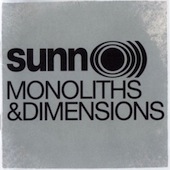
Let me start by saying that I was originally going to open this review with a piece of description, a short story to set the tone and convey how the album makes me feel. However, after trying and starting over a couple of times I realised that absolutely nothing I write can do justice to the twisted, surreal emotions that Monoliths and Dimensions subjects me to. I'm still going to do my best but know that this isn't something that can be expressed in words. You have to listen to it yourself to get the full experience.
And what an experience it is. The tone stays consistent throughout, but for a drone metal release the songs themselves couldn't be more varied in their emotions and methods for conveying them. The existential opener 'Aghartha' builds up and up for close to 10 minutes before crashing back down with a full orchestra playing a dissonant wall of sound. This climax stretches on for what feels like an eternity - it's an incredibly uncomfortable experience but one you're glad you went through at the end. Picture being stuck outside in a storm at night on an abandoned mountainside. You're frozen, you're being lashed at by sheets of rain and you feel pathetic, your very life at the mercy of the elements. But eventually, after you've accepted the bitterness of your situation, you begin to find some beauty in the distant lightning strikes, the monolithic black clouds and the sheer might of nature. When the day finally dawns, you realize what you just went through was a once-in-a-lifetime experience and, despite how torturous it was at the time, you're grateful for it. That's what listening to 'Aghartha' feels like.
The range of emotions present in the first track are starkly contrasted by 'Big Church [Megszentségteleníthetetlenségeskedéseitekért]', which is pure terror. It's minimalistic, with basslines and vocals at the forefront as opposed to a full orchestra, but it's effective. You're trapped in a surreal nightmare beyond the realms of imagination, drawing ever closer to something unspeakably evil. No other song can have me at the very edge of my seat for 10 minutes, absolutely convinced that I'm about to die, but the combination of the bass frequencies with sinister choirs and low spoken vocals really does it. It might sound ridiculous to Hungarians, but the repetition of that one word, again and again, in each movement more frequent and intense than the last, just gets to me. I'm paralyzed. I can't survive. This is the end. Then, just as the piece crescendos for the final time and the arcane horror you're confronting begins to come into sight, it's over.
The album's closer also needs touching on - 'Alice' is a contender for the best metal song of all time in my eyes. It's a tribute to the deceased jazz musician Alice Coltrane, performed to near perfection. The track starts out in typical Sunn O))) fashion, submerged in an abounding darkness as heavy as the crushing basslines. A screeching harp occasionally pierces the creeping and dissonant melody, adding to the overall discomfort and sense of impending doom - once again I go back to the analogy of being stuck outside in the nighttime, but 'Alice' is less abrasive and more subtle than 'Aghartha' in its delivery. It's foreboding rather than torturous. You're looking out into the dark, thinking about what might be hiding in it but knowing you can never be quite sure. But gradually, the tone changes. More and more instruments join the ensemble - a saxophone, a French horn, a trombone and more can be heard over the low-end droning. And ever so slowly, the darkness is alleviated. Triumphant and assonant melodies seep into the piece just as light would begin to fill a pitch-black sky at dawn. At the end the bass is almost completely gone, the final notes of the album comprised of a French horn melody which is nothing short of beautiful - one of the most beautiful things I've ever heard. You've survived the storm. You've survived the night's terrors. The sun has risen.
There is one small negative to the album - track 3, 'Hunting and Gathering', is a very sinister and well-composed drone track but pales in comparison to the album's other three behemoths - but this isn't enough to stop the Monoliths and Dimensions from being as near perfection as it gets in my eyes. It definitely isn't for everyone; it's uncomfortable and might seem like pure noise at first, but underneath the chaos there are patterns and in those patterns there is beauty. It's absolutely worth going through, because if it does click with you, you're never going to hear anything else like it.
Rating: 9.9 out of 10
1.01kReview by George on March 17, 2020.
Let me start by saying that I was originally going to open this review with a piece of description, a short story to set the tone and convey how the album makes me feel. However, after trying and starting over a couple of times I realised that absolutely nothing I write can do justice to the twisted, surreal emotions that Monoliths and Dimensions subjects me to. I'm still going to do my best but know that this isn't something that can be expressed in words. You have to listen to it yourself to get the full experience.
And what an experience it is. The tone stays consistent throughout, but for a drone metal release the songs themselves couldn't be more varied in their emotions and methods for conveying them. The existential opener 'Aghartha' builds up and up for close to 10 minutes before crashing back down with a full orchestra playing a dissonant wall of sound. This climax stretches on for what feels like an eternity - it's an incredibly uncomfortable experience but one you're glad you went through at the end. Picture being stuck outside in a storm at night on an abandoned mountainside. You're frozen, you're being lashed at by sheets of rain and you feel pathetic, your very life at the mercy of the elements. But eventually, after you've accepted the bitterness of your situation, you begin to find some beauty in the distant lightning strikes, the monolithic black clouds and the sheer might of nature. When the day finally dawns, you realize what you just went through was a once-in-a-lifetime experience and, despite how torturous it was at the time, you're grateful for it. That's what listening to 'Aghartha' feels like.
The range of emotions present in the first track are starkly contrasted by 'Big Church [Megszentségteleníthetetlenségeskedéseitekért]', which is pure terror. It's minimalistic, with basslines and vocals at the forefront as opposed to a full orchestra, but it's effective. You're trapped in a surreal nightmare beyond the realms of imagination, drawing ever closer to something unspeakably evil. No other song can have me at the very edge of my seat for 10 minutes, absolutely convinced that I'm about to die, but the combination of the bass frequencies with sinister choirs and low spoken vocals really does it. It might sound ridiculous to Hungarians, but the repetition of that one word, again and again, in each movement more frequent and intense than the last, just gets to me. I'm paralyzed. I can't survive. This is the end. Then, just as the piece crescendos for the final time and the arcane horror you're confronting begins to come into sight, it's over.
The album's closer also needs touching on - 'Alice' is a contender for the best metal song of all time in my eyes. It's a tribute to the deceased jazz musician Alice Coltrane, performed to near perfection. The track starts out in typical Sunn O))) fashion, submerged in an abounding darkness as heavy as the crushing basslines. A screeching harp occasionally pierces the creeping and dissonant melody, adding to the overall discomfort and sense of impending doom - once again I go back to the analogy of being stuck outside in the nighttime, but 'Alice' is less abrasive and more subtle than 'Aghartha' in its delivery. It's foreboding rather than torturous. You're looking out into the dark, thinking about what might be hiding in it but knowing you can never be quite sure. But gradually, the tone changes. More and more instruments join the ensemble - a saxophone, a French horn, a trombone and more can be heard over the low-end droning. And ever so slowly, the darkness is alleviated. Triumphant and assonant melodies seep into the piece just as light would begin to fill a pitch-black sky at dawn. At the end the bass is almost completely gone, the final notes of the album comprised of a French horn melody which is nothing short of beautiful - one of the most beautiful things I've ever heard. You've survived the storm. You've survived the night's terrors. The sun has risen.
There is one small negative to the album - track 3, 'Hunting and Gathering', is a very sinister and well-composed drone track but pales in comparison to the album's other three behemoths - but this isn't enough to stop the Monoliths and Dimensions from being as near perfection as it gets in my eyes. It definitely isn't for everyone; it's uncomfortable and might seem like pure noise at first, but underneath the chaos there are patterns and in those patterns there is beauty. It's absolutely worth going through, because if it does click with you, you're never going to hear anything else like it.
Rating: 9.9 out of 10
1.01kReview by Joshua on November 27, 2004.
Swedish death metal is propagating southward, and the Dutch are perfecting its method. Fire Reflects in Ashes is precisely the type of Swedish death metal that most musicians have all but abandoned: No keyboards, no non-traditional instruments, five guys with guitars, bass and talented drums. Include some interesting hook lines, catchy rhythms, and all the trappings of vintage Swedish heavy metal, and that’s a quick description of Instil.
Here’s another way of looking at them: Picture a mixture of The Haunted, Arch Enemy, The Crown, and Edge of Sanity. Add a hardcore influence to the vocals. Master it at Antfarm Studios -- Denmark’s other contribution to civilization, right after Elephant beer -- so it sounds just like The Haunted. You’re done. That was easy, wasn’t it?
Instil are clearly talented, but they don’t distance themselves very much from their influences; rather than covering new or experimental ground, they’re improving on well-honed musical ideas. Granted, this is a common technique for young bands. It enables a band like Instil to write interesting music with very little experience. Unfortunately, though, the end result is predictable: excellent songs that are only transiently entertaining, because their material is never groundbreaking enough to be lastingly memorable.
I’m not suggesting this is a bad album. I’m not even calling it unoriginal. It just isn’t especially groundbreaking. In fact, Fire Reflects in Ashes has a few excellent songs -- the title track, “Chimera”, and “Transient” stand out as shining examples. It even shows off real, promising talent. However, this band does almost nothing their musical influences don’t -- unless you count a hilarious Tom Petty cover. It’s great Swedish death metal, in the vein of The Haunted and The Crown, but it could benefit from some diversification.
Categorical Rating Breakdown
Musicianship: 8
Atmosphere: 6
Production: 7
Originality: 5
Overall: 7
Rating: 6.6 out of 10
Review by Kostas on June 21, 2023.
"Sleep of The Angels" is the second gothic album of Rotting Christ. Although quite similar to the band's previous full-length release, this one is characterised by a deeper and darker atmosphere, as well as a few flaws which prevent it from standing out as one of the band's best releases.
The first thing someone notices when listening to this album, is once again the remarkable and creative solos and rifts that seem to be the best thing this band has to offer. The vocals have improved significantly as well, making the whole album easier to enjoy. Of course, the greek accent is still present, but not in a way that makes it difficult for the listener to understand the lyrics. Now, the songwriting is pretty simple but definitely unbiased and more compatible to the ban's current sound.
Unfortunately, the drums once again sound boring and uninspired. Although they never seem to be out of pace, there is nothing special about them. It is almost as if the band added them in the end just because they had to. Just like in "Non Serviam". In addition, there is a lack of variety in "Sleep of The Angels". Almost all tracks sound similar, to such an extent that someone may confuse the start of "Victoriatus" with "After Dark I Feel". Some may find the melodies catchy enough to ignore the aforementioned repetitions. However, they make the record seem like it recycles the same ideas over and over.
To sum up, I can't say the songs in "Sleep of The Angels" are bad. The band members show their skills and maybe the whole album could be brought to life at a live concert. On the other hand, it is no masterpiece or an album that will stay in your mind for a long time. What it needed was variety, inspiration and, last but not least, a descent cover artwork.
Rating: 6.6 out of 10
1.01kReview by Joshua on November 27, 2004.
Swedish death metal is propagating southward, and the Dutch are perfecting its method. Fire Reflects in Ashes is precisely the type of Swedish death metal that most musicians have all but abandoned: No keyboards, no non-traditional instruments, five guys with guitars, bass and talented drums. Include some interesting hook lines, catchy rhythms, and all the trappings of vintage Swedish heavy metal, and that’s a quick description of Instil.
Here’s another way of looking at them: Picture a mixture of The Haunted, Arch Enemy, The Crown, and Edge of Sanity. Add a hardcore influence to the vocals. Master it at Antfarm Studios -- Denmark’s other contribution to civilization, right after Elephant beer -- so it sounds just like The Haunted. You’re done. That was easy, wasn’t it?
Instil are clearly talented, but they don’t distance themselves very much from their influences; rather than covering new or experimental ground, they’re improving on well-honed musical ideas. Granted, this is a common technique for young bands. It enables a band like Instil to write interesting music with very little experience. Unfortunately, though, the end result is predictable: excellent songs that are only transiently entertaining, because their material is never groundbreaking enough to be lastingly memorable.
I’m not suggesting this is a bad album. I’m not even calling it unoriginal. It just isn’t especially groundbreaking. In fact, Fire Reflects in Ashes has a few excellent songs -- the title track, “Chimera”, and “Transient” stand out as shining examples. It even shows off real, promising talent. However, this band does almost nothing their musical influences don’t -- unless you count a hilarious Tom Petty cover. It’s great Swedish death metal, in the vein of The Haunted and The Crown, but it could benefit from some diversification.
Categorical Rating Breakdown
Musicianship: 8
Atmosphere: 6
Production: 7
Originality: 5
Overall: 7
Rating: 6.6 out of 10
Review by Luka on May 28, 2002.
Italy’s most admired gods of emo-metal stamp the seal on their third album and confirm to anyone who had a last remaining shred of doubt the sheer talent, prestige and commitment they hold. These guys do their own thing and they do it best; Lacuna Coil have hit solid home-runs throughout their career and there is nothing but clear skies ahead for them. “Unleashed Memories” is their strongest work to date!
Stacking large emotional chords within a clear and powerful mix, Lacuna Coil’s balanced vocal-instrument harmony displays their ability to create some of the finest melodic metal in the world! Now whether it can be called metal is up to the listener, as 'Senzafine' and a few other songs’ radio-friendly mainstream style even reaches the level of pop music (reminding me strongly of 'The Corrs'), which can be a turn-off. It’s the heavier numbers, most memorably '1.19', which pick up the beat and let loose all the emotion, energy, and power the band has got to enchant you and stir up some of the most feminine emotions that no one imagined existed in a hardy metal heart. Get out your hankies, boys...
Like fellow (and mellow) artists including Katatonia and The Gathering, Lacuna Coil’s formula is based on the principle of less-is-more. The songs are simple, straightforward, and very accessible, but they’ll move you and toy with your emotions more than any kind of music in the world. The style is predominantly depressing, much like modern Katatonia, but with a stronger beat and more energy, not to mention the beautiful female vocals by Cristina Scabbia. She sings and the instruments are the background veil that constantly twists and writhes, representing the different emotions and moods in the song. Backup singer Andrea Ferro adds his own voice in every once in a while, supporting Cristina’s light voice with his deep and bassy one.
The music and vocals are blended in perfect harmony and the album is few notches short of flawlessness. While Lacuna Coil don’t quite fit into an average fan’s idea of “metal”, I strongly recommend this album to any and every one of them on the planet. This is one of the most exciting and unique bands that exist on the edge of the metal world and help to expand its boundaries to strange and beautiful places. It’s easy to fall in love with this band and I am a common victim.
Bottom Line: Hardly room for improvement in this beautiful and emotional work of art. Definitely on the lighter side of the spectrum.
Categorical Rating Breakdown
Originality: 8
Musicianship: 9
Atmosphere: 10
Production: 8.5
Overall: 10
Rating: 9.1 out of 10
Review by Adam M on April 16, 2025.
Fear Factory – Obsolete
This is the album where Fear Factory tighented their style and become a more mainstream act. There is a very catchy vibe to the proceedings and it makes the music very memorable. The industrialized nature of the songs makes them very vibrant and colourful. The band is able to change their style into something more accessible and still be incredibly interesting at the same time.
The music on this album displays a crisp and clear time type of resonance that makes it appealing. Guitars are cinematic sounding and display poignancy. Drums are pounding and form the backbone for the album nicely. Also, the vocals of Burton C. Bell are very prominent and make for a powerful listen. All in all, this album has a sort of futuristic sound that is one of a kind and very vibrant. In terms of the futuristic sound that is one of a kind and very vibrant. In terms musicianship, the band is simplistic, yet powerful sounding.
The flaw to the album lies in its simplistic and easy to get into style. It is a very mainstream, but has and underground style to it as well making it the perfectly well-rounded album. This is an album that I would recommend for just about anyone as it has a very large potential and in the end Fear Factory would go on to craft several good album, but none as good as this one.
Rating: 7.5/10
1.01kReview by Adam on April 24, 2001.
Fear Factory is a band that is constantly evolving and adding new elements to their electronic brand of metal. Gone are days of thrashing riffs and crazed blast beats, but the band now embraces a more distorted, layered sort of approached first brought out on their previous effort Demanufacture and now put into sharper focus the the band's latest effort Obsolete.
With that being said, lets move on to some of the new musical elements Fear Factory are implementing with this release.
The first track, Shock is nothing really new. This is just your standard Fear Factory double kick fest with the emphasis on clean vocals for the chorus which, like on their previous album, is basically the main way the clean vocals are used throughout the album, but probably more so with this release.
With Obsolete, the band goes for a more groove oriented sound as well, instead of the short and choppy sound from Demanufacture. Take for instance the song Edgecrusher. The band goes for a mid-paced sort of structure on this one and even adds in vocals that could be considered Rapping for the verses. Also, some of you hardcore fans might be turned off by the dj scratches on the song as well, but what does one expect from a band whose lead singer's favorite music is hip hop.
Anyways back to the record! The group basically offers us ten more tracks of their layered and electronic brand of metal. Some of the songs including Decent and Resurrection bring more to the table than just intensity and actually offers us "rock songs" with that notable Fear Factory charm. All in all this is a pretty good record. Raymond Herrera again shows off his amazing drumming techniques, Dino Cazeres again graces us with his no holds barred riffing, and Burton Bell again give us his signiture vocal approach. This also marks the first time bass player Christian played on a Fear Factory album, so he must be commended as well.
This band really has seemed to have found their own style now. Some fans may embrace it and some may turn away, but the fact is that this is good cd, and if you liked Demanufacture then you will probably like this just as much if not more.
Bottom Line: Not the brutal powerhouse they used to be, but they still know how to pack a severe punch onto their listener's face.
Rating: 7.5 out of 10