Amorphis - Official Website - Interview - News
The Beginning Of Times |
Finland
 |
|---|
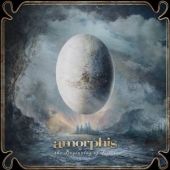

Type: Full-Length
Release Date: May 27th, 2011
Label: Nuclear Blast
Genre: Melodic, Modern, Rock
1.
Karelia
2.
The Gathering
3.
Grail's Mysteries
4.
Warriors Trial
5.
Black Embrace
6.
Exile Of The Sons Of Uisliu
7.
The Lost Name Of God
8.
The Pilgrimage
9.
Misery Path
10.
Sign From The North Side
11.
Vulgar Necrolatry (Abhorrence Cover)
1.
Battle For Light
2.
Mermaid
3.
My Enemy
4.
You I Need
5.
Song Of The Sage
6.
Three Words
7.
Reformation
8.
Soothsayer
9.
On A Stranded Shore
10.
Escape
11.
Crack In A Stone
12.
Beginning Of Time
13.
Heart's Song (Bonus Track)
Review by Stellarium on March 23, 2024.
The History / Concept of the Album:
“The Karelian Isthmus” is a section of land in South East Finland that shares a border (and territorial disputes) with Russia. Historically, this was considered part of Finnish Karelia, until the Russian Empire conquered it during the Great Northern War of 1712. When Finland achieved independence from Russia in 1917, the majority of the Isthmus remained Finnish. The area has been witness to many a battle and power struggle over the centuries, up to and including the events of WWII.
The Karelian Isthmus:
One of the tropes that Amorphis are best known for is their use of local and world literature and mythology. Before heavily featuring the Karevela (Epic collection of tales from Finnish folklore) as the bulk of their lyrical output, the group mixed a lot of Celtic and Arthurian references to form the general milieu of the group’s trope. Despite numerous departures, arrivals, and re-arrivals to the line-up, this is the only album to have the original Amorphis line-up of Tomi, Esa, Olli and Jan.
The record opens with “Karelia” which is a mood-setting intro track, (which at forty-two seconds is the shortest Amorphis song recorded). A melodic motif plays 16 times, slowing as it reaches its climax. You can imagine the warriors sailing on a Drakar as land appears on the Horizon. As the ship pulls in to dock, the track concludes, and the happiest part of the story comes to a swift end, as they know their lives (or what remains of them) will be irreparably changed forever.
“The Gathering” tells of the moment that the longboat disembarks, arriving at the battlefield. The piece is a slow melodic death composition, draped heavily in doom influences, marking a powerful contract to the previous piece - composing a poignant analogy between carefree life and imminent demise. Lyrically, this track veers very closely towards pagan metal. The song benefits from the light use of keyboards and synths, as they are discreetly used to add a layer of reflectiveness to the misery of the scene. The track ends extremely abruptly, as if an arrow has suddenly struck the poor narrator mid-flow. Powerful stuff.
"The Exile of the Sons of Uisliu" (Oosh-lyoo) is the best song on the album by an absolute landslide. Highly referencing Irish Mythology, this track refers to the consequences up to and surrounding the assassination of Noisiu. (Neesha) – who was the nephew of the King of Ulster. As the song develops, the music becomes heavier and more frantic before the vocals ascend into the deepest metal growls on the record. The story is lifted from the epic Celtic myth found in (Tahn Bo Coolnyeh) (The Cattle Raid of Cooley), which themselves are a part of the wider Ulster Cycle legends.
"Sign from the North Side" once again discusses Celtic Pride and references the region of Kernow (modern day "Cornwall") in the United Kingdom. It's a song about defending your land, and how your purpose is to do so. “I am the unburied child without a name, without a fate, fighting for peace and love… I am reborn…”
"Vulgar Necrolatry" is another track worth mentioning and is a cover of a track written by Finland’s Abhorrence (of which members of Amorphis were previously involved, so they’ve covered their own material in a roundabout way.) The track is a brutal piece that has synergy with the themes from the album and is a clever addition to closing off the release. It discusses death, the stench of rot, and the ambition to bring back the dead – with whatever means are necessary. This therefore completes the cycle of life and death, fighting and dying for gods that you don’t know if they exist or not, as in your dying moments, you find yourself swollen with pride and bruised with fear and doubt, knowing that whatever happens, you will live on, and history will be doomed to repeat itself for as long as man is flawed…
This is exactly why this album is a special, spiritual experience. The tracks and their meanings are ordered so beautifully and deliberately, the album creates an ouroboros of all the stages of life, death, and afterlife. The band also uses the music to great effect to reinforce this point. The tracks are designed to flow together and play on a near endless loop – no track stands out massively over any other, and despite their own complexities, the album sounds very samey throughout. The same sombre mood is used regardless of the composition, and it seems to genuinely suit the theme of the recording. It isn’t a story put to music – it is music put to a story and compressed to match it’s mood. It sits second to the tale of the warriors and their conflicts, never stealing away from the protagonist. There are no guitar solos, no examples of instruments breaking out and stealing the show – just a steady collection of melodic death metal that comfortably acts as a supporting character – much like the weaponry in the hands of the skilled Berserkers.
Rating: 8.4 out of 10
1.40kReview by George on August 16, 2020.
With early death metal origins, an increased presence of folk and rock influences later on and more, Amorphis have never been an easy band to assign a single genre to. Nowadays they straddle a very strange line between prog metal, folk rock and melodeath, a niche that they've explored and refined over the last fifteen years since the introduction of Tomi Joutsen. Today I will review what might just be the pinnacle of this era and arguably even Amorphis overall.
I consider Silent Waters, Skyforger and The Beginning of Times something of a trilogy in Amorphis' discography, each being a concept album that deals with one of the three main characters in the Kalevala, the Finnish national epic. Both the preceding albums are amazing in their own right, with Silent Waters telling the stories of Lemminkäinen and Skyforger dealing with the great blacksmith Ilmarinen. But The Beginning of Times is on its own level entirely, where breathtaking storytelling, mystic melodies and Amorphis' magical composition converge to create a near-perfect experience.
The third instalment of the trilogy tells the tale of the great bard Väinämöinen, and the atmosphere is impeccable. The focus of the album is on wondrous, folky keyboard lines with very few overtly epic moments, but then again the Kalevala is not an epic text. Sure, magical duels, celestial wars and visits to the underworld are commonplace, but the book's true soul is in its poetic beauty and storytelling, reflected well by the sweet, flowing motifs that make up a large part of the experience.
The cynosure of the record is, without a doubt, Tomi Joutsen. His true versatility is not even on display here, but once again that's because it doesn't have to be. The desperate, harrowed side of him isn't necessary (although if you want to hear a man with such a powerful voice sound like he's about to collapse on the floor in tears I heartily recommend Hallatar), leaving just his storytelling mode. I don't think there's anyone else who could better represent a Bard with the power to infuse his songs with magic - his clean singing is even more passionate than ever before while he reserves his forceful growls for the more thematically intense sections such as Väinämoinën's rage in 'My Enemy'.
The album overall is a very logical progression from Skyforger, comprised mostly of simple, anthemic melodic rock songs such as 'Mermaid' and 'You I Need', which serve the atmosphere well with catchy riffs, powerful, memorable choruses and guitar solos aplenty, never overly technical but always emotionally resonant. But The Beginning of Times is at its best when it's combining those joyous leads with more complex, ambitious structures that give a true sense of progression and storytelling. This occurs most notably in 'Song of the Sage', which is really a convergence of every single element that makes the album great and more - it sets the scene with soaring twin melodic lines from a guitar and flute, both coming together for one of the most evocative choruses on the album. The duality between the instruments is perfectly reintegrated later on in a series of atmospheric solos - it's quite a simple concept but Amorphis execute it to perfection, squeezing every last drop of raw beauty they can out of each and every melody they write.
And that is, to me, the best way to describe this album. It's a series of very simple ideas taken to their very limits and executed to sheer perfection. The band aren't reinventing the wheel in terms of any particular songwriting devices, but there's still a characteristic individuality in the unorthodox blend of genres they present. Every moment is brimming with passion, imagination and sheer artistic vision and the result is captivating.
In the end, The Beginning of Times is a near flawless album that I have just one complaint about. There's a singular point around the middle of 'On a Stranded Shore' where I begin to feel it's overstaying it's welcome. It happens on every listen without fail, but fortunately Amorphis have always managed to recapture my attention with the beginning of 'Crack in a Stone' (a song that introduces yet another new element with a beautiful integration of choirs). However, just for that one small moment where the inclusion of 'On a Stranded Shore' begins to feel unnecessary, I'm forced to deduct a single point from the album. Ultimately though, this one little blemish is nothing compared to the creativity the rest of the album oozes. It manages to be distinctly Finnish in atmosphere even while defying the melancholic conventions of the band's contemporaries, and while the core ideas behind the music remain the same for the whole duration the subtleties and details are constantly shifting which keeps the experience fresh and memorable. With each track we're introduced to a new mood, a new story, a new landscape to be explored, and that is what makes The Beginning of Times such an incredible record. This is Amorphis at their peak.
Rating: 9.9 out of 10
1.40k