
Blood Stain Child - Official Website
ε psilon |
Japan
 |
|---|
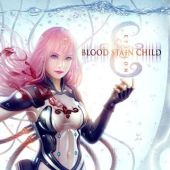

Type: Full-Length
Release Date: June 15th, 2011
Label: Pony Canyon
Genre: Electronic, Melodic, Metalcore
1.
Sulphur, Charcoal And Saltpetre
2.
Descent
3.
World Encircled
4.
Levitation
5.
The Temple In The Bedrock
6.
Black Lines
7.
Impact
8.
Nightmare
9.
A Second Chance
1.
Misanthrope
2.
Intermezzo
3.
Thou Are The Dragon
4.
Seed Of Greed
1.
One-Track Minded
2.
Distance To The Truth
3.
Kiss Or Kill
4.
Pornoholic
5.
Great Cop (Fugazi)
6.
Pink Machine Gun (Doctor And The Crippens)
7.
Scum (Electro Hippies)
8.
Garfield For President (Unseen Terror)
9.
I Hope You Die In A Hotel Fire (Righteous Pigs)
10.
Hippie Cult (Agathocles)
11.
Intrusion
12.
Suckass
13.
Fuck Authority
14.
I Need A Spliff
15.
Filthkick
16.
The Human Scum (Live)
17.
A Load Of Cocaine (Live)
18.
Political Shit (Live)
19.
Rock Out With Your Cock Out (Live)
20.
Conviction (Live)
21.
Mental Confusion
22.
Brainslam
23.
Hyper-Detection
24.
Perverse Illusion
25.
Blind To The Truth
26.
Tilt
27.
Emotive Synergy
28.
Intro
29.
Imminent Obscurity
30.
And Abhorrence Still Remains
31.
Homicidal Blatency
32.
Morbid Obligation
1.
Sirius VI
2.
Forever Free
3.
Stargazer
4.
S.O.P.H.I.A.
5.
Unlimited Alchemist
6.
Electricity
7.
Eternal
8.
Moon Light Wave
9.
Dedicated To Violator
10.
Merry-Go-Round
11.
La+
12.
Sai-Ka-No
13.
Void Dmn-str. Remix
Review by Rosh on November 22, 2023.
This project has been, since its inception, a cornerstone of classic sounding doom as a more serious artform rather than just redundant riff-worship. I feel that neither big name band of the style which Lord Vicar's own Kimi and Chritus respectively come from, Reverend Bizarre and Count Raven, ever displayed a truly esoteric musical vision for doom metal that transcends its defining characteristics - both those bands simply played doom that danced with both the expected solemnity and a touch of absurdism, and never really went beyond making exquisite masterpieces like these. Lord Vicar, though, has proved to be a more substantial and memorable project than even those two bands whom I hold in high regard. In every sense they are a more unique, more defined vision that Kimi had post-Reverend Bizarre. Esoteric in a poetic and truly unpredictable sense, something I have a real liking for because it feeds originality. The music itself and the decipherable lyrics blend together beautifully on each of the four Lord Vicar full-lengths so far, crafting a brilliant set of dynamics that can portray with great emotional weight the band's heavy thematic overtones. Fear No Pain from 2008 is still the most approachable release they've done up to this point, since it balances so well between musical tendencies of both the Reverend and the Count, but even here it was clear that Kimi was doing something more distinctly his own, coming from deeper within himself, and this tendency only continued over the next decade (has it really been that long?).
In 2019, The Black Powder dropped, as a total surprise. The band humbly said something to the effect that this release was supposed to be layered, unfolding more and more of its artistic detail with each subsequent listen, and judging by their previous couple albums, I believed it. Their soundscapes had only become more diverse since the debut, yet Kimi's bludgeoning riff attack always seemed to prevail through all the atmospheric sections, and Chritus' vocals would adapt accordingly, thus proving his vocal range and personal investment in the band. And while The Black Powder isn't their most larger than life album, it is absolutely the most emotional, dynamic, and deeply resonant album they've crafted yet, due in no small part to its layered nature. Lord Vicar is still a relatively young band, yes, but this album has to be their creative peak and the ultimate realization of Kimi's superb musical vision.
Now, generally speaking, an outstandingly good album should feel just right regardless of whether it's relatively shorter or longer, because it gets the dynamics and pacing right. The Black Powder, though, is actually so varied that it seems to adjust to each respective listen in terms of duration, and multiple moods seem to bleed from each respective moment. The monumental opener, "Sulphur, Charcoal, and Saltpetre", which is, bar none, Kimi's greatest musical achievement so far, may feel a bit dreamlike so as to be uncannily familiar in its opening sequence, yet at the same time it feels esoteric and difficult to grasp thematically, to me at least. This is a doom metal record of course, but the heavy power chords seem all the more befuddling and abstract when they come in, mirroring an already vague moment with a fierce passion. But while the slow, heavy doom metal part of this piece is awfully perplexing and even somewhat unnerving, especially the hook of the first verse, the feel of the music becomes more emotionally accessible when it picks up a bit more of a rocking groove. The increase in tempo at certain moments is generally welcome in traditional doom for a number of reasons that mainly have to do with lending the music a natural feel, but Lord Vicar use it to evoke an entire palette of colors, emotionally speaking.
And they do offer more accessible doom fare across the next few tracks, while still having this mystique about them. "Descent", "World Encircled", and "Levitation" have these shades of melody that feel so fresh amidst an otherwise bottom-heavy riff swamp, but this is also where Chritus' vocals shine, since the music has just enough melody to compliment the emotion in his vocals, but not so much that it can really carry on and manage to be this engaging without such emotion. "Descent" is, to be sure, a more depressive piece but I get a sense of wistful hope from the other above mentioned songs as well as "Black Lines." The doomy esotericism still shines through during the bridge of the otherwise uptempo "Temple in the Bedrock" and the melancholic acoustics (which are just as distinct as the legendary acoustic segments on Epicus Doomicus Metallicus) return on "Nightmare", which is by far the most accurate yet unthinkable representation of our modern world in many ways. I do feel that "Impact" and the end of the closing track are totally contrary to that esoteric melancholic feel from some of the other songs, but they're uplifting in a manner that is just as esoteric.
Ultimately, Lord Vicar's fourth album is not their most approachable yet but is certainly their best - and it's honestly a contender for the best doom metal album of the 2010's. In fact, this album opened my eyes up to a new tier of albums - there's albums that merely feel like collections of songs, albums that feel like a cohesive experience, and then albums that can be anything you want them to be. This is one of those albums and they weren't kidding when they said it's meant for multiple listens. I swear the music adapts to your mood.
Rating: 10 out of 10
1.16kReview by Rosh on November 22, 2023.
This project has been, since its inception, a cornerstone of classic sounding doom as a more serious artform rather than just redundant riff-worship. I feel that neither big name band of the style which Lord Vicar's own Kimi and Chritus respectively come from, Reverend Bizarre and Count Raven, ever displayed a truly esoteric musical vision for doom metal that transcends its defining characteristics - both those bands simply played doom that danced with both the expected solemnity and a touch of absurdism, and never really went beyond making exquisite masterpieces like these. Lord Vicar, though, has proved to be a more substantial and memorable project than even those two bands whom I hold in high regard. In every sense they are a more unique, more defined vision that Kimi had post-Reverend Bizarre. Esoteric in a poetic and truly unpredictable sense, something I have a real liking for because it feeds originality. The music itself and the decipherable lyrics blend together beautifully on each of the four Lord Vicar full-lengths so far, crafting a brilliant set of dynamics that can portray with great emotional weight the band's heavy thematic overtones. Fear No Pain from 2008 is still the most approachable release they've done up to this point, since it balances so well between musical tendencies of both the Reverend and the Count, but even here it was clear that Kimi was doing something more distinctly his own, coming from deeper within himself, and this tendency only continued over the next decade (has it really been that long?).
In 2019, The Black Powder dropped, as a total surprise. The band humbly said something to the effect that this release was supposed to be layered, unfolding more and more of its artistic detail with each subsequent listen, and judging by their previous couple albums, I believed it. Their soundscapes had only become more diverse since the debut, yet Kimi's bludgeoning riff attack always seemed to prevail through all the atmospheric sections, and Chritus' vocals would adapt accordingly, thus proving his vocal range and personal investment in the band. And while The Black Powder isn't their most larger than life album, it is absolutely the most emotional, dynamic, and deeply resonant album they've crafted yet, due in no small part to its layered nature. Lord Vicar is still a relatively young band, yes, but this album has to be their creative peak and the ultimate realization of Kimi's superb musical vision.
Now, generally speaking, an outstandingly good album should feel just right regardless of whether it's relatively shorter or longer, because it gets the dynamics and pacing right. The Black Powder, though, is actually so varied that it seems to adjust to each respective listen in terms of duration, and multiple moods seem to bleed from each respective moment. The monumental opener, "Sulphur, Charcoal, and Saltpetre", which is, bar none, Kimi's greatest musical achievement so far, may feel a bit dreamlike so as to be uncannily familiar in its opening sequence, yet at the same time it feels esoteric and difficult to grasp thematically, to me at least. This is a doom metal record of course, but the heavy power chords seem all the more befuddling and abstract when they come in, mirroring an already vague moment with a fierce passion. But while the slow, heavy doom metal part of this piece is awfully perplexing and even somewhat unnerving, especially the hook of the first verse, the feel of the music becomes more emotionally accessible when it picks up a bit more of a rocking groove. The increase in tempo at certain moments is generally welcome in traditional doom for a number of reasons that mainly have to do with lending the music a natural feel, but Lord Vicar use it to evoke an entire palette of colors, emotionally speaking.
And they do offer more accessible doom fare across the next few tracks, while still having this mystique about them. "Descent", "World Encircled", and "Levitation" have these shades of melody that feel so fresh amidst an otherwise bottom-heavy riff swamp, but this is also where Chritus' vocals shine, since the music has just enough melody to compliment the emotion in his vocals, but not so much that it can really carry on and manage to be this engaging without such emotion. "Descent" is, to be sure, a more depressive piece but I get a sense of wistful hope from the other above mentioned songs as well as "Black Lines." The doomy esotericism still shines through during the bridge of the otherwise uptempo "Temple in the Bedrock" and the melancholic acoustics (which are just as distinct as the legendary acoustic segments on Epicus Doomicus Metallicus) return on "Nightmare", which is by far the most accurate yet unthinkable representation of our modern world in many ways. I do feel that "Impact" and the end of the closing track are totally contrary to that esoteric melancholic feel from some of the other songs, but they're uplifting in a manner that is just as esoteric.
Ultimately, Lord Vicar's fourth album is not their most approachable yet but is certainly their best - and it's honestly a contender for the best doom metal album of the 2010's. In fact, this album opened my eyes up to a new tier of albums - there's albums that merely feel like collections of songs, albums that feel like a cohesive experience, and then albums that can be anything you want them to be. This is one of those albums and they weren't kidding when they said it's meant for multiple listens. I swear the music adapts to your mood.
Rating: 10 out of 10
1.16kReview by Rosh on November 22, 2023.
This project has been, since its inception, a cornerstone of classic sounding doom as a more serious artform rather than just redundant riff-worship. I feel that neither big name band of the style which Lord Vicar's own Kimi and Chritus respectively come from, Reverend Bizarre and Count Raven, ever displayed a truly esoteric musical vision for doom metal that transcends its defining characteristics - both those bands simply played doom that danced with both the expected solemnity and a touch of absurdism, and never really went beyond making exquisite masterpieces like these. Lord Vicar, though, has proved to be a more substantial and memorable project than even those two bands whom I hold in high regard. In every sense they are a more unique, more defined vision that Kimi had post-Reverend Bizarre. Esoteric in a poetic and truly unpredictable sense, something I have a real liking for because it feeds originality. The music itself and the decipherable lyrics blend together beautifully on each of the four Lord Vicar full-lengths so far, crafting a brilliant set of dynamics that can portray with great emotional weight the band's heavy thematic overtones. Fear No Pain from 2008 is still the most approachable release they've done up to this point, since it balances so well between musical tendencies of both the Reverend and the Count, but even here it was clear that Kimi was doing something more distinctly his own, coming from deeper within himself, and this tendency only continued over the next decade (has it really been that long?).
In 2019, The Black Powder dropped, as a total surprise. The band humbly said something to the effect that this release was supposed to be layered, unfolding more and more of its artistic detail with each subsequent listen, and judging by their previous couple albums, I believed it. Their soundscapes had only become more diverse since the debut, yet Kimi's bludgeoning riff attack always seemed to prevail through all the atmospheric sections, and Chritus' vocals would adapt accordingly, thus proving his vocal range and personal investment in the band. And while The Black Powder isn't their most larger than life album, it is absolutely the most emotional, dynamic, and deeply resonant album they've crafted yet, due in no small part to its layered nature. Lord Vicar is still a relatively young band, yes, but this album has to be their creative peak and the ultimate realization of Kimi's superb musical vision.
Now, generally speaking, an outstandingly good album should feel just right regardless of whether it's relatively shorter or longer, because it gets the dynamics and pacing right. The Black Powder, though, is actually so varied that it seems to adjust to each respective listen in terms of duration, and multiple moods seem to bleed from each respective moment. The monumental opener, "Sulphur, Charcoal, and Saltpetre", which is, bar none, Kimi's greatest musical achievement so far, may feel a bit dreamlike so as to be uncannily familiar in its opening sequence, yet at the same time it feels esoteric and difficult to grasp thematically, to me at least. This is a doom metal record of course, but the heavy power chords seem all the more befuddling and abstract when they come in, mirroring an already vague moment with a fierce passion. But while the slow, heavy doom metal part of this piece is awfully perplexing and even somewhat unnerving, especially the hook of the first verse, the feel of the music becomes more emotionally accessible when it picks up a bit more of a rocking groove. The increase in tempo at certain moments is generally welcome in traditional doom for a number of reasons that mainly have to do with lending the music a natural feel, but Lord Vicar use it to evoke an entire palette of colors, emotionally speaking.
And they do offer more accessible doom fare across the next few tracks, while still having this mystique about them. "Descent", "World Encircled", and "Levitation" have these shades of melody that feel so fresh amidst an otherwise bottom-heavy riff swamp, but this is also where Chritus' vocals shine, since the music has just enough melody to compliment the emotion in his vocals, but not so much that it can really carry on and manage to be this engaging without such emotion. "Descent" is, to be sure, a more depressive piece but I get a sense of wistful hope from the other above mentioned songs as well as "Black Lines." The doomy esotericism still shines through during the bridge of the otherwise uptempo "Temple in the Bedrock" and the melancholic acoustics (which are just as distinct as the legendary acoustic segments on Epicus Doomicus Metallicus) return on "Nightmare", which is by far the most accurate yet unthinkable representation of our modern world in many ways. I do feel that "Impact" and the end of the closing track are totally contrary to that esoteric melancholic feel from some of the other songs, but they're uplifting in a manner that is just as esoteric.
Ultimately, Lord Vicar's fourth album is not their most approachable yet but is certainly their best - and it's honestly a contender for the best doom metal album of the 2010's. In fact, this album opened my eyes up to a new tier of albums - there's albums that merely feel like collections of songs, albums that feel like a cohesive experience, and then albums that can be anything you want them to be. This is one of those albums and they weren't kidding when they said it's meant for multiple listens. I swear the music adapts to your mood.
Rating: 10 out of 10
1.16kReview by Lawrence Stillman on November 28, 2023.
"How dare you diss Idolator while liking this?" I can already see the shitstorm brewing now. Oh well, at least I've written my fair share of terribly hot takes in the past, so I'm used to it. It's not like my music taste isn't already appealing to the obscure and extreme.
Epsilon marks the third album where BSC dabbles in this style of melodeath and trance, but this time they went too far in the trance direction and adopted a more uplifting and optimistic sound. Not only that, this marks the first (and only) time they have female vocals in a BSC full length (Nuclear Trance and Metropolis don't count). Suffice to say that this album will be alienating to those looking for a next step from the sound they have established in Idolator, and instead this album will be their most accessible, even when I'm writing this in 2023, full of elements that would not be out of place in a synth pop/trance album.
But first things first, let's talk about the production. While this is mixed by Ettore Rigotti of Disarmonia Mundi fame, this might be his weakest effort barring Mind Tricks and Cold Inferno. For one, the EDM elements are pushed too far forward into the mix, which causes the said elements to bury the other instruments. And as a direct consequence, the rest of the instruments sound really muddled, but not too muddled to the point where all the instruments blend together like one singular source of noise. You can still make out the guitars and drums (they sounded more creative here than in Idolator), they just don't sound as loud as they did during Idolator. The bass is unfortunately pretty inaudible here, typical modern melodeath/death metal stuff, and considering that this is Ettore after The Isolation Game, he went full Lars Ulrich and Newsteaded the basslines. What's with death metal/melodic death metal producers and their grudges with bassists?
Songwriting-wise, this might be their best since Mystic Your Heart. This time they did not take the Gothenburg melodeath approach to songwriting, and instead the songwriting here has a more minimalistic approach similar to trance music. The songs do not all follow the verse-chorus structure; they do what they have to, and once it's done, the song ends (kind of paraphrasing Jon Nodtveidt here, he's still a piece of shit, good riddance that he killed himself instead of wasting time killing gays or Jews). As a result, the songs here flow better because they do not have to deal with songwriting bloat. The guitars seemed to benefit from this too, for they have more creative riffs and solos that fit the songs and enhance them, unlike in Idolator, where the riffs sounded like they were taken from a Gothenburg riff factory. One example of this is the solo within Stargazer; after a small synth bridge, both guitars promptly picked up from where the bridge ends and did a back-to-back solo before Sophia took over from there. The album also has the closest thing BSC has to a full-on trance song, Electricity. The peculiarity of this song and how out of place it is makes it one of the best tracks in the album and solidifies this album as one of the most unique albums within metal music that has a major electronic influence, like Crossfaith and Crystal Lake. Regarding Sai-Ka-No, I heard the version with Royal Sky that comes after that so I treated Sai-Ka-No as an intro to Royal Sky, so that is why I did not complain about its inclusion.
Speaking of vocals, another thing that makes this album stand out is Sophia's vocals. Her vocals are unlike most female vocals in that they have a deeper, more soulful sound to them, while most female vocalists are trying to sound as operatic or poppy as possible. Besides fixing the Engrish lyrics and vocals that the band suffers from, her vocals also serve to stop Ryu from exerting his obnoxious cleans and instead give the band some good cleans for once, which really helped the songs, as now BSC has someone to contrast Ryo's harsh vocals with that actually sounds great. And as a lover of vocal contrasts, this can only be a good thing (I know Sadew did cleans in Neo Gothic Romance from Mozaiq, but that is just one song). One example of this is during the rerecorded version of Final Sky here (now named Royal Sky). While the song still has Ryo's harsh vocals as if it were not changed at all from the original, Sophia added a lot of impactful cleans into the song, replacing the half assed and ineffective cleans of the original courtesy of Ryu. This might be a hot take, but I actually like this better than the original Final Sky.
Despite losing a lot of metal elements compared to Idolator or Mozaiq, I still think this is their best effort after Mystic (I do not hold Amateras in high regard). Who cares if they have more trance than metal in this album? At least this is genuinely enjoyable from start to finish, unlike the terrible electronic metalcore and melodic death albums they influenced. But yeah, this album does not deserve the hype it has, nor does it deserve the hate it gets from fans of older material.
If you want something similar to Idolator, go listen to Kamikakushi by MergingMoon instead of complaining about Epsilon.
Highlights: 'Sirius VI', 'Forever Free', 'Stargazer', 'Royal Sky', 'Electricity', 'LA+'
Rating: 7.2 out of 10
1.16kReview by Monika on September 5, 2011.
To be completely honest, when I got “ε psilon” into my hands for the first time, and judging purely by the cover of the album, I half-expected a sugar-coated bunch of screaming late teenagers. Alas, as the saying “don’t judge book by its cover”, I was, must admit, pleasantly surprised by the contents. While I have not had much experience with Blood Stain Child in the past, I think I may just check up on them once in a while from now on, just to see if they grow further, better.
If you look up the word 'ε psilon', it is used in many different fields. Now, if you look at the track listing of the “ε psilon” album – the titles seem to come from different fields as well; the lyrics seem to have various subjects, yet the thing that binds them together is the variety of meaning of the word 'ε psilon' – whether the defined limit, the smallness of something, precision. All in all, the CD is a combination of distinct but connected songs. Music is free-flowing, dynamic, almost colorful. Vocals are quite frankly the forte of this album – I think that the fact that the band had taken on a female vocalist of this quality has greatly improved an already good band. Sophia’s soft but powerful singing, intermittently intertwined with an almost mocking growling – with the bright and upbeat tempo in the background – together give off a sometimes aerie feeling to it – had it not been for the beat. Surprises throughout – an almost club beat slowing down to a serenade; a theme park carousel cheesiness converting into a metal concert venue. Very, very nice. I thoroughly enjoyed the haunting, slightly digitized softness versus almost barked out roughness – I think the balance was just right. Music was, I have to admit, put together seamlessly – and judging from the “resume” that came along with the CD – Blood Stain Child have had their chance to work with some note moguls over the last decade – it shows they know what they’re doing. No unfinished songs. No songs that start just randomly. Another example of what the world knows Japan for – excellence and perfect finish – no cutting corners.
“ε psilon” will get you moving and keep you going. If you’re a fan of guitars and abstract acoustic solos – please look elsewhere. If you’re a fan of insane drumwork – pick another CD. If you’re looking for a good example of Cyber Metal – definitely give Blood Stain Child a go.
Categorical Rating Breakdown
Musicianship: 7.5
Atmosphere: 7.5
Production: 9
Originality: 7.5
Overall: 8.5
Rating: 8.0 out of 10