Oathbringer - Interview
Better late than never: Sanctuary is finally set to make its debut on Brazilian stages. Could—or should—this have happened sooner, back when vocalist Warrel Dane was still alive? Yes, of course. But his replacement, the incredibly versatile Joseph Michael, helps stave off inevitable comparisons as the band looks to the future, with a new album on the horizon and a preview of it already included in their live set. A month after speaking with Joseph , I had the opportunity to have the conversation you are about to read with none other than Lenny Rutledge—guitarist, founding member, and (despite his humility and approachability leading him to reject the label) a true legend of American metal.
Marcelo Vieira (@marcelovieiramusic)

Sanctuary will finally play in Brazil for the first time on August 30, 2026, after four decades of history. How does it feel to finally reach a country where the band's music has had such a long-lasting underground following?
Lenny: Yeah, we're really excited about it. We know there are a lot of passionate fans down there in Brazil. And, of course, we have a lot of connections there because Warrel was down there a lot. I would always talk to him when he was there, and he had his solo band down there and everything. So, yeah, we've heard a lot of great stories about Brazil and the people there.
This will actually be your first visit not only to Brazil but to South America. What have you heard about the Brazilian and South American metal audiences over the years, and what are you expecting to discover for yourself?
Lenny: That they're very passionate and really, really into metal. They really get into it, so we're looking forward to it.
Would you rather approach the Brazilian show as a celebration of the band's history or as the beginning of a relationship with a completely new audience?
Lenny: Definitely both. You know, there's obviously a lot of music that we want to celebrate and share with everybody, from the past and the future. Honestly, we're only going to be playing one song while we're down there, but I know it's a different configuration of the band. There's a lot of stuff that we're going to be playing that we haven't played in a long time, and there were some things that were a little more of a struggle to play. But you're going to hear a ton of old stuff from Refuge Denied and Into the Mirror Black. The bulk of the set is going to be that. You're also going to hear three songs from The Year the Sun Died and one new song from the upcoming release.
Twelve years have passed since "The Year the Sun Died". What made 2026 the right moment for Sanctuary to finally feel that there was a strong artistic reason to return to the studio?
Lenny: Well, we're getting closer. You know, sometimes it takes us a while to finish everything that we've been working on. And so we're getting a whole lot closer to the end. We're actually going to finish it up this year, and it's going to be released toward the beginning of next year. There's a possibility that it's going to be called Transmutation; that's the working title.
"Not Of The Living" is being presented as the first step into a new chapter. What does this song represent to you personally within Sanctuary's history?
Lenny: Well, I mean, it's some growth. Obviously, there are some differences there, too, but we try to do that with every album. We try to show a little bit of growth, from Refuge Denied to Into the Mirror Black to The Year the Sun Died. And I think we're headed down that path with this new record as well. I mean, obviously, the main difference is that Joseph is singing on it instead of Warrel. But we're still trying to retain the legacy of Sanctuary as well.
Joseph Michael has described "Not Of The Living" as one of the more straightforward songs among the new material. Why did you feel this was the right song to introduce this new incarnation of Sanctuary to the world?
Lenny: Well, I don't know. It just resonated with us, and we felt like it was a good song for that. A lot of times, when you have a batch of songs, some of them stick out. We recorded some of this record in sections, and in the first section we did three songs. That song kind of stood out as one of the first songs we'd like people to hear. We felt like it was a strong song and kind of showed where we were going.
This is the first new Sanctuary material since Warrel Dane's death. How do you find the balance between acknowledging his enormous importance to the band and avoiding turning every new step into a comparison with the past?
Lenny: Yeah, it's hard. It's hard to do. I think that, depending upon the person or the listener, there are always going to be comparisons. I'm probably guilty of it myself. But, you know, we're just trying to live up to what we feel is music that we enjoy, and hopefully we can make it so that other people enjoy it as well. That's the first thing for us: we just try to make music that we really like.
At the same time, like I said, we're trying to retain the legacy of Sanctuary. We don't want to go too far out and change the band into anything bizarre or anything. We know that we have parameters that we're going to stick within, for the most part.
Joseph Michael obviously isn't trying to "be" Warrel. What has he brought to Sanctuary that you didn't realize the band needed until you heard him singing these songs?
Lenny: Well, I mean, one good thing is that he has a lot of different vocal qualities. We have some stuff that we're working on that's not as clean vocally. Sanctuary has always had a lot of clean vocals, but we're actually experimenting with some stuff that's not so clean—not a whole lot, but a little bit—just because we think some of that stuff is cool, and we like it.
And we like the fact that Joseph can span the ranges, from all the way back to Refuge Denied to some of the lower stuff on The Year the Sun Died. So we appreciate all the range that we have there.
The enormous gaps between Sanctuary albums are part of the band's history. Does that affect your relationship with songwriting?
Lenny: It probably does, because from 1990, when Into the Mirror Black came out, to 2014 and The Year the Sun Died, obviously some things changed. I was telling somebody this story the other day: from 1999 to 2009, I didn't play electric guitar at all. I only played acoustic guitar for ten years. So a lot of that changed the way I think about things and the way I play as well.
When Sanctuary got back together, I had a different way of looking at things, and I think that kind of shaped the way I wrote after that period. It made me look at things differently. I feel riffs a little differently because of that ten-year break I took, but it was a little bit of work to get back to that point.
Do you feel a greater sense of freedom because you have never been a band that had to constantly produce new records?
Lenny: Yeah, I don't know. I guess we're just a little bit slower. One of the reasons why it took us so long to put out The Year the Sun Died is that we broke up for 20 years. There's that. But this time, we've just taken a long time. There have been some things that have happened along the way—family, COVID, other things, and Warrel passing away. Sometimes life gets in the way, and sometimes those things are a little bit more important. I mean, music and metal are important, but sometimes you have to lean into those other things, I guess.
Is there something specific about the way Warrel wrote, sang, or approached a song that still influences your decisions?
Lenny: Yeah. I mean, he was a bit of an enigma. That was the thing: I was always trying to figure out what he was writing about. A lot of times, he really wouldn't talk about it. Sometimes he would, but there were definitely things that he would explain, especially when they were about a specific topic.
We had a few songs—at least one—that were about a book or a movie, you know, that type of thing. You don't always know that when you listen to them. For instance, "Soldiers of Steel" is actually a song about a book and a movie called The Keep, by F. Paul Wilson. It's a really good movie and a really good book. So, if people are interested in knowing what "Soldiers of Steel" is about, that's it.
I love that kind of thing about Warrel. He always had these really deep subjects. They were very thoughtful and very deep.
There is a fine line between honoring the past and becoming trapped by it. How do you recognize when a new idea is genuinely moving Sanctuary forward rather than simply reproducing a formula that worked decades ago?
Lenny: Good question. I don't know. I'm sure there's a little bit of both. Being the main riff writer, I'm sure there's stuff that I probably inadvertently regurgitate. A lot of times, we go through a process where we'll check ourselves, and somebody in the band will say, "You know, that sounds a little bit too much like this or that." So we do that. In fact, that comes up a lot.
A lot of times, you find out that you may be plagiarizing one of your own riffs. We definitely don't want to plagiarize somebody else's riff, but sometimes you don't even realize it. We've actually had pieces that we've removed from our songs just because they sounded too much like one of our own riffs from earlier in our career.
But there's also the other side of it. You have AC/DC—AC/DC sounds like AC/DC. A lot of their songs sound the same, right? I mean, they do have a brand. So I feel like Sanctuary has a brand as well, and a lot of bands do. You're going to end up having things that sound similar within a certain vein, I guess. So I hope I answered the question.
"Refuge Denied" and "Into the Mirror Black" have become landmarks of American metal. When you write today, can you actually forget those records, or are they inevitably sitting on your shoulder?
Lenny: I love the energy of Refuge Denied. So there are times when I try to replicate that. It's really easy for me to write dark, slow, almost Sabbath-y type of stuff. I could do that all day long. So there are times when I have to remind myself that we wrote Refuge Denied and that we need that energy.
It's the same with Into the Mirror Black. Mirror was a little darker and a little different, with maybe a little less energy but more intensity. So I do think about that at times, yes.
The new album will inevitably be heard in the shadow of "Refuge Denied", "Into the Mirror Black", "The Year the Sun Died", and, of course, Warrel's legacy. What do you want listeners to understand first when they hear the complete new record?
Lenny: All I can say to everybody is: give it a chance. Give it a listen. I always say, give it a couple of listens, because I can't tell you how many times somebody has come up to me and said, "Hey, I heard 'Not Of The Living' and I wasn't sure about it. Then I heard it three or four times, and now I love it."
Sanctuary is celebrating its 40th anniversary at a very particular moment in the band's history. When you look back at this entire journey, what do you still feel Sanctuary has to prove—to yourselves rather than to the audience?
Lenny: Oh, well, I mean, that we can do it. That we can still do it and that we can still survive, still go out there, and make great music. We'll probably do it as long as people come to our shows and continue to support us.
I mean, that's really a lot of it. To go out there and share the music with fans who love it, and to see that happening—that's the magic right there.
Is there any Sanctuary song that you now hear differently because of everything that has happened since Warrel's passing?
Lenny: That I hear differently? I don't know. There are definitely songs that we play that sort of bring up emotions for us when we play them. There are certain songs that Warrel would, you know—we play "Epitaph" right now, and it's a song that we didn't play a lot for many years. We've been playing it, and we're going to bring it down with us to South America, along with "Veil of Disguise."
"Epitaph" kind of brings up some emotions for me because Warrel and I's dads—each of our fathers—passed away when we were younger, and that's kind of what that song is about.
There are still four months to go, but anticipation for the joint Latin American tour featuring Testament, Municipal Waste, and Immolation is already sky-high. Brazil will host five dates: Curitiba (Dec 5), São Paulo (Dec 6), Limeira (Dec 8), Belo Horizonte (Dec 10), and—to the surprise of many—Rio de Janeiro (Dec 13). This will mark the fifth visit to the country by these death metal veterans. Although their previous tour was recent, this new run serves to promote the newly released and acclaimed "Descent". Guitarist and founder Robert Vigna discusses the album with the excitement of a child who has just received a new toy.
Marcelo Vieira (@marcelovieiramusic)

"Descent" is Immolation's twelfth studio album, yet the band still sounds unmistakably like Immolation without simply repeating the formulas of the past. How conscious are you of the balance between preserving the band's identity and finding new territory as a songwriter?
I guess, yeah. Well, you have to be. You have to watch out for repeating yourself or trying to sound like anything else. It becomes more difficult the more songs you write and the more albums you release, you know? It gets harder and harder. But luckily, I just try to write stuff that sounds cool. Then, once I'm done with certain things and I send them out to the guys, I rely on Ross or Alex, who are more in tune with the older stuff, you know, and Steve, of course. If it sounds like anything else, they're kind of like my police, so to speak.
But, you know, you just try to do the best you can to come up with interesting-sounding stuff and go from there. I mean, there's really not too much of a formula in the sense of, like, "Okay, we're going to try this now. We're going to try something like that." It's just, "What do we come up with?" And then, if something sounds cool, we make it work. Or if it's something like, "Okay, this is a little different, but I think this could be cool," then we're good, you know?
But that's it. It's not like we go out of our way to say, "Okay, we're gonna do this. This record's gonna sound like this now." You know, it doesn't work that way.
The album title, "Descent", suggests a movement downward, while songs such as "False Ascent" and "Bend Towards the Dark" seem to reinforce that imagery. What does "descent" represent to you in the broader conceptual world of the album?
Yeah, well, the concept basically runs through the whole record, but mainly that song as well, which wraps up the record. It's really looking at everything going on around us today, as we always do. We're always just looking at what we see in the world and kind of reflecting on it, talking about it, bringing it to light, bringing the darker side of mankind to light.
In general, the song "Descent" just looks at really where we are today and how we've kind of... We're at a place now where, I know, we're starting to repeat stuff from the past that we shouldn't be, but we're also heading into some areas that we've not quite been before, I think. And that's kind of what that song is about. It's just about saying, "Hey, what are we doing here?" Because, you know, it seems like these days the world is a very... Everywhere you go and every subject, it just seems like everyone's at opposite ends of everything. Everything has become extreme, you know what I mean? Way too much. Less talking, more hatred, more anger, you know. So it's just a crazy place.
And I know we've done plenty of that in the past in our history, but it just seems like we're repeating certain points of that that people should realize by now never got us to a good place. So why are we doing that again, you know?
So, basically, that's roughly, in a nutshell, what the album looks at.
Immolation has always dealt with religion, power, humanity and the darker aspects of existence, but the band's lyrics have never felt like straightforward political or religious statements. After more than three decades of writing within this universe, where do you still find new ideas to explore?
I guess it's a little bit of both, but at the same time, there's a lot of stuff out there, so it's easy in that respect. It's just a matter of, well, you know, there are times when you're like, "What angle are we going to take? What are we going to do a little differently?" You know what I mean?
So, like, "The Ephemeral Curse" was cool because that kind of looks at humanity in general, basically explaining how small we are, you know? All the stuff we go through, but we mean nothing in the universe. You know, that's kind of what that song's about, in a nutshell.
So, you know, there are certain aspects you try to take different turns on, but I mean, there's plenty of the basic ideas and other darker things to go around to come up with stuff. Trust me.
I think, with the music, the more you've done, the harder it gets. But Ross and I always keep a lot of different ideas and concepts around, whether it be a title, one word, or a line or lines I've come up with when I'm writing the stuff. And then you take those and say, "Okay, what fits with what song?" Or, "This idea sounds cool. This song's a good song for this." You know?
So we just take it from there. That kind of makes it easier, and then we bounce things back and forth to each other. And that becomes the more... As stressful as it is, it's still the fun, the more fun part of writing, because the music—the hard part of the music—is done. The ideas and things we want to explore are there, so it's just a matter of kind of connecting them to the songs and then coming up with the lyrics.
Luckily, with that, you can do things at the last minute, or you can just brainstorm and come up with a bunch of stuff in one shot. So it's a little easier for me to write that stuff than it is the music itself. The music is always a little harder for me.
Immolation's guitar language has always been remarkably unconventional, with dissonant intervals, unexpected chord movements and riffs that often seem to work against traditional death metal structures. When you are writing, do you approach the guitar as a source of melody first, or are you primarily thinking in terms of atmosphere, tension and rhythmic movement?
It's usually more about the atmosphere, the feeling, you know what I mean? Like, whether I'm writing riffs, it doesn't matter if it's basic, if it's technical, or if it's something else. It's like, whatever sounds interesting or cool to me, that's what I go with.
It could be the most basic of things, but if it sounds cool, I'm like, "Okay, that sounds kind of basic, but it also sounds very cool, so I'm just gonna..." On my computer, I'll put drums to it to get an idea of what I want it to sound like, and then I'll put it to the side. And I'll do that with all the other parts, too, and eventually find parts that connect together. Or you come up with a part that you think can carry a song, and then you take that as your main thing and work around that.
But yeah, to me, it's more about the feeling. That goes for the solos as well. I've never been one to be like, "Okay, I have to really do some crazy solo here. I gotta show off," or whatever. You know, it's not that for me. It's more about what fits the music.
There are a lot of times when I do solos that are more rhythmic, that go along with the rhythm to carry a song to a certain point. Or if Alex and I are working on solos, he might do a solo and take a certain approach to it. So if he's doing that, I'll answer it with something a little different. This way, you have a little... You know, it's not like, "Okay, he's doing something crazy, I gotta do something crazy." It's like, "Okay, he did that. It's got a lot of emotion, so let me do something that's more laid-back," or vice versa, you know? So they kind of carry each other.
That's all it is to me. It's always about the feeling, no matter what it is—rhythm, solo, or anything else.
"Adversary" was the first song released from the album, and you also directed its video. Did you already have a visual concept in mind while writing the song, or did the music inspire the imagery afterward?
We had the music first, obviously, and then that was one of the first songs we put lyrics to. I happened to see "Adversary" written down in one of our notes, you know, and I said, "Okay, that's a pretty aggressive song. It kind of would fit that, I think." So I was like, "Let's go with that," and then just started writing from there.
And then, once the song was done and we were thinking about video tracks, that one came up, obviously. And yeah, we did have a couple of concepts in the sense of, "All right, I think we could put us in this kind of scenario." So that was my thought for that song.
You know, the videos—we actually shot all three of them together in the same weekend. So we had to kind of have somewhat of a concept. Luckily, the Adversary concept was there, so I was able to get the lighting to work for that particular concept. And then I did different lighting and looks for the other two songs, kind of not knowing what I was doing exactly for those.
But I tried to, you know, basically, when filming the band, I wanted to at least have three different looks so I could create three different videos with that. But yeah, Adversary—we kind of had the fire idea for sure, and then, you know, brought it on from there.
Luckily, it worked out, because when you're shooting and you're doing something specific—which I normally don't do—I'll shoot with certain lighting, but I won't do something as specific as we did with that kind of flame look. So that was kind of hit or miss. You know, if it didn't work, we're like, "All right, well, we're gonna have to figure something out here." But it worked out really good, and the video, you know, everything kind of came together on that one.
You also directed the videos for "Attrition" and "Bend Towards the Dark." What do you find creatively satisfying about working with images in addition to music?
It's interesting. I mean, it's something I slowly got into because I worked for a production company in Brooklyn, New York, for many years, where I not only programmed moving lighting fixtures and did that kind of production work, but we also did some minor video stuff on a small scale.
But then, as I worked with other video guys like Tommy Jones, who did our first couple of videos with Nuclear Blast, and saw how he did things, and then worked on other videos... Little by little, we had to do one with a project Ross and I were working on called Gospel for the Witches with Karen Crisis from Van Crisis, from back in the day. She and her husband had this new band, and Ross did some vocals on the first record, and I played guitar live. We played a few shows live, but she wanted to do a video, and they had ideas and a concept.
So, at that point, I said, "Okay, let me give it a shot." Because I'd done minor video stuff for weddings and events and things like that, so I knew roughly what the tools were and had some basic knowledge. But going forward, I just kind of thought, "Let me just give it a shot." So we did it, and it came out pretty decent.
And then, from that point on, when Atonement came out, that's when I started working on videos for the band.
And yeah, it's fun. You know, we kind of do everything on our own. We'd help some friends and stuff, but for the most part, it's just us recording everything. I'll come up with some ideas, but a lot of times I'll... We'll film the band, and I'll figure the rest out later, you know?
But it's interesting. It's fun. I enjoy it. Like, same thing with the music, it's kind of fun to try and create stuff for the music that you've created, you know what I mean? And try and create some kind of visuals.
So I find it interesting. There's always stuff that I wish I had done better or whatever, but it's a learning process for me. And over the years, it's gotten a little bit better, and I've been able to learn more. But I still have a lot more to learn, especially with all the new technology out there now. So I have a little catching up to do.
But, you know, I try and keep as current as possible. It's always a learning process, though, but it's a fun one.

"Descent" features Zack Ohren as producer, mixing engineer and mastering engineer. What did you want to achieve sonically this time that perhaps you felt was missing from previous Immolation records?
Well, the last two records we liked a lot. I mean, I thought Atonement came out really cool. It had a really good... You know, Kingdom of Conspiracy, and I think Atonement was a good... You know, kind of like, from that point on, it was better in the sense that we had a more organic sound on Atonement, and that came out really good. It was a little darker-sounding, and then Acts of God was also very cool.
Different from Atonement, but also a really good production. It had a very cold sound to it, which fit the music well. But Zack Ohren, you know, as the years go by, Zack kind of has been more and more familiar with our music.
And with this record, we recorded it very differently. We normally would all go into one space, into a studio, and spend time with each other, etc. with Paul Orofino, who we've worked with since the third record. He had moved the studio down to Tennessee, and we also had a lot of stuff going on in our personal lives at the time. So, you know, it was like we couldn't really all go and meet in one spot.
So we had a local guy here, Justin Passamonte, who has a studio, and we went and did the rhythms, vocals and bass here. Steve recorded his drums close to home, about an hour away from his place in Ohio, with Noah Buchanan, who has Mercenary Studios. He was familiar with him and comfortable doing it there.
So Steve would record his drums and then he'd send us the tracks, and then we'd record to the stuff here. I even drove down to Virginia and got some of Alex's solos and stuff when he was down there. So everything was done in different spots.
But what we got sounded very good. And even though we were still under the gun to get the stuff done, it was a more relaxed feel because I would just go for a few hours a day and come home, you know? It didn't feel like there was the event of being in the studio, which, although we've enjoyed that many times over the years and had great times, this was more like, "All right, I'm gonna go record guitars for three hours and come back," you know? It was very nonchalant like that.
But we had the EVH head in there, and it was nice. It had a good sound, and I just... You know, it was very simplistic. We just jammed stuff out to Steve's drums, and yeah, all together it came out great.
And I think Zack, although we had very little time and we didn't really bug him too much, he did his thing, and he just did a phenomenal job. I mean, it's one of the biggest-sounding records we've had. It's very strong and powerful and very large-sounding.
And I think, production-wise, the music, and then the artwork for the cover came out amazing from Eliran Kantor. You know, everything just kind of came together, even though it was a tight window to get it done. But everything came out really, really well, and I'm super happy with it.
One particularly interesting aspect of "Descent" is the participation of Dan Lilker on vocals on "Host" and the title track. What made you choose him for those songs, and what did his presence bring to the material that you couldn't have achieved with the regular lineup?
Just a fun thing we do. He did it on the last record, I know, and he might have done it on... I can't remember. He did something on Atonement, but, you know, I think on the last record he did something at the end of one of the songs. And I think he did it on his phone, and he said, "Oh, you know, maybe you could use this," or something like that.
And then I heard it, and we put it in a certain spot, and I said, "Oh, that's cool. Tell him to do a longer one." So he did it on his phone again, like, whatever, and he just sent it to us, and it worked out.
But it wasn't... It was there, but it wasn't as present as these two are. These were kind of cooler because you can really hear them a lot better on this one.
So we had the last song, "Descent," where I thought it was really cool for him to do a nice scream together with Ross at the end. It was just kind of a cool thing. It added a different layer, you know, because Ross has the heavier side, and Danny likes... I mean, the guy's a thrash legend, but he also loves black metal, and he's into that kind of thing. He wanted to do some of those kinds of vocals, and I was like, "Yeah, go for it, man." And it sounded sick.
So it was that one, and then there was another part in one of the other songs that Ross thought of as well. He's like, "Ah, this would be a cool part for Dan to do something as well." So I was like, "Yeah, awesome."
So those two little parts... They were very quick. He just came by the studio because, again, we were here in Rochester, so he just came by with his wife, Heather, and we just came in. It was very quick. He sat there by the mic, did a couple of things, and it was done.
But it was just fun. It's like a fun thing to do, and it just adds a nice little... Just kind of like a cool little thing to add in there. It just adds what they call "ear candy," you know? It's like a nice little change there for certain parts.
And yeah, it sounds awesome. He did a great job, so it just added a nice little layer to a couple of those vocal lines, which was awesome.
Looking back at the band's discography, do you hear "Descent" as a continuation of the path that began with "Acts of God", or does it feel like the beginning of a new chapter for Immolation?
It just feels like where we are now, you know what I mean? Every album feels that way. I don't think it's the beginning or end of anything.
I mean, I would say more so the last three records—Atonement, Acts of God and Descent—are kind of like... I guess those two led up to Descent, so to speak. But I think after the many years of writing songs and being on the road, we've just gotten more into a certain place where I think we need to be as far as the writing and everything.
And, you know, we're going to take it to the next level with the next one, I guess. You know, it's always crazy to get down to a record and start writing when we had Atonement, which we thought was a really good record, and a lot of people liked that one. And then the last record, same thing. You're like, "You know what? Now what do we get here?" Because you always want to try and be at least as good as the last record, you know what I mean?
So you can't really do anything but just do your best and hope for the best, you know?
But yeah, that being said, I think it came out awesome. And it's good to be able to have that twelfth record and just say, "Wow, you know, this is a good one." We love playing the stuff live, and we're super happy about playing all the songs live, you know? It's great.
After twelve albums, countless tours and decades of surviving changes in the metal landscape, what still gives you the feeling that Immolation has something genuinely new to say?
I guess because there's still all these things out there that we see, and, you know, someone else is gonna say them, so why don't we say them? You know what I mean?
There's always gonna be other bands, new music, talking about everything that's going on. So we just continue to do that. And I think with every record, you know, you think, "Well, I don't know what to do here." And then we'll come out with a record like this and think, "Wow, we wouldn't have these nine songs now if we didn't go out there and get it done." You know what I mean?
So it's... It's always cool. Because I'm always happy with the stuff, especially this record. It's like thinking, "Wow, these are great songs. Like, it's cool. We have these now," you know?
And, you know, there's always something to say. There's always something out there. There's always that dark side of humanity. That's always there. And a lot of it keeps happening over and over again.
So we'll continue to talk about those types of things from different angles and everything, because all these things that are out there have gotten progressively worse over the years. So yeah, there's always that inspiration, for sure.
And then just the love of the music, you know? Because in the end, we love music. We love what we do. And it becomes a positive thing, even though we're talking about darker subjects.
You know, ourselves as a band, and I'm sure the bands and the fans that come out to all the shows that go on... I mean, I think it's just nothing but a unifying and positive experience for everybody in the end. So it's always a more unifying thing than anything else.
We talk about all the things that are going on that are separating people, and I think that kind of unifies us because we all have the same ideas.
Sometimes life is a bitch and it doesn't work as it should. This interview was already done in spring but unfortunately I just found the time to write it down by now. My apologies for that but I hope that my questions about Hellripper's new album (read full album review here) are still actual and interesting. So, maybe you might still enjoy reading my questions I asked James McBain.
Michael

Hi James, I hope you're doing fine?!
I'm doing very well, thank you very much!
You new album "Coronach" is going to be released next month. First of all, what is this title about?
The title is an improvised song for the dead. It's a vocal lament that will be performed at funerals in Scotland and the Scottish Highlands to honor the dead. I think the word sounds cool and it fits the theme of the album.
Is it Gaelic?
Yes it is. But I think it's also used in English but I'm not too sure about it (laughs).
It took me some spins to fully get into it, maybe it is because of the kind of bulky opener, did you try to get out of your comfort zone a little bit this time with this song?
Yeah, there's lot of new things I wanted to try, different things and trying to get out of my comfort zone. I was trying different vocal styles, different mixing techniques, different instruments and stuff like that. The first track starts off with a change in time signature between the first couple of bars. Each bar kind of changes the time signature a little – not too complicated but it's not something I've done previously. So that was something new and I like the chaotic feel of it and thought it was fun to open the album just with chaos and no room to breathe or time to get ready as the listener. It just blasts you in the face with dissonance and craziness (laughs).
The last album was on #12 in the British album charts, if I am correct – so what do you think about when they buy the new album and listen to that track and think "what the fuck"?
Haha, yeah! I think it's fun and it's always fun to think of an album. I always think of an album as a whole thing and I think of an opening and a closing track of side a and b and I'm always trying to make sure that it's some sort of journey and difference between atmospheres and styles of songs. For example the first track is very chaotic and a bit complex structure-wise and there's blast beats and punk parts, spoken word parts and five guitar solos happening and in the next song is a little bit more straight forward rock n' roll vibe. It's kind of contrast between these songs, trying make the full album experience as effective as I can.
You said you try to play a lot of different instruments on the album – did you have any guest musicians or did you just do it all on your own?
Both. I did a lot of piano and synthesizer on the album and I had some session musicians for bad pipes and violins. I had my friend Joseph (Quianlan; M.) who is the live guitar player in Hellripper. He performed two or three guitar solos on the album and he's done that for the past few albums as well. I had our drummer Max (Southall; M.) contribute some cow bells because this is very necessary I think.
Cowbell?
Yes! So it was lots of fun, both playing new instruments myself and figuring out how to incorporate them, how to make them sound good and how to make them work in Hellripper and even for the instruments performed by the other people just to write things on these instruments and trying to make it work in Hellripper. Also to add some things, I don't like things just to be there for no reason, I need to have a reason for them to be there. They've got to improve the song in my view, it's all very well bragging about having something different but if it's not improving the song it doesn't matter how different or unique it is.
How can we imagine the bagpipes when you will perform live? Will it be like Saor did with guest musicians?
Unfortunately not. Usually the bagpipes and things, to be fair, all of the non-traditional Hellripper things are usually there for texture ad atmosphere. They can be adapted to the live show, the vibe of Hellripper live shows is quite chaotic, fast and aggressive. Usually if there's something like a bagpipe part that needs to be in the song we translate it guitar so it still works. We like the studio side of recording – I love having all the textures, different instruments, vibes and atmospheres and some experimentation but the live side of things I really like it stripped back and raw, fast and rock n'roll so it's kind of two different sides to me which I enjoy.
Also the title "Hunderprest", as many others on the album, are not easy to understand if you don't have a very specific knowledge in Scottish history. Maybe you can fill me in a little bit more into the background of these songs with Gaelic titles?
This album every song is based on Scotland in some way. There are things like "Hunderprest" which is based on the legend of Hunderprest, the vampire of Melrose Abbey. There are also historical events like in "The Art Of Resurrection" which is about the body snatchers and grave robbers in Edinburgh in the 19th century. It's also about creatures from folklore like the Banshee, there's horror stories in there – "Blakk Satanikk Fvkkstorm" is based on a story by Robert Louis Stevenson called "Thrawn Janet" which is a cool horror story about possession and witchcraft. There are things inspired by some poetry like in the title track and some more of my personal experiences. So it's all based on Scotland in a way and it's cool to be able to do that. It kind of fits the vibe of Hellripper: about good and evil, horror stories, dark lyrics but kind of seen through the Scottish lens which allows me to use different settings, atmospheres and words. It keeps me creative and inspired much like using different instruments and different types of songs. It want to keep myself creative and learning and exploring new things which allows me to do that.
How can I imagine you are writing the lyrics about Scottish history? Do you dive deep into the material with reading a lot of stuff about it or is it more superficial?
Usually I do try and write the best lyrics I can. Obviously I am more a musician than a lyricist so the music is the most important thing. But I put a lot of effort into the lyrics. When I'm coming up with song ideas or titles, I just kind of anything I hear or read about I make a note of. I just have random documents, random quotes and folklore stories, legends, whatever. When I'm writing songs, some of the music suggests to me the vibe I want to go with the lyrics. Then I dive deeper into it, do more research and write the song that way. A lot of stuff are stories I've heard of while growing up and some I'm very familiar with. But some stuff is new to me as well. I enjoy the learning process of hearing new stories or historical things and writing a song about it. Again, it just keeps me creative and it's fun to learn new this as well, that's an additive little bonus.
Is the Scottish history and the heritage connected to it very important for you? I mean, people like Sean Connery always held the banner high and of course there is this difference between England and Scotland….
It's not really important to me. I mean, I do like Scotland and I enjoy being in Scotland but it's not a massive part of my identity. It's just a part of my life but I'm not engaging in all the traditions and celebrating every occasion, making a big deal of things. It's just kind of something that is a part of me. For the band the Scottish themes where we always explore horror stories and stuff like that, it's never based on historical wars or so, it's just to fit the Hellripper aesthetic and imagery.
Can we expect a Nessie song in the future, haha?
Haha, if I can come up with an evil story involving Nessie, I'm more than happy to, haha!
Could you imagine to write a complete song in Gaelic lyrics?
No, I don't speak Gaelic. There are some words I understand or that may be more part of our everyday use but I don't speak it at all. It's not a very common language spoken in Scotland actually but where I live right now a lot of people speak it. It's cool to have these words and titles and it adds to the theme.
Am I wrong when I state that Motörhead and Cathedral were some of the influences you had this time while writing the music? There is one specific riff in "Baboahn Sith" that sounds so much like Cathedral …
Okay! That wasn't something I was listening to but I'll take it. They're a great band. It's cool that it can be heard, it's a different aspect to the sound. I like hearing what people can hear in the music because sometimes it's exactly what I was meaning, exactly what I was listening to or I was influenced by. Sometimes it's something I wasn't consciously influenced by and it's really cool that this can be evident, that Cathedral might have been a subconscious influence.
"Kinchyle (Goatcraft and Granite)" is another very untypical track, quite slow and doomy in some parts and full of energy and party vibes in others. Could this become a new band anthem?
Maybe. That's why it was released as the first single from the album because to me it is the most appealing, most accessible song of the album with the chorus and it has more in common with songs of mine already like "All Hail The Goat" where you can shout the chorus along. It is one of my favorite songs on the album and I hope people like it. We've been playing it live a few times over the past few months and it seems it's gone damn well.
The last words belong to you!!
Check out the new album. There's a bunch of different vinyl, cassettes, CD versions of the album. Come to our shows throughout the whole year and all hail the goat, of course!
For some time now, Azeroth has been more than just one of Argentina's leading power metal bands—they've also built a strong connection with Brazilian audiences. After opening for Angra in Brazil, paying tribute to Viper, and strengthening ties with the country's metal scene, the band now presents Trails of Destiny, the English-language counterpart to Senderos del Destino (2022), furthering its international ambitions. In this interview, vocalist Ignacio Rodriguez discusses rewriting the album's lyrics for a new language, working with Fabio Lione, the challenges faced by South American metal bands, the influence of Brazilian metal, and the excitement of sharing the stage with Helloween at Buenos Aires' Movistar Arena.
Marcelo Vieira (@marcelovieiramusic)

"Trails of Destiny" is the band's first album entirely in English, but it stems from a reimagining of "Senderos del Destino". What motivated this language switch?
Actually, it wasn't the first. We had already done that with Beyond Chaos, the English version of Más Allá del Caos. While working on that album, the idea came up to do the same with other records. Shortly after, we received an invitation from Angra to play in Buenos Aires, followed by an opportunity to tour Brazil. We realized that if we wanted to reach more people and play in other countries, it made sense to release English versions of our songs.
Did the lyrics need to be completely rewritten to work in the new language?
Yes. There is no such thing as a literal translation. We kept the same message, but all the lyrics were rewritten from scratch. You have to respect the rhythm, melody, accentuation, and the way words sound when sung. Translating word-for-word simply wouldn't work.
Did you feel that any emotion or nuance from the original versions was lost during the process?
I wouldn't say it was lost, but it certainly changed a bit. Singing in English is different from singing in Spanish, which is my native language. Even so, I've been singing in English for about fifteen years, so I'm quite used to it. In fact, for some songs, I actually prefer the sound of the melodies in English. Each language has a different sound, and that influences the interpretation.
Does that preference also have to do with the fact that power metal is a genre traditionally associated with English?
Definitely. The biggest bands and key influences in power metal sing in English. When you start listening to the genre, it's almost always through bands that use that language. In Argentina, we have important groups—like Rata Blanca—that lean toward power metal but don't exactly embody the style. So, we grew up listening to our idols singing in English, and it ends up becoming something very natural.
Since "Senderos del Destino" is still a relatively recent album, was there any temptation to use this new version to correct or change anything you would do differently today?
Senderos del Destino brought us many achievements. It was with this album that we had the opportunity to play in Brazil for the first time, and now we're taking this work to Chile as well. So, it didn't make sense to change much about it. Of course, there's always something you'd do differently, but we prefer to save that evolution for the next album. The band has grown a lot since those first international tours, and all that experience is naturally being incorporated into the new songs we're writing.
I often say that Brazilian audiences only start to value a domestic band after it gains recognition in Europe or the United States—as if foreign approval acts as a seal of quality. Does the same thing happen in Argentina?
Yes, exactly the same thing happens. There's this common idea of saying, "This band sounds like a foreign band." But why should that be a compliment? We're an Argentine band and we want to sound like an Argentine band, while still doing professional work. I think this is a common problem across South America. If local bands had the same financial resources as European ones, they could reach the exact same level. That prejudice needs to end.
In your opinion, what is needed to change this mindset?
We need to strengthen the scene as a whole. In Europe, there's much greater unity among bands, record labels, and the market. Just look at Finland: Nightwish, Children of Bodom, Sentenced, Amorphis, Sonata Arctica, and Stratovarius all grew up around the same time because there was a structure supporting multiple bands simultaneously. When there's room for many artists, the entire scene gets stronger. We also need audiences to give a chance to the local bands that open for international acts. There are a lot of people doing excellent work.
Interestingly, you mentioned only bands that sing in English. Ultimately, does this issue come down more to language than geography?
That could be it. In Argentina, there's a strong barrier regarding English due to historical reasons—mainly the Falklands War. When we started, a lot of people asked why we sang in English instead of Spanish. There's a strong cultural component to it. I don't know if it's the same in Brazil, but here, that debate has always been present.
Power metal is often associated with virtuosity. How do you prevent technical skill from overshadowing the emotion of the songs?
That's a great question. Many people think power metal is just about playing really fast or showing off technique, but we believe the music needs to go beyond that. Acero was born out of passion ...by heavy and speed metal. We are heavily influenced by the early era of Sepultura and by bands like Blind Guardian, who manage to combine aggression with memorable melodies. In our music, melody always comes first. All arrangements are built around it, which prevents technical skill from becoming an end in itself.

Speaking again about that "foreign validation," the album features Fabio Lione. What did his presence add to the work artistically?
First of all, it was a great opportunity. We met Fabio when he was in Argentina with Rhapsody and Angra. We had a brief chat; he listened to the band, liked what he heard, and said we could talk more later. Since we were already planning to record an album in English and invite an internationally recognized musician, his name came up naturally. Beyond the artistic contribution, observing his work process was a very enriching experience. It also showed us that the band is capable of operating at an international level.
Did you feel extra pressure having a world-renowned musician working directly with you?
Not really. Everything happened very naturally. The band is currently going through a phase where many important things are happening, including collaborations with big names in power metal. Fabio is a world-renowned artist who does incredible work, but at the end of the day, he's a musician just like us. We worked together as equals. Plus, he's an extremely humble and pleasant person, which made the whole experience very smooth.
Another striking aspect of the album is the Viper cover "Prelude to Oblivion", which brings the band even closer to Brazil. What does Viper—and Brazilian metal more broadly—represent in your development as a musician?
Acero was founded by our bassist, Fernando Ricciardulli, and it all started because he heard Soldiers of Sunrise here in Argentina. I think it was in the early 90s, when the album first arrived here. That left a deep mark on his life. In 2018, we decided to pay tribute to Viper, and after André Matos passed away, that idea took on even greater significance. We released an EP before our first tour of Brazil and included that cover specifically to celebrate that legacy.
What makes Brazilian audiences different in terms of energy and receptiveness?
What impressed us most was the reception we got at the band's very first show outside Argentina—in Curitiba. We didn't know what to expect, but as soon as we started playing, the crowd sang along, got involved, and responded in an incredible way. Back in Argentina, that usually only happens when a foreign band is playing. In Brazil, it was different. We finished the first song, and the reaction was so intense that it took us a while to even start the second one. It was an indescribable feeling—a mix of achievement, gratitude, and fulfillment. It's been a few years now, but I remember that moment as if it happened yesterday.
Sharing the stage with Helloween at the Movistar Arena—one of the bands that helped define power metal—carries enormous symbolic weight. What was it like to receive that invitation?
Without a doubt. We had already worked with the same promoter on shows for bands like Stratovarius and Powerwolf, so they mentioned the possibility of us playing with Helloween the following year. At the time, it was just a possibility. When I got the confirmation, I was at my parents' house. Shortly after, I saw the official poster on Instagram with our band's name on it. It was an incredible thrill. A whole movie of memories flashes through your mind because you remember all the struggles you've faced since the beginning. Sharing the stage with one of the bands that created the genre we play, in a venue like the Movistar Arena, is priceless. There is, of course, a greater sense of responsibility, but above all, it's a moment of celebration.
Are experiences like that what help keep the band's creativity and motivation alive, even after lineup changes and so many challenges?
Absolutely. Ever since we started playing outside Argentina—especially in Brazil—everything has entered a very positive phase. We're also heading to Chile now and are in talks with producers and musicians from various places. All these experiences help the band grow and directly influence our new music and even our visual identity. We have a lot of new things planned for 2026, and I believe the highlight of this period will be the show with Helloween at the Movistar Arena. We are living through a very special time.
It was supposed to be a farewell, but it became a manifesto. Epitome's new album was conceived as a symbolic finale, yet it ultimately marked the beginning of a new chapter—brutal, unapologetic, and bursting with fresh energy. "Goodbye My ROT" is the sound of a band fully aware of its legacy and strengths, but still hungry to make noise and push boundaries. In this conversation with Kiszka (Bass, Backing Vocals) and Młody (Guitars), we look back to the moment when the end seemed inevitable and go behind the scenes of a lineup that, instead of falling apart, found a new, (un)fresh breath of life. We talk about grindcore's uncompromising spirit, experimentation that still makes sense, and how, after more than three decades, Epitome continues to play as if everything were only just a beginning. Rather than closing a chapter, the band has added the filthiest footnote to its discography.
Levi

It was supposed to be ROTend, yet here we are with a brand-new album. What emotions accompany the release of "Goodbye My ROT"? Does it feel like you've come back from the grave, or more like a defining turning point for the band?
Młody: We're incredibly excited about the final result, which, to be honest, we weren't completely sure about until the very end. Everything happened very quickly. Besides, not everyone may agree with me, but whenever you're making music, even if you have a clear vision in your head, you never really know how it's going to sound once it's actually pressed onto a record.
I joined the band in the autumn of 2023, and from the very beginning, I was told that the plan was to record Epitome's final album and play a handful of farewell shows. As a guitarist, I had always played completely different styles. Technical thrash and death metal were much closer to me. Grind wasn't really my thing, although I always admired how powerful and effective bands playing that style could be.
And here we are—after twenty years of wandering through different bands, I finally found my home. Once I settled in and found my place within this style—and this may sound a little immodest—I think my enthusiasm rubbed off on the rest of the band. At that point, the idea of ending Epitome's career simply stopped making sense. We want MORE!
Kiszka: (laughs) That's right. ROTend was very close to becoming reality, but we managed to put together a fantastic lineup, and the results speak for themselves. I don't know if I'd call it a breakthrough, though. The atmosphere in the band is just fantastic, and that naturally translates into the music. You can hear it on the album, but even more so at our live shows. Every new member has brought something valuable to the band. There's huge enthusiasm and a ton of new ideas, so we're pushing forward.
The album sounds remarkably confident and cohesive. Is that mainly the result of this lineup having played together for a while, or did you approach the songwriting differently this time around—even though we're talking about such an experienced band and seasoned musicians?
Młody: Every one of us brings a lot of experience to the table, so we simply know what we're doing. We officially started writing the album on January 1, 2025, when Kiszka came to visit me in Przemyśl. In just two days, we came up with and recorded a huge pile of riffs. From that collection, Rafał Chruścicki and I spent the following months—up until around August—turning everything into actual songs. At that stage, everyone contributed something, whether it was complete songs or individual ideas and arrangements. Rafał wrote several tracks himself, including the opening 'Goodbye...' and my personal favorite, 'Crepitating Flesh'.
Kiszka: I also think it comes from the fact that each of us comes from a completely different musical background. That had a huge impact on the writing process. At the same time, there was enough room for everyone's ideas to find their place. Of course, everything had to be put together tastefully and in the right proportions, and that was mainly Młody's and Rafał's job. The final result is something we're all genuinely happy with.
Apart from the greater confidence and tighter chemistry, what has changed the most in the band's internal dynamics since the previous release? Even though the current members of Epitome come from seemingly very different musical backgrounds, it's obvious there's a real spark between you, and you're all operating on the same "Epitome wavelength."
Młody: Definitely the sound, but also a much more thoughtful and meticulous approach to everything. I'm a perfectionist, and even though this album is far from perfect, it simply sounds good. Whether it's better or worse than our previous releases isn't for me to judge, but it's certainly different. Most importantly, our entire approach has changed.
I have a different musical sensitivity and a different skill set, and I tried to fit my own ideas into Epitome's style as naturally as I could. On top of that, the atmosphere within the band is excellent. There aren't two assholes like Kiszka and me anywhere else; you won't find a better drummer than Rafał or a better vocalist than Dyvan. What more could you ask for? It's a dream lineup.
Kiszka: I think Młody summed it up perfectly, so there's really nothing for me to add.
Your music has always balanced between grindcore and death metal, but this album also introduces plenty of experimentation—samples, saxophone, and other unexpected elements. How did you decide what still felt like "Epitome" and what pushed beyond your comfort zone? Was the experimentation spontaneous, or was it part of the band's vision from the very beginning? I know this isn't the first time you've experimented, but sometimes certain ideas work in one context and fall flat in another. In your case, though, it's obvious—or rather, audible—that "the wolf always wants to return to the forest." Looking back on more than thirty years as a band, how do you view your evolution? Early Epitome was raw, wild, and almost recklessly fearless. Today you sound like a perfectly tuned machine.
Kiszka: A lot of the samples were planned from the start, while others came together much more spontaneously. Right from the beginning, we knew we wanted to include additional instruments and samples. I've always been drawn in that direction because I come from that era when we were creating all those twisted, sick sounds. The guys really did an incredible job because we managed to make all those elements work together.
Comparing the early days to where we are now? Back then, it was all about learning and making a lot of mistakes. But it was also a time of unlimited ideas, total freedom, and pure fun. I think we still draw heavily from that spirit today, only now we're much more aware of what we're doing and far more experienced, which is probably something you can hear in the music.
It's impossible not to bring up the classics. How do you look back today on releases like "Auto e'ROT'icism"? Do you feel you've carried some of that fearless attitude into the new album, or is this a completely different story?
Kiszka: If you hear any similarities, that's great, but we all know they'll only be minimal because that record simply can't be recreated. That's just the way it is. Today's Epitome is a completely different band, although it still carries that unmistakable identity—something that immediately tells you it's us. Whether you're listening to our albums or watching us live, you know it's Epitome. I'd describe it as a new, pathological formula for our sound. (laughs)

As I mentioned earlier, "Goodbye My ROT" sounds like a perfectly tuned machine. What was your approach to the production? Were you aiming for rawness, or for carefully controlled chaos?
Młody: Both. We wanted it to sound coarse, dirty, and brown—yes, sounds have colors—but never without control. We divided the work between us. I was responsible for the production and overseeing the rhythm section, while Kiszka and Dyvan handled the vocals. The lyrics and vocal lines were all Dyvan's work. The final stage—mixing and mastering—was Kiszka's responsibility. Everything was constantly discussed with the rest of the band, but in the end, it was Captain Kiszka who squeezed the final result out of the engineer.
Kiszka: Everyone had their own vision, and Haldor—Haldor Grunberg from Satanic Audio, who handled the album's mix and master—had to somehow make it all come together. As Młody mentioned, I stayed in constant phone contact with both him and the rest of the band. Through countless discussions and a few necessary compromises, we eventually achieved the sound you hear today. I wouldn't call it my achievement, as Młody jokingly suggested. It was a team effort from beginning to end. Sure, I oversaw the final result, but there's no way I'd take sole credit for that "success."
I'd also like to ask about the album cover. It's very personal, yet incredibly stylish and bloody at the same time. Where did the idea come from to use a photograph of you and your wife, and what's the story behind it?
Kiszka: There's no dramatic story behind it, really. I simply had a clear vision for both the album title and the cover, and I wanted to make it happen. At first I considered hiring someone to create my concept, but that proved difficult—and probably way beyond my budget. So I asked my wife if she'd be willing to do it. You can probably guess her answer. In the end, we did everything ourselves and only hired a photographer. The photo session lasted about three hours, and we achieved exactly the effect we were after. After that, I sent several versions to the rest of the band, and together we chose the final one. Nothing particularly extraordinary. (laughs)
Today, you're the longest-running active band on the Polish death/grind scene. What still drives you—ambition, the hunger to play, or perhaps the desire to prove that you still belong in the top league?
Kiszka: Probably a bit of everything, although we don't feel we have to prove anything to anyone anymore. We still enjoy doing this; we're still hungry for it, and hopefully it'll stay that way for a long time.
After delivering such a strong album, what's next? Do you see yourselves pushing the experimentation even further, or refining the style you've already established?
Młody: We're moving forward. New songs are already taking shape, and some of the ideas sound even more extreme than anything we've done so far. We have an enormous hunger to play live, write new music, and explore new sounds. We don't set any limits in advance. Whenever I come up with something new but I'm not entirely sure whether it fits Epitome's style, I send it to the guys and ask what they think. Kiszka's answer is usually: "Everything fits in Epitome." (laughs) As for our release plans, I'll let Kiszka answer that.
Kiszka: We have plenty of ideas, and we're definitely planning to bring them to life. I don't want to reveal too much just yet—we'd rather not jinx anything. We know that not every plan works out, so for now I'd prefer to keep a few things under wraps. We'll keep everyone updated as work progresses.
We already have several split releases planned. The first will be with Neuropatia, followed by another split with Austria's Disharmonic Orchestra. Those are our immediate goals, and that's what we're currently focused on. Looking a little further ahead, we're also planning a brand-new full-length album, although it's still too early to talk about it in detail. I can reveal one thing, though—we already have the title, and the concept for the cover artwork is finished.
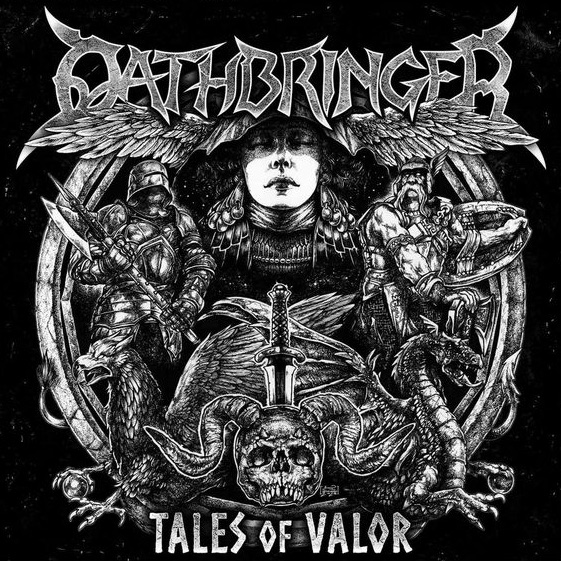
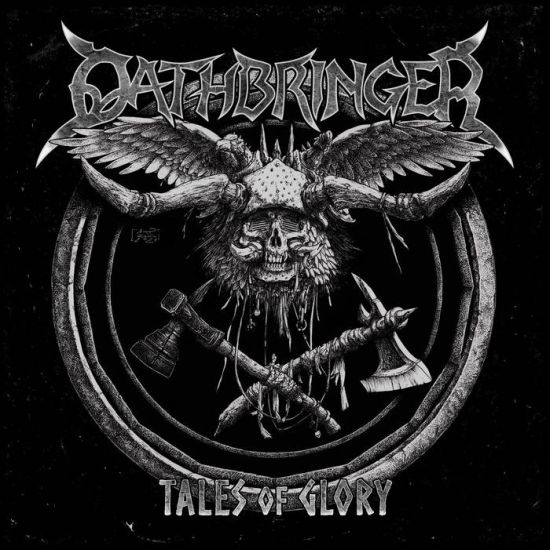
The so-called "New Wave of Traditional Heavy Metal" was pretty fortunate to give us some amazing bands that left a big mark in the world of music, and I am very glad that one particular band in Serbia managed to do the exact same. Case and point are the epic heavy metal band Oathbringer from Kragujevac, who have managed to attract a lot of attention thanks to their debut album "Tales of Glory" back in 2022, and even now with their recent second album "Tales Of Valor", which further expanded their army of loyal fans. As I've said before, Oathbringer is one of those bands that essentially came out of nowhere and turned out to be a pleasant surprise, with their albums being some of the best Serbian metal releases I've ever heard, and I still can't recall anything remotely great in the last decade. Their journey has been very turbulent in the past couple of years, with all the line-up changes, album recording, playing live shows and constantly going forward into a new and brighter future, and yet they still manage to stay on track and triumph over all. I recently reached out to Lazar "Berserker" Zakić with the idea to do an interview with him, as well as all the other members of Oathbringer, so we finally got around via Zoom on April 14th, where I chatted with him as well as with my fellow mates Miloš "Priestkiller" Stošić, Aleksandar "RapidBasstard" Milutinović and Petar "Axxer" Đorđević, with the exception of Bora "The Unholy One" Petrović (aka Helldiver), who at the time was rehearsing with another band. We had a nice hour-long conversation where we talked about the band's half--decade journey, from their debut "Tales Of Glory" to their recent "Tales Of Valor", mentioning epic fantasy and science-fiction literature that influenced their music, their potential third album as the final album in the Tales trilogy saga, with many other subjects along the way. If you wish to enter the Hall of the Slain, and hear about the Tales of Glory and Valor, feel free to join along and dive into the world of Oathbringer.
Vladimir
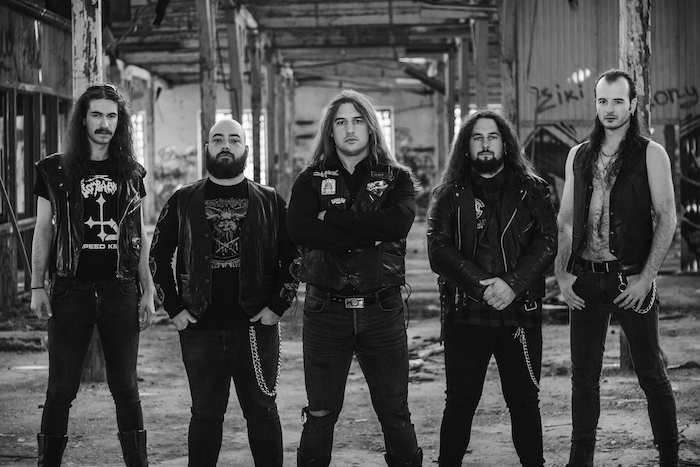
For the start I wanted to ask how have the preparations for the upcoming mini tour been going so far? You will be playing with Claymorean and Wicked Ways, and people will be seeing many great bands at once. I can't remember when was the last time you shared the stage with Claymorean, I believe it was somewhere before you released "Tales Of Glory".
Priestkiller: They have been going well so far, we had a rehearsal yesterday and I think we can consider ourselves ready. As for when we shared the stage with Claymorean last time before the tour, we played with them a couple of times after we released our first album, but this will actually be the first time for both bands to share the stage after the release of our second album. And it is generally our first gig ever since the release of our second album, and with the new lineup.
Yeah, you guys really hit the gas especially because the new album was released in January, and since then a lot of reviews and feedback have gathered. Generally, a lot of them are very positive feedbacks, with some of them being a bit mixed saying that this album is good but not necessarily better than the first one. But overall, I don't recall coming across any negative feedback. How are you generally satisfied with the audience reactions that you got from the new album?
Priestkiller: You know how it goes, when you have two albums, some people will say that they prefer the first one over the second one, or the other way around. In any case, we are very pleased and more satisfied with the new one because we got bored from playing songs from the first album numerous times, but it's alright, everybody has their own opinion. Even I heard a lot of people saying that they prefer the first one, and some saying they prefer the second one, but it's important that we didn't fail to deliver on the second one, that it's at least considered to be somewhere along the same line.
Of course, generally what I personally consider to be a big highlight about the second album was that it was more focused on aggression. The first album had a lot of melodic moments and it was pretty dynamic, which built a strong foundation, and then came the second album which strengthened that foundation and you have moments where it really surpassed the first album in terms of aggressive heavy metal performance, especially the first song 'Morgoth' that cannot be outmatched in my opinion. Was that the kind of direction that you were going with "Tales Of Valor"?
Berserker: Well, when it comes to both the first and second album, we didn't intend to have the second album be less melodic than the first one, we simply had the demos of our songs from the second album ready since we started recording the first one. When we chose the songs for the first one, it just turned out that a lot of those mid-tempo songs ended up being used for the second album, but for the third album, we have a lot of songs that can be characterized as "speed metal", because a lot of those fast songs remained for a next release.
Yeah, basically it seems like a build-up to something "harder, better, faster, stronger", especially because this is meant to be a trilogy. It's basically that horse drawing meme when it gets even better the more it goes or even more flammable, just don't end up screwing the third album so the last part of the horse doesn't end up being the shitty drawing of the horse that will disappoint everybody hahah. That's what I told Laki (Berserker), don't you disappoint me with the third album because you started going so well right now, so I am slowly preparing that final meme when the third album comes out that it ends up being the perfect trilogy with the perfect drawing, no more no less.
Priestkiller: You know what, in terms of the genre, Oathbringer is heavy metal at its core. But we have a background of playing in speed and thrash metal bands, so you can't really expect it to be 100% heavy metal without influences and other faster subgenres. I personally look at it as an inseparable entirety, be it speed or power, as in the German power metal like Hellowen and early Blind Guardian and so on, I think they are close enough subgenres that you can't draw the line between the two because it simply wouldn't make any sense. On the first one we had more fast songs, on the second one we had more mid-tempo songs, so I expect that the third album will be an escalation of everything we did in the last 5 years.
For me personally, you can easily make an album that will be like a better part of Blind Guardian's discography that can be fast and epic, but still maintain that speed metal energy, without going too far into predominant power metal, more like a melodic speed metal output. It would be very cool because the two of you (Priestkiller and RapidBasstard) are from Deadly Mosh so you bring that up here.
Priestkiller: And Bora (Helldiver)! Don't forget that he recorded the drums for the first Deadly Mosh album.
Yeah, Hellsound, I always forget that he was in the lineup.
Berserker: But you know what, since Oathbringer's inception, the range of song ideas have been varying from European heavy metal, German metal, US power metal, speed metal. I don't think we ever had any thrash metal moments, because it's too melodic to be strictly thrash metal, but let's say that 80% of it is that epic heavy metal with the addition of some related subgenres, depending on how the inspiration hits.
Since you mentioned thrash metal, I remember when the band was added in the Metal Archives when someone classified it as "power/thrash metal" and Laki (Berserker) sent that to me, back then I already had Oathbringer in my band drafts still waiting for the opportunity to submit it. But once I saw that someone already added the band, I noticed that he completely missed the band's genre. I was totally pissed off, because I don't know what part of it is power/thrash metal, I think they just came to the conclusion based on one song, and I went like "What the hell? What kind of joke is this, you motherfuckers?" hahah. This was 2 years ago, somehow, I managed to convince them to change it, maybe Laki (Berserker) still remembers it.
Berserker: Of course, I remember everything, especially that meme with the horse, that was the best hahah. I personally hope that the third album won't be that front with the child's drawing of a horse.
Priestkiller: Yeah, I mean there is no chance in the world that it will be bad. Going back to what I said about having two albums, it is inevitable for the audience to have split opinions, when you have three then they are even more split with their opinions, but you can't expect from the band to continue releasing the same album. I think it is a goal to progress and for albums to be different from each other. Although, the significant difference from the first album was the change of studio and change of producer, because the second album was recorded in a studio that is mostly focused on metal music, whereas the first album was recorded in a studio that hadn't recorded or produced a metal album before that, so it was actually the first metal album recorded in that studio. That's why it has some special production. We were pleased with that approach, because it was done by a man who generally doesn't work with metal bands, but he did a great job. As for the second album, it's "tight" like people said, because everything was recorded on better equipment and the recording went better, so it was expected for Tales of Valor to be tighter than the first album.
Yeah, when my review came out, the producer Ćili wrote the comment saying "The expensive plugins obviously did their job". So, he really knew what he had to deal with and how to highlight every bit of musical detail, as well as the band's performance.
Priestkiller: Yeah, that's right hahah!
What is significant about this album, and generally what happened in the meantime last year when you released your new single "Hall Of The Slain", is that you had a lot going on. You had line-up changes, Pera (Axxer) left the band and he was replaced by Igor "Jimmy" Stanić, who helped you guys finish the new album, then he left the band and Pera returned, and you Stole (Priestkiller) passed on your bass guitar duties to Coa (RapidBasstard) and you fully switched to vocals. How did you manage to keep on track with everything that happened along the way, up until the second album was released?
Berserker: To be honest, we still don't know if Pera is in the band or not, because he sometimes is and sometimes, he's not hahah. All the jokes aside, it was very confusing for all of us, I can only imagine what it was like for other people. It was a real catastrophe, because we just scheduled the recording of our second album, then due to personal reasons, Pera announced that he's leaving the band just a month and a half before recording, because he was going through rehab. Then Jimmy Stanić came in, recorded the album after a month and half. He recorded the guitars perfectly and he also brought some new ideas that I encountered for the first time.
Priestkiller: It was weird at first.
Berserker: Yeah, it was weird at first, because I got used to working with Pera from the band's inception and I know how he plays. To put it simply, we altogether know how all of us function and breathe, because I know exactly what and when to expect from him, like when he's about to screw up a part of the song. But Jimmy surprised me in a positive way, but of course that's what happens when you have someone who has over 20 years of experience and he knows what he's doing, and he also helped a lot with my playing. And not just Jimmy, it was also Ćili, because he really drained me a lot during the recording that I still have no clue how I recorded some parts, and I didn't even think that I could record those parts so good, because he kept repeating that for me over and over again until I nailed it. He basically made me sit at home and practice all day, which hadn't happened ever since I grabbed the guitar for the first time, so that brought a lot of positive things on the album that you can definitely hear. On one hand, I felt a bit bad when Jimmy left the band, and the only logical solution was for Pera to return to the band, because we had a meeting where we exactly stated what we expect from him and what we expect from him in the future.
Priestkiller: We simply told him that we'll give him a call if Jimmy ever decides to leave the band. But for me personally, I was hoping that Jimmy would be staying in the band much longer, but unfortunately due to family obligations and other obligations on the side, it was obvious from the start that he won't be a member of the band for God knows how long. But during his time in the band, he did a great job, especially with the song 'Arakis', because Laza and I only had the intro riff to the song 'Arakis', or some foundation of the song.
Berserker: Indeed, we had some foundation of the song, the intro riff and the verse riff, but we stopped at the chorus.
Priestkiller: Yeah, so we gave Jimmy the song that was unfinished at the time, but he actually managed to perfect the song arrangement and he gave it some of his parts and riffs. Since he's a really big fan of Frank Herbert and his work on the Dune, it was logical to ask him to do the music for that song, and I think he did a fantastic job. I don't think that neither me nor Laza or anybody else would be able to approach the song the way he did it, because the song was very lukewarm and debatable at first, but now it sounds great live and I think the audience will like how it sounds live.
Since you mentioned 'Arakis' and Dune, the new Dune movie was released this year, was it meant to have the album come out the same year as Dune Part 2 or was it a big coincidence?
Priestkiller: 'Arakis' was actually done for the first album, simply because I still hadn't managed to watch the entirety of the first part, and today I just watched the entire part two. I have been connected with works of Frank Herbert since the 90's, back when I played Dune the video game on the old Commodore 64 or Amiga 500 computer, whatever it was of the two. The deal between Laza and me was to not have that song on the first album to avoid mixing epic fantasy and science-fiction, but eventually I figured that there should be a song on the second album that should be a tribute to science-fiction. So, I think there will be much more of that in the future. I don't think there was anyone better than Igor Stanić to finish the song, because he left a big mark on the second album, mostly because he concentrated heavily to not stray away too far from Pera's playing style on the first album, but in some ways, he managed to elevate it to the next level. Like I said, we used better equipment, because on the first album we used the recording equipment that was in that studio, but for the second album we rented a recording equipment worth 30000 euros, so we tried three different amplifiers until we found the right sound.
Congratulations to Jimmy indeed, because it is very common for our local bands when they start working on a new album, that all that work ends up being trapped in a limbo or development hell, and it never sees the light of day when it's supposed to be released. So again, congratulations to him, he did his part and he left a big mark in the history of Oathbringer, and I think in the history of "New Wave of Traditional Heavy Metal" in general, because you are a part of that wave, and people really appreciate you guys, because you are in the ranks of bands like Eternal Champion and Visigoth, and my opinion still stands that you guys should share the stage with both bands.
Priestkiller: I don't see why not haha. As for Jimmy, a lot of people asked me how he became a member of the band, but he has been there ever since the beginning, because he did the music video for 'Moria' and 'Hall Of The Slain'. We have been friends since 2011/2012, and we have been working together ever since, so it was logical to ask him to join the band. But when he left the band, it was logical for us to fulfill that promise to call Pera back, so once again it is that old lineup of the band with the addition that my wish being solely the vocalist of the band was finally fulfilled when we found the right bassist for the band, and I think we found a great replacement for what I did.
Indeed, now you guys are even stronger than before.
Priestkiller: And now I am a couple of pounds lighter hahah.
Yeah yeah haha. You know how some people say that when you have five members in the band it's much harder to handle than with four members, especially with traveling costs, rehearsals, and the overall chemistry between the members when working on new material. Tell me, do you consider the current situation with Oathbringer to be an exception, that the current situation as a five-piece is much better and easier than previously as a four-piece?
Berserker: If you ask me personally, it's much easier for me, especially since we've known each other for years now. So, it was logical for me to have Coa (RapidBasstard) become a member of the band. Stole and I had a discussion once, where he told me that it's hard for him to play and sing at the same time. Even after the first album we decided that we'll have a fifth member of the band, and of course the first option was Coa, but we waited a couple of months until we were all sure about it, especially with the confusing situation about the line-up changes, and the day when we decided to ask Pera if he wants to come back in the band, we also asked Coa if he's sure about joining.
Priestkiller: Indeed, because when we started putting all the pieces together, we wanted to have it all complete to the very last bit. But it was actually ever since the first day of the band, when we realized that Oathbringer will definitely be doing live gigs when I came to the decision that I might switch to do just vocals, because the problem isn't when you sing and play at the same time when you have your own sound engineers and technicians, but it's a real problem when something bad happens on-stage and we're busy playing and no one is there to give you a helping hand. Because you would otherwise depend on the technicians on the stage. On the other hand, I think that the interaction with the audience is much better when you have a guy who is only the singer and his only job is to sing and entertain the audience. I hope that the new line-up will be much better than the previous one, but as for the part whether it's harder or easier, for me it's obviously much easier, logistically it may be harder, but overall, it's not a big problem. I think it will be much easier for us and the audience will definitely be pleased.
Yeah, I believe they will be. Now, going back to when we previously talked about Dune, you mentioned Frank Herbert and it reminded me of something that I wanted to ask. Oathbringer incorporates a lot of lyrical subjects coming from artists such as Sanderson, Moorcock, Tolkien and now Sapkowski on the new album. What I wanted to know is, when working on a song which is thematically based on works of certain fantasy authors, how do you focus on the work for that song? Do you aim to convey the energy of that particular book through the riffs and the arrangements, or is it all done naturally?
Priestkiller: First of all, because I write the lyrics and the music alongside Laza, we start writing the music first and then based on the atmosphere of the song we chose the lyrical theme, so I think it's natural. The only two songs we purposely made to be based on a certain lyrical theme, were 'The Ring' from the first album and 'Arakis' from the second album. All the other songs were systematically done by coming up with a riff first or arranging a foundation of the song, and then, based on that and how we personally feel, we try to figure out the direction of the song on the basis of the lyrics, and then we start working on the music and the lyrics at the same time.
I understand. I also wanted to mention what I found specific about the CD release of the "Tales Of Valor" is that it doesn't contain the slipcase that the "Tales of Glory" CD release had. I don't know, for me personally it doesn't seem like an issue, but I don't know how other crazed collectors would feel about that. How come you guys decided to change that?
Priestkiller: The first album was done in a factory in Brazil, but I wasn't really on-board with the decision of manufacturing our CDs in that factory in Brazil, especially since I am the legal representative of RTR Records in Serbia, before Oathbringer was even conceived. Wade Childs, the founder and owner of the label, and I have been working together for a while, and I tried to draw his attention to the potential issue. The problem was that many of the physical releases had the problem with the middle piece that holds the CD, because it's a very weak piece of plastic and it would often break, which happened during the transport, so a lot of people complained that they received the physical release with that broken middle part. So, I insisted that we change the factory, and Wade Childs said OK, so we tried with the factory in the USA. It is more expensive, but it's definitely much better quality. We were aware from the start that they wouldn't be able to provide us with the slipcases, but they offered to have the booklet contain more pages, and based on that we decided to compensate on that part that was left out. I think our second album doesn't hold back from the first album in terms of quality, because it was done in a better factory, and the label owner decided that we'll have the future releases done in the factory in the US or in legitimate factories somewhere in Europe.
Yes, of course. I see that you guys really put a lot of effort into making the second album better in every way, from the music to the physical release, especially with what happened along the way and how you continue your work in the future as a band. You don't repeat the same ideas and you don't repeat the same mistakes.
Priestkiller: Indeed, we just keep making new ones haha. But that's that really.
What were guys aiming to do on "Tales Of Valor" better than "Tales Of Glory"? It doesn't just have to be the music; it can be anything about the band's work overall.
Priestkiller: Tales of Glory was made during the corona pandemic, when Laza and I started working on that album without any goal. Somewhere half-way through we came up with the name Oathbringer and realized that it will become a band, so a better part of Tales Of Glory wasn't done with a clear intention of having it be as an entire album. You can notice from the first album based on the bonus track 'Under The Spell', which was included simply because it was the first song that was done during our arranging work before we even settled that the band will be playing epic heavy metal. For me personally, the second album was done more as an entirety, because we worked with a clear intention that it should thematically and musically represent that sound that Oathbringer is aiming for, which doesn't mean that the first album is bad, it's just that we had a clear goal on the second album, whereas the first album was released spontaneously.
Understandable. It was a strange period where you didn't really know what else to do, because if you didn't do any gigs, it was a great opportunity to write new music. A lot of musicians said that they could fully commit to work on a new album when they didn't tour or do any gigs, and you guys effectively used that opportunity. I was actually surprised back then how everything turned out, especially with the first album, because it was a really highly anticipated release. Once I finally got to hear the first album, I couldn't recall the last time I heard such a great album in the last ten years. So, after listening to that album multiple times on repeat, I kept thinking "How are these guys going to come up with a follow-up to this album?", because it would take a lot of effort to make a nice continuation considering how the first album had a strong foundation. Once the second album came out and the band turned into a five-piece, it became more exciting since a lot of people joined the established hype. Nowadays, more people would love to see you guys play live and support the band, and the live performances will be much better now. So, I generally like how the band's progression was very gradual, but without forcing anything along the way, because you were concentrating on your work and so the final result is highly satisfying. Since you managed to build a strong reputation on the local scene and you were also promoted on the YouTube channel NWOTHM albums, have you received any offers to do shows at Keep It True Festivals or similar?
Priestkiller: Well, there is a possibility of coming to a collaboration with the organizers of these festivals, however that still hasn't happened yet. We weren't really aiming to charge at full force to grab these chances, because we're only trying to put out our albums on schedule and to have them be on the same level of quality as the previous ones. I believe that we'll get a good chance and that everything will come together nicely if we deserve it as contributing authors. There are a lot of other things, it all depends on the label, and it's also about the band promotion, but I think if you publish something that is great that it will definitely reach out to people who really like listening to it.
I agree absolutely. There are people who really value what you guys do, and the general purpose of those kinds of festivals such as 'Keep It True' is to have bands like you on the lineup, especially bands in that so-called "New Wave of Traditional Heavy Metal". Honestly, do you think that the bands should still consider taking the necessary risks with full responsibility, no matter what? Even if the band doesn't really get much in return by performing at such festivals, whether it's something like attracting new fans or selling a lot of merch, do you think that they should still do it regardless?
Priestkiller: You mean like doing it at their own expense?
Yes, at their own expense.
Priestkiller: Well, it only makes sense if it will contribute something to the band's future in one way or another, but if it doesn't contribute at all, then it's just pure tourism/traveling. It can happen if all the members of the band are onboard with the idea, like when we played at the Running Free Festival in Bulgaria, money wasn't really our prime motivation. I played at the Running Free Festival for the first time back in 2016, and I know what it's like, so I told all the other band members that we should primarily visit the festival as fans, but it was great that we got invited to play there. The same story goes with all those festivals, whose prime game is that type of music, heavy, speed or power metal, but if it doesn't contribute to anything like expanding the fanbase, then it's debatable whether it's really worth it or not.
Yes, exactly. I mean the modern world has made it difficult to get in touch with someone who wants to pay for the travel expenses of the band, and above all, meet the satisfying expectations where no one is losing anything, both the organizers and the band. And also, to have nice things happen along the way like positive feedback from the live performance, selling merch, other experiences and even meeting other bands along the way.
Priestkiller: Yeah, because when you start a heavy metal band, you don't do it for the sake of earning money, if anyone would do it for that reason then he's obviously living in a world of fantasy. There is not much money from this music, we all do it because we love this music. But on the other hand, it would be nice if we manage to earn some money, not just for the sake of having money, rather to have financial resources that would benefit the band and help us spend more effective time with the band.
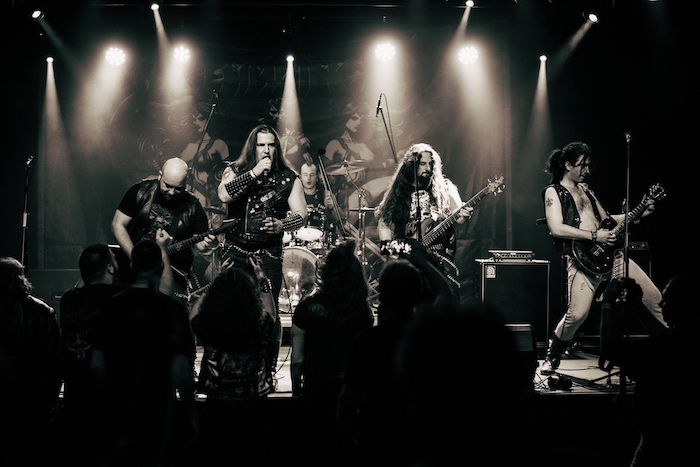
Like I said before, if a band should strive for success, then any band, anywhere in the world, should focus on giving 100% of themselves. It doesn't just have to be in a financial sense, but also in a matter of being fully committed. Like I said, it's one thing when one member of the band is giving the absolute 100% of himself, and it's a completely other thing when another member of the band is not giving his absolute 100% or 110%, because then the band is not giving all they got. When I spoke to Bobby Liebling of Pentagram, he said that people should really understand that being in a band is a lot of work, and they should give it all they got, whether it's practicing or concentrating on the work, in order for every bit of work to be of some importance. And again, every band should take that into consideration, because a lot of them don't know what challenges they need to face, and when they're not aware of it, then they trip and fall, and they simply give up doing it.
Priestkiller: I used to be like that, but I left those days behind me, just like Copa (RapidBasstard) and Laza (Berserker), and I believe Pera (Axxer) too, because he's 27 years old now and he's not a kid anymore. It's always after a year or two when playing in the band when you begin to notice that it's not exactly like you imagined as a kid, when you realize that there's a lot of pressure, that it requires a lot of effort, and that people don't always notice what you are doing. People are very prone to criticize, but rarely do they ever stop for a second and think how much effort did the band put in order to get their release made. Throughout the years I became very soft towards bands in Serbia, simply because I know how much effort it requires to have any album made, so I think we all became aware that we're doing this because we love what we're doing, because of this music and the people that listen to this music.
Berserker: After all, nothing can change that feeling when you get on the stage in front of 20 people or 2000 people, when you start playing your songs and everybody's having fun.
Priestkiller: Those are the kind of people that are very like-minded. It's not like when you meet new people at work because everybody is a stranger. When you meet someone at a metal concert who happens to wear a shirt of the band you like, and even though they are a stranger to you, they are not a stranger in that same sense, because in five minutes you both manage to get along. The general concept of heavy metal is all about the unity around that same idea, and that's why I said that we simply became a part of that "New Wave of Traditional Heavy Metal" out of nowhere, we didn't even know that we'll ever be a part of that, because like I said from the start, you simply play heavy metal or you don't play heavy metal. I don't know if there isn't such a thing as "modern heavy metal", because heavy metal to me is a timeless thing. The boundaries of that genre have been established since the 70's and it's impossible to not sound like one famous heavy metal band, and to say for yourself that you are playing heavy metal. Even though we are creating art, we are also re-creating that historic sound which already happened 20-30 or even 40 years ago, so we're not aiming to "discover/invent hot water", we just want to play the music we honestly love. That's why I think people like it, because we became a part of it unprepared, we didn't really want people to come and say something like "Wow you guys are so original". To be honest, a lot of criticism we got was based on the aspect of originality, but honestly how original can you be nowadays when you play a genre that's been around for 50 years? I mean, nobody really nitpicks at blues rock musicians for their lack of originality, so I think that we exchanged that originality for energy and love we give towards our music.
I spoke to a lot of people about that, and I said many times that you can't really "reinvent/rediscover hot water", or as I say it better in English, "you cannot reinvent the wheel, you just need to keep the wheel spinning", because it's true, you simply have to keep spinning that wheel in order to progress. I honestly don't think we should reinvent any of it, because there's nothing wrong about it, so "if it's not broken, don't fix it". Even more-so, standard or traditional heavy metal is one of those sounds you eventually come back to, including myself as of lately. Because I, who has been listening to a lot of thrash, death and black metal throughout the years, I came back to good old heavy metal, because it's a "be all, end all" for many people. A lot of people at some point feel like "Man I missed this a lot, but I really needed this lately", and it's a feeling you really can't describe. I don't know if you guys ever had any of those moments that you really missed that sound of good old-school heavy metal.
Priestkiller: I personally don't look at it from a strictly separated genre-wise perspective, because when I say "heavy metal" I think of everything that was being made throughout the 70's, 80's and 90's, and that includes heavy, speed, power, even black, death and thrash metal. Heavy metal branches out to different subgenres, and at some moment it led to the point where the boundaries have been crossed and some very debatable subgenres came to be, to which I have nothing against personally, like metalcore, nu metal and djent and so on. But I think those are not really subgenres that are related to what we are doing, maybe that's where you should set the boundary to separate it by saying what is exactly traditional and what isn't. When it comes to that division of subgenres within heavy metal, whether it's speed, power of standard heavy metal, I don't think it's that important nowadays. For example, a lot of people who listen to Visigoth also listen to Vulture, and I even heard of a great band that fuses heavy metal with black metal influences, the Italian band Lord Goblin. I simply don't look at it from the point of view that it's "not heavy enough", because to me it's all within the same genre. When you look at the NWOTHM YouTube channel, you realize that there are a lot of different bands who incorporate the sound from the 70's and some that incorporate the sound from the 80's, and then you have a band such as Oathbringer that aim to play this type of music the best way possible, but without relying heavily on using studio tricks to get a much better sound. So, there can only be a difference in the production, but from the songwriting perspective, you either play heavy metal or you don't.
I honestly really respect bands who mainly focus to have great material, and not just to have a great sound production. The sound production should mainly be there to highlight the music better, because a lot of bands have that "style over substance" approach, and I really like the fact that Oathbringer isn't a part of that. First of all, Oathbringer has a lot of songs that are memorable and for each song I can find something that I like about. The next thing I wanted to ask is: Since you guys play in various other bands and you played in many other bands in the past, what is the current situation with the bands Deadly Mosh and Motorcharge?
Priestkiller: When it comes to Motorcharge, it's probably the only band in which I never had a hard time, because it wasn't ever inactive. Our first next gig will be on May 10th in Čačak, and we recorded the drums for the new single that's called „Lumberjack got the morning wood", hehe. So Motorcharge is a band that was made purely to have fun, both us and the audience that comes to our show, it's a totally different approach from what we are doing in Oathbringer. As for Deadly Mosh, unfortunately it's currently inactive. The band isn't officially split-up, so we're „on-hold" so to speak, because we don't have a drummer for the band. We have our third album ready, and even the better part of our fourth album, but it sadly never came to a realization of that. As for Pera, he played in the doom metal band Invisible Hate and there are some hints that the band will be revived. As for our drummer Bora, he is always actively playing in other bands that perform either their own songs or cover songs at bars, so his current situation is probably the most interesting out of all of us.
Yeah, he simply doesn't give a fuck, he just sits in back playing and that's it.
Priestkiller: Yeah, basically. As we speak, he's currently in the studio rehearsing with another band, I think they're called Django & Space Cowboys.
As for Invisible Hate, I spoke to Darko recently, he even mentioned that he's planning to bring back the band. It made me think "Well wait a minute, what happened with Druids Ritual?". That band was basically born from the ashes of Invisible Hate, and now Invisible Hate is coming back. You all know too well how much of a crazed Metal Archivist I am, always attempting to follow everything along, but specifically with the scene in Kragujevac, I don't know what's going on.
Priestkiller: Just to say this quickly, the four us from the band are sitting here, but two of us are wearing Druids Ritual shirts haha. Copa (RapidBasstard) is here and he can tell you a bit more on that subject.
RapidBasstard: Honestly, from the start, the band had a lot of ambitions, we actually started doing something like writing songs and we all had the idea to do something and to exist as a band. But eventually it didn't really go anywhere, because a year after the band's inception, we had enough songs to record an EP at least, and there were even some ideas to do a music video, and it just ended there with that idea. We had written 4 songs and they weren't bad, we also had a vocalist who was great for this kind of music, but in the end, a lot of internal problems arose that prevented Druids Ritual from continuing to play as a band. I don't want to bother you with this subject anymore, but now Pera and Darko came to the decision to resurrect Invisible Hate.
Priestkiller: Now it's finally Visible Hate!
RapidBasstard: Yeah haha. There is also a possibility of making a fusion of ideas between what was done in Invisible Hate and Druids Ritual, so I hope that there will be something in the future. Hopefully a music video, or an EP, and to actually play.
Priestkiller: The band made shirts but there is no music hahah.
Yeah, the band made shirts but they don't actually exist.
Berserker: It's not a band now, it's a brand hahah!
RapidBasstard: Like I said, I feel very sorry about it, because Druids Ritual had a lot of potential for great things, and it could have been great but unpredictable things happened along the way, so we have to figure out how to move on because it couldn't materialize in that manner.
Priestkiller: Every metal band is formed from that emotion and passion towards performing, but it often happens that the band burns out from all that emotion and passion. It simply happens to a lot of bands nowadays, more than it should. With Oathbringer, we were really lucky because we started all of this without pretentiousness and that has developed over time. We were quite surprised from audience reactions because I thought that it wouldn't be interesting to anyone in Serbia, but eventually it proved that there is an audience for it, so that's why we focus a lot to perform live as much as we possibly can, so we'll make sure to play wherever possible. Going back to playing abroad, festivals and such, I can't really confirm anything because it's definitely the matter of the label, but we all wish to play outside of Serbia as much as possible, so there are plans to do like a mini-tour in Western Europe during Autumn or Winter. The label will definitely be on-board with that idea, but I don't want to talk about it far ahead, because we don't have 100% confirmed plans. There are some offers for next year to perform at some festivals, but what matters the most right now is to play in Niš, Belgrade/Zemun and Novi Sad, and then on May 13th we'll be playing with bands Cyrax, Shangri-La, Xant and Trilogija in Pančevo. And then after that, we'll be playing at the Arsenal Fest on June 28th, where we'll overshadow Brega (Goran Bregović) himself haha. And Mimi Mercedes and Cobi haha.
Axxer: And Lil Pump too, it will be sure as hell crazy! It will be quite the competition hahah.
Priestkiller: Except maybe for Keanu Reeves, because he can overshadow everyone of us.
That's what I wanted to say haha. I hope Keanu Reeves will become a big fan of Oathbringer if he's interested in staying around and seeing you guys play.
Berserker: If anything, we'll make sure to lock him up and make him watch!
Axxer: Though I doubt that he's more dyslexic than all of us.
Priestkiller: What he's trying to say is that he's more dyslexic than Keanu hahah. He's playing at the Main Stage which is at least 500 meters further than the Garden Stage where we are playing, so it's debatable whether he'd be able to get through that big number of potential fans that would want to take pictures with him, but I would love to know his reaction.
The only potential solution for him to get to the Garden Stage is to put on some kind of disguise like Bobby Liebling did at the festival when he put on sunglasses, a Compton cap, Wu Tang Clan shirt and jogging pants and went through the mud like some old rapper. So, I think Keanu Reeves should do the same in order to come and see you guys.
Priestkiller: Yeah, exactly haha. This is the second time we're playing at the Arsenal Fest, we'll be playing on June 28th, and just to give some shoutout to order bands from the local town, Forever Storm will be performing on June 27th and Despite the Noise on June 29th, though it's a shame that the three bands, including ourselves, didn't play together on the same date, because we all released our new albums lately. I truly hope we'll also have the opportunity to talk about our third album quite soon, because it's still not in a demo recording phase, because the main focus now is to perfect the current line-up and to do live shows. I hope that we'll be recording demos for our new songs around summer and that we'll have the complete third album by the end of the year. If everything goes well, we'll have the final chapter to the Tales trilogy, then we'll have to figure out how the band will continue working afterwards.
In any case, I wish you all good luck with the upcoming shows and future work. I am really looking forward to hearing the third album because this saga deserved to get its own "Peter Jackson trilogy" and stay remembered as one of the best Serbian heavy metal sagas, at least for me personally. Before we wrap this up, are there any final words you'd like to leave for your fans that are reading this conversation?
Berserker: The best we could do so far is to invite people to come to the shows to see the band, especially now when we put a lot of effort to elevate our stage presence on a higher level, we made a couple of surprises for all the fans that are interested to come. And I hope that by the end of the year, we'll make sure to confirm as many shows as possible, in Serbia and abroad, so that everybody gets the opportunity to see us live. I really hope that people like our new album, so that's that basically.
Priestkiller: On top of that subject regarding both our albums, it's just a glimpse of what the band has to say, but they'll get to see the real picture of the band if they come and see us on one of these upcoming five shows. So, I hope we'll blow your minds! We're really glad that we got this opportunity to chat with you, and I hope we'll be seeing each other soon. Big greetings to you and all the people who follow the band Oathbringer, I hope they'll get to see the band perform live as soon as possible.

Upcoming Releases
- Sněť - V Bažinách Vědomí - Sep 10
- Terrestrial Hospice - Omnicide - Chapter I - Sep 11
- Godslave - Godslave - Sep 11
- Epitaphe - III - Sep 11
- Cartilage - Operating Altar - Sep 11
- From The Vastland - Servant Of Ahriman - Sep 11
- Harlott - Exsequiis - Sep 11
- Neolith - Inbir - Sep 12
- Blodtår - Monark - Sep 18
- Game Over - When Darkness Falls - Sep 18
- Revel In Flesh - Flesh For The Kult Of Death - Sep 18
- Runemagick - After Chaos: Nocturnal Vigil - Sep 18
- Garota - Strąceni W Ciemność - Sep 18
- Massteron - Second In The Spheres - Sep 24
- Tombstalker - Chaos Monolith - Sep 24
- Stellar Silence - Expeditio - Sep 25
- Wharflurch - Mycodeath And Rebirth In The Outer Clusters - Sep 25
- Draugr - Ahnenfeuer - Ginnungagap Chaos Pt. I - Sep 25
- Noctule - Extinguish Thy Flame - Sep 25
- Critical Defiance - Rivers Of Blood - Sep 25