
Twilight Aura - Interview
Twilight Aura returns with "Believe", a powerful and emotionally charged album that expands the band's sound into new territories of hard rock, progressive rock, and melodic ballads. With roots dating back to the 1990s, the band has evolved while staying true to its melodic identity, incorporating influences from iconic acts like Viper, Dream Theater, and Queensrÿche. Featuring collaborations with legendary artists such as Jeff Scott Soto, Fabio Caldeira, Felipe Andreoli, and a heartfelt tribute to the late Andre Matos, "Believe" is both a celebration of the band's past and a bold step into its future. In this interview, guitarist Andre Bastos opens up about the creative process, the emotional resonance of their music, and their vision for connecting with fans worldwide.
Marcelo Vieira

"Believe" represents a significant sonic expansion, incorporating elements of hard rock, progressive rock, and ballads without losing the band's melodic identity. How did the experimentation and decision-making process for this musical evolution unfold on the new album?
Most of the songs on this album were actually composed back in the 1990s, during the band's first phase, shortly after [guitarist] Rodolfo Elsas joined. He brought new elements, giving our sound a harder edge. From there, we combined the influences of the other members, and the songs naturally ended up sounding a bit different from what we had done before. You can really notice this by comparing the songs from our first album, "For a Better World", which were mostly written before Rodolfo joined and leaned more toward power metal.
Bands like Viper, Dream Theater, and Queensrÿche are often cited as influences on Twilight Aura. How do you incorporate these references while maintaining your own identity?
We've always listened to these bands a lot. For example, "Laws of Life" was written shortly after Viper's album "Theatre of Fate" came out—I was still feeling the excitement from that release when I started composing the song. Also, whenever we traveled or hung out together, we listened to a lot of Dream Theater and Queensrÿche—during the era of "Images & Words" and "Awake", when DT was producing melodic tracks like "Innocence Faded" and "Lifting Shadows." Another band we listened to extensively was Elegy. Over time, all these influences naturally became part of how we wrote and arranged our own music.
The album features special guests such as Jeff Scott Soto, Fabio Caldeira, Felipe Andreoli, and an emotional tribute to Andre Matos on "Laws of Life." How was it working with these artists, and what did these collaborations mean to the band?
It was amazing, each for different reasons:
Fabio Caldeira became a great friend. We participated together in a wonderful event in Lençóis Paulista for the second part of the documentary "Andre Matos, o Maestro do Rock", where he performed a beautiful duet with Daísa on the song "Adrift" by SoulSpell. That's when the idea of him participating on our album came up. He agreed and not only sang but also arranged the orchestration for "Coming Home." My friend Marcel Ribas from Austin, TX, where I live, also appears on that track, recording guitar and bass.
Felipe Andreoli was another exciting collaboration. I knew he was a great guitarist, and when the idea came to me in early 2024, I asked if he would record a guitar solo for one of our songs. He agreed immediately, and shortly after I sent him the track, he returned the solo—it sounded fantastic.
BJ, the vocalist from Spektra and a friend of 30 years, also participated, delivering an amazing performance.
Jeff Scott Soto was introduced to us through BJ. He's a genius, an incredible musician, and very generous and friendly. Rodolfo has been a fan since he was 14. We asked him to record vocals on a song composed by Rodolfo, and he agreed, creating a duet with Daísa that turned out incredible.
Finally, we had Andre and Daniel Matos on a very special track for us, which I'll elaborate on in the next question.
"Laws of Life" features vocals recorded by Andre Matos in 1992, restored for the album. What was the emotional and artistic impact of revisiting this song with those recordings and with the participation of his brother, Daniel Matos?
This song was composed before Angra existed. I played it with my previous band, Skyscraper, and when we recorded a demo, I invited Andre Matos and Rafael Bittencourt to do backing vocals, and they accepted. Over time, other songs joined Skyscraper's repertoire, and the debut album was released in 2003. After our first album, Naza from Skyscraper suggested we consider recording "Laws" for a potential second album. We decided to do it and thought it would be wonderful to bring Andre's vocals back for the chorus. Naza recovered the original vocals, and everything worked beautifully. We invited Fabio Elsas, Rodolfo's brother, to record drums—the same drummer from the original demo. It was the first time the Elsas brothers recorded together on a track. Then we invited Daniel Matos, Andre's brother, who plays bass and sings beautifully. The result is stunning: a song over 30 years old, revitalized with modern technology and production, celebrating incredible talent and honoring our unforgettable maestro.
The band's comeback and the release of this new album happened in a challenging social and musical context. How did these factors influence the creation and message of "Believe"?
The world is undergoing major changes again. While some are discouraging, progress always comes in waves. Sometimes the tide moves against us, but just like before, we will overcome and emerge stronger, ushering in a new wave of moral and spiritual progress. That's why we insist that people believe. A better world will come, and we will build it together.
"Believe" addresses social, emotional, and spiritual themes, from fake news and climate change to emotional challenges and uplifting spirituality. How does the band see the role of music in conveying these reflections and positive messages?
Music has the power to overcome differences and connect people from completely different worlds. It can also serve as a vehicle for messages. We're very concerned about the direction things are heading. Today, it's too easy to fabricate an opinion and convince a large number of people to follow it. Lyrics like "Real World" and "Right Thing" emphasize caring for our planet—it's the only one we have. You can't ignore the truth by spreading false information just for clicks or temporary financial gain; it only pushes the planet closer to collapse. It's time to do the right thing and act responsibly.
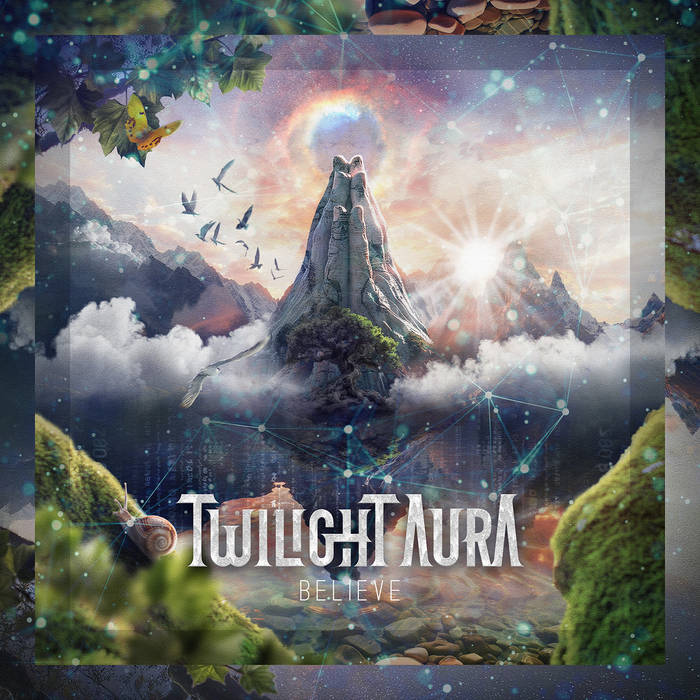
The album's visual work, created by Juh Leidl, has a strong identity. How important is graphic art for you, and how does it interact with the music?
We met Juh through her amazing work with Maestrick. Fabio Caldeira introduced her, and our communication flowed effortlessly. We wanted artwork that reflected lightness and strong spirituality, not tied to any specific religion. Juh captured all of that with a delicate touch, making this one of the most beautiful album artworks we've ever seen.
"Believe" was produced by Andre Bastos and Tito Falaschi, who also handled mixing and mastering. How did this collaboration influence the album's final result?
The mixing and mastering were done by Tito Falaschi. Production involved many stages, so we split the tasks. We've known Tito for over 30 years; he understands our music and knows exactly what we want. He has incredible talent and delivered the precise sound we envisioned. We couldn't be happier with the results.
You've recently released singles with emotional videos, such as "Yourself Again." How important is the audiovisual experience for the audience today?
We realized it was crucial to release videos along with singles. Even though the band has existed for a long time, we only began exploring the modern music world after our 2021 comeback. We decided to produce at least two videos, and we even made a third if you count the lyric video for "Laws." It was challenging since band members are spread across four continents, but we made it work in August 2024, filming "Yourself Again" and "Coming Home" with director Dani Mazza. Friends helped us a lot on shoot days, and the experience was incredible. The audience's response exceeded our highest expectations!
The "Coming Home" video was marked by a very emotional moment, as Fabio Caldeira recalls. Can you share more about this experience and the importance of this track?
This song carries strong spiritual and emotional significance. I wrote it on the beach in Trindade, Paraty, RJ, on a cloudy day, reflecting on everything that led me there and what was yet to come. When recording, I revised the lyrics to emphasize that life on Earth is temporary: we take nothing with us, only what we do. We must resolve differences, forgive, let go of grudges, and connect with higher spirituality to be guided to do our best. Fabio was deeply moved during the shoot; the day before, his best friend had passed. The song's message resonated profoundly with him, making the moment unforgettable.
Finally, what's next for Twilight Aura with this album, and what can we expect in the second half of 2025?
We want to take our music even further than with our first album. We aim to reach people worldwide, connecting as many souls as possible through our art. The internet breaks down nearly all boundaries, and we plan to use it fully. There's more exciting material on the way. Thank you so much for this opportunity, and a big hug to everyone!
 3.03k
3.03k
Upcoming Releases
- Insomnium - Netherworlds - Oct 16
- Night Hag - Great Dismal Darkness - Oct 16
- Master - Among The Seeds Of Death - Oct 16
- Lugubrious Garment - In The Wide Vale Of Uncreated Night - Oct 16
- Carnation - Symphony In Flesh - Oct 16
- Throneum - Love Is The Law But Death Is The Frame - Oct 16
- Leadbelcher - Heaven's Bloated Corpse - Oct 16
- Anagnorisis - Caregriever - Oct 23
- Wolves In The Throne Room - Estuary - Oct 23
- Critical Defiance - Bloodsurge - Oct 23
- DET - Bloodsurge - Oct 23
- Bokkerijders - Crush Kill Destroy - Oct 23
- Fvneral Fvkk - Indecent Idols - Oct 23
- Messier 16 - Shouts From The Cliffs Of Heterodoxy - Oct 23
- Ereboros - From Oblivion To The Grave - Oct 30
- Cryptorium - Through The Bowels Of Ceaseless Dissonance - Oct 30
- Xentrix - Allied With The Enemy - Oct 30
- Deathwards - Realms Of Sin - Oct 30
- Paara - Laulut Tulen Ja Jään - Oct 30
- Eldfödd - The Night Belongs To The Dead - Oct 30