
Beyond Forgiveness - Interview
Veteran of the American heavy metal scene, David K. Starr has built a solid and respected career over several decades, leaving his mark on essential bands such as Vicious Rumors, Chastain, and more recently WildeStarr. A bassist by trade but always driven by a strong compositional instinct, Starr now steps back into the spotlight with "Not Dead Yet", a single and music video that represent not only a new artistic chapter, but also a powerful personal statement. Diagnosed with Parkinson's disease in 2020, the musician transforms pain, uncertainty, and resilience into a manifesto of survival — direct, intense, and universal.
More than just a release, "Not Dead Yet" marks a series of firsts in Starr's career: for the first time, he takes on lead vocals and records all the guitars, embracing a rawer, more urgent approach without sacrificing the trademark heaviness of his work. In this exclusive interview, David speaks candidly about the impact of his diagnosis on his creative life, revisits key moments from his history with Vicious Rumors and Chastain, reflects on his current artistic choices, and makes it clear that, even in the face of adversity, his creative flame remains lit — and more defiant than ever.
Marcelo Vieira

You play all the guitars on the track "Not Dead Yet" and take on lead vocals for the first time. What proved to be the biggest challenge in juggling those roles — the technical demands or the emotional weight of exposing yourself in a new way?
Aside from a few shitty bands I was in when I first started out, I had never sung before. So this was all completely new to me. That said, I think I did a pretty good job, and the fans have told me they like it. I was really nervous before the song went live on YouTube, because I honestly had no idea how people would react!
As a bassist, you've long been recognized for your drive and rock-solid rhythmic sense. Now that you're writing and recording as the primary guitarist, how does your background on bass shape your riff and harmony choices?
To me, it's all just music. I've always thought about the song as a whole when coming up with bass parts. These days, I'd rather be known for my songwriting abilities. When I was in Vicious Rumors, my bass lines were a bit more melodic and complex — when I could get away with it. I don't really play like that anymore. Now I'm more focused on supporting the vocals and the guitars.
The structure of "Not Dead Yet" is direct and urgent — almost like a manifesto. During the writing process, were there moments when you had to simplify ideas or cut elements to preserve that sense of immediacy?
The message of the song is very personal and powerful, so I wanted four minutes of pure, kick-ass metal. I did simplify the lead guitar parts, but that has more to do with the issues I'm dealing with because of Parkinson's and the effect it's had on my playing. I can't really play the way I did on the three WildeStarr albums anymore, so I brought things down a notch or two to a level where I felt comfortable. Less technical, but still raw and powerful.
Across your albums with WildeStarr, you've explored literary and emotional themes in very different ways. Where does "Not Dead Yet" fit within that creative evolution?
In WildeStarr, our singer London Wilde wrote all the lyrics to the music I composed. "Not Dead Yet" really stands apart because I wrote the lyrics, the music, and also sang the song. I'm nowhere near the singer she is, but I believe I got the message across. In that sense, it represents a creative evolution — being able to pull all of that together at a high level and tell my own story.
You've said you avoid mentioning Parkinson's directly in the song to prevent it from becoming overly sentimental. How did you draw the line between honest vulnerability and excessive self-exposure?
The origin of the song is rooted in the problems I've faced over the last five years since my diagnosis. But as I worked on the lyrics, I turned it into an anthem for anyone dealing with serious challenges in life. That could be the death of a loved one, a broken heart, a serious incurable disease like mine, or anything else life throws at you. We all experience pain at some point. "Not Dead Yet" is about standing tall in the face of adversity.
Many artists say a diagnosis can change their creative urgency. Since 2020, have you felt a shift in how you write or choose themes?
For starters, I don't know how much longer I have to live — or how much longer I'll even be able to play guitar. So yes, there's a real urgency to get as much done as I can in whatever time I have left. Parkinson's is a huge drain on my energy, and that's something I deal with every single day. I have a million things I want to do, but limited time and energy to do them.
Is there any advice you received — from doctors, friends, or fellow musicians — that became essential in helping you face the disease and keep creating?
Basically, it's very important to stay busy, stay active, and stay engaged. Life goes on, and the worst thing you can do is sit around feeling sorry for yourself. Those are reminders I give myself every day.
Do you see "Not Dead Yet" as a standalone work or as the beginning of a new creative cycle, perhaps even a full solo album? What kinds of ideas are emerging for your next steps?
"Not Dead Yet" is a standalone single and video, but the response and support I've received have been amazing. At this stage of my life and career, I don't really have the desire to record full albums anymore. I'm more interested in releasing one or two songs and videos per year. I definitely have plenty of new song ideas.
Now, walking down memory lane… During your first run with Vicious Rumors (1984–1993), the band helped define a style of metal that was precise, technical, yet deeply emotional. Which aspects of that aesthetic do you feel were directly shaped by you — things only the band members might truly notice?
Aside from being the bassist on those albums, I was the one responsible for bringing Carl and Mark into the band in 1986. That was huge for Vicious Rumors — it changed everything. A lot of fans don't know that story.
Digital Dictator (1988) is still cited as an influence by younger musicians. At the time, did you have any sense you were creating something long-lasting, or was it simply a daily pursuit of being "better than yesterday"?
It's a great album that has truly stood the test of time. Thirty-eight years after its release, it still kicks ass. When I brought Carl and Mark into the band, everything just clicked — it was magic. At the time, all we cared about was making a great album. There were no grand designs and no crystal ball. We had no idea what a huge impactDigital Dictator would have.
Is there a moment from that era that, to you, perfectly captures the spirit of the band at the time?
That's hard to say. We had a very strong following in the San Francisco Bay Area, and the shows kept getting bigger and bigger. I have very fond memories of that period. We were climbing the ladder, having a blast — it was an amazing time for the five of us.
By the time you returned to Vicious Rumors in 2005 for Warball, the metal landscape had changed significantly. What shifted in your approach to playing and recording bass — and in the band's dynamic — compared to the late '80s and early '90s?
That was a strange time for me. I had been clean and sober for about six months before recording that album. I played an eight-string bass (4x2) on all the tracks, keeping things mostly low and heavy. But honestly, my heart wasn't fully in it. Carl and Mark were gone, and I had already started writing songs with my wife — which became the beginning of WildeStarr, what I really wanted to focus on. I recorded Warball and shortly afterward told Geoff I was leaving. He wasn't happy, but I felt it was the right decision for me. It's a great album, and it was cool to work with Geoff and Larry again, but I didn't want to be known as "the Vicious Rumors bassist" for the rest of my life. I had other things I wanted to do.
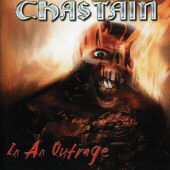
Regarding your time with Chastain and the album In an Outrage (2004): what was the most striking difference between working with David Chastain and the more collective dynamic of Vicious Rumors?
With Chastain, I was essentially a hired gun, a session player. For the most part, I kept my opinions to myself. It was David Chastain's show, and I knew that. That said, he was great to work with — an amazing talent and an all-around great guy. Plus, it was the first time in years that Larry Howe and I played together again.
On In an Outrage, some tracks carry a darker, more introspective weight. What was it like contributing to a record that felt more somber than your previous work?
Some of that material reminded me of Vicious Rumors. The singer, Kate French, was a big fan of the band, so that probably had something to do with it.
You've mentioned that you always aimed for bass lines that went beyond simply "holding down the foundation." Which track from your entire career best represents that philosophy?
"Out of the Shadows" has a great bass line — it's practically a song in itself. Mark wrote that one, and he was more open to my writing complex, moving bass parts. "Ends of the Earth" is another great example, with a cool, flowing bass line. And "Ship of Fools" as well — most of the bass parts are simple, but Mark, Geoff, and I play that three-part harmony solo together, and it sounds absolutely epic.
Finally, which famous bass line do you wish you had written — and why?
Wow, that's a tough one! I actually had to sleep on it for a few nights. It's hard to pick just one, but Joe Bouchard from Blue Öyster Cult is one of my favorite bass players. His bass lines on "Burnin' for You" are so melodic and expressive. I absolutely love his playing.
Link to the original:https://www.marcelovieiramusic.com.br/2025/12/david-k-starr-entrevista.html
 2.59k
2.59k
Discography
Upcoming Releases
- Messier 16 - Shouts From The Cliffs Of Heterodoxy - Oct 23
- Bokkerijders - Crush Kill Destroy - Oct 23
- Fvneral Fvkk - Indecent Idols - Oct 23
- Critical Defiance - Bloodsurge - Oct 23
- DET - Bloodsurge - Oct 23
- Anagnorisis - Caregriever - Oct 23
- Wolves In The Throne Room - Estuary - Oct 23
- Iommi - From The Dark - Oct 23
- Eldfödd - The Night Belongs To The Dead - Oct 30
- Mastic Scum - Void - Oct 30
- Αχεροντας - For The Blood Of Tiamat - Praxis I - XXX Years Anniversary Of Magick And Metamorphosis - Oct 30
- Vigil - Primordial Rites - Oct 30
- Deathwards - Realms Of Sin - Oct 30
- Paara - Laulut Tulen Ja Jään - Oct 30
- Ereboros - From Oblivion To The Grave - Oct 30
- Cryptorium - Through The Bowels Of Ceaseless Dissonance - Oct 30
- Xentrix - Allied With The Enemy - Oct 30
- Arckanum - Beswærilsin - Oct 31
- Powermönger - Powermönger - Oct 31
- Boor - The Stones Hold All Echoes - Oct 31