
Revengin - Interview
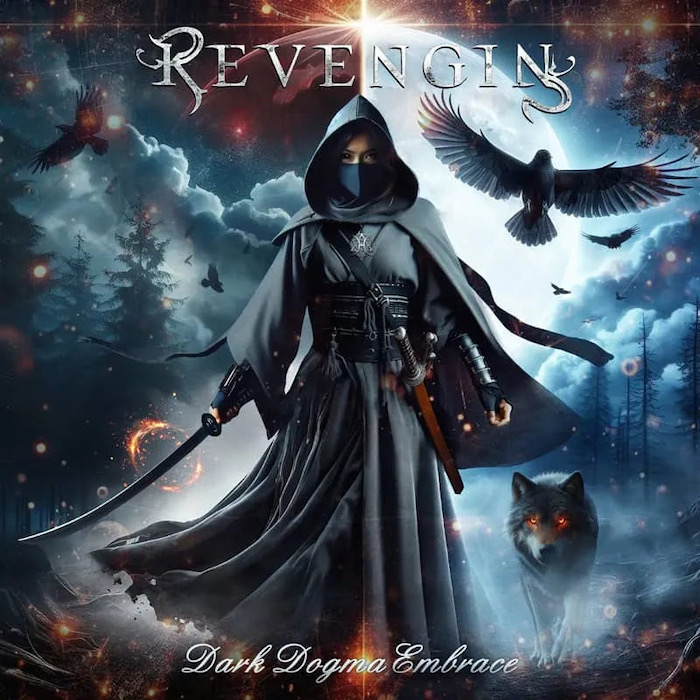
With "Dark Dogma Embrace", released in April 2025, Revengin opened a new chapter in its trajectory within Brazilian symphonic metal. Denser, darker, and emotionally visceral, the album represents a clear turning point for the band — not only in sonic terms, but also in how its ideas, emotions, and artistic identity are presented. The maturity gained over the years, combined with the chemistry of the current lineup, results in a cohesive, contemporary, and deeply personal work that firmly establishes the group as one of the most consistent names in the genre in Brazil.
In this interview, vocalist Bruna Rocha speaks openly about the creative process behind the album, the themes explored in the lyrics, the vocal and musical challenges faced during recording sessions, and the impact of international touring on the band's professional and artistic mindset. She also reflects on the Brazilian symphonic metal scene, the importance of visual aesthetics in contemporary music, and Revengin's next steps — which already include new releases and another chapter of their journey across European stages.
Marcelo Vieira (@marcelovieiramusic)

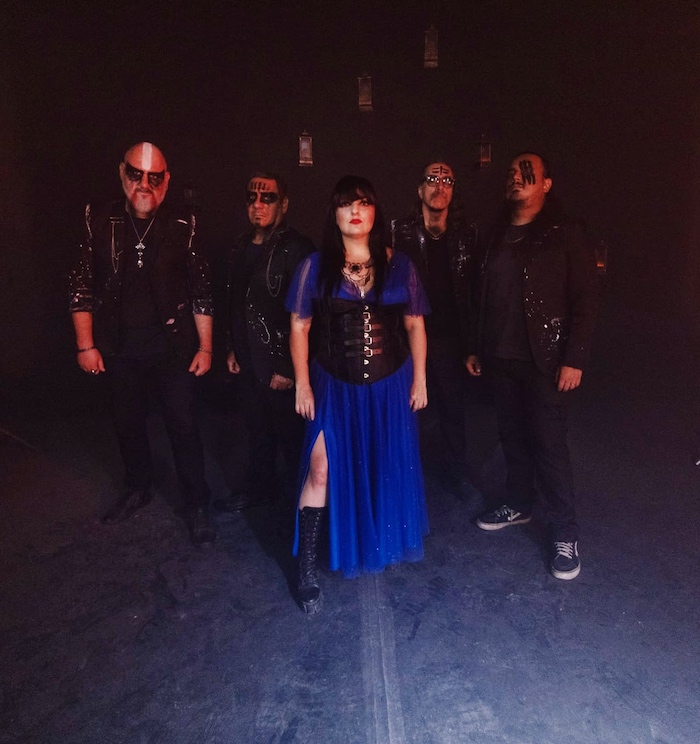
Photo by Ian Dias (@diasphotograph)
What does Dark Dogma Embrace represent for you personally and for Revengin's trajectory?
Dark Dogma Embrace is literally a turning point — not just for me, but for the band as a whole. Today, we are more mature, not only in terms of age, but musically as well. After so many years since the release of our first full-length album (Cymatics, 2011), I believe DDE arrives to establish a new milestone in our journey.
The current lineup has a very natural chemistry, where all the "pieces" fit and complement each other. Everything flows organically.
How has the creative dynamic of the current lineup been, and how does it reflect in the compositions?
We don't have a fixed formula for composing. Generally, I write the lyrics, almost always based on something I'm thinking or feeling — and the same applies to the orchestrations. The instruments we choose, when they enter or leave, or when they are highlighted, are all part of expressing those emotions.
It's also common for Thiago [Contrera, guitars and growls] or Themys [Barros, guitars] to come up with a riff idea, and from there we transform everything into a new musical line. The experience and professionalism of each member contribute greatly to the final result.
What differences would you highlight compared to the band's first album? Were there changes in the way you compose or produce?
I believe this album is heavier, darker, and incorporates more modern elements into the orchestrations, which have always been the foundation of our compositions. Today, we know exactly what we want and how we want it.
On Cymatics, for example, we were still experimenting with how to convey messages and emotions. Everything was much more experimental back then.
The lyrics address feelings that are often silenced. What reflections or messages will listeners find on this album?
Dark Dogma Embrace is a very personal album. It explores feelings we often try to hide or ignore. It talks about love, hate, overcoming, and transcendence. It's a more visceral and darker work, where everything was carefully placed exactly where it is because of the message it carries.
How do you balance Bruna the artist and Bruna offstage? Does everyday life directly influence the lyrics and your vocal approach?
Bruna on stage and Bruna off stage are pretty much the same person. Everything is learning and experience, and that naturally ends up reflecting in the compositions. That's why I'm not afraid to experiment with new ways of singing, composing, or even slightly changing our sound — as long as it makes sense to us.
Our main principle is always to remain true to what we feel and believe.
Which track was the most challenging to record, and why?
"Caught in Dark," without a doubt. I sing in a range that is completely outside my comfort zone, in a lower register than I'm used to. Despite being a huge challenge, it's one of my favorite songs. It completely breaks away from our "standard," both vocally and musically.
Is there a song with a particularly special meaning for you?
"Wish You the Same but Worse." It's extremely visceral and translates exactly what we wanted to express. It talks about the mental battle we all face when dealing with injustice or betrayal. It doesn't mask its meaning — it is the message.
The recordings took place at Tellus Studio, which has hosted major names in metal. What stood out most in that experience?
I love being in the studio. And being in the studio with friends is something hard to put into words. It's a very special experience.
The album was produced by the band in partnership with Caio Mendonça and Rômulo Pirozzi. What were the biggest challenges and advantages of that process?
The entire process felt very natural. I learned a lot from the guys. Rômulo has been with us since Cymatics — he's practically a band member already.
Caio, with all his expertise, care, and professionalism, added an incredible amount to the project.
The biggest challenge at first was understanding how to evolve our sound without losing our identity — making that transition without sounding forced or artificial. They were essential in achieving that. The greatest advantage was having everyone fully committed to the same goal.
The music videos have a strong cinematic identity. How do you approach the visual aspect today?
The visual side is an extension of the musical experience. The biggest challenge was blending the essence of people who were born in the 1980s with contemporary aesthetics, without making it feel forced. The result feels very natural, and I'm completely in love with the videos.
How have experiences at festivals like Rock in Rio and international tours influenced the band?
We've learned a lot from all of them. Over time, we understood how important it is to be prepared and to professionalize ourselves within metal. On our first European tour, we went in with sheer courage and came back with a completely expanded perspective.
Rock in Rio was also a real crash course. And I can't fail to mention the show in the Maré community, which ended up being decisive for our first trip to Europe. That day, everything happened — including our keyboard player bringing only a MIDI keyboard because the other one was in a different car!
What were the main professional lessons learned from playing outside Brazil?
We learned a lot, especially about professionalism. Even in the underground scene, we are treated as musicians and service providers. Once you understand that, everything changes. Beyond the musical exchange, experiencing different cultures greatly expanded our horizons.
What does a European tour demand that differs from a national run?
Above all, it demands a professional attitude. It's not a "hangout" — it's work, with schedules, logistics, and agreements. Everywhere we played, everything worked exactly as planned. That posture makes all the difference.
Were there any particularly memorable moments or "tour mishaps" on the last European run?
There are always mishaps on tour. Our van almost got towed, and we even got fined at one point. But the most important thing is that everyone stays focused on the same goal.
As for the band's identity, we grow more connected every day. Live, we sound even heavier and more energetic. The show in Austria was especially emotional, particularly because we met Ukrainian refugees there. In Hungary, people who had seen us back in 2014 showed up again. And in Romania, the interaction with the audience was indescribable. Every show brought a new lesson.
How do you see the Brazilian symphonic metal scene today?
There are many excellent symphonic metal bands in Brazil. What I notice is a preference in promotion for certain niches and bands, which reinforces the idea that the genre is "small." But this goes far beyond audience size — it involves interests, closed circles, and established structures between bands, media outlets, and producers.
Still, we see a positive movement supporting new bands, and that's essential. A scene isn't built with just a handful of names. A continental country like Brazil cannot be reduced to three or four bands or genres.
What are Revengin's priorities moving forward?
We're preparing for our November tour, driven by the great reception we had in Europe. The second leg of the Dark Dogma Tour will include three additional countries, and we'll be announcing everything soon.
Besides that, we're already working on our next album, scheduled for release in late 2026 or early 2027. So there's still a lot coming our way.
 1.56k
1.56k
Upcoming Releases
- Messier 16 - Shouts From The Cliffs Of Heterodoxy - Oct 23
- Bokkerijders - Crush Kill Destroy - Oct 23
- Fvneral Fvkk - Indecent Idols - Oct 23
- Critical Defiance - Bloodsurge - Oct 23
- DET - Bloodsurge - Oct 23
- Anagnorisis - Caregriever - Oct 23
- Wolves In The Throne Room - Estuary - Oct 23
- Iommi - From The Dark - Oct 23
- Eldfödd - The Night Belongs To The Dead - Oct 30
- Mastic Scum - Void - Oct 30
- Αχεροντας - For The Blood Of Tiamat - Praxis I - XXX Years Anniversary Of Magick And Metamorphosis - Oct 30
- Vigil - Primordial Rites - Oct 30
- Deathwards - Realms Of Sin - Oct 30
- Paara - Laulut Tulen Ja Jään - Oct 30
- Ereboros - From Oblivion To The Grave - Oct 30
- Cryptorium - Through The Bowels Of Ceaseless Dissonance - Oct 30
- Xentrix - Allied With The Enemy - Oct 30
- Arckanum - Beswærilsin - Oct 31
- Powermönger - Powermönger - Oct 31
- Boor - The Stones Hold All Echoes - Oct 31