Maceration - Interview
Maceration is back with a new album (one I just can't seem to get enough of), so when the promo materials landed in my inbox, I knew I'd jump at the chance to do an interview. Jakob Schultz (guitars) was kind enough to answer my questions, giving us a pretty good inside look at the making of the new album, along with plenty of interesting information about the band's earlier days and history.
Whenever I receive an email interview and go through all the answers, I always find myself thinking of more questions I could have asked. This time, I had to resist sending more, but I'll save those for the next time Maceration is up for another interview. The album is already out, so check it out on whichever format you prefer, and enjoy learning a little more about Maceration in the interview below.
Tomek
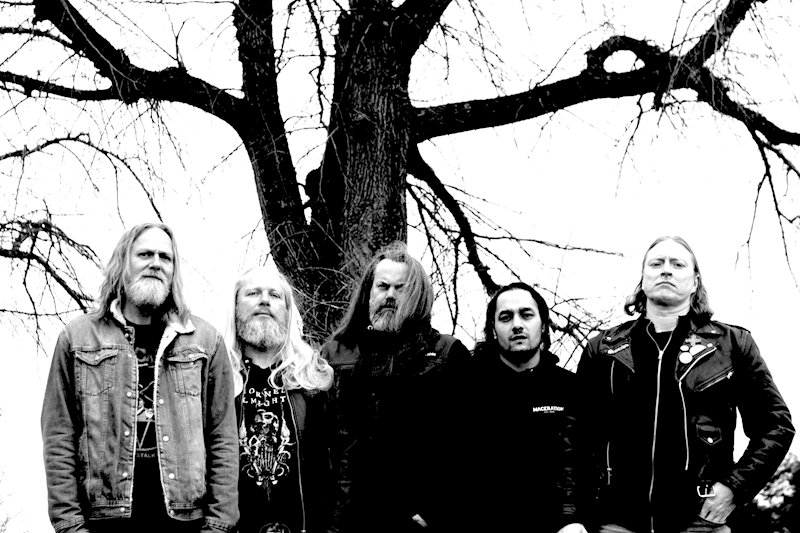
Maceration emerged from the Danish underground in the early '90s, when the death metal scene was still taking shape. Looking back, what memories stand out most from those first years?
It was a time of exploration, with new musical styles evolving. We experienced everything firsthand. We listened to the first death metal songs and organized shows with some of the bands that would later become legendary. It was a strong but relatively small scene compared to what we have today. It was much more underground, and you had to put in more work to stay in touch with people. Everything was DIY. There were no fancy booking agencies; you simply did what you could as a band.
In some ways, it was harder to communicate and get your music out there back then, but in other ways, it was easier because there wasn't so much competition or so many bands. Today, everything is flooded by social media, countless releases, festivals, and shows. Death metal has become more of a commercial thing than it was back in the day, when it was much more underground and DIY.
After such a long break, Maceration returned with "It Never Ends…" in 2022. Now, with three albums released since the reunion, does the band feel like a continuation of what you started back then, or has it gradually become something entirely different?
I think it's kind of both. It's a continuation in some ways because of the history, the name, and the people who have been involved. Of course, the music has evolved and developed into something that might be slightly different from the debut album. But then again, what we did back then was kind of an experiment. It ended up being quite original, with influences from thrash, progressive metal, and death metal.
Today, the band is probably something a bit different, but you can still hear the Maceration heritage from back in the day.
When did the first ideas for "Mercy To The Miserable" start taking shape? Was there a particular musical direction you wanted to explore, or did the album develop naturally as the songs came together?
It developed naturally. It's always like that. Ideas take shape, riffs end up in songs, and everything evolves naturally without there being any particular musical direction. That said, after so many albums since the debut, you feel freer to do what you want. You can try out ideas and riffs that you perhaps wouldn't have used on the comeback album in 2022, when we still had to figure out where we stood and who we were as a band 30 years later.
How does the songwriting process work within the current lineup? Do you usually bring in fairly complete song ideas, or does the material take shape through collaboration and rehearsal?
I write complete songs myself and present them to the others. The other members also present their demos, and we discuss them, come up with ideas, or suggest changes. But most of the work is done individually. I like working on complete songs because I often have an idea that develops from a particular riff.
Compared with "Serpent Devourment", where do you feel "Mercy To The Miserable" takes Maceration musically? Are there any new elements, arrangements, or approaches you consciously wanted to bring into the songs?
I think it's in the same style as "Serpent Devourment". Some would say there are more melodic parts. Again, we've always had those, even on the debut and "It Never Ends…", but perhaps there's a little more variation between the songs. Some feature melodic riff sections, but they're always contrasted with more in-your-face riffs. Some of the new songs are pure 200 BPM, direct, in-your-face death metal.
We also have some songs that explore different atmospheres, but I think you still get that Maceration vibe throughout the album. Looking back at our previous albums, we've always had doomy parts, fast sections, and melodic riffs. Of course, we sound different now than we did on our debut.
The promo highlights three tracks in particular: ‘The Fall Of Virtue,’ ‘Mind In A Chokehold,’ and the title track. What can you tell us about these songs? Do they represent different sides of the album, and do you have a personal favourite among the new material?
You could say that these three songs represent three different sides of the album. ‘The Fall Of Virtue’ is the fast, direct, in-your-face old-school killer. ‘Mind In A Chokehold’ is the slower, more atmospheric, doomy type of song, which we have always liked to explore on our albums. The title track is the more epic one, with a more melodic theme, but it still has very fast and aggressive parts.
I think ‘Lycanthropic Carnage’ is one of my favourites, alongside the title track and ‘From The Ashes Of Indulgence.’ The latter has a very special atmosphere.
Death metal can be brutally direct, but the strongest albums also have a sense of dynamics and atmosphere. When writing these songs, how much attention do you pay to pacing, transitions, and creating contrast between the faster and heavier sections?
It comes naturally. We've always had these different dynamics on all our albums, and it's part of what Maceration is about. We have the direct songs as well as the more epic and atmospheric ones. On the debut, you have a song like ‘Silent Lay The Gentle Lamb,’ and others with more weight, such as ‘Where Leeches Thrive’ or ‘Tender Twigs Of Innocence.’ Then you have direct ragers like the new ‘The Fall Of Virtue’ or ‘Engulfed In Agony.’
It's always a mixture of different dynamics. Even though it's not planned, having these differences in the music simply feels like a natural flow. It's been that way since the beginning.
Your previous two albums were produced by Dan Swanö, while "Mercy To The Miserable" was mixed and mastered by Lawrence Mackrory. What made you decide to work with someone new, and what did Lawrence bring to the sound?
We really love what Lawrence has done, so we were interested in working with him. He really likes Maceration and the old-school death metal style, and I think it was great that he wanted to work with us. I really like his productions for Bloodbath, Lik, and Paradise Lost.
We could easily have continued working with Dan and gotten the result we wanted, without a doubt. Dan has always been associated with the band, but sometimes you need to try a different approach. That's what we wanted this time. I think it was great to have some fresh ears and a fresh perspective on what we do rather than simply playing it safe. I think Lawrence brought something different to the sound. The drum sound in particular is more alive, and that adds a lot to the music as a whole.
Did the change in production team affect the way you approached recording? Were there particular guitar tones, drum sounds, or other details you wanted to get right this time around?
Well, we listened to some of his other productions and liked the way he approached the drum sound, so we wanted to go in that direction. He also works with re-amping, trying out new ideas. He used an HM-2 pedal, but this time he went with a Mesa Boogie Dual Rectifier amp and a Mesa cabinet. That's really cool because the guitar sound turned out so great.
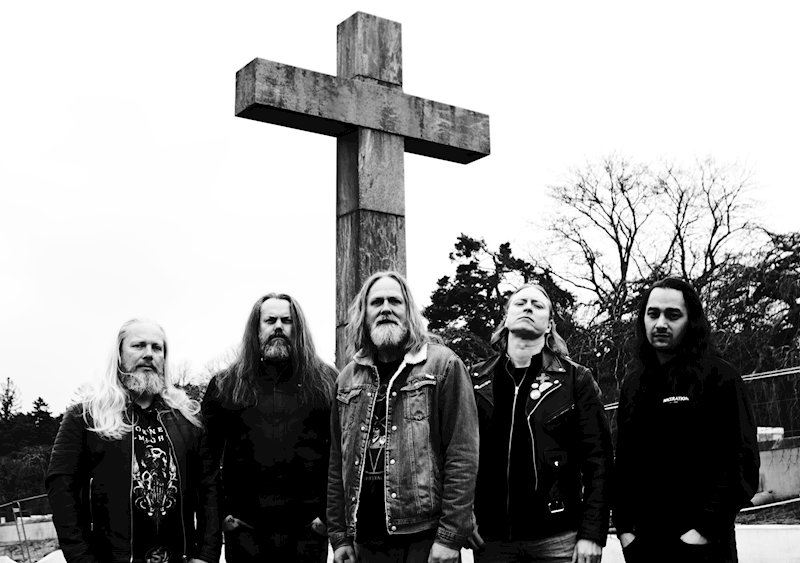
The lyrics explore the darker sides of the human mind, death, grief, and self-perception. Are these subjects connected to personal experiences, observations of the world around you, or more imaginative storytelling? How important is it that the lyrics complement the atmosphere of the music?
The lyrics can be read and understood however the reader or listener wants to interpret them. Everyone can develop their own vision of what the lyrics mean. I always include a personal side in my lyrics, and sometimes I might be the only one who knows what a particular song means to me on a personal level.
I draw inspiration from all my personal experiences, from happiness and life to death, grief, and sorrow. I also take inspiration from what I observe around me. I think I get a lot of inspiration from the chaos we see in the world. You need something constant to keep you grounded and avoid getting caught up in all the craziness of this world.
You're constantly bombarded with news, social media, religion, politics, and opinions about what's right and wrong. I see so much hypocrisy everywhere I look. People today are increasingly seeking attention and feel the need to express their opinions about everything. In the end, you need to take responsibility for yourself, be yourself, and follow your own path without becoming a victim of all that. You have to be your own constant. Your own god. Don't bow to anyone, but follow plain common sense.
Two songs have particularly interesting horror inspirations: ‘Lycanthropic Carnage,’ connected to werewolf movies, and ‘Absolution Of Grace,’ inspired by Hellraiser. Are horror films a regular source of inspiration for you? What is it about these particular stories or images that works so well with death metal?
If death metal were a movie, it would be Hellraiser, I think. It's simply the perfect imagery, or perhaps the perfect sound to accompany a movie or musical style like this. Horror movies have always been an influence, even back in the day. A song like ‘Pain And Pleasure’ from the debut was undoubtedly also inspired by Hellraiser.
Sometimes an idea comes to life and is inspired by a movie, but most of the lyrics are more psychological, dealing with mankind and all the depths that dwell in the mind and soul.
And here we have a couple of unrelated questions that simply had to be asked. Hope you don't mind! :) Are you into any sports? Do you play or follow a particular team?
I have been into Formula 1 and motorsport for many years. I support Ferrari, but I also follow IndyCar and the World Endurance Championship.
What's your favourite drink, alcoholic or otherwise? (For all those who might want to buy you a drink after a show!)
Beer – Guinness and pilsner are always good. Dry white wine, such as Riesling, and gin and tonic. But the most important beverage in my daily life is coffee.
Are you a movie fan? What's one film you could watch over and over again?
Yes, I am. One of my all-time favourites is "The Big Lebowski." I like everything by the Coen brothers. I also enjoy Tarantino. I've always been a horror fan, especially back in the day. "Hellraiser" and "A Nightmare on Elm Street" are great gems.
What do you enjoy doing when you're not playing or listening to music? Any hobbies that might surprise us?
I like watching TV series, travelling, or simply taking walks with my dog. Much of what I do is related to music or art. I own a tattoo shop where my son works as a tattoo artist, and my girlfriend is also a tattoo artist. I also organize a tattoo convention and an annual metal festival here in Odense.
Are you a good cook? What's your favourite meal to prepare yourself?
That's for others to judge, haha. But I do get compliments when I cook, so I guess I'm not that bad. I enjoy cooking. A very simple dish is carbonara, which can also easily be done wrong, but I tend to get it right.
Thanks much, Jakob!!!!
 76
Discography


Upcoming Releases
- The Aeons Torn - Void Artefakkts - Nov 27
- Devastator - Goathammer - Nov 27
- Necroshade - The Last Dawn - Nov 27
- Repentance - Retaliate - Nov 27
- Kalt Vindur - The Void Of Time - Nov 27
- Ulthima - Midnight's Call - Nov 27
- Mystic Prophecy - In Metal - Nov 27
- Whiplash - Roar - Nov 27
- Savage - Malignant Reveries - Nov 27
- Void Chant - Threnody Of Stars - Nov 30
- State:Chaos - The Reckoning - Dec 04
- Witchgöat - Serpent Hordes - Dec 04
- Panzerfaust - The Lucifer Principle - 10th Anniversary Redux Edition - Dec 04
- Haxprocess - Endlessly Flowing Cascades Of Grief - Dec 04
- Amenhotep - Utterances For The Dead - Dec 04
- Nekyian - Impure Stargazing - Dec 09
- Critical Fear - Dark Fate - Dec 11
- Seid - Dystopolis - Dec 11
- Agrimonia - Of The Shadows - Dec 11
- Gorgatron - Turmoil - Dec 11