La-Ventura - Interview
When the topic of Technical Death Metal comes up in conversation, naturally, one would be so-inclined as to discuss Chuck Schuldiner and Death, but he'd be remiss to overlook Monstrosity and what's been a stellar contribution to the sub-genre on their part. "Millennium", "The Passage of Existence" and now "Screams from Beneath the Surface" - three career-defining records with the latter having just been released via Metal Blade Records. It stands as a beacon for genre trueness, as it simultaneously pushes the limits of said genre. Not to the max, but just enough to keep the music fresh. Just the way it was meant to be.
Percussionist, Lee Harrison - co-founding member of Monstrosity and drumming phenom has been a a scene-player for decades and has seen them come and go, all the while as Monstrosity has maintained their reputation as a prolific force; having navigated their way through their own perils and industry woes; resulting in one of the most favorably reviewed discographies in the business. During my latest interview for MetalBite, Lee discusses some of the band's defining features, his outlook on the current scene and a look into their latest LP, "Screams from Beneath the Surface", released this month via Metal Blade Records.
Jeger

Greetings, Lee, and welcome to MetalBite. It's been eight years since "Passage", which was a monumental album in my opinion. Now, the "Screams from Beneath the Surface" era has begun. How do you feel about the band in its current form with such a long-awaited new LP being released?
Lee: Things are moving right along! Won't be long until the tour starts and we can get back out to playing again!
A lot has changed in the Tech-Death world since the early '90's. Some of this stuff is hardly discernible as Death Metal anymore. I feel like Technical Death Metal should still be fundamentally grounded in traditional Death Metal mechanics. You guys nailed it with "Millennium". What's your outlook on the genre as it stands today when you compare today's Tech to, say, "Individual Thought Patterns" (Death) or "Millennium"?
Lee: Well, we always try to have a balance between technicality and brutality. Some bands can go too far, and you end up confusing the listener more than entertaining them. So, we've always tried to find that balance. I think with Millennium we got a little crazy with the odd time signatures, so with the release of "In Dark Purity" in 1999, we really wanted to find the perfect balance. And I think that's what we did. We've kind of been perfecting that formula ever since. For some of the younger bands playing technical music, there are some great musicians out there. But like anything, there's good and bad; it just depends on the perspective of the listener and the influences they bring into the experience.
Which era of Monstrosity do you feel has best testified to the band's overall vision for Technical Death Metal?
Lee: Well, if we're strictly talking about technical metal then Millennium is definitely the album that people are going to consider the best. That being said, I think all of our songs have a certain degree of technicality. We just want to retain the essence of strong songwriting and the art of arrangement. Technicality for its own sake can sometimes come across as showing off, and that's not really our thing. We do like to incorporate odd time signatures when it serves the song, though.
How would you say the last eight years has shaped Monstrosity? The world is a different place than it was when "Passage" was released.
Lee: I mean, we learn a little something from every album. There wasn't really anything in particular that happened in the last eight years that changed me. I was basically quarantining before quarantine was even a thing, so the pandemic didn't really affect me that much, to be honest. Obviously, life events do inspire us and influence us in certain ways, but I'll leave it up to the listener to decide whether it's for the better or for the worse.
What was your biggest challenge in recording "Screams from Beneath the Surface"?
Lee: Nothing too crazy, of course. It was mainly just the usual scheduling difficulties. We put in the time and work to make sure the material was as good as it could be. During the mixing session, we got a little critical about the guitar sound and ended up going back to change a few things. Of course, with every album there are things you'd change, and this one is no different. So really, everything's pretty much as expected. LOL
Exile, paralyzation and bewilderment appear to be some of the abstract concepts pertaining to the new material. Does "SFBTS" follow a concrete theme?
Lee: I don't know about those three words in particular, but we've always drawn on similar apocalyptic themes and end of the world scenarios as subject matter for our song lyrics. Death, destruction, war, all those kinds of things have been central to the inspiration behind our lyrics. This album is no different in that respect. I purposely try to retain a certain level of familiarity.

What does your touring schedule look like in support of the new album?
Lee: Well, at this point we're starting the tour on April 18th in Lucerne, Switzerland with Napalm Death. From there, we continue headlining for another three and a half weeks. Then we come back and play Maryland Deathfest again; this time with Napalm Death and Sinister. That should be a good one. After that, we're playing the Milwaukee Metal Fest. In August, we head to the Czech Republic for the Brutal Assault Festival. Following that, we're hoping to confirm a US tour for the fall, and possibly a South American tour after that. We'll see what happens. It's possible some of that may spill into 2027. But hopefully we can just keep the ball rolling and keep moving forward.
When you look back at Monstrosity, what about your career would you say has stood out most?
Lee: I'd just say we've stuck to our guns and persevered for as long as we have. We haven't given in to the usual business garbage that tends to bring bands down. We've been fortunate to keep it rolling this long, and hopefully it won't stop anytime soon. We'll see what happens. Thanks for the interview. Hope to see everyone out on the road. For merch and everything else, check: out www.conquestmusic.com and www.monstrosity.us.
Epic, solemn, and deeply human, doom metal has always demanded more than casual listening—it asks for immersion. Few voices embody that ethos as completely as Robert Lowe. From his defining work with Solitude Aeturnus to his celebrated tenure in Candlemass, Lowe helped shape the emotional and sonic identity of epic doom, forging a style that balances power with vulnerability and grandeur with raw feeling. Now preparing to connect with Brazilian audiences, Lowe reflects on a career built not on trends, but on conviction. In this conversation, he opens up about artistic identity, the evolving nature of heavy music, the realities behind band dynamics, and the enduring importance of emotion in an increasingly digital world. Unfiltered and grounded, his perspective reveals an artist who remains driven not by legacy, but by the simple, relentless urge to create.
Marcelo Vieira (@marcelovieiramusic)

Over the decades fronting Solitude Aeturnus and later singing for Candlemass, your voice became one of the most recognizable signatures in epic doom metal. How do you define your artistic identity today beyond the bands' names?
How do I define that? Okay, I'll keep it quick and simple. I just do what I do. I know that might sound a bit egotistical, but that's not the case at all. It has to be a journey for people—music should feel like something, represent a moment in time. When you listen to something, you want it to capture that feeling.
Doom metal often balances near-liturgical grandeur with stark human vulnerability. How do you personally navigate that tension between monumentality and fragility in your performances?
Navigating that becomes a very personal thing. What I try to do is reflect what I'm feeling. Most of my songs are collaborations with the band members and everything else we do together, but when it comes down to it—when I'm in the booth, so to speak—I just do what needs to be done to make sure the music comes across to everyone else.
If I can't make it connect, then I haven't done my job. My job is to allow people to listen and feel like they're part of it.
You have witnessed the genre evolve from the analog underground of the late '80s and '90s to today's digital, streaming-driven landscape. How has the way audiences consume—and emotionally process—doom metal changed?
You hit a major point right there—the digital side of things. I think what a lot of people might be missing is that you can't just press a button and make a guitar sound good. You can't just hit auto-tune and call it a day.
What really matters is what comes from inside—something natural. That's what we have to do. Sure, anyone can hit a button and say, "I want my guitar to sound like this," and I'm not dismissing those tools—they can be useful—but it all depends on how you use them. You have to shape them into what you want them to be.
Your vocal approach has always carried controlled theatricality without slipping into operatic excess. Was that an intentional aesthetic choice, or something that developed organically from your background?
Honestly, it wasn't something I sat down and planned—like, "I'm going to do this." It goes back to what I said before: it's personal. Everything I do is very personal.
When you hear me sing, or the lyrics, or the music I've written, it means something to me before it's ever, let's say, broadcast. How it's done matters to me—the approach matters. So no, there was never a conscious decision like that. It just comes from within.
From a technical standpoint, how have you preserved power and range over the years? Have you changed your preparation or your mindset toward recording and touring?
Give me a beer and a smoke.
I mean, when you're on the road for four, five, six weeks—playing six or seven nights a week—you just keep doing it. You're on the bus, you're performing every night, and that keeps everything in shape, so to speak. Other than that, there's not a whole lot of preparation involved.
In the studio, do you see your voice primarily as a melodic instrument woven into the sonic mass, or as a narrator standing above the band's foundation?
That's easy. As far as I'm concerned, vocals are just as important as the guitar, bass, or drums. It's all part of the same picture.
Nobody stands above anyone else. The whole point is to create the complete sound together. There's no "turn me up, turn me up." If anything, I'm usually the one saying, "Can you turn me down a bit? I don't want to hear myself that much."
No, not at all. It always comes back to emotion. Whatever your favorite band is, what you're really looking for is emotion—from the guitarist, the singer, whoever is involved.
That never changes. My emotions don't change.
Your entry into Candlemass marked a historic moment, uniting a seminal band with an already established voice. How do you assess that period artistically today?
Yeah, I mean, come on—we both know Candlemass has always been something special, right up there with bands like Sabbath. What Leif, Messiah, Johan, and the others built is something you can always go back to when you listen to that music.
Does it change? I hope not. That's what you want.
Your departure from Candlemass generated speculation and differing narratives. Without delving into personal details, what do you believe ultimately shaped that decision—creative differences, practical circumstances, or diverging visions for the future?
You mean leaving Candlemass? Yeah.
It was just a process—things happen. You see it in documentaries about bands like ZZ Top or ABBA—stuff just unfolds, and you let it be and move forward.
There were no creative differences. Not at all. Leif always had it, and those guys always delivered—Lars, Lasse, Mappe, Janne… I still talk to them, everything's good.
It was just a moment in time when things went in a different direction. Would I play with them again tomorrow? Fuck yeah. Would they have me? I hope so—maybe.
What did that experience teach you about leadership, collaboration, and boundaries within a band that carries such a strong legacy?
It comes down to respect. You respect each other and give everyone their space.
When you do that, collaboration works. That's what it's all about—respecting your brothers and appreciating what each person brings. You take care of each other.

When you reflect on your career, do you feel a sense of completion, or is there still something essential you need to express artistically?
Completion? No—there's no such thing.
I'll be doing this until I'm six feet under. There's always something—every day you hear something new, think of something new, something else you want to try.
When it's part of you, there's no finish line. That's just the way it is.
When your career is examined in the future, would you rather be remembered as "the voice of an era" or as an artist in constant evolution?
That's a great question.
But honestly, that's not how I think. I just want to create something meaningful—like Sabbath, or Dio, or whoever. You hear someone like Bruce Dickinson and you recognize him instantly.
But I'm not focused on being remembered. If people remember me, great. If not, that's not the point.
The point is making good music.
If you could leave one message to the next generation of vocalists who see you as a reference point, what would it be?
Just do your thing.
Whatever that is—if it brings out emotion in you, then do it. That's all that matters.
What can Brazilian audiences expect from these upcoming shows: a celebration of the past, reinterpretations of different phases, or a reaffirmation of a still-restless present?
We're going to crush—it's going to be heavy, it's going to be doomy, and it's going to hit hard.
Celebrate the past? Sure—but I don't live in the past. For me, tomorrow is a new day. It's about what we're doing now.
It's not about singing songs from 40 years ago. It's about what we do today—right here, right now.
Slaughterday don't need big introductions for everybody who is firm with the German OSDM scene, I guess. With "Dread Emperor" Bernd Reiners (vocals, drums) and Jens Finger (guitar, bass) they once again have released a superb death metal album which for sure is one of the best albums in 2026 (read full album review here). I had the pleasure of talking with the two charismatic guys via Zoom to talk about their latest output. Enjoy reading!
Michael

Hey, how are you doing? Still that cold at the coast or is it getting warmer?
B: School can take place again!
Yeah, I read about it. A lot of days school didn't happen.
B: Yes, it was a catastrophe, very bad.
J: A bomb cyclone!
During new year we were at the coast, too and when we drove back home I needed two hours for 40 kilometers because there were no snow plows anywhere and also the first fifty kilometers on the highway were full of ice and snow. But spring is coming.
So my first question: Jens, do you built yourself a monument with the new album title? "Dread Emperor" and Temple Of Dread….
J: Well, the album title swirled around in our heads for some time and we really didn't think of Temple Of Dread. But the term is pretty cool (laughs).
What is your intention behind the title?
B: First of all I have to note that we were the first with "Dread" because we had this song called "Church Of Dread". After that came Temple Of Dread and then "Dread Emperor". And so you can look forward to the new title of the upcoming Temple Of Dread album. But I won't reveal it here, haha.
What? I thought that there wouldn't be a release in 26!
J: Ah well, I think it will be this year. The record is done (laughs).
B: You asked about the title. Well, it is the guy on the cover artwork. This is the Dread Emperor whom we depict there metaphorically, as some sort of horror figure because it is a death metal cover. It is meant as a metaphor for the instrument of dread and how mighty dread can be, for example to control other people or to make them go insane. It is also about inner fear and external fears that has an effect on people. For all this the Dread Emperor is the representative, the ruler of all that.
So, you didn't think about that the guy could have been orange with some tousled hair?
B: No, that was something we avoided. I guess that people get to hear enough from all these persons and we as a band don't want to get involved into that. For us it is meant more timeless. People should still have a relation to that figure in 10 years. Maybe there are other things that scare them, there are other persons who are important and there may be other fears, not only certain persons but also some specific situations, fear or war or technology, a lot of things. This is a huge topic of our time and so this has actually nothing to do with Putin or Trump. Of course who says that he fears this situation in Ukraine or these guys can interpret this. It is meant to be this way, it is a metaphor and everybody has different fears and we don't want to project our personal fears onto others.
Well, getting old is another fear the one or the other might have. "Dread Emperor" already is your sixth full-length. Are you aware that Slaughterday exists for thirteen years or do you wonder how times flies?
J: Well, actually it is our fifth full-length. I know that in the promo text is written that it is our sixth one but I guess they took "Abattoir" as another full album. It was meant as an EP with a running time of 30 minutes and for some this already counts as a regular album. Personally I am absolutely surprised how fast the time goes by but the older you get the faster time passes. I am still feeling that this is my new band and when I think about it this is an extreme long time. But it also depends on the person you are talking with and because we are older you don't really notice that it is such a long time. But when you share the stage with bands that are a little bit younger they think that you are an older band and then I always think about that we just started with Slaughterday.
B: I also wonder in retrospective how many songs and lyrics we wrote together. Each time it sounds quite remarkable and if you look back and consider that our original plan was to do one record together and still we are here. Well, on one side it is very sad that time passes by so fast but on the other side you are proud that you are still there. You have seen a lot of bands come and go in that time who started with us and did three or four albums and vanished after that. So I think it is pretty cool that we are still on board and that we are still having fun and being motivated to continue.
J: I remember when we started, somebody wrote that we are the old men that give it another shot, haha!!
B: Haha, I don't remember that! But it wasn't completely wrong, haha!
Well, how old are you if I may ask? I would guess around 50? I become 49 this year, so we all kept well for our age.
J: 50.
B: I become 51 soon. I mean you keep yourself young with music. Listening to music, meeting other people, talking about music…you are permanently 16 to 18 years old when you do that. This is a piece of your youth you keep for yourself with that, also through the band. This is quite important, not only as a sort of balance for our work but also because of that.
Yep. When I consider that it is already 3 ½ years ago that we talked to each other the last time and we talked about Covid and all this stuff, a lot of shit has happened since then.
Musically each album became more sophisticated and "Dread Emperor" has become a really great piece of music. Did you have a specific aim when you started writing and recording the album?
B: No, we are really well prepared when we go to the studio. Maybe there are some nuances if somebody has a great idea or Jörg (Uken, the producer; M.) mean that we could change something here or there but these are just some little things. We always intend to do something but throw it overboard regularly. We let ourselves drift and it doesn't make any sense when we plan to sound gloomier, faster or more psychedelic what I think was the line of approach for this time. It turned out to be the opposite, total catchy and somehow we had great passion for all that while we wrote the album, that all is catchy and the refrains are matching. But this wasn't the original plan.
You just mentioned Jörg and you have been in his Soundlodge Studio as always. Do you talk to each other or does each other know what he wants and it all works like some sort of clockwork?
J: I think this time we didn't talk too much about it with him. We made an appointment and recorded the drums at his studio and we didn't tell him how the drums have to sound. He records it all like it sounds.
B: We talked to Jörg in the studio, haha!
J: Yes, but we didn't give him any instructions like it has to sound like Slayer 1984 or whatever.
B: Yeah, in this case we would get a good telling-off if we would do that. We know how we want to sound and we don't come to the studio and say that we want to sound like Death 1989 or when they recorded "Spiritual Healing" or anything like that. Jörg would tell us that we would have to play like them and it was some different equipment and time. Jörg knows exactly what to do and we are very well atuned. The only important thing for us was the bass sound. This had to be quite clear and good to hear and much more dominant than on the two previous releases. We said told it to him and I guess we realized it quite well.
J: Though we made some things quite different this time. For us it is important that we change some nuances so that it always sounds a little bit different from the previous album. It's an important thing for us that each record has its own signature sound. You hear a certain song and you can say it sounds like from this specific record. I think we always dealt quite good with this aim so far. Of course only in some nuances and so it isn't something big but for example I used for each release a different amplifier. Or we use different speakers or another guitar and bass. This time I recorded bass and guitars completely at home, before that we always recorded everything at Jörg which makes it all a little bit quicker because he can tune it all much better than we can. So I recorded everything at home and sent him the raw files so he could re-amp it at his studio with Mesa Boogie, I guess. So the difference this time was that we only sent the signals through the amplifier and not to record it directly. In the end it is all the same only the recording is different. I also used four guitars and not three like I used to do before and also a different amplifier.
Yes, you can notice it for sure. I think the production is clearer this time; "Tyrants Of Doom" was a little bit muffled in comparison. It all comes over a little bit punchier.
J: Maybe I played it all a little bit clearer because I had some much time at home to play it all until I was completely satisfied. In the studio you might say "okay, that's fine" instead of recording it again.
B: The sound is much more complete and with Slaughterday we don't want to do the things that disturbed us in the past when it comes to old-school death metal bands. These were things such as some sort of experiments and other things like that you couldn't differ the albums because of the sound, just like Jens said. Most bands have their signature sound in the studio, they have a signature guitar and amp and it all sounds the same, even if they use different studios. And like Jens said, we want that people can hear from which album the songs are.
So let's note: Jörg isn't Andy Sneap.
J and B: No!
B: And he doesn't want to be it. It is all too plastic for him, too many samples on the drums and this actually isn't his style and wouldn't match to us. That's not the term we understand for "polished".
My absolute fave on the album is "Dethroned". That one sounds, let's say Swiss. Was that intentional?
J: No, serisouly not!
B: No. "Dethroned Emperor" - I got aware of it later. Somebody wrote a comment under the lyric video and I thought "oh yes, that's right!". Of course you can make comparisons but I guess it depends on that Celtic Frost also were a little bit punkier on their old releases. Celtic Frost wasn't the working title, that was the Karloff song. Karloff is Toms band, he is our live drummer and it's some sort of black punk. Foo Fighters was also a name that Jens threw in if you don't think of the vocals and you imagine another production. It was more the punk song and also the most experimental one we had. We weren’t sure if we could do this one but in the end we decided that the song sounded great and would fit perfect on the album.
"Obliteration Crusade" sounds a lot like the last Black Sabbath album – doomy with a powerful guitar sound. Was it some homage to Ozzy?
J: Not consciously, as always. I personally find it quite exciting reading reviews when people write this riff sounds Carcass-influenced, here they are Bolt Thrower-influenced…in most of the cases this is wrong. Most time we wanted to do something completely different. But I understand where that comes from and this is unconscious. We didn't say things like "this is the Black Sabbath-riff" or whatever. Wait, I'm gonna show you something. (Shows me a sheet of paper with some handwritten notes) I don't know if you can read it but so does it look like when we make notes for our songs. "New Dawn 5" I don't know which song this is, do you know, Bernd?
B: Nope.
J: Starts with "Gore Bloody Scream beginning"
B: Haha, no, I can't remember which one this is!
J: I guess it's "Astral Carnage".
B: This might be.
J: Yes, may be. Just as an example. Our riffs have working titles, not the songs. They are called "Gore Bloody Scream" blunt G, blunt vary C… what else do we have? Obituary double bass, Celtic Frost D-beat and stuff like that. So does it sound here and we have quite often noticed "Autopsy groove" or "Mercyful Fate part" but Black Sabbath not too often, right Bernd? More often Candlemass.
B: Ah well, we also have Black Sabbath. I guess it's in "Phantasmal Death". There is a middle part where we had a part that was called Black Sabbath-riff or something like that. This also helps recognizing the riffs when you are at the rehearsal room and someone says here comes the Mercyful Fate-part. You don't have to think about it too long and it's better than saying "the one with the double bass" so that nobody knows what is meant with that.
J: Yes but quite it is quite noticeable that we have songs with Autopsy groove or Death part in it.
B: Candlemass!
J: Candlemass we also have quite often.
Yes, but that I didn't want to aks because it is too obvious. What is also obvious is the Protector influence in "Golem". Why didn't you ask Martin if he could contribute some vocals for the cover version?
J: That would be too boring if it sounds quite the same.
Well, maybe a guest scream or something like that.
J: Maybe the refrain.
B: Martin has heard the song and he likes it. So we have luck that he approved it. He said that it would sound cool and that everything is fine with it.

After 5 records you left F.D.A. Records and signed with Testimony. What is the reason for that?
J: That's quite easy. The contract expired and we wanted to try something new, we felt ready to depart to new horizons. I knew Testimony because of Temple Of Dread and was aware of that they do a good job. Thomas showed interest and so we said let's do it!
With that, there was the first Testimony Records Festival in Essen. I've heard from a friend that it was quite a blast apart from the fact that it lasted so long. What were your impressions?
J: It was great. I didn't think it was too bad that it took so long, the people were pretty tipsy in the late evening, haha!
B: Haha! And we had a good spot as co-headliner. There is always a certain point when the mood is at its peak and I guess when we entered the stage it was the right time. I think it was about 8.55 PM and the people were already attending the festival for four hours. Asphyx did also quite a blast that evening and they manage to activate also the most tired guys. But sometimes when you are the headliner you notice that the audience is tired and have to go to bed because most of them aren't the youngest ones any more. But this time everything was great, the bands were cool and most of it was some German underground death metal and we always wanted to play a show with Asphyx. It's really great that this worked out now.
Temple Of Dread I mentioned already. Jens, does that mean you are the lazier one of you both because you're only playing in one band?
B: Yes, haha!!!
J: First of all yes and I am quite happy with that. Honestly I don't need a second band.
Besides, do your students know what you are doing?
J: Yes, in principle they know it but they don't care too much about it. A few ones ask about it and some like it so much that they are following or talking to you but not really too much. Nowadays it is a different world. They also ask strange questions, today one student asked me if we were just on Spotify. They cannot imagine the whole business because they know music only from Spotify or YouTube.
B.: This is also more music for old people. The students don't care about it and cannot understand it. For them it's just some sort of noise as it was for my grandma or my parents. If I have had a teacher who said that he was playing in a thrash band I would have freaked out completely. That would have been my favorite teacher for sure. But for our students it's almost the same as if our teacher had said that he was playing in a jazz band or we're covering rock n'roll songs from the 60s. Most of them don't listen to metal, this is more or less an expection.
J: Although yesterday there was a student who showed me very proudly his new Immolation beanie and he told me that he was at Mayhem and Marduk.
Yeah, at my school it is the same. There is one student who listens to metal but the rest don't care about it. Final question, which albums are you looking forward in 2026?
J: The new Temple Of Dread, haha!!
B: You're happy!!
J: I guess it will be pretty cool.
B: I actually don't know what will come out this year. I only notice it via Release Radar on Spotify and I don't know a band I'm totally burning for that is going to release an album this year.
J: One album I have in mind, that's the new Harrowed.
B: Oh yes, that's cool.
King Diamond….
J: If there will be something….
B: I'm looking for to "The Second Coming" by Sadistic Intent which is announced for 35 years or so now, haha!
J: Obituary are working on a new album, at least I have heard so but I don't know if it's scheduled for this year.
What do you think about new Megadeth?
J: I like it as one of the few old bands they have done something good. The new Kreator isn't my cup of tea though.
Yes, I like it too. Only "Ride The Lightning" turned out to be pretty boring.
B: Would it be bad if you would tell Dave Mustaine that this song is the best one on the album, haha??? I guess the interview would be ended with that.
Yes, I think so! Thanks a lot for the interview.
Interview with Carla van Huizen (vocals) by Jeremy Carpenter.
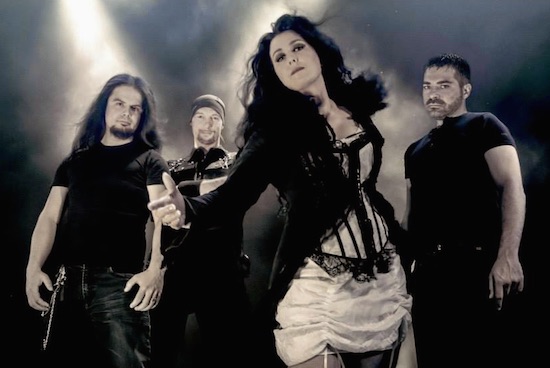
I personally think 'La Ventura' has a sound that is uniquely theirs; however it is hard to put it into words. How would you best describe it?
How about: Female Fronted Melodic Rock Metal?
I like the sound of 'La Ventura', your voice is also very distinctive to me. How important is it to you, is it something that you intentionally try and do?
Thank you for your complement! Well, not intentionally. This is who I am as a singer, my way of expressing myself through vocals. Yes, when listening to me live or the way I have grown per album, it will let you hear some differences, but all for the best. I sing to the best of abilities wherever and whenever. Studio is very different from live, but if I have done the job right: you will always hear it is me ;)! So…unique? Probably not, but 100% Carla: YESSS!
You have said in the past that it can be hard to overcome nervousness about a performance, however in videos or watching stage performances it does not seem to hinder you. How do you go about overcoming this anxiety?
I think there is nothing wrong with a bit of nervousness. It keeps you focused because it is always exciting to go on stage or to perform in front of an audience. Is everything in place and will everything go according to plan? Who knows... but when I sing my first notes and look at the faces in the audience before me, I get so much positive energy that the nervousness moves away immediately. Furthermore, it is really great to work with our well experienced crew, and to know that technically everything is in good hands.
How important is changing styles in your work over time? Do you feel that changing styles is essential to having quality work in a long music career, or would you be perfectly ok with keeping a similar, but great 'vintage La Ventura' sound throughout your music career?
There is a thin line between evolving and repeating yourself. A band obviously needs to grow and develop in order to exhilarate, because we all want to hear the chemistry in a song. It is a magical thing. You can hear when it is there, when everything is in place. The high standard of our specific sound is also very important for La-Ventura, since the quality on the White Crow album has lifted our music, we definitely will seek for a way to do the recordings the analogue way again for future albums.
In writing lyrics, how do you draw your inspiration? Is it important to you that the themes of the music be things that are personally meaningful to you?
Pointed out correctly! I won't write about things that are meaningless. I see it as an opportunity to share my thoughts and emotional experiences with people who listen to our music and take it all in including the lyrics.
You seem to have 'cleaner' vocals than many other metal vocalists, meaning it is easier to understand what you say (this coming from someone that often struggles to understand lyrics without looking them up first even from 'cleaner' vocalists). How important is it to you to understand lyrics in metal music, do you think it is a key in strongly appreciating a song?
Pronunciation is a key to be heard correctly, second "catchy" words and lines, which stick in your mind, helps as well. And last but not least: using words that speak to the imagination. Mixing all three, you will have lyrics which will be clear from the first time you hear them and will stay with you during the whole song. Singing meaningless words and lines won’t do it for me, but I do not wish to preach either. Let the words speak for themselves and draw your own conclusions.
Your band is described on your page as being 'female fronted metal' as your genre. How do you respond to claims that a band's genre/style shouldn't be defined by the gender of the vocalist?
As a band you will always be defined and as a fan you will always have to search for your favorite music regardless gender but female fronted seems to be hot at the moment, so why not use it to our advantage? With so many bands out there, it is wise to use the right tools, especially in your promotion. With the whole "female fronted" hype, it means we as La-Ventura can do more shows live, attract specific partners, but also find so many fans all around the world who are looking for this in particular. If after listening to the music, it is still not for you; well than gender does not matter right ;)?!
It seems you guys interact with your fans a lot (which I greatly appreciate). How much do you enjoy this interaction (both on Facebook, and at your shows), and do you feel it is important for you to continue to do this in the future?
Yes, we love to interact with our fans and social media are a very powerful tool for our promotion. It does take a lot of time and energy but how cool is it to see people getting involved in the band. It means a lot to see the effort rewarded by support from fans and music related business partners from all over the world!
Personally, 'A New Beginning' is my favorite La Ventura song, do you have a personal favorite of your songs, and if so what is it?
A New Beginning is also a favorite of mine! Time and Time Again gives me goose bumps every time when I sing it and from the new material there is already one that will be in the top three of all-time favorites! The song is called As I Lay Dying, somewhere on YouTube you can find some live clips of it. Let me know what you think of it, ok?
I like how you put this into words as your band's motto: 'Let’s make music that reflects the skills and souls of each member of the band and exhilarates on stage', seemingly a way of describing how you find your own uniqueness. Do you guys struggle to accomplish this for all of your members in the 'creative' process?
Not at all. We all have our own expertise to bring to the table. With the line-up we have now, it really shows that La-Ventura has grown and is at its best. Yes, in the band certain people have certain roles. One is more the songwriter than the other; one is more the finisher of songs than starting from scratch. One is good at capturing the drive of the song and translates it in steady grooves, so other parts and lines of the song can evolve. And for me; when the music speaks to me, the vocal lines come in mind thus the lyrics. This total package is the complete process on which songs come to life for La-Ventura.
In the future, what are some bands you would like to share the stage with, both underground or that are already major acts in metal?
Wow, that would be a nice list of bands and artists! Amaranthe would be cool for sure! But there are so many great bands out there, even like us, who are not that well known but still kick ass!
Is there anything I haven't covered that you would like the readers to know?
Keep following us on Facebook to keep updated about our upcoming mini-album and check the live dates which will be after the Summer! To all of you, thanks for your support and thanks for your time reading this interview! ROCK ON! Greetz from La-Ventura – kisses from Carla

Discography
Upcoming Releases
- Artillery - Made In Hell - May 15
- Desecresy - The Secret Of Death - May 21
- Blossom Death - Spirit - May 21
- Dark Millennium - Come - May 22
- Piołun - Exolvuntur - May 22
- Downfall Of Nur - And The Firmament Will Burn To Quench The Pain Of This Earth - May 22
- Opera IX - Veneficium - May 22
- Deathstorm - Cascophonies - May 22
- Shewolff - We're All Gonna Fukkin' Die - May 22
- Dimmu Borgir - Grand Serpent Rising - May 22
- Malebeste - Monestherou - May 25
- Godthrymm - Projections - May 29
- Trelldom - ...By The Word... - May 29
- Pharmacist - Vertebrae After Vertebrae - May 29
- Crocell - Swarm Of Insects - May 29
- Seven Metal Sins - Legacy Of Chaos - Jun 05
- Bloody Falls - IV - Jun 05
- Urkraft - Naturens Skrik - Jun 05
- Fleshcrawl - Epitome Of Carnage - Jun 12
- Woewarden - The Roots Of My Neglect - Jun 12