Ephel Duath - Official Website - Interview


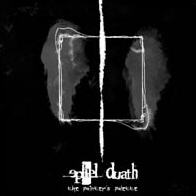
The Painter's Palette

Italy Country of Origin: Italy

The Painter's Palette
Send eMail
Type:
Release Date: 2003
Label: Elitist Records
Genre: Avant-Garde, Death, Experimental, Hardcore, Progressive
1. Cosmic Depths
3. Of Dementia
4. Lost Carcosa
5. A Thousand Young
6. Dreams Of The Nuclear Chaos
8. To A Dreamer (Bonus Track)
1. The Passage (Pearl Grey)
2. The Unpoetic Circle (Bottle Green)
3. Labyrintheine (Crimson)
4. Praha (Ancient Gold)
5. The Picture (Bordeux)
6. Ruins (Deep Blue And Violet)
7. Ironical Communion (Amber)
8. My Glassy Shelter (Dirty White)
9. The Other's Touch (Amarath)

Review by Jerome on March 26, 2020.

Translating a written work of fiction into a musical piece does come with its set of challenges. The music must be able to portray an atmosphere that is very similar to the one intended by the author. The French post-black metal band The Great Old Ones is one of these bands that managed to successfully adapt a literary work, in this case Lovecraft’s stories, into music.

An extreme metal band using the work of Lovecraft as an inspiration is certainly nothing new. This can be attributed to the subject matter of his stories which tends to revolve around the concepts of misanthropy, hopelessness, absurdity and insanity. As such, black metal is especially well suited to display these emotions and ideas through its dissonant and entrancing music. For The Great Old Ones, the portrayal of looming fear was achieved both through the thick layer of dissonant guitar riffs and atypical song structures. In fact, the change in tempo, emphasis on instrumental sections and multi-layered track does give a post-metal vibe, hence why they tend to be classified as post black metal.

Throughout their musical career, The Great Old Ones kept a very constant sound and thus only slightly innovated musically between each album. In fact, it could be argued that the only noticeable change between Al Azif, Tekeli-li and EOD : A Tale Of Dark Legacy would be the production quality as well as the themes portrayed. While the album Al Azif was produced as a compilation of multiple Lovecraftian short stories or themes, Tekeli-li and EOD... each focused on a single story being respectively At The Mountain of Madness and Shadows Over Innsmouth. On Cosmicism, The Great Old Ones decided to create an album that would treat about the multiple deities present within the Lovecraftian universe. As such, the album is constructed in a similar way as Al Azif where each song are self-contained and only loosely connected to an over-arching theme. This would be my first complaint about Cosmicism, as it doesn’t have the magnitude and grandeur present within their last two albums.

Musically, The Great Old Ones opted for a far more spacious sound, making every riff sound as if they were coming from the confines of space. The production value of the album is on point with their lyrical theme showcasing immortal and apathetic beings. The first and second songs, 'Omniscient' and 'Of Dementia', which treat respectively about Yog Sothoth and Cthulhu, are great examples of how the mixing of the guitars can give such a grandiose atmosphere. The first song contains the most melodic riffs composed by The Great Old Ones while keeping the post metal influences in terms of song structure.

The wailing guitar sound for which The Great Old Ones are known for is highlighted in the 'Lost Carcosa', a song which deals with Hastur the Unspeakble, also known as the King in Yellow. The song 'A Thousand Young' is a slower and heavier song covering Shub-Niggurath. This song shows the ability of the band to adapt their music to a gloomier atmosphere and a slower pace which is where they shine. In fact, the influence of doom metal can also be noticed in their last song 'Nyarlathotep'. The Great Old Ones expanded their music by slowing their pace towards end of the album which brings a breath of fresh air to a style that didn’t evolve a lot since Al Azif. A contrast to these slower pieces is the second to last song 'Dreams of Nuclear Chaos'. It must be one of the most aggressive songs on the album as it blasts away at a dazzling speed, raving about Azathoth.

When taken individually, each song is quite enjoyable and showcases the band’s strength in translating despair, otherworldliness and terror into sound. However, therein lies the weakness of The Great Old Ones as the album feels very dense and too long, making a full listen a bit tedious. While I would recommend the album to any fans of Lovecraft or black metal, I still think the greatest strength for the band was showcased through their album Tekeli-li where every song was strongly connected through the retelling of a short story. There are still many novellas that The Great Old Ones hasn’t tackled yet so there is still much room for the band to explore. As the occultist would say Ph'nglui mglw'nafh Cthulhu R'lyeh wgah'nagl fhtagn!

Rating: 7.6 out of 10

   1.09k

Review by Allan on July 11, 2003.

I've always found myself to enjoy those albums that are a bit more innovative than say those that are absolutely perfect in performance or song writing. Something unique and creative is far more liberating for the listener than something we've all heard a dozen times already, except the next time it's just done that little better. That is why I am quite fond of Ephel Duath and their latest release "The Painter's Palette."

Quite a progression has happened since Ephel Duath's debut "Phormula" (later to be re-released as "Re-Phormula"). Whereas "Phormula" had it's moments and was a bit underdeveloped, "The Painter's Palette" is a solid album throughout and is far more mature. Those of you who weren't too keen on "Phormula" owe it to yourself to check "The Painter's Palette" out, seeing as the slate has been wiped clean and this is a new start. In fact, the only remaining member from "Phormula" is main-man Davide Tiso. Ephel Duath has now been blessed with a virtuoso line-up consisting of hardcore-esque vocalist Luciano George Lorusso, professional jazz drummer Davide Piovesan, progressive bassist Fabio Fecchio, and clean vocalist Davide Tolomei. Yes, that is three Davide's in the band.

Such a diverse line-up is bound to produce something interesting. That is exactly what happened. It's a big statement to say that Ephel Duath are utterly treading new ground with "The Painter's Palette," so I'll refrain. Rather, I'll say that Ephel Duath are taking what so many bands have tried to do and failed, and are doing it right. Ephel Duath, more specifically Tiso, put their song writing skills to the absolute max and craft something that cohesively blends together multiple styles into the form of a dark, progressive metal opus.

One of the styles thrown into this progressive mixture is jazz. Countless bands have tried continuously to bring the age-old element to the metal genre, but have only succeeded in poorly throwing in only jazz sections instead of fully integrating it into the song. Ephel Duath succeed in fully incorporating jazz into the songs, be it through the style of the riffs, the occasional trumpet use, or Piovesan's drumming. Countless other aspects of "The Painter's Palette" also substantiate this claim.

The only other thing necessary to point out is that you rarely find somebody as ambitious as Tiso. The music of Ephel Duath is extremely intelligent, well crafted, creative, and dare I say original. There are things you can hear in the music of Ephel Duath that aren't common.

Bottom Line: "The Painter's Palette" is the type of album that doesn't come along very often. It's not a perfect album, but it does show a band still trying to push ahead. That's far more important.

Categorical Rating Breakdown

Musicianship: 9
Atmosphere: 9
Production: 8
Originality: 9
Overall: 9

Rating: 8.8 out of 10

   1.09k