
Aeternus - Official Website - Interview
Philosopher |
Norway
 |
|---|
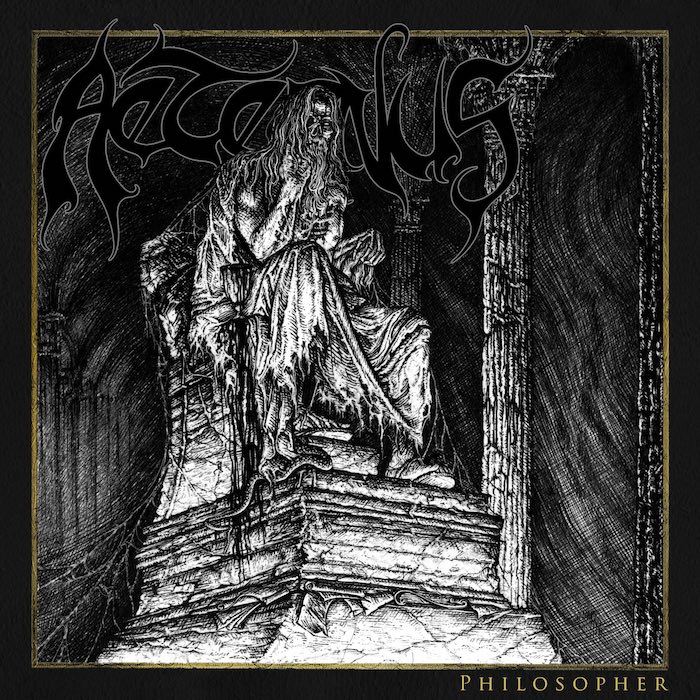

Buy on: Bandcamp
Type: Full-Length
Release Date: November 17th, 2023
Label: Agonia Records
Genre: Death
1.
The Temple Of The Crescent Moon
2.
Equinox Of The Gods
3.
Until The Hellhounds Sleep Again
4.
Will They Come?
5.
Lucienne
6.
Summertime Is Gone
7.
Katarraktis Apo Aima
8.
Raining Dead Angels
9.
Misantropolis
10.
Amanitis
11.
Meliae
12.
Via Dolorosa
13.
Circles
14.
Amanes
1.
Existentialist Hunter
2.
World Bleak Nepotism
3.
The Intentionality Of Unitigated Evil
4.
Void Of Venom
5.
Wresting Worm
6.
The Luciferian Architect
7.
Carving The Pristine Anomie
Review by Nick on June 21, 2008.
With a string of inferior to mediocre releases -- Skeleton Skeletron, Judas Christ and Prey -- most have come to consider Tiamat a decomposing shell of its former self. Demonstrated by the lack of originality and breadth on their previous three albums, Johan Edlund and his gloomsters seem to have creatively withered faster than a slug in a mound of salt. A long time has passed since the masterful Wildhoney and the brilliantly crafted A Deeper Kind Of Slumber, so please forgive me for the skepticism that precedes 2008’s Amanethes.
The opener, "The Temple of the Crescent Moon,” comes across as hollow and desperate, lacking the confidence and quiet patience that permeated songs from the previously mentioned albums. The melody is generic and sounds almost synthetic. In addition, the lyrics are benign and stale. What might have worked, both musically and lyrically, ten years ago, ends up falling short in 2008.
There is a familiar black metal tinge to the beginning of “Equinox of the Gods,” recalling similarities from Sumerian Cry and Astral Sleep, with rolling, rapid guitar melodies interweaved with penetrating bass thumps and blasting drums. I expected the song to melt into an uninspired doom rock song, ala Prey, but it retained the frenzied pace throughout. “Equinox” ends as a surprising recent Tiamat entry and an above average metal song.
The bleak mood constructed by “Equinox of the Gods” becomes even more sullen for the lackadaisical “Until the Hellhounds Sleep Again.” The track comes across as a failed attempt to recreate the sound that ex-Tiamat member Johnny Hagel mastered on Sundown’s Design 19. Likewise, “Lucienne” is similar in its misguided drudgery. Edlund’s vocals show glimpses of promise, but are ultimately toiled and pitchy. And the would-be fist-pumping guitars? Honestly, Johan? Cheesy metal anthems went out with the Flowbee and Vanilla Ice’s shaved eyebrows.
On the other hand, “Will They Come,” “Summertime is Gone” and “Katarraktis Apo Aima” are stirring and emotive, something that Tiamat hasn’t been able to achieve for the better part of the past ten years. The creeping tempo and atmosphere of all three songs shows that Edlund allowed the music to form, instead of forcing something to happen. The three tracks, sandwiching the sloppy “Lucienne,” establish a somber, yet stunningly beautiful mosaic of atmospheric rock. “Summertime” is a fantastic rock song, mirroring a Paradise Lost-onian tone (Edlund sounds much like Nick Holmes on this track). “Katarraktis” is essentially “Summertime’s” second half, sounding almost identical, but with a more anger-laced component. The former song flows seamlessly into the latter, providing a nice continuity throughout the middle section of Amanethes.
The evil “Raining Dead Angels” is as ferocious and it is strong, detoxifying brilliantly into “Misantropolis.” “Raining Dead Angels” is death metal, black metal and gothic metal all meeting at the pinnacle of each genre’s most valuable asset. The pre-release publicity of Amanethes hinted upon a sound more typical of pre-A Deeper Kind of Slumber Tiamat, and those murmurings hold true on this track (not so much on most of the previous songs, however). Edlund’s vocals are vicious and piercing, the music symphonic and threatening. Quintessential female whispers add another dark element, cementing “Raining” as a standout track. Meanwhile, “Misantropolis” features a more subdued Edlund with his unmistakable voice hovering ominously atop one of the most musically lush and fulfilling songs on the album.
"Amanitis” is an interesting instrumental, seemingly influenced by the Greek surroundings in which the recordings took place. I’m not sure if this track was written prior to the band’s arrival in Greece, but it definitely sounds like it was an improvisation during recording rehearsals. Having said that, “Amanitis” is a nice connecting track, ideally placed on the album.
“Meliae” is an amazingly inspiring song, sounding very much like a modern-day Pink Floyd (not that surprising considering the space rock soundscapes of A Deeper Kind Of Slumber). Edlund’s uncanny vocal similarities to Dave Gilmore are ever-present on this song. Having listened to “Meliae” in excess of ten times before writing this review, I’m inclined to call it Tiamat’s most beautifully written and satisfying song…ever. The accessibility and rock-oriented aspect of the song may turn away some fans, but I’m confident that those not afraid to set aside expectations will find “Meliae” to be a truly pleasing experience.
Unfortunately, “Via Dolorosa” cannot hold under the weight of six of the last seven songs and finds its way to the land of the Amanethes bottom-dwellers, sucking on the radiance of the majority. The penultimate “Circles” is rather lackluster and boring. It does have moments of redemption, but not enough to sustain itself. The album’s closer, “Amanes” is the most tactfully menacing of the fourteen. It’s an effective ending to the album and closes things with slumbered pacing and a somber ambience. Truly dreadful.
As the album comes to a close listen after listen, I become increasingly content and comfortable with being proven wrong. Amanethes, despite its apparent flaws, is an admirable Tiamat release (tracks range from poor to exceptional – if this album lost some of its weaker songs, it could have been a stellar release). The album runs the gamut of atmospheres and emotions that we have come to expect from the band, and with a renewed vehemence and passion. I wish that we could erase two of the previous three albums from Tiamat’s discography, but this ascension from the ashes makes Amanethes that much more memorable and welcomed.
Categorical Rating Breakdown
Musicianship: 7
Atmosphere: 8
Originality: 7
Production: 8
Overall: 8
Rating: 7.6 out of 10
Review by Michael on November 4, 2023.
I love the fall with the early onset of darkness, the storms and the rain knocking at the window. Together with a tasty drink and a burning wood in the fireplace makes this a pretty nice time but of course you need some adequate music for such an evening. This mustn't be fast stuff, not too brutal and also not too epic. That's where the new Aeternus album The Philosopher joins the game.
Although the band had some hard times and some not too inspiring albums they never gave up and did a very good album in 2018 with Heathen. Having not changed many things in comparison to that you can find some trusted sound marks that make the Norwegian guys so outstanding in that genre. The sonorous voice performed by Ares (this time even with some spoken word parts in the opener) and the dark, rumbling guitar tunes that always remind me a little bit of Bolt Thrower on a valium trip. As a whole the album appears to be very inspired and the band sounds as fresh as they sounded like on their opus magnum …And So The Night Became. What is noticeable is that Aeternus focus a little bit more on some atmospheric elements like acoustic guitars, guitar solos and clean vocals (like in the opener 'Extentialist Hunter') but also some catchier parts as you can clearly hear in 'The Intentionality Of Unmitigated Evil' (what a title!). Whilst the guitars are always very calm and spread some chilling atmosphere, sometimes the drums break out into a real thundering blast beat thunderstorm which fits really perfectly and this is it what gives the seven songs a very special touch and a good pinch of aggressiveness.
So, Aeternus find a really smart and interesting balance between metallic rage and some more heathenish ambient sounds here. Which doesn't mean that they won't surprise you in some parts. 'Void Of Venom' starts like a harmless acoustic intermezzo just to explode within a second with so much fury and rage that it caught me just like “wow, what the hell was that?”. That is a fantastic song that gets me right from the start until it's end because of the highly sophisticated twists and turns. 'The Luciferian Architect' even includes some rocky tunes reminiscent of old Black Sabbath before Lucifer creates a very dense and sinister atmosphere in these tracks with a lot of double bass and really evil vocals by Ares. And again we can find some acoustic guitars and some amazing breaks here that show that Aeternus are back with a vengeance. The album finishes with 'Carving The Pristine Anomie' where the band again shows their skills. This is a wild ride through some dark, blast beating parts, some acoustic intermezzos and some spacey trips peppered with a lot of fantastic and surprising breaks. This is maybe the most diverse song in the whole career of Aeternus.
The Philosopher has truly become a dark metal album and also one of the strongest albums in the long career of the band. If you liked the band before you won't find anything wrong with this one, so grab your copy and see the band on their upcoming European tour this December together with Gorgoroth!
Rating: 9.3 out of 10 poisoned Socrates
1.11kReview by Michael on November 4, 2023.
I love the fall with the early onset of darkness, the storms and the rain knocking at the window. Together with a tasty drink and a burning wood in the fireplace makes this a pretty nice time but of course you need some adequate music for such an evening. This mustn't be fast stuff, not too brutal and also not too epic. That's where the new Aeternus album The Philosopher joins the game.
Although the band had some hard times and some not too inspiring albums they never gave up and did a very good album in 2018 with Heathen. Having not changed many things in comparison to that you can find some trusted sound marks that make the Norwegian guys so outstanding in that genre. The sonorous voice performed by Ares (this time even with some spoken word parts in the opener) and the dark, rumbling guitar tunes that always remind me a little bit of Bolt Thrower on a valium trip. As a whole the album appears to be very inspired and the band sounds as fresh as they sounded like on their opus magnum …And So The Night Became. What is noticeable is that Aeternus focus a little bit more on some atmospheric elements like acoustic guitars, guitar solos and clean vocals (like in the opener 'Extentialist Hunter') but also some catchier parts as you can clearly hear in 'The Intentionality Of Unmitigated Evil' (what a title!). Whilst the guitars are always very calm and spread some chilling atmosphere, sometimes the drums break out into a real thundering blast beat thunderstorm which fits really perfectly and this is it what gives the seven songs a very special touch and a good pinch of aggressiveness.
So, Aeternus find a really smart and interesting balance between metallic rage and some more heathenish ambient sounds here. Which doesn't mean that they won't surprise you in some parts. 'Void Of Venom' starts like a harmless acoustic intermezzo just to explode within a second with so much fury and rage that it caught me just like “wow, what the hell was that?”. That is a fantastic song that gets me right from the start until it's end because of the highly sophisticated twists and turns. 'The Luciferian Architect' even includes some rocky tunes reminiscent of old Black Sabbath before Lucifer creates a very dense and sinister atmosphere in these tracks with a lot of double bass and really evil vocals by Ares. And again we can find some acoustic guitars and some amazing breaks here that show that Aeternus are back with a vengeance. The album finishes with 'Carving The Pristine Anomie' where the band again shows their skills. This is a wild ride through some dark, blast beating parts, some acoustic intermezzos and some spacey trips peppered with a lot of fantastic and surprising breaks. This is maybe the most diverse song in the whole career of Aeternus.
The Philosopher has truly become a dark metal album and also one of the strongest albums in the long career of the band. If you liked the band before you won't find anything wrong with this one, so grab your copy and see the band on their upcoming European tour this December together with Gorgoroth!
Rating: 9.3 out of 10 poisoned Socrates
1.11k