
Watain - Official Website - Interview - News
Casus Luciferi |
Sweden
 |
|---|
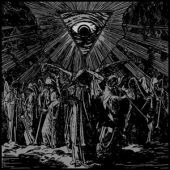

Type: Full-Length
Release Date: November 17th, 2003
Label: Drakkar Productions
Genre: Black
1.
Chrematheism
2.
We Are The Sun Gods
3.
The Orb
4.
Savitri
5.
Breeding Silence
6.
Victory
7.
Waltz Of Shades
8.
Scale Of Sorrows
9.
Strange Days
1.
In Hell
2.
Dance Of The Dead
3.
King In Yellow
4.
Stronger Than God
5.
Death Takes Us All
6.
Morningstar
7.
Down To His Kingdom
8.
Metatron
9.
Bane Of Creation
10.
All That Remains
11.
Hades Rising
1.
Bow Before The Oligarchy
2.
Silver Ziggurat
3.
Ninety-Nine Raids
4.
Forgotten Minion
5.
Summon The Stone Throwers
6.
Colossal Glaciers
7.
The Tarnished Crown
1.
Nekyia
2.
Eidolon
3.
Phobos
4.
Katabasis
5.
Stygian
6.
Elysion
1.
The Limb Crucifix
2.
Rabid Death's Curse
3.
On Horns Impaled
4.
Life Dethroned
5.
Walls Of Life Ruptured
6.
Agony Fires
7.
Angelrape
8.
Mortem Sibi Consciscere
1.
You're Still Alive
2.
Page By Page
3.
Dragon Reborn
4.
The Crow
5.
World Full Of Wonders
6.
Metal Messiahs
7.
Sea Of Lies
8.
Not Look Back
9.
The Man Without Fear
1.
Night Vision
2.
De Profundis
3.
Black Flames March
5.
The Child Must Die
6.
They Rode On
7.
Sleepless Evil
8.
The Wild Hunt
9.
Outlaw
10.
Ignem Veni Mittere
11.
Holocaust Dawn
1.
Devil's Blood
2.
Black Salvation
3.
Opus Dei (The Morbid Angel)
4.
Puzzles Ov Flesh
5.
I Am The Earth
6.
The Golden Horns Of Darash
7.
From The Pulpits Of Abomination
8.
Casus Luciferi
Review by Felix on December 7, 2020.
Casus Luciferi was the first album of Watain that blew me away. Expect nothing less than eight songs of profound blackness, filled to the brim with evil, cruelty and well, musical talent. All these characteristics show up right from the beginning. The well-chosen opener combines raging aggression and desperate misanthropy. Better still, it does not wait to show the listener the shortest way to the sulphurous, fiery and torrid place called hell. Already the first tones of 'Devil’s Blood' sound excellent, triumphant, dark and promising. They find the perfect balance between spirituality and violence. It is therefore only natural that the typical black metal maniac wants to get more of this sound immediately and Watain do not disappoint their audience. It might be true that some songs have less clear contours than the overwhelming opener. I also realize a marginal lack of individuality. The complex pieces are cut from the same cloth and so they do not differentiate much. All of them spit on conventional patterns and the degree of vehemence remains more or less the same during the entire work, but that’s really no big deal.
On a positive note, the homogeneous approach underlines the holistic vision of the Swedes. This milestone of diabolic art works as a whole and maybe it is no disadvantage that all songs spread similar vibes. Bands like Bolt Thrower have proven that precisely this way of proceeding can result in an album where the whole is more than the sum of its parts. In this respect it is absolutely no problem that a piece like 'Puzzles ov Flesh' does not fully reach the class of the opener. Or – to let the cat out of the bag – of other outstanding monuments like 'From the Pulpits of Abomination'. It is of much higher relevance that the song blends seamlessly with the remaining material.
I have mentioned the complexity of the tracks, but I must add that this feature is not at the expense of their flow. The pitch-black lines do not get hurt by abrupt or overly edgy breaks. Watain’s instinct for conclusive compositions does not leave them in the lurch and it is exciting to see that the enormous effect of their apocalyptic melodies remains untouched by the frequent tempo changes. The excellent steadiness of the material is not weakened by the admirably great number of diverse sections per song – and vice versa. This alone shows the compositional brilliance of Watain; and it does not matter that one can, of course, find trace elements of the two Dissection classics or the early Dark Funeral outputs in their sound. Especially the great harmonies of the 'Black Salvation' remind me of some masterpieces of Lord Ahriman’s (mostly lazy) squadron.
The alarming, evocative guitars at the beginning of 'From the Pulpits of Abomination' leave no doubt that the listener is getting closer to the grand finale which consists of this excellent, high-speed dominated eruption and the equally fascinating title track. Although its clocks in at almost nine minutes, it is thrilling and excellent from the beginning to the end. This is not my opinion, this is simply true. Everybody who begs to differ is a miserable liar who deserves to listen to the whole catalogue of Avantasia. At least three times in a row! But aside from draconian punishments for the aforementioned group of disoriented clowns, Casus Luciferi is a very good foundation for having an inspiring black mass and the fact that it benefits from a more or less perfect mix is nothing less but the crown on the terrifying head of Satan. Two outstanding pieces at the beginning, two outstanding pieces at the end and very good stuff in the centre shape a dense, majestic monument that sees no sense in acoustic intermezzos. No doubt, it leaves the serious reviewer no chance to give less than 9. And maybe / probably / surely my reviews cannot be taken seriously, but I also vote for nine points out of ten. Or perhaps 9.2 – this is my honest opinion and it underlines my seriousness.
Rating: 9.2 out of 10
1.18kReview by Felix on March 31, 2020.
It is always a magnificent moment of grandeur when a promising and promoted band decides to write, record and publish its magnum opus. The meaningful spirit of "now or never" is in the air and everybody feels that the day of reckoning is coming nearer and nearer. My German fatherland had this situation two times during the last century - the result is well known. "Never" in both cases. But here we have Watain, a horde that has proved its ability to write fascinating music a couple of times. Stop breathing for a moment, they challenge fate... and the result is "never".
Watain meander through newly developed musical regions. That's no surprise, because you cannot produce something greater than before while still doing things in the same way. But it's always a risk. A good neurologist is a good doctor, but he is probably not a good surgeon, although both professions require successful medical studies. Crude analogy, I know, but a good black metal unit is not automatically a good dark metal band, although both kinds of metal require solid guitars. 'They Rode On', the most discussed piece of The Wild Hunt, shows impressively that Watain are not able to open the gates to new musical dimensions without copying the formulas of other formations. I listen to a typical ballad with a calm beginning, clear vocals, emotional guitars and a more or less catchy chorus. But cheap and predictable emotionalism does not lead to a profound song. Nine minutes of mediocrity in the middle of the album kill its flow in an annoying manner.
Speaking of predictability, the first number after 'They Rode On' emphasizes the harsh side of the Swedes. Everything else would have been a surprise, because Watain are interested in keeping their bad boy image. Therefore, they must destroy the impression that they want to earn money with their music instead of following strictly Satanic (or any other non-commercial) ideals. This is slightly stupid. Worse still, Watain confirm the old rule that a stylistic change does not only result in mediocre tracks that rely on the new formula. This dilemma mostly goes hand in hand with the fact that a band is also unable to write great tracks on the base of their previous approach. 'Sleepless Evil' lacks conviction, exciting ideas and depth. Fortunately, the band has not completely lost its power. 'Outlaw', for example, shows a passionate band that has created a furious and lethal piece with an intelligent design. The slightly ritualistic frame of the track, I refer to the "in ya a huu" choirs (is this correctly written? Don't think so), gives the song an eerie aura.
No, Watain have not forgotten how to pen mighty songs. 'Black Flames March' combines majestic elements with an unholy atmosphere while revealing a lot of compositional ideas and a more than solid substance. The relatively melodic 'The Child Must Die' cannot be blamed for being lukewarm or ill-defined as well. Nevertheless, the entire album holds too many theatrical elements. Its opulent configuration matches the media book packaging and the album boasts with melancholic, dramatic and wistful sections, but can anybody tell me when exactly does the wild hunt start? The title track begins in a strong manner and has its charm, but any form of wildness is conspicuous by its absence. Instead, it seems to be a number that Quorthon (R.I.P.) forgot to put on "Twilight of the Gods". Watain want to be the current kings of black metal, but they do not show alternatives how this genre takes the next step. One should learn from the past, but it makes no sense to reanimate old recipes.
No doubt, the production deserves the attribute "perfect", because it supports the ambition of the band: to be still (a little bit) black while being acceptable for a greater target group of music loving people. But even the best mix cannot hide the fact that the old dogma "less is more" is still valid. For example, 'Holocaust Dawn' or 'Ignem Veni Mittere' just prolong the album. And at the end of the day, things are pretty easy. Giving yourself an ambitious aim is one thing, but to reach it is something completely different. Watain fail. They left nothing undone, but they just forged another decent (and overlong) black metal album. This is not enough for self-declared kings. Never.
Rating: 6.8 out of 10
1.18kReview by Felix on December 7, 2020.
Casus Luciferi was the first album of Watain that blew me away. Expect nothing less than eight songs of profound blackness, filled to the brim with evil, cruelty and well, musical talent. All these characteristics show up right from the beginning. The well-chosen opener combines raging aggression and desperate misanthropy. Better still, it does not wait to show the listener the shortest way to the sulphurous, fiery and torrid place called hell. Already the first tones of 'Devil’s Blood' sound excellent, triumphant, dark and promising. They find the perfect balance between spirituality and violence. It is therefore only natural that the typical black metal maniac wants to get more of this sound immediately and Watain do not disappoint their audience. It might be true that some songs have less clear contours than the overwhelming opener. I also realize a marginal lack of individuality. The complex pieces are cut from the same cloth and so they do not differentiate much. All of them spit on conventional patterns and the degree of vehemence remains more or less the same during the entire work, but that’s really no big deal.
On a positive note, the homogeneous approach underlines the holistic vision of the Swedes. This milestone of diabolic art works as a whole and maybe it is no disadvantage that all songs spread similar vibes. Bands like Bolt Thrower have proven that precisely this way of proceeding can result in an album where the whole is more than the sum of its parts. In this respect it is absolutely no problem that a piece like 'Puzzles ov Flesh' does not fully reach the class of the opener. Or – to let the cat out of the bag – of other outstanding monuments like 'From the Pulpits of Abomination'. It is of much higher relevance that the song blends seamlessly with the remaining material.
I have mentioned the complexity of the tracks, but I must add that this feature is not at the expense of their flow. The pitch-black lines do not get hurt by abrupt or overly edgy breaks. Watain’s instinct for conclusive compositions does not leave them in the lurch and it is exciting to see that the enormous effect of their apocalyptic melodies remains untouched by the frequent tempo changes. The excellent steadiness of the material is not weakened by the admirably great number of diverse sections per song – and vice versa. This alone shows the compositional brilliance of Watain; and it does not matter that one can, of course, find trace elements of the two Dissection classics or the early Dark Funeral outputs in their sound. Especially the great harmonies of the 'Black Salvation' remind me of some masterpieces of Lord Ahriman’s (mostly lazy) squadron.
The alarming, evocative guitars at the beginning of 'From the Pulpits of Abomination' leave no doubt that the listener is getting closer to the grand finale which consists of this excellent, high-speed dominated eruption and the equally fascinating title track. Although its clocks in at almost nine minutes, it is thrilling and excellent from the beginning to the end. This is not my opinion, this is simply true. Everybody who begs to differ is a miserable liar who deserves to listen to the whole catalogue of Avantasia. At least three times in a row! But aside from draconian punishments for the aforementioned group of disoriented clowns, Casus Luciferi is a very good foundation for having an inspiring black mass and the fact that it benefits from a more or less perfect mix is nothing less but the crown on the terrifying head of Satan. Two outstanding pieces at the beginning, two outstanding pieces at the end and very good stuff in the centre shape a dense, majestic monument that sees no sense in acoustic intermezzos. No doubt, it leaves the serious reviewer no chance to give less than 9. And maybe / probably / surely my reviews cannot be taken seriously, but I also vote for nine points out of ten. Or perhaps 9.2 – this is my honest opinion and it underlines my seriousness.
Rating: 9.2 out of 10
1.18k