Wuldorgast - Interview
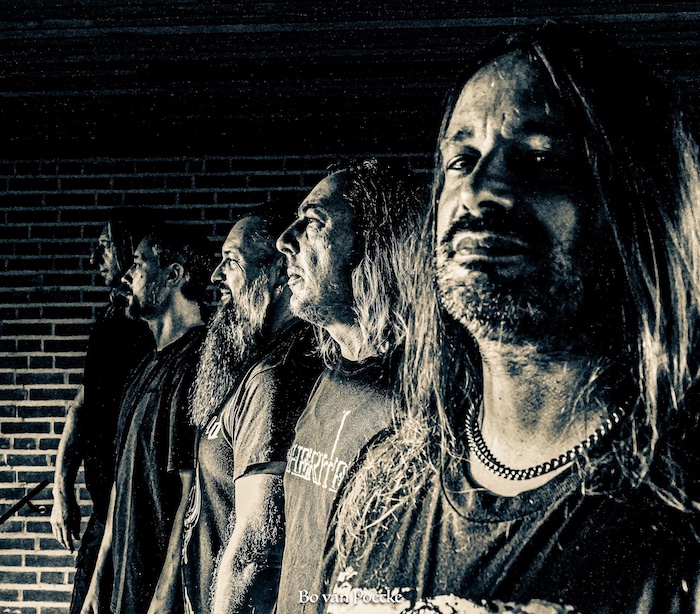
Dutch death metal veterans Klaïton are back with "A Celebration Of Pain", a six-track EP that builds on the foundation laid by their 2024 debut, "Behind The Ritual". Rooted firmly in old-school death metal but delivered with a clear, powerful production and plenty of groove, the new material shows a band that knows exactly what it wants to do. We caught up with Ronald Camonier (drums), Gratiën Versijpt (vocals), and Erwin Wesdorp (guitars) to discuss the band's beginnings, the new EP, lineup changes, influences, and what lies ahead. Crank it up, check out our review, and get to know Klaïton a little better!
Tomek

Klaïton was formed back in 2013 by musicians who had already spent years playing in bands such as Polluted Inheritance and Burial. How did the band originally come together, and what made you decide to start a new project rather than continue with your previous bands or move on to something completely different?
Ronald: By 2013, Polluted Inheritance and Burial had already split up or had at least been inactive for a few years. And as happens with most musicians, I think, after a while you just get that itch to make music again. Erwin and Stefan ran into each other at a party (we're all from the same area...), and that's where the seed was planted to start a band. The hunt was on for a drummer, bass player, and singer. It didn't take too long to find a bass player, Steven Vrieswijk (former bass player for Polluted Inheritance), and a drummer... me (former singer and guitarist for Polluted Inheritance). So, as you can see, they didn't have to look very far to complete the lineup. It took a bit longer to find a vocalist, but we eventually found Gratiën Versijpt. The goal wasn't to become a Polluted Inheritance or Burial clone, but to start fresh and see where we'd end up stylistically. In the end, this turned out to be quite a long process because, as you know, our first EP didn't come out until 2024. That was really the point when we were all happy with the direction we had taken.
You spent many years building a reputation in the Dutch underground before releasing your debut EP, "Behind The Ritual", in October 2024. How do you explain that long gap between forming the band and finally releasing your first official material? Was it a conscious decision to take your time, or did life simply get in the way?
Ronald: Like I said before, it was a real search for a style that everyone was happy with. We also played our earlier live shows in those different styles, and even though we weren't completely satisfied ourselves, the crowd was always enthusiastic! In the meantime, I started looking into home recording, which made it a lot easier to simply record something. Things kept getting better and better, and that definitely fueled our desire to record the EP. Everything just clicked around that time.
Gratiën: But I guess it also took us a while to become confident enough and satisfied with the songs before taking the step toward recording them. We wanted to take our time and offer the best we had in us at that point. In that respect, it was good that we could record at Ronald's place, without time pressure or budget constraints, and in an environment where we felt comfortable and had enough time to experiment. That helped a lot in reshaping the songs we had.
Where does the name Klaïton come from? Is there a particular story or meaning behind it, and does it have any connection to the band's musical identity?
Ronald: The name Klaïton comes directly from forgotten chthonic mythology — the ancient cult of deities that dwelled deep beneath the earth. The name itself is a corruption of the Old Greek "Klito" or "Klaito," meaning "the enclosed one" or "he who is hidden in the mire." In ancient texts, he wasn't just a generic devil, but the God of Weeds: the brutal, unstoppable primal force of nature that reclaims everything the moment humanity lets its guard down. While other gods claimed the marble and the light, Klaïton was the entity of the pitch-black void and the roots beneath the altar. We deliberately chose this name because it perfectly captures the atmosphere of an ancient, inevitable threat that is always slumbering just out of sight.
"Behind The Ritual" received positive feedback, and you mentioned in an earlier interview that the physical edition was almost sold out. How did the response to that debut EP compare with your expectations? Did it change anything for the band or give you a different perspective on what Klaïton could achieve?
Ronald: To be honest, after all the positive reactions to the "Behind The Ritual" EP, we had hoped for more shows and interest from venues or festivals. Unfortunately, that didn't really happen. We're not entirely sure what the exact reason is. Social media is a must nowadays, and I have to admit we've fallen a bit behind in that department, mostly because everyone in the band has a busy family life. So maybe that was the reason?
You're now preparing to release a new EP on November 4. What can you tell us about the new material? How does it compare with "Behind The Ritual", and have you deliberately tried to push your sound in a different direction, or is this simply the next natural step for Klaïton?
Ronald: Yes! The new EP, "A Celebration Of Pain", drops on November 4. It's truly an evolution of our first one. Sound-wise, we tried to make it a bit more modern, but not too modern. We love that old-school vibe, and we feel it's definitely still there. I think we all share the feeling that this is the exact style we've been searching for all this time. "A Celebration Of Pain" is something we're incredibly proud of!
Gratiën: We also spent more time working on the vocals, experimenting a bit more with different approaches and making them as clear as possible without losing brutality and power. We also mapped out more precisely how things should sound and how we wanted them to sound. I think, as Ronald said, that we really succeeded in achieving that goal this time. For me, some of the songs turned out almost exactly as I had imagined them.
When did you begin writing the new EP, and how did the songwriting process develop? Steven mentioned that Ronald and Erwin usually bring in nearly complete songs for Gratiën to work on lyrically. Is that still how things work, or has the creative process changed over the years?
Ronald: We started writing new material around September 2025, and by late May or early June, we officially started recording. There is one track on the EP, though, that is as old as the band itself. 'Godforsaken' is the very first song ever written for Klaïton. We've always thought it was a really strong track, and we've been playing it live all these years. We felt it was finally time to record it and see if it would hold up on a record. Well, it's on the EP, so there you go! It's still the case that Erwin and I write the songs and deliver them pretty much complete to Gratiën so he can write the lyrics and vocal lines. Nothing has changed in that regard, and it works perfectly for us.
Your music combines raw, old-school death metal aggression with intricate guitar work, relentless drumming, and plenty of technical detail. How do you strike the right balance between brutality and complexity? Do you consciously avoid overcomplicating things, or do the songs naturally end up sounding the way they do?
Ronald: You hit the nail right on the head! We try to keep things as accessible as possible, but we secretly throw in a few technical twists here and there to keep things interesting, both for the listeners and for ourselves. As we said before, we didn't want to become clones of our former bands, but rather create a blend of the two. In our opinion, that's exactly the kind of music we're making right now, and we're really happy with it.
Gratiën: I think the songs naturally turn out the way they do, although there's also a conscious effort involved. They're not overly complicated or technical, but we deliberately try to make them as catchy as possible without losing their heaviness and brutality. The songs may sound pretty straightforward at times, but they definitely have that hidden technical twist. So, while they may seem accessible at first listen, you might only notice the technicality after a couple of listens. That's when the songs really open up.
Gratiën is responsible for the lyrics; Steven explained that much of the inspiration comes from the darker side of humanity and the state of the world. Does the new EP continue exploring those subjects? Are the lyrics based on specific events, personal observations, or more abstract ideas?
Gratiën: Well, between the first EP and the new one, not much has changed for the better when it comes to world affairs! So you could say that, lyrically, it's a continuation of the topics from the first EP. However, I think there are differences in approach and scope.
On the "Behind The Ritual" EP, the lyrical themes dealt more with institutional violence and abuse in general, as opposed to "A Celebration Of Pain", where they deal more with the effects that such abuse has on people, on the human psyche, and on their surroundings. Whereas the first EP focused more on institutions, this one is more concerned with the systemic aspects of control and indoctrination, how victims of systemic oppression are shaped, and how they end up craving that particular type of control and abuse and, in turn, applying it to their own surroundings.
We seem to crave institutional and systemic control because, as a species, we've evolved to a point where we can no longer conceive of an era in which that type of control didn't exist. As a result, we need some form of controlled violence to be able to function "normally." Hence, "A Celebration Of Pain".
Without necessarily expressing a political viewpoint, I simply try to relate what I see and read and pour it into some fancy death metal lyrics. But it's cool that different people have different ideas about what the lyrics deal with. I think everybody should be entitled to their own interpretation without me telling them what or how to read into them. Maybe they don't express happy thoughts, but I think people can definitely draw some strength from them.
I take writing lyrics pretty seriously because I believe good lyricism can enhance the quality of a song and contribute to its overall feeling and seriousness. I think that's also why we've included the lyrics with the physical releases this time.
Is there a particular song on the new EP that you feel best represents Klaïton as it stands today? What makes that track special, and is there anything about it that might surprise listeners who discovered you through Behind the Ritual?
Ronald: That's a tough question. We're truly proud of every single track on this EP, so picking just one that best reflects Klaïton is difficult, especially since every song is different from the rest. What I can say is that we chose 'From Blood To Muscle To Bone' for the music video. We all think it's a really strong song, but it isn't necessarily the one track that represents Klaïton as a whole. It has heavy riffs, great drum parts, and a solid chorus that I think will work really well live.
The band's roots are closely connected to the Dutch death metal underground, particularly through your history with Polluted Inheritance and Burial. How much of your musical upbringing still influences Klaïton today? Are there particular albums, bands, or periods of death metal that continue to inspire you?
Erwin: I certainly believe we're still influenced by bands like Morbid Angel, Death, Meshuggah, and other great acts, both from the past and the present. Polluted Inheritance also remains part of our DNA. We try to channel all of that into the sound of Klaïton as much as possible.
Gratiën: As a vocalist, I get a lot of inspiration from non-metal bands, especially when it comes to phrasing and timbre, but also the atmosphere and emotions I want to convey in a song. It's not all about sounding as brutal as possible, but rather about creating an underlying sense of impending dread and uneasiness. For me, that's a constant process of invention and reinvention.
At the beginning of 2026, Steven stepped away from Klaïton after 13 years, with Jan Verdoorn taking over on bass. How has this lineup change affected the band, both personally and musically? Has bringing in a new member introduced fresh ideas or changed the dynamic within the group?
Ronald: Steven's departure came quite unexpectedly. However, we respect his decision, and it won't stand in the way of our friendship. As for Jan... Jan Verdoorn is a childhood friend and, as it happens, Stefan Verdoorn's big brother. By the way, Steven Vrieswijk is Stefan Verdoorn's (and, of course, Jan's) nephew... We like to keep it in the family!
To be honest, Jan wasn't our first choice to replace Steven! The reason was that Jan plays in several other projects, so we figured there was no way he would have the time. Through the grapevine, we heard that Jan was wondering why we hadn't contacted him for an audition yet. Once we heard that, the choice was made pretty quickly, and that's how Jan became part of the Klaïton family. Right now, Jan is focused on learning the songs from both Behind the Ritual and the new EP, so everything will be locked in for the live shows.
In an earlier interview, Steven described finding time to rehearse as one of the band's biggest challenges, especially with several members working irregular shifts and balancing family life. Has that situation changed at all? How do you keep a band active and creative when music has to compete with so many other responsibilities?
Ronald: Yeah, it's definitely not easy, but it's not impossible either. Since we've all been in the business for a very long time, our wives have learned to live with the fact that they don't always come first (hahaha). Sometimes it's a bit difficult to find a date for rehearsals, but overall we manage to get together about three times a month. You just have to make time for it!
Gratiën: And, of course, nowadays we have the internet, so even when it's not always possible to rehearse together physically, we can still practice and prepare the songs at home.
You've built a loyal following largely through live performances, even before releasing your debut EP. What does playing live mean to you at this stage of your career? Do you prefer the immediate energy of the stage, or is the process of writing and recording new material just as rewarding?
Erwin: Yes, we certainly have a loyal fan base, and we're very grateful to everyone for that. We believe that writing our music, as well as recording and releasing it, is incredibly important. It's what truly gives us a sense of fulfillment. And, of course, that's complemented by an energetic live show into which we pour everything we've got.
Ronald: Playing live is the main goal, and seeing the crowd enjoy your music is, of course, very rewarding. For me, recording is equally rewarding. I find the process of creating a song absolutely fascinating. During recording, things sometimes happen that can truly bring a song to life. I can get a real kick out of that.
The Dutch death metal scene has produced plenty of great bands, both established names and newer acts. How do you see the current state of the scene? Do you feel that old-school death metal still has plenty of room to grow, and is there a band from the Netherlands that you think deserves much more attention?
Erwin: The Netherlands has always produced great bands (Pestilence, Thanatos, Dead Head, Gorefest...), and the death metal scene has never really disappeared. I believe there's definitely still room for it. In this context, I'd really like to draw more attention to Klaïton. Even though we've been receiving some really positive feedback, the live shows just haven't been coming our way.
Looking ahead, what would you like the next few years to bring for Klaïton? Is a full-length album something you're considering, or are you happy to keep releasing shorter records and playing shows whenever circumstances allow? And finally, what would you like listeners to take away from the new EP when they hear it for the first time?
Erwin: As for what the future holds, we'll have to wait and see. For now, we're very curious to find out how the new EP will be received. We're also looking into the possibility of releasing a full-length album. Naturally, we'd love to keep playing shows as well, within the limits of our busy lives, of course. Hopefully, our listeners will be excited about the new EP, come out to our shows, and see just how energetic and tight our band is on stage.
 524
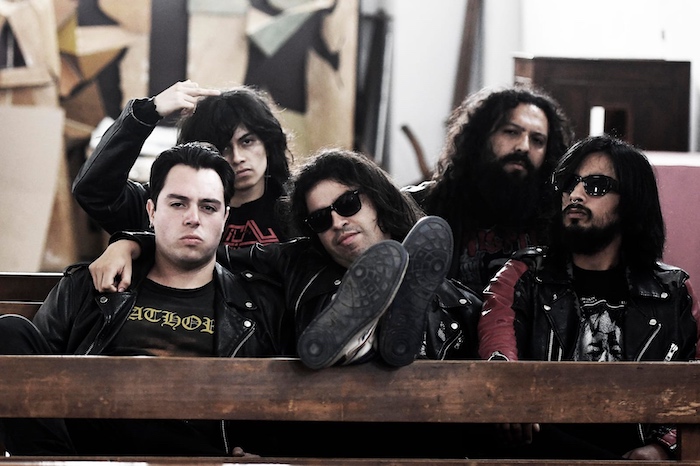
Chilean thrashers Critical Defiance have just unleashed their brutal fourth album, "Rivers Of Blood", which was released around the same time as a split album featuring Finnish thrashers DET. (Read review of "Rivers Of Blood" here.) A perfect excuse to fire some questions at Felipe Alvarado about the new album, the band, and the history of Chile. Enjoy the interview, and make sure to check out both the album and the split!
Michael

Hey, how are you doing? I hope you guys are happy with the feedback towards your new album?
We're feeling excited and a little anxious with just one day to go before the trip. We're eager to take what we do best to new places around the world, and that keeps the flame alive. The overall reception of Rivers of Blood has really surprised us and has us enthusiastic. We didn't expect so many people to pay attention to it and identify with this approach, which is a little more explicit than our previous works. It's interesting to see that this progression catches the attention of people who are passionate about fast music and who understand this approach of staying true to the genre's foundations while bringing it into our own historical context. This album represents an important stage in our trajectory, and we're satisfied with what we've achieved. Perhaps that's also part of the reason behind its positive reception. We hope that continues as we get ready to set foot on European soil.
"Rivers Of Blood" isn't the only one release by Critical Defiance in 2026. This month a split with DET followed. Was this planned right from the beginning or is it more or less coincidence?
It wasn't planned from the beginning. The idea came from DET as a way to give a tangible form to the connection between both bands ahead of the European tour. The split also plays an important role during the tour, allowing us to present material together and spread this release through the shows and everything that happens along the way. When the opportunity came up, Rivers of Blood had already been recorded and was being mixed, so we had to work quickly on four new songs to meet the deadlines. More than a coincidence, it's something that takes shape along the way and requires quick decisions, just like the music we make: fast, but well thought out at the same time. That's why we paid special attention to every detail, from the split's artwork and title to our own compositions and lyrics. On our side, it was a brief period in which we had to respond quickly, with professionalism and a strong sense of self-demand, to create material with its own identity in record time.
How did you stumble over the Fins? I must confess that I never heard of them before.
DET are also part of Dying Victims Productions, and the label considered them an excellent band to share this tour with us. The dates worked out, and it seemed like a combination that could work really well. It was the label's decision to take that chance, and we trusted it one hundred percent. At first, we didn't know DET either, but when we listened to their music, we felt they had a very similar approach to intense, aggressive music to what we find in the underground bands around us. I think that connection is important because it shows that, even though we are geographically far apart, we can share the same attitude towards music. There's no doubt that this tour will create an atmosphere filled with genuine underground metal.
Comparing the full-length with the split, I must admit that the sound on the split is rougher so I guess the songs aren't the rest of the recording for "Rivers Of Blood"?
No, the songs on the split are not leftover material from Rivers of Blood. They were composed specifically for this release in a fairly short period of time, after the idea of doing a split with DET came up. We believe the rougher sound also reflects other influences that come through in these compositions. Those who can pick up on those references will probably understand what we're referring to. Everything is built upon the most primitive foundations of the genre, and perhaps that contributes to the rawer, more direct feel of the result. In any case, we never wanted the split to be an extension of Rivers of Blood. They are two releases with different identities, reflecting different approaches and moments in the band's development. In fact, for several of us, the split has even become a bigger personal favorite than the album, haha. That shows we don't see it as a secondary release, but as a record with its own personality, one that we feel particularly attached to.
"Rivers Of Blood" sound quite violent and a song like "Valparaiso" let me suggest that you might deal with the violent past of your country on the album? If I'm not totally wrong the Pinochet dictatorship started in that city….
First of all, we appreciate that you took the time to research our history and political development. These are things that still shape the way we relate to one another and live in Chile, even several decades later. Indeed, the first movements of the coup d'état on September 11, 1973, began in Valparaíso, but it was with the bombing of La Moneda Palace in Santiago, the capital, that the overthrow of Salvador Allende's government reached its culmination. It is quite a striking historical coincidence that both Allende and Augusto Pinochet, who led the coup and subsequently the dictatorship, were born in Valparaíso. This ties the city to a history full of contradictions and episodes of violence that go far beyond that period. That is part of what Rivers of Blood seeks to represent. When we look at how different acts of violence have converged in this territory over time, we can say that the album also finds part of its meaning here. For us, "Valparaíso" represents this violence in a timeless way, as an expression of the history of this territory and the contradictions that run through it. Valparaíso was not even born as a city founded according to a formal urban plan. Its history is marked by pirates, looting, the imposition of Catholicism as a moral and social framework, the devastation of Indigenous peoples, banking interests, political corruption, police abuse, atrocious crimes, bohemian life, alcoholism, drug addiction, and lust, among many other things. It is a port that once became one of the most important in Latin America and is also home to El Mercurio de Valparaíso, the oldest continuously circulating newspaper in the Spanish-speaking world. It is a place full of stories, some well known and others that remain hidden. If the song initially sought to be an offering, a way of showing respect for the place we come from, over time it became a timeless description of what this territory represents to us. It does not aim to tell a story solely in a positive or negative light, nor to idealize the city. It is part of who we are, and we have chosen to show it to the world without filters, in our own language. Not as a tourist invitation to explore Valparaíso, but as a way of conveying how we ourselves experience it.
This track is the most diverse one, almost progressive like Black Sabbath in "Fluff". Do you attach a certain importance to escape the typical thrash stereotypes sometimes?
We don't necessarily think in terms of escaping Thrash Metal stereotypes, because we've never felt that we need to limit ourselves to a particular formula. For us, what matters is that each song has its own identity and that our musical decisions serve what the composition needs, rather than what a Thrash Metal song is supposedly expected to have. Rivers of Blood has speed, violence, and technicality, but we're also interested in working with dynamics, harmonies, and changes in atmosphere. We don't see these elements as something foreign to the genre, but as tools that can enrich it without taking away its aggression or identity. In the case of "Valparaíso," its structure and length reflect the nature of the song. It's a composition that has existed for many years and needed that space to develop. We're not trying to do something progressive simply for the sake of sounding different. If a song calls for a slower passage, a particular harmony, or a less conventional development, we incorporate it as long as it makes sense within the composition. Ultimately, respecting the roots of Thrash Metal doesn't mean repeating a formula. It means understanding where this music comes from and finding our own way of developing it.
Together with the quite blunt album cover that shows a lot of offending violence and song titles like "Innate To Kill" or "Glorify War" one might assume that you want to provoke with the album?
We're not necessarily trying to provoke just for the sake of provoking. For us, it's more about transparency: we don't want to turn a blind eye or pretend that the world is only concerned with trivial matters while violence continues to happen all around us. When we think of albums like Slayer's Reign in Blood or Kreator's Pleasure to Kill, we see examples of bands that dared to approach these themes in an extremely direct way, pushing the boundaries of what could be expressed within Thrash Metal and helping open up space for other bands to take these ideas even further. In a way, we believe the answer is much simpler than it might seem: going back to the most primitive roots of Thrash Metal's heyday. Today, we see many bands talking about introspection, outer space, or paranormal phenomena, while someone is being killed just around the corner. We're not saying those subjects have no value, but sometimes it feels like we lose sight of the very real violence happening in our own surroundings. The artwork and song titles on Rivers of Blood reflect that intention to show things without softening them. It's not about glorifying violence or using explicit imagery just to provoke a reaction. We're interested in addressing human and social contradictions that we often prefer to ignore. If someone feels provoked by the album, we have no problem with that, but it isn't our main objective. We want to express our view of reality honestly, without turning away from uncomfortable truths and without abandoning the rawness that is part of Thrash Metal's identity.
How much does the normal life and its insanity, which becomes more and more every day, influences you in your lyrics? When I think of the announcement of US "War", minister Hegseth who announce the public execution of a prisoner on TV or the latest federal state election results here in Germany for example, I guess mankind is going as low as possible these days.
Everyday life influences us much more than we sometimes realize. We don't need to look for extraordinary situations to find material for our lyrics; we just have to observe what happens around us and how people relate to one another. Violence, indifference, ambition, abuse of power, and how easily certain atrocities become normalized are all part of our reality. On Rivers of Blood, we wanted to approach that reality from different perspectives. It's not only about wars or major political events, but also about the forms of violence that emerge in everyday life, human relationships, and social structures. Sometimes, the most disturbing thing isn't that terrible things happen, but how quickly we get used to them and carry on as if they were an inevitable part of life. We also believe extreme music has a particular ability to express this kind of unease. Not necessarily because it has to provide answers or solutions, but because it can turn frustration, anger, and helplessness into something tangible. For us, writing about these issues doesn't mean pretending we completely understand the world or claiming a moral position superior to everyone else's. We simply try to process what we see and experience through our music. We don't know if humanity is reaching its lowest point, because history is full of periods when people probably felt exactly the same way. What does concern us is that, with so much information constantly circulating, we can end up watching terrible situations as if they were just another form of entertainment. And when violence becomes entertainment or stops provoking any reaction in us, we think there's something deeply wrong with the way we live.
I my review I stated that you have that certain thrash vibe that is lacking on the latest releases by the great role models such as Kreator, Exodus, Destruction. What is the magic ingredient to sound as raw and furious like these bands did back in the 80s?
We don't think there's a magic ingredient. The great bands you mentioned developed their music at a particular time and within a specific context, and perhaps, after so many years and albums, some of them gradually lost that thirst for violence and that desire to tear everything down that drove them in their early days. At some point, the machine may start losing speed, even just to keep itself alive. But that doesn't mean it has lost its ability to express violence; perhaps that same machine, running at a different pace, can convey a level of rawness that we, as Critical Defiance, still wouldn't be able to develop within our own context. We think there's also an element of chance in art: unique personalities coming together at the right time and place, experiences, decisions, and emotions that eventually shape something unrepeatable. That's part of what defines Critical Defiance. We don't want to simply reproduce a formula from the past, even though we have a great deal of respect for the bands that helped shape this music. We want to take the aggression, speed, and rawness that we connect with and push them as far as we can through our own identity and experiences. For us, getting angry is still essential, and knowing how to channel that anger into the music, taking it to the extreme when the moment calls for it, is far more important than trying to sound like a band from another time.
In another review I read about black metal influences that you could hear on "Rivers Of Blood". Impiety and Destroyer666 were mentioned. Would you agree to that, this was something I actually didn't notice while listening to the album.
We didn't specifically have Impiety or Destroyer 666 in mind when composing Rivers of Blood, although we understand that there may be certain points of connection. What this album has is a greater focus on rawness, atmosphere, and melodies that come much closer to the most primitive roots of Black Metal. We do believe these elements are more prominent than on our previous releases, but if you listen closely, tritones, dark atmospheres, and gloomy harmonic patterns have been present in Critical Defiance from the very beginning. Perhaps the difference now lies in the execution and a more conscious intention to convey certain musical states. If I had to mention a specific reference, Snorre's tremolo picking could serve as an example of that connection. Rather than associating our music with specific bands just to justify these influences, we're interested in understanding where these sounds come from and recognizing those who helped develop them. We believe looking back is essential to moving forward, especially when it comes to rediscovering figures and works that have gone relatively unnoticed in the history of the worldwide underground, despite having contributed a great deal to the evolution of these sounds. There's a musical legacy that deserves to be revisited, not to reproduce it, but to understand it and find new ways to express it through our own identity.
In the past years South America has become a cool spot for thrash metal. Which are the most important bands in your opinion?
South America has always had great Thrash Metal bands, but I think the history of the genre could have been very different if certain circumstances had played out another way. Just imagine what might have happened if Pentagram (Chile) had reached a bigger audience than Sepultura, for example. Perhaps we would be listening to a different kind of Metal today, haha.
I know that you're coming to Germany this fall, are there any other plans for the rest of 26 and the upcoming year?
We plan to work on our next album.
Last one – which 5 albums are essential for you?
Deathrow - Raging Steel
Sax - Zona Strachu
Morbid Angel - Coverant
Yes - Fragile
Beatles - White Album
Thank you very much for answering the questions – hope to see you in Essen!
Thanks for the support! STAY THRASH!
678
Six Feet Under is finally embarking on its first-ever tour of Brazil, with four shows scheduled between October 30 and November 2. However, vocalist Chris Barnes didn't seem particularly enthusiastic about discussing the tour, the recently released album "Next To Die", or anything else—or, at the very least, he was simply having a terrible day for chatting. The interview you are about to read was supposed to last between twenty minutes and half an hour. It ended in less than ten. Here’s hoping the fans’ experience doesn’t mirror the one this journalist had. Enjoy the—brief—read!
Marcelo Vieira (@marcelovieiramusic)

Six Feet Under will finally embark on its first tour of Brazil, with four shows in Belo Horizonte, Limeira, São Paulo, and Curitiba. What do you know about the Brazilian death metal audience, and what do you expect to discover when you finally stand in front of them?
I don't, I don't know much about it, actually. I know there's an overall great scene in South and Central America from what I've seen, so I mean, I'm looking forward to getting onstage in front of all the fans that like Six Feet Under.
How will the setlist be put together for this first trip to Brazil? Do you intend to build a set that spans the entire history of Six Feet Under, or will you focus primarily on the more recent albums?
It's really the same setlist we've been playing all summer long on our summer tours of Europe and North America. There's really a lot of the classic material there and a couple of new songs from the past two albums.
Brazil has a particularly strong history within death metal. When you think about the Brazilian bands that have been part of that history, which names or albums immediately come to mind?
Oh, I mean, I don't know, you know, Sepultura, that's pretty much the major one. But I mean, I don't really think Sepultura is death metal, but I mean, they're a metal band from Brazil and stuff, you know.
Besides the shows, is there anything specifically Brazilian that you would like to experience while you're in the country — food, music, a particular place, or simply getting to know the culture?
Oh, I really won't have time to experience anything, really, except for going onstage and being prepared to do so. So, I mean, when I go on tour, I'm not someone who's on vacation or thinks that they're on vacation. I'm really working and doing the job that I've been commissioned to do. So I just really concentrate on being prepared and keeping my head in the game.
The new album's title "Next To Die" suggests a very direct reflection on mortality. After more than three decades of writing about death, do you feel that your relationship with that subject has changed?
I don't think that the album is based on a direct relationship with mortality at all. I think, really, in the songs that I've written on the album lyrically, I'm focused on what I usually focus on, and that's where the music takes me as far as storylines and thoughts that I have about different aspects of life. Do I think that I've had a different relationship with death? I mean, not really. I've kind of always had the same ideas about that, so I just, you know, like to explore my thoughts through music.
"Next To Die" is the third album you and Jack have made together since reuniting. Do you feel that, with each record, this partnership is revealing an identity of its own that perhaps didn't exist when you worked together in the past?
No.
How does your creative partnership work these days? After so many years and so many albums, has the songwriting process changed since you started working together again in 2017?
I think that's a kind of dramatic way of looking at things. We just have a good time writing together.
You began writing extremely graphic lyrics with Cannibal Corpse, at a time when that kind of approach was practically a new language within death metal. After more than 30 years, what can still be explored in that territory without simply repeating imagery that the genre has used thousands of times?
I don't really think of it that way. I just take it one song at a time.
Some of the lyrics on "Next To Die" seem to draw less from fictional horror and more from real feelings or experiences related to death, pain, and loss. What made you bring these two worlds closer together?
Again, I don't think of things like that. I mean, if that's what someone pulls from my writing and my, you know, lyrics and stuff, you know, that's how they experience it, but that's not how I experience it. I've always written every song from subject matter as far as life and death.
Is there a difference between the way you step into a fictional character and the way you write about something that has genuinely affected you?
That's really a dramatic way of kind of perceiving things. I just, I just write what I'm interested in.
Is there a song on the new album whose lyrics you consider particularly personal or revealing, even if that isn't necessarily obvious to the listener?
I mean, I just, if people experience it the way they're going to experience it, I don't want to, like, put any boundaries on that. So I don't, I don't really care how people experience my lyrics. If it interests them in the way they want it to interest them, then that's fine with me.
When you look back at these more than 30 years of Six Feet Under, what has changed the most: the music you want to make, the way you see death metal, or the way you see yourself within it?
What's changed the most over the years in Six Feet Under? Probably the lineup, the musicians that I've been able to work with.
"Haunted", "Warpath", and "Maximum Violence" remain inevitable references when discussing the band's early identity. How do you listen to those albums today?
Oh, I don't really listen to my music, so I don't listen to those albums today unless I'm rehearsing them. So, I mean, that's, that's, again, how other people view things, if they're regarded as references or whatnot. I don't really — every song I've written, every album I've done over the past 38 years, it's all one album to me. So I don't really look at it as, like, sectioned off into albums. It's just one giant work.
Do they still serve as creative references, or do they belong to a period that you prefer to leave in the past?
Again, I don't look at things like that. I look at each song as part of my history and a part of myself.
What does "being extreme" mean to you today?
(interrupting) I'm not extreme.
MUSICALLY extreme. Is it a matter of speed and brutality, or can music be equally extreme through atmosphere, groove, dynamics, and tension?
I don't think any of that's important. I mean, I think what's important is doing what you enjoy yourself.
You have lived through several generational changes within metal. What surprises you most about the way a death metal band is received by listeners who were born decades after its earliest albums?
I think it's really amazing that the style of music has kept going all these years.
After such a long career, what still needs to happen during a Six Feet Under show for you to walk offstage thinking, "This is why we still do this"?
Uh, just seeing people have a good time.
What's your message for the Brazilian fans?
See you soon, and, uh, it'll be a good time. So get your tickets early, because I don't think we're going to be back for quite a long, long time after that. If you want to see the band, uh, now's the time.
803
Sardonic Witchery is a band that is deeply rooted in the underground scene. The guys have just released a compilation of old songs, as well as a brand-new album called "Hell's Thorns Attack" (read the review here). I had the pleasure of talking to mastermind King Demogorgon, although some technical issues made the interview a little more difficult than expected. Nevertheless, we managed to get everything together and, despite the problems, it was quite fun talking to him. Enjoy reading, and check out the new album – it's a killer one!
Michael

Hails, King Demogorgon! How are you doing?
Good, haha!!
Before we start talking about Sardonic Witchery in more detail, maybe you can introduce your band a little bit more to us?
Well, I started Sardonic Witchery in 2012 by myself after I disbanded the band I had been in for 11 years, called Infernal Kingdom. In that band, I was just a musician and the other member was the singer. So we did that for 11 years, and after that we divorced and said that neither of us would continue with the band, so I started a new band by myself. That was Sardonic Witchery in 2012.
I tried to find a new singer. I wrote the lyrics and, after all, I had some auditions with some guys, but I decided to do it by myself (laughs). So I did the first demo in 2012, Hidden Shadows, on cassette, with a guitar pedal and distortion on the vocals. I liked it, so I decided to stay as the singer. That was the first time in my life I had ever done that. I had never thought about doing vocals; I had always just been a musician.
It must have been quite a busy year for you, having released a compilation called "Under the Sign of the Trident", the upcoming album "Hell's Thorns Attack", plus playing a lot of live gigs with a new and stable band member who has to be trained, right?
This year was crazy. Two years ago, when we released the fourth album, Barbaric Evil Power, my intention was just to be a studio band at that time. I didn't have any intention of playing live anymore. The last show I did before the album was at Mass Destruction Fest in Atlanta in 2022 with some great fucking bands. Gabriel Luis Ruina was already there as the live guitar player.
After that, I did the album, and Gabriel said that we could play some other shows because that one had been so amazing. I said okay, but we decided to do just one more. But more and more offers were coming, so we did them, including Under the Black Sun 2025 in Germany.
Luis said that we could take the musicians from his band because it was easier to work with them. They learn fast, and because I live in Texas and Gabriel lives in Washington, D.C., it made things easier. I met another guitarist living in Texas, but I don't know why, maybe he had problems playing live or whatever, so Luis offered to record the solos and also, because he is a producer, to record the album. Barbaric Evil Power already had some participation from Luis.
After we had been working with him for almost three years and he was so dedicated to the project, I decided that this guy was the right one to work with and that he could improve the band and bring some extra elements to it. I don't want to put somebody into the band just because he is a friend or a nice guy, but I decided to go ahead as a duo now.
I gave him the offer after Under the Black Sun to do the next album together and have him as a permanent member, and he was very enthusiastic about that. So we did the album, which was ready in December 2025, and we decided to do a compilation, Under the Sign of the Trident, just to buy some time to find better labels than the ones I had worked with before because we think that this album is really very good.
We also wanted to have something to play and represent the band at Maryland Deathfest and Darkness Over Cumbria in England. So we re-recorded old songs for that compilation, and Luis already put his own touch into them and made some changes to the songs.
I guess the main focus was the release of the upcoming album, though. What makes the difference compared to your previous releases, would you say?
The previous releases were done completely by myself. Everything was written and recorded by myself; just the guitar solos on the first recordings were done by some other guys. So I did everything else – drums, guitar, I composed everything.
On this album, Luis wrote about 90% of the riffs because he is a lot better guitar player than me (laughs). He's a master on the guitar. I just tell him what I want, and he does the stuff I cannot do.
I heard a lot of old thrash influences on "Hell's Thorns Attack", mainly Slayer from their first two albums. Was this a major inspiration for you?
Of course! That was the idea. I'm really into metal, and my influences come from Slayer, Pantera, Sepultura, Judas Priest. Everything for me started when I was a kid, and later I started getting into more extreme metal.
I cannot remember what the first album was, whether it was Immortal or Dark Funeral, when I started listening to black metal, but I love a lot of metal. I like glam, thrash, black metal, and the idea is to do something like my favourite bands.
These are Maniac Butcher, Destroyer 666, Gospel of the Horns, Nocturnal, Nifelheim – all this black/thrash is what I want to do. So when we talk about thrash, you need to have some more skills on the guitar because you need to have some hell-fucking riffs, which, unfortunately, I don't have. I tried my best on the last album, so I told Luis to do whatever he wanted to.
When I put my lyrics on it, it will sound like Sardonic Witchery. But I never liked to copy a band, just to sound like Slayer. I don't think that it sounds 100% like Slayer. Sometimes it is a little bit Testament. The last album was something in between Manowar and Maniac Butcher – two completely different styles.
On this album, I tried not to sound like Sargeist, Darkthrone, or Satanic Warmaster, but I wanted to experiment a little bit and do some fucking metal with the true Satanic power of steel. It's the spirit of true metal, and I wanted to give that to the maniacs who listen to Sardonic Witchery.
What has changed in a remarkable way is the cover artwork. It is much more detailed and more mature than the previous ones. Who created it?
We worked with Jenglot Hitam from Indonesia. Before that, we worked with Leonard Selzer from Texas for the previous albums. He is a good artist, but for the new one he was very late, so I contacted Jenglot this time because I like his work.
He didn't have to create anything because he already had that one that I love (laughs). It had already been for sale for five or six years, and nobody had taken it. It's crazy.
I saw you for the first time at Under the Black Sun last year. Do you think you have gained some more popularity in Europe since that gig?
I think it was a very good opportunity to show ourselves in Europe. We had already played in many European countries in 2018, and now we came back for shows in Germany, Portugal, and Spain.
This time, most of the people didn't know us, and it was a good show, although it was not 666% of what we can really do. But we worked and improved with the other live shows, and I think we will be doing great at the upcoming shows.
We try to get on as many festivals as we can, but of course it is very hard to get opportunities because there are so many bands.
And coming back to Under the Black Sun, it was fantastic. Not just because we could play there, but also because of the amazing line-up that year. The people there were so nice. Everybody was friendly, and we definitely want to come back!
Coming back to your upcoming album, it is full of blasphemous song titles such as "Unholy Conqueror" or "Cult of a Thousand Horns." How important is the evil, satanic image for Sardonic Witchery?
It's about being a fucking crusher of shit religions, and this album is an old vision of thrash/black metal, a vision of darkness and blasphemy.
All the songs particularly talk about the same things: rebellion, freedom, power, the end of the world. I've been doing this for almost 30 years, and I don't want to do anything new, just take the old spirit of Satanic metal. I don't want anybody to tell me what to do or what my politics are or any shit like that. I think that's what metal means to me.
How is it possible to purchase your albums, and where will fans be able to buy the new album?
Well, we have always done things very underground. Sardonic Witchery already has more than 20 physical releases, including all five full-length albums, demos, splits, and other releases, all released through different underground labels from different territories.
For the new album, Hell's Thorns Attack, we are working with two labels in two different territories. In Europe, the CD and vinyl are being released through Firecum Records from Portugal. In North America, the CD, vinyl, and cassette are being released through Jems Label LLC.
The digital version is being released directly by the band through Ditto Music and will be available on all major streaming and digital platforms.
There are no exclusive agreements for these releases, which gives me the freedom to reissue the album wherever and whenever I want. I already have offers from other underground labels interested in releasing it in South America, Mexico, and Asia.
We also have physical releases available directly through our Bandcamp, so fans can always support the band directly there.
What about promoting the album live? Are there any touring plans for the rest of the year?
You actually asked this at the right moment because we were supposed to start a U.S. tour with Besatt in just two weeks. Unfortunately, we decided to cancel our participation.
With only two weeks left before the tour, our flights still hadn't been purchased, and the communication had become very poor. At that point, we simply couldn't continue relying on promises without having the basic arrangements confirmed, so we decided it was better for us to step away from the tour.
We will still be playing two dates in Mexico in October – Mexico City and León, Guanajuato – and after those shows, our live activity for 2026 will be finished.
Right now, we are already working on our plans and scheduling festivals for 2027. So if any festival promoters are interested in having Sardonic Witchery on their 2027 line-up, they can contact us directly at sardonicwitchery@hotmail.com.
Alright, last one – the five essential albums you would take with you to a deserted island?
Five wouldn't be enough, and honestly, I'd probably need a lot more than five albums to survive!
If I absolutely had to choose, my list would probably look something like this:
SLAYER — Show No Mercy / Hell Awaits / Reign in Blood
CELTIC FROST — Emperor's Return
JUDAS PRIEST — Painkiller
MANIAC BUTCHER — Barbarians / Lucan-Antichrist / Krvestreb / Černá Krev
DARKTHRONE — Soulside Journey
AZAGHAL — Mustamaa
GOSPEL OF THE HORNS — Realm of the Damned
SARDONIC WITCHERY — all five albums, because I really love listening to my own music!
The final words belong to you!
Thank you very much, Michael, for your support and for giving me the opportunity to talk about Sardonic Witchery with the readers of Metalbite Magazine. I really appreciate it, and I hope I can see you again soon so we can have some beers together!
To all the Metalbite Magazine readers: keep supporting the true underground metal bands. Buy physical releases, go to shows, discover new bands, and, most importantly, keep the underground alive!
Check out our new album, Hell's Thorns Attack, and keep supporting Sardonic Witchery!
Let's keep fighting for the underground!
AAARRRRRGGGGHHHHHH!!!
814
Greetings, MetalBite legion!
It's always great to welcome a new voice to MetalBite Magazine, and this time around we're very happy to introduce Matt Quiggins, who joins us as a new contributor. Matt is no stranger to the world of music interviews, having been behind the microphone for his own podcast, drumquigpodcast, where he regularly sits down with drummers to talk about their music, careers, influences, experiences, and everything that comes with being behind the kit.
We're always looking for people who bring something different to MetalBite, and Matt's experience and passion for music make him a great addition to our crew. His focus on drummers also gives us the chance to hear from some of the people who are often quite literally keeping the whole thing together!
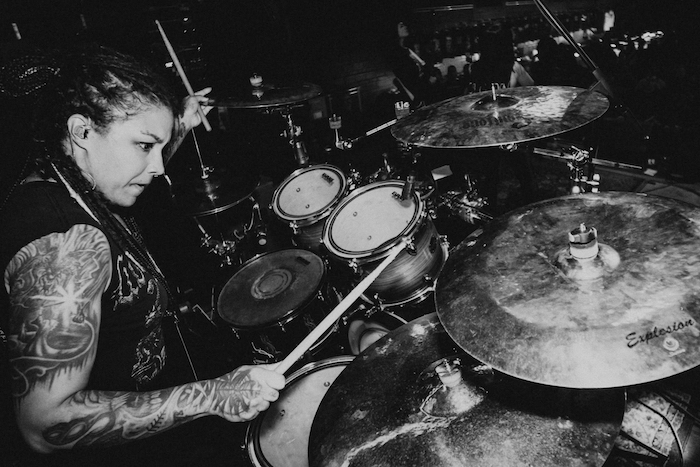
To kick things off, Matt sat down with Cierra White (@cierradrums), the powerhouse drummer of Emasculator, for a conversation covering her work with the band, her approach to drumming, recording, her other musical projects, and plenty more. Cierra is involved in a number of different projects, so there was certainly no shortage of things for Matt to ask her about.
So, without further ado, welcome aboard, Matt — and let's get into his first MetalBite interview!
We're glad to have you with us, and we're looking forward to seeing where this takes you.

953
To explore the existential crisis of humanity and to admonish modernity is the Wuldorgast way - a proud yet brand new entity on the ever-shifting USBM scene. Are they even pleased to be a part of it? Not necessarily, as you will soon see. Wuldorgast are members of an exclusive order known as The Order of the Broken Sword; not a magickal order, but a band of brothers who've been a part of each other's lives for decades and whose music is a voice for genre trueness: evil, intimidating and unruly. Definitely an anomaly - grown men amongst boys as it seems, and Wuldorgast's debut LP, "Cold Light", is a reflection of this stark truth. You generally don't get black metal like this in The States or anywhere else for that matter, at least not in this age of plasticity and commercialization, hence my interest in them. Get a taste of real black metal right here during my discussion with F.S. of Wuldorgast.
Jeger

Hails and welcome to MetalBite! I may have misperceived Wuldorgast, but it appears that you are a Satanic black metal band?
Wuldorgast is not a satanic black metal band. This project was meant as an exploration of existential themes, anti-modernity and humanity's struggle against its own nature.
When did you form the band and what were some of your inspirations going in?
I'd been asking Sceadugenga to do a project with me for a couple years. He had written this material and was without a vocalist for it, so he offered the spot to me. It all came together very quickly after that in early summer 2024. I had been wanting to get some ideas out that weren't applicable to my other projects, and this was a great opportunity. I wanted to lyrically focus on anti-modernity, the harshness of our reality and the more nihilistic side of the human experience.
There's very little to be known about The Order of the Broken Sword other than the fact that Wuldorgast and a couple of your labelmate outfits are also a part of the circle. What can you tell us about the order? Is it a magickal brethren or something else entirely?
The Broken Sword constitutes a myriad of things. First and foremost, it is an agreement. Somewhere along the line I was doing research and came across a news bit about a broken sword discovered in two places. The theory is that two parties broke the sword together and each kept a piece of it as a physical reminder of the bond and honor bestowed to one another.
This group of musicians has known one another for 20 or so years. There is a history, a knowing and an understanding that comes with that time. The Broken Sword was chosen as a symbol of that.
The USBM scene is one that in my opinion has yet to find its true identity. How do you feel about black metal in the United States?
There's a lot of weaklings in American black metal and I don't care to make friends.
Do you draw much inspiration from the Scandinavian scene or do you consider Wuldorgast to be a different beast altogether?
There are bands from Scandinavia that I love and are inherently an inspiration as it's the birthplace of black metal. I'm not sure any of that is directly an influence with Wuldorgast though. I tend to be inspired by Nordvrede, early Darkthrone, Arckanum and Bathory if we're talking Scandinavia. I'm also a fan of the Polish and German scenes. Bands like Capricornus, Odal, Kataxu, Thunderbolt, Vargsang and Bilskirnir get plenty of listening.
"Cold Light" - your debut album is brilliant in its genuineness. True black metal people will be salivating over this thing. It appears to be a concept album centered around the wolf and the hunt, but it's hard to actually tell. Is "Cold Light" a concept album and if so, can you explain its theme?
Thank you. I didn't consider it to be a concept album. It all came together very quickly. I wrote the lyrics the day before recording and the vocal patterns were chosen on the spot. The lyrical themes center around man's lack of understanding our innate ties to nature and grappling with our need for more and what "more" means in the modern sense, but all through a sterile and distant point of view. Technological advancement, loss of the self in a sea of 8 billion pestilential swine and a never ending misunderstanding of our relationship with nature and spirituality. It's all loosely tied together. I think our next output will be more focused on one centralized theme, but definitely in the same vein.
The closing track to "Cold Light" is called "Dawn of the Black Sun". The black sun symbol can be traced to various forms of Paganism and is also discussed in Russel McCloud's 1991 occult novel, "The Black Sun of Tashi Lhunpo". What does the Black Sun mean to Wuldorgast and the Order of the Broken Sword?
I am only speaking for myself on this matter. The other musicians in The Order are free to have their own interpretations.
The Black Sun represents to me the coming together of negative and sublime spiritual experiences of man - quite literally an illumination of that which bears no light - the human soul. True enlightenment requires confronting and acknowledging the darkest parts of existence. If you cannot coexist with this duality of self then you can never fully comprehend the world around you.
Here's a lyric excerpt from "Dawn of the Black Sun":
"Engulf me in the flames of your truth,
Reveal to me the unvarnished reality,
For the whispers within are but deceivers,
Savvy in their exploitation of our vulnerabilities.
Death, a tempting respite amidst life's relentless anguish,
What Verity must we confront?
Some opt for the embrace of death,
others delude themselves with the semblance of life…"
Wuldorgast translates as a spirit of glory or a glorious ghost. To me, this implies some sort of spiritual warfare. What are the implications related to the name of the band?
The name was meant to evoke a sense of mythic resonance. The concept of glory can be multifaceted, encompassing honor, achievement and even hubris. The idea of a spirit signifies a connection to our memories and the past. Reflecting on these notions helped inspire the themes for this project and perfectly embodies the attitude, music and lyrics.
What do you find most fascinating about the world of the occult and how would you say it has influenced you the most?
I find introspection, the search for deeper meaning and understanding "unknowing" fascinating. Personal development is imperative to transcending a life lived in a fog. This is mostly what has attracted me to groups like the Hermetic Order of the Golden Dawn and the teachings of Hermeticism.
Do you have a message for the horde?
Thanks for any and all support.
3.33k

Upcoming Releases
- NervoChaos - Chaosmongers - Nov 13
- The Mosaic Window - Answered Prayers - Nov 13
- Asgrauw - Solips - Nov 14
- Eyes Of Agony - When They Return - Nov 20
- Azarath - Scorn Eternal - Nov 20
- Maceration - Mercy To The Miserable - Nov 20
- Mara - Sadistic Hallucinations - Nov 20
- Golgothan Remains - Born From Darkness Absolute - Nov 20
- Berlial - Des Crevettes Sans Tête - Nov 20
- Savage - Malignant Reveries - Nov 27
- Necroshade - The Last Dawn - Nov 27
- Repentance - Retaliate - Nov 27
- Kalt Vindur - The Void Of Time - Nov 27
- Ulthima - Midnight's Call - Nov 27
- Mystic Prophecy - In Metal - Nov 27
- The Aeons Torn - Void Artefakkts - Nov 27
- Devastator - Goathammer - Nov 27
- Whiplash - Roar - Nov 27
- Witchgöat - Serpent Hordes - Dec 04
- Amenhotep - Utterances For The Dead - Dec 04