
Distraught - Interview
After defining themselves with almost programmatic precision in their own Facebook bio — "Thrash Metal band formed in 1990, still strong and thrashing all around" — Distraught reaffirm that spirit with inVolution, an EP that goes far beyond musical aggression to propose a direct and uncomfortable reflection on human regression, denialism, and environmental self-destruction. The band transforms real-world events — such as floods and wildfires — into artistic raw material, structuring the work around the five elements of nature and consolidating it as a closed conceptual piece, where form, content, and urgency move together.
In this interview, vocalist André Meyer and guitarist Ricardo Silveira detail the creative process behind inVolution, explain how the concept naturally imposed itself throughout the compositions, and comment on metal's role as a tool of resistance in times of social collapse and information overload. The duo also discuss the visual identity created by Marcelo Vasco, the choice of a physical CD release as an almost manifesto-like gesture, and the EP's place within the band's discography — not as a rupture, but as a synthesis of everything Distraught have built so far, clearly pointing toward the future.
Marcelo Vieira (@marcelovieiramusic)

Photo by Cristiano Seifert (@cristianoseifert)
inVolution is based on the idea of human regression. At what point did you realize this was no longer just a recurring social critique common in metal, but a concept that needed to be structured as a closed work?
André Meyer: It all started with no intention of making a conceptual album. The first lyric I wrote was "Bloody Mines," linked to the earth element and to illegal mining in Serra Pelada — yet another Brazilian environmental crime that couldn't be ignored. [Serra Pelada was one of the largest open-pit gold mines in the world during the 1980s, located in northern Brazil. It became internationally infamous for its extreme working conditions, environmental devastation, and human rights abuses.] The initial idea was simply to react to a specific fact. But when I talked to Ricardo, he suggested that we continue, addressing other themes based on each element. From that point on, things started to gain another dimension.
Ricardo Silveira: Unfortunately, a large part of humanity doesn't evolve — it has been involuting for centuries. It keeps repeating the same mistakes, the same neglect, the same negligence in every area. It's a process of self-destruction. In 2024, when we were in the pre-production stage of inVolution, the news simultaneously showed the floods in Rio Grande do Sul [In 2024, the Brazilian state of Rio Grande do Sul faced catastrophic floods that caused widespread destruction, displacing thousands of people and becoming one of the country's worst climate-related disasters] and the wildfires in the Pantanal. [The Pantanal is the world's largest tropical wetland, located mainly in Brazil, and one of the most biodiverse ecosystems on the planet. In recent years, it has suffered record wildfires linked to climate change and land exploitation.] André had already written "Bloody Mines" and was developing "Extermination of Mother Nature" under the impact of the floods. That's when I suggested a lyric about the wildfires. At that moment, the album's concept stopped being loose and became a closed work.
The EP organizes its tracks around the five elements. Did this concept come before the musical composition, or did it solidify as the songs took shape?
Ricardo Silveira: It solidified as the songs were taking shape. In the beginning, we weren't sure whether it would be just a single, an EP, or a full-length album. The idea of a "concept EP" started to emerge with the lyrics to "Extermination of Mother Nature." Up to that point, we had three songs: "Bloody Mines," "Extermination of Mother Nature," and "Truth Denied." The first two already had lyrics, while "Truth Denied" existed only as some drum ideas and riffs. Another curious detail is that the track order on the EP is exactly the order in which we created the songs — it happened completely naturally, with no prior planning.
Each element carries different symbolic meanings across cultures. Was there any symbolic or philosophical research behind this choice, or did the concept emerge more from an intuitive reading of the current collapse?
Ricardo Silveira: Once the EP's concept was fully defined — meaning that we decided each lyric would relate to an element, even indirectly — I started to deepen that idea. The songs don't carry the names of the elements, but they symbolically dialogue with them. From there, I had several conversations with a close friend of mine, Felipe Karasek, who holds a PhD in Philosophy. These exchanges helped expand the meaning of the elements beyond the obvious and connect today's environmental and human collapse with broader symbolic and existential interpretations.
The title inVolution suggests a movement opposite to the idea of progress. Musically, do you see this EP as a return to thrash roots or as an evolution that takes on more aggressive and direct forms?
André Meyer: We never work with the idea of repeating formulas. With every release, we seek evolution — in arrangements, production, themes, and communication. Even when the sound is rawer and more direct, it comes from a process of maturation.
Ricardo Silveira: Musically, I see inVolution as a natural evolution within our own style. We always try to extract the best from what the band is today. Thiago Caurio's (drums) participation in the compositions added many ideas as well. On this EP, several songs originated from rhythmic ideas created on the drums.
In terms of composition, was there any track that required a more delicate balance between message and sonic impact, so that one wouldn't overpower the other?
Ricardo Silveira: The track that required the most balance was the instrumental "Aether." As an interlude, it needed to fulfill a structural role within the EP. So the message had to be conveyed through timbre choices, harmony, rhythmic flow, and dynamics — not lyrics. We worked a lot with tension and release, texture variation, and transitions so it could connect two songs without breaking the album's narrative flow.
After more than 30 years of career, what has changed in the way you channel indignation and social criticism into music? Is there more rationality today, or more urgency?
André Meyer: Distraught have been writing for 35 years about everything that causes us discomfort: environmental neglect, all forms of violence, political hypocrisy. What has changed isn't the indignation — it's the scenario. Today, the world is in a permanent red alert state. So maybe there's more awareness, more clarity… but there's also much more urgency.
The EP's production is dense, clear, and extremely direct. To what extent were studio decisions made to serve the concept, rather than just sonic aggressiveness?
Ricardo Silveira: In our sound, concept and aggressiveness are inseparable — they feed off each other. The idea was always to make the production sound like the lyrics. We wanted pressure in the social criticism and pressure on the ears. Every studio decision was made to make the message more evident, more uncomfortable, and impossible to ignore.
Working with experienced producers and engineers tends to refine ideas. Was there any moment during recording when an external suggestion significantly changed a song's direction?
André Meyer: Our producer, Renato Osório, is practically the band's sixth member. We feel completely comfortable working with him.
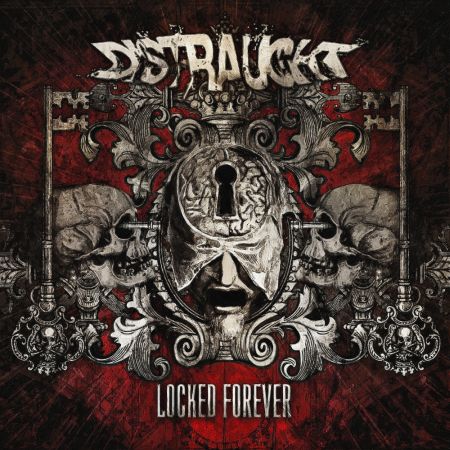
Ricardo Silveira: Since we started working with Renato back in 2015 on Locked Forever, there have always been many suggestions during recording. A producer's perspective is essential precisely because it's external to the band — he listens from a different place. Sometimes, a single different note, a change in execution or dynamics, can alter the entire structure of a song. In the studio, that makes a huge difference.
The lyrics of "Extermination of Mother Nature" and "Truth Denied" directly address denialism and environmental crisis. Do you feel metal is still an effective space for this kind of denunciation in an information-saturated world?
André Meyer: Metal remains a territory of resistance. It's where we expose what power tries to sweep under the rug: environmental crimes, institutional denialism, and the logic of profit over life. As long as people are being silenced and nature is being exterminated, metal will continue to be a tool for denunciation.
The release of inVolution gained new symbolic weight when associated with events like COP30. [COP30 refers to the 30th United Nations Climate Change Conference, scheduled to take place in Brazil. The event has intensified discussions around environmental responsibility, climate policy, and global inaction.]pDo you see the EP as a document of its time, or as something that will inevitably remain relevant?
Ricardo Silveira: I see it as both. If after thirty COPs there's still been no real evolution, then this discourse becomes timeless. There's a lot of talk, a lot of promises — but very few concrete actions that truly change the scenario.
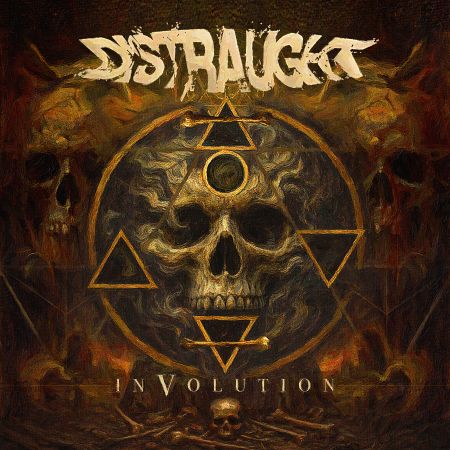
The cover artwork by Marcelo Vasco [Marcelo Vasco is a renowned Brazilian graphic artist known for his work with major metal bands such as Slayer, Kreator, and Machine Head, as well as numerous influential South American acts] carries strong visual impact. How does the graphic identity dialogue with the EP's narrative and Distraught's visual history over the years?
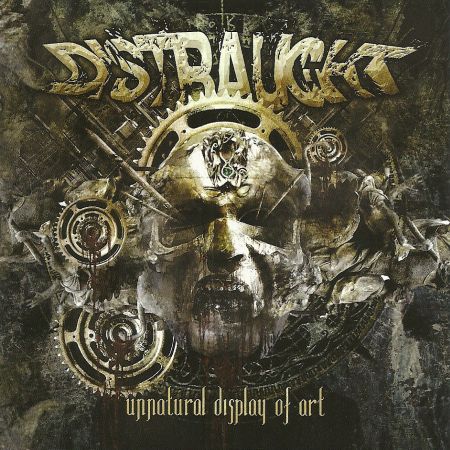
Ricardo Silveira: Marcelo Vasco is a close friend. I met him in 2008 through our brother Fabiano Penna (in memoriam) from Rebaelliun. [Rebaelliun was an influential Brazilian death metal band formed in the late 1990s, recognized internationally within the extreme metal underground.] The first artwork he did for us was on Unnatural Display of Art. Since then, whenever we start a new cover, we send him the lyrical concept, the album's atmosphere, and the core ideas — and he creates from that. Then we refine the details together. In the case of inVolution, the visual identity directly dialogues with the EP's narrative: it's an image of collapse, regression, and human and environmental wear.
Do you believe inVolution speaks more to the current Brazilian metal scene or to the band's historical trajectory? Or does it function as a bridge between both worlds?
Ricardo Silveira: I think it functions exactly as a bridge between those two worlds. inVolution carries the identity built throughout our trajectory, but it also dialogues with the energy and urgencies of the current Brazilian metal scene. It respects the band's past without being trapped by it, while still connecting with the present.
Looking back, where do you place inVolution within Distraught's discography: a point of synthesis, rupture, or artistic reorientation?
Ricardo Silveira: I see inVolution as a natural continuation of our creation. It doesn't break with who we are, but it also doesn't repeat things out of inertia. It's a point of synthesis: it carries everything we've built so far and, at the same time, points to where the band is heading.
The physical CD release almost feels like an act of resistance in digital times. What does this format still represent to you — aesthetics, nostalgia, manifesto?
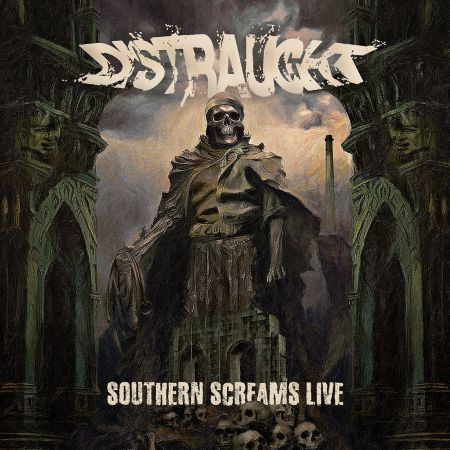
André Meyer: Personally, I really like having a physical format of a finished work in my hands. Unfortunately, most people are moving away from valuing this kind of acquisition. Our last physical release was in 2024, Southern Screams Live. Today, releasing a CD is almost a manifesto.
What do you hope listeners take away after hearing inVolution: reflection, discomfort, catharsis — or all of these at once?
André Meyer: We hope listeners experience all of that at the same time: reflection, discomfort, and catharsis. Our lyrics exist to provoke thought. The speed at which the planet is becoming uninhabitable due to human negligence is frightening — and pretending this is normal is part of the problem. If inVolution makes people uncomfortable, it's doing its job.
To wrap up, what does 2026 hold for Distraught?
André Meyer: The inVolution EP was released recently, so there's still a lot of work ahead with this material. In 2026, we want to play more shows and show our fans how this work translates live.
 1.51k
1.51k
Discography
Upcoming Releases
- Messier 16 - Shouts From The Cliffs Of Heterodoxy - Oct 23
- Bokkerijders - Crush Kill Destroy - Oct 23
- Fvneral Fvkk - Indecent Idols - Oct 23
- Critical Defiance - Bloodsurge - Oct 23
- DET - Bloodsurge - Oct 23
- Anagnorisis - Caregriever - Oct 23
- Wolves In The Throne Room - Estuary - Oct 23
- Iommi - From The Dark - Oct 23
- Eldfödd - The Night Belongs To The Dead - Oct 30
- Mastic Scum - Void - Oct 30
- Αχεροντας - For The Blood Of Tiamat - Praxis I - XXX Years Anniversary Of Magick And Metamorphosis - Oct 30
- Vigil - Primordial Rites - Oct 30
- Deathwards - Realms Of Sin - Oct 30
- Paara - Laulut Tulen Ja Jään - Oct 30
- Ereboros - From Oblivion To The Grave - Oct 30
- Cryptorium - Through The Bowels Of Ceaseless Dissonance - Oct 30
- Xentrix - Allied With The Enemy - Oct 30
- Arckanum - Beswærilsin - Oct 31
- Powermönger - Powermönger - Oct 31
- Boor - The Stones Hold All Echoes - Oct 31