Critical Defiance - Interview
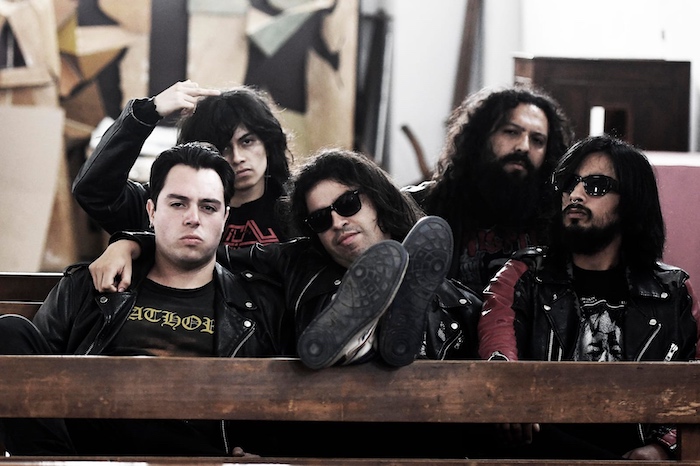
Chilean thrashers Critical Defiance have just unleashed their brutal fourth album, "Rivers Of Blood", which was released around the same time as a split album featuring Finnish thrashers DET. (Read review of "Rivers Of Blood" here.) A perfect excuse to fire some questions at Felipe Alvarado about the new album, the band, and the history of Chile. Enjoy the interview, and make sure to check out both the album and the split!
Michael

Hey, how are you doing? I hope you guys are happy with the feedback towards your new album?
We're feeling excited and a little anxious with just one day to go before the trip. We're eager to take what we do best to new places around the world, and that keeps the flame alive. The overall reception of Rivers of Blood has really surprised us and has us enthusiastic. We didn't expect so many people to pay attention to it and identify with this approach, which is a little more explicit than our previous works. It's interesting to see that this progression catches the attention of people who are passionate about fast music and who understand this approach of staying true to the genre's foundations while bringing it into our own historical context. This album represents an important stage in our trajectory, and we're satisfied with what we've achieved. Perhaps that's also part of the reason behind its positive reception. We hope that continues as we get ready to set foot on European soil.
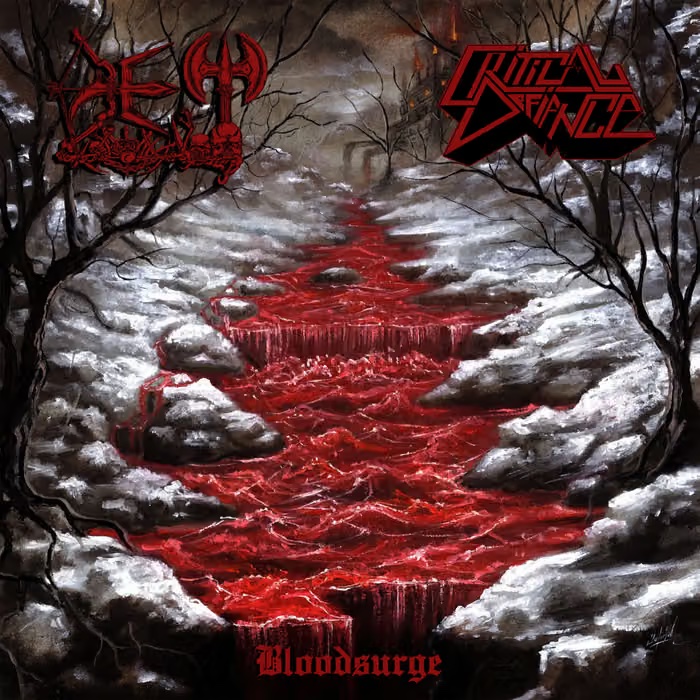
"Rivers Of Blood" isn't the only one release by Critical Defiance in 2026. This month a split with DET followed. Was this planned right from the beginning or is it more or less coincidence?
It wasn't planned from the beginning. The idea came from DET as a way to give a tangible form to the connection between both bands ahead of the European tour. The split also plays an important role during the tour, allowing us to present material together and spread this release through the shows and everything that happens along the way. When the opportunity came up, Rivers of Blood had already been recorded and was being mixed, so we had to work quickly on four new songs to meet the deadlines. More than a coincidence, it's something that takes shape along the way and requires quick decisions, just like the music we make: fast, but well thought out at the same time. That's why we paid special attention to every detail, from the split's artwork and title to our own compositions and lyrics. On our side, it was a brief period in which we had to respond quickly, with professionalism and a strong sense of self-demand, to create material with its own identity in record time.
How did you stumble over the Fins? I must confess that I never heard of them before.
DET are also part of Dying Victims Productions, and the label considered them an excellent band to share this tour with us. The dates worked out, and it seemed like a combination that could work really well. It was the label's decision to take that chance, and we trusted it one hundred percent. At first, we didn't know DET either, but when we listened to their music, we felt they had a very similar approach to intense, aggressive music to what we find in the underground bands around us. I think that connection is important because it shows that, even though we are geographically far apart, we can share the same attitude towards music. There's no doubt that this tour will create an atmosphere filled with genuine underground metal.
Comparing the full-length with the split, I must admit that the sound on the split is rougher so I guess the songs aren't the rest of the recording for "Rivers Of Blood"?
No, the songs on the split are not leftover material from Rivers of Blood. They were composed specifically for this release in a fairly short period of time, after the idea of doing a split with DET came up. We believe the rougher sound also reflects other influences that come through in these compositions. Those who can pick up on those references will probably understand what we're referring to. Everything is built upon the most primitive foundations of the genre, and perhaps that contributes to the rawer, more direct feel of the result. In any case, we never wanted the split to be an extension of Rivers of Blood. They are two releases with different identities, reflecting different approaches and moments in the band's development. In fact, for several of us, the split has even become a bigger personal favorite than the album, haha. That shows we don't see it as a secondary release, but as a record with its own personality, one that we feel particularly attached to.
"Rivers Of Blood" sound quite violent and a song like "Valparaiso" let me suggest that you might deal with the violent past of your country on the album? If I'm not totally wrong the Pinochet dictatorship started in that city….
First of all, we appreciate that you took the time to research our history and political development. These are things that still shape the way we relate to one another and live in Chile, even several decades later. Indeed, the first movements of the coup d'état on September 11, 1973, began in Valparaíso, but it was with the bombing of La Moneda Palace in Santiago, the capital, that the overthrow of Salvador Allende's government reached its culmination. It is quite a striking historical coincidence that both Allende and Augusto Pinochet, who led the coup and subsequently the dictatorship, were born in Valparaíso. This ties the city to a history full of contradictions and episodes of violence that go far beyond that period. That is part of what Rivers of Blood seeks to represent. When we look at how different acts of violence have converged in this territory over time, we can say that the album also finds part of its meaning here. For us, "Valparaíso" represents this violence in a timeless way, as an expression of the history of this territory and the contradictions that run through it. Valparaíso was not even born as a city founded according to a formal urban plan. Its history is marked by pirates, looting, the imposition of Catholicism as a moral and social framework, the devastation of Indigenous peoples, banking interests, political corruption, police abuse, atrocious crimes, bohemian life, alcoholism, drug addiction, and lust, among many other things. It is a port that once became one of the most important in Latin America and is also home to El Mercurio de Valparaíso, the oldest continuously circulating newspaper in the Spanish-speaking world. It is a place full of stories, some well known and others that remain hidden. If the song initially sought to be an offering, a way of showing respect for the place we come from, over time it became a timeless description of what this territory represents to us. It does not aim to tell a story solely in a positive or negative light, nor to idealize the city. It is part of who we are, and we have chosen to show it to the world without filters, in our own language. Not as a tourist invitation to explore Valparaíso, but as a way of conveying how we ourselves experience it.
This track is the most diverse one, almost progressive like Black Sabbath in "Fluff". Do you attach a certain importance to escape the typical thrash stereotypes sometimes?
We don't necessarily think in terms of escaping Thrash Metal stereotypes, because we've never felt that we need to limit ourselves to a particular formula. For us, what matters is that each song has its own identity and that our musical decisions serve what the composition needs, rather than what a Thrash Metal song is supposedly expected to have. Rivers of Blood has speed, violence, and technicality, but we're also interested in working with dynamics, harmonies, and changes in atmosphere. We don't see these elements as something foreign to the genre, but as tools that can enrich it without taking away its aggression or identity. In the case of "Valparaíso," its structure and length reflect the nature of the song. It's a composition that has existed for many years and needed that space to develop. We're not trying to do something progressive simply for the sake of sounding different. If a song calls for a slower passage, a particular harmony, or a less conventional development, we incorporate it as long as it makes sense within the composition. Ultimately, respecting the roots of Thrash Metal doesn't mean repeating a formula. It means understanding where this music comes from and finding our own way of developing it.
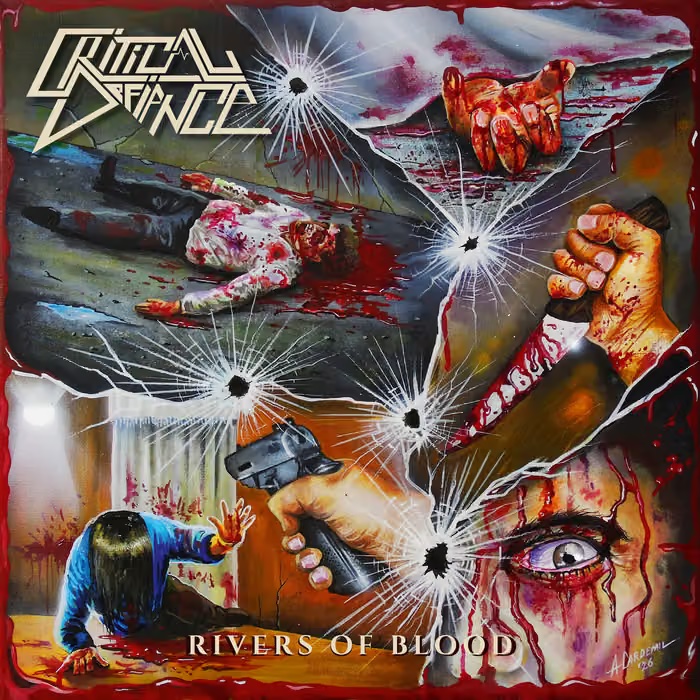
Together with the quite blunt album cover that shows a lot of offending violence and song titles like "Innate To Kill" or "Glorify War" one might assume that you want to provoke with the album?
We're not necessarily trying to provoke just for the sake of provoking. For us, it's more about transparency: we don't want to turn a blind eye or pretend that the world is only concerned with trivial matters while violence continues to happen all around us. When we think of albums like Slayer's Reign in Blood or Kreator's Pleasure to Kill, we see examples of bands that dared to approach these themes in an extremely direct way, pushing the boundaries of what could be expressed within Thrash Metal and helping open up space for other bands to take these ideas even further. In a way, we believe the answer is much simpler than it might seem: going back to the most primitive roots of Thrash Metal's heyday. Today, we see many bands talking about introspection, outer space, or paranormal phenomena, while someone is being killed just around the corner. We're not saying those subjects have no value, but sometimes it feels like we lose sight of the very real violence happening in our own surroundings. The artwork and song titles on Rivers of Blood reflect that intention to show things without softening them. It's not about glorifying violence or using explicit imagery just to provoke a reaction. We're interested in addressing human and social contradictions that we often prefer to ignore. If someone feels provoked by the album, we have no problem with that, but it isn't our main objective. We want to express our view of reality honestly, without turning away from uncomfortable truths and without abandoning the rawness that is part of Thrash Metal's identity.
How much does the normal life and its insanity, which becomes more and more every day, influences you in your lyrics? When I think of the announcement of US "War", minister Hegseth who announce the public execution of a prisoner on TV or the latest federal state election results here in Germany for example, I guess mankind is going as low as possible these days.
Everyday life influences us much more than we sometimes realize. We don't need to look for extraordinary situations to find material for our lyrics; we just have to observe what happens around us and how people relate to one another. Violence, indifference, ambition, abuse of power, and how easily certain atrocities become normalized are all part of our reality. On Rivers of Blood, we wanted to approach that reality from different perspectives. It's not only about wars or major political events, but also about the forms of violence that emerge in everyday life, human relationships, and social structures. Sometimes, the most disturbing thing isn't that terrible things happen, but how quickly we get used to them and carry on as if they were an inevitable part of life. We also believe extreme music has a particular ability to express this kind of unease. Not necessarily because it has to provide answers or solutions, but because it can turn frustration, anger, and helplessness into something tangible. For us, writing about these issues doesn't mean pretending we completely understand the world or claiming a moral position superior to everyone else's. We simply try to process what we see and experience through our music. We don't know if humanity is reaching its lowest point, because history is full of periods when people probably felt exactly the same way. What does concern us is that, with so much information constantly circulating, we can end up watching terrible situations as if they were just another form of entertainment. And when violence becomes entertainment or stops provoking any reaction in us, we think there's something deeply wrong with the way we live.
I my review I stated that you have that certain thrash vibe that is lacking on the latest releases by the great role models such as Kreator, Exodus, Destruction. What is the magic ingredient to sound as raw and furious like these bands did back in the 80s?
We don't think there's a magic ingredient. The great bands you mentioned developed their music at a particular time and within a specific context, and perhaps, after so many years and albums, some of them gradually lost that thirst for violence and that desire to tear everything down that drove them in their early days. At some point, the machine may start losing speed, even just to keep itself alive. But that doesn't mean it has lost its ability to express violence; perhaps that same machine, running at a different pace, can convey a level of rawness that we, as Critical Defiance, still wouldn't be able to develop within our own context. We think there's also an element of chance in art: unique personalities coming together at the right time and place, experiences, decisions, and emotions that eventually shape something unrepeatable. That's part of what defines Critical Defiance. We don't want to simply reproduce a formula from the past, even though we have a great deal of respect for the bands that helped shape this music. We want to take the aggression, speed, and rawness that we connect with and push them as far as we can through our own identity and experiences. For us, getting angry is still essential, and knowing how to channel that anger into the music, taking it to the extreme when the moment calls for it, is far more important than trying to sound like a band from another time.
In another review I read about black metal influences that you could hear on "Rivers Of Blood". Impiety and Destroyer666 were mentioned. Would you agree to that, this was something I actually didn't notice while listening to the album.
We didn't specifically have Impiety or Destroyer 666 in mind when composing Rivers of Blood, although we understand that there may be certain points of connection. What this album has is a greater focus on rawness, atmosphere, and melodies that come much closer to the most primitive roots of Black Metal. We do believe these elements are more prominent than on our previous releases, but if you listen closely, tritones, dark atmospheres, and gloomy harmonic patterns have been present in Critical Defiance from the very beginning. Perhaps the difference now lies in the execution and a more conscious intention to convey certain musical states. If I had to mention a specific reference, Snorre's tremolo picking could serve as an example of that connection. Rather than associating our music with specific bands just to justify these influences, we're interested in understanding where these sounds come from and recognizing those who helped develop them. We believe looking back is essential to moving forward, especially when it comes to rediscovering figures and works that have gone relatively unnoticed in the history of the worldwide underground, despite having contributed a great deal to the evolution of these sounds. There's a musical legacy that deserves to be revisited, not to reproduce it, but to understand it and find new ways to express it through our own identity.
In the past years South America has become a cool spot for thrash metal. Which are the most important bands in your opinion?
South America has always had great Thrash Metal bands, but I think the history of the genre could have been very different if certain circumstances had played out another way. Just imagine what might have happened if Pentagram (Chile) had reached a bigger audience than Sepultura, for example. Perhaps we would be listening to a different kind of Metal today, haha.
I know that you're coming to Germany this fall, are there any other plans for the rest of 26 and the upcoming year?
We plan to work on our next album.
Last one – which 5 albums are essential for you?
Deathrow - Raging Steel
Sax - Zona Strachu
Morbid Angel - Coverant
Yes - Fragile
Beatles - White Album
Thank you very much for answering the questions – hope to see you in Essen!
Thanks for the support! STAY THRASH!
 126
Discography


Upcoming Releases
- Ereboros - From Oblivion To The Grave - Oct 30
- Cryptorium - Through The Bowels Of Ceaseless Dissonance - Oct 30
- Xentrix - Allied With The Enemy - Oct 30
- Deathwards - Realms Of Sin - Oct 30
- Paara - Laulut Tulen Ja Jään - Oct 30
- Αχεροντας - For The Blood Of Tiamat - Praxis I - XXX Years Anniversary Of Magick And Metamorphosis - Oct 30
- Vigil - Primordial Rites - Oct 30
- Mastic Scum - Void - Oct 30
- Eldfödd - The Night Belongs To The Dead - Oct 30
- YHWH - Baghavat - Oct 30
- Traumatomy - Ascension Of The Ineffable - Oct 30
- Grave Hex - Domain Of Foul Rebirths - Oct 30
- Boor - The Stones Hold All Echoes - Oct 31
- Arckanum - Beswærilsin - Oct 31
- Powermönger - Powermönger - Oct 31
- Dantalion - Dantalion - Nov 01
- Klaïton - A Celebration Of Pain - Nov 04
- Beenkerver - Doodlot - Nov 06
- Wingless - Vision Beyond Form - Nov 06
- NervoChaos - Chaosmongers - Nov 13