
Marty Friedman - Interview
Ten o'clock on a Friday night is, by no means, the ideal time for an interview—unless, of course, the person being interviewed is someone of Marty Friedman's caliber. To call him one of the most revolutionary guitarists in metal over the last four decades would be stating the obvious—and, in a way, it would be limiting him, given the sheer diversity of styles he has explored (and continues to explore) throughout his prolific solo career. That career began long before he took on the role of Dave Mustaine's right-hand man in Megadeth in February 1990—a position he would hold for over a decade.
The purpose behind 63-year-old Friedman's highly anticipated return to Brazil for actual live performances—clinics and workshops don't count, apologies!—in São Paulo (Nov 11) and Curitiba (Nov 12) becomes quite clear in the short, yet content-rich, interview you are about to read. And, before I forget—enjoy the read!
Marcelo Vieira (@marcelovieiramusic)

You've already played in Brazil on previous occasions, but this time you're returning with a show that spans different phases of your solo career, includes material from Drama, and revisits songs from Megadeth. What have you learned about Brazilian audiences over the years, and what would you like to offer those attending the shows this time?
I don't want people to think that I'm going there to play Megadeth songs, because that's not correct. I don't know where you got that information. I love Megadeth songs, don't get me wrong, but what I'm doing in Brazil is playing my Scenes album in its entirety. It's the 34th anniversary of the album, and I'm going to perform the whole thing, along with a lot of material from the Drama album and a whole bunch of other songs from throughout my career. So you never know what else might come up, but the main focus is Scenes in its entirety, which has never been performed outside Japan before.
The Live Drama setlist brings together original instrumental compositions, Japanese reinterpretations, and songs from an important period in Megadeth's history. How do you decide the running order for a show like this? Do you try to build a musical narrative, or do you deliberately alternate between different energies and atmospheres?
Well, this time in Brazil, it's a bit different because it's the 34th anniversary of Scenes. As I just mentioned, performing that entire album is the main focus. However, the album is only about 45 minutes long, and we play for over an hour and a half, so there will be plenty of other music from different parts of my career. It could be anything. Usually, I play songs from my most recent album — in this case, Drama — particularly those featured in music videos and the best-known tracks. I also include songs from previous albums that have received the best response from fans over the years when played live. So this show will encompass all parts of my career, with a special focus on Scenes.
In Live Drama, the concept goes beyond the mere execution of solos; the interaction between the musicians and the band's movement on stage are also integral parts of the show. How do you currently choose the musicians who accompany you, and what do you look for in a lineup capable of sustaining such dynamic music?
Yes, that's a great question. I feel my band is very different from others where the frontman, so to speak, is a guitar player. I don't want to be seen as an instrumental guitar hero with backing musicians behind me. I want it to be like a four-cornered diamond. It's a band. When you see us play, it's not one guy with four musicians in the background. We're a unit, and each person has a lot to offer and a lot to focus on. They're not just there to provide backing music. Everyone in my band is a star, and you'll realize that when you see them play. You might come to see me, but then think, "Oh my God, the other guitar player, Halka, is unbelievable!" or "That drummer is crazy!" You might even forget I was there. That's what's going to happen, and that's a promise.
Choosing these band members is quite difficult because, you know, I need stars. I want everyone to be able to shine as a featured artist in the show. They can't just stand back there and play chords or whatever. They have to be frontmen. Each person in the band is a frontman.
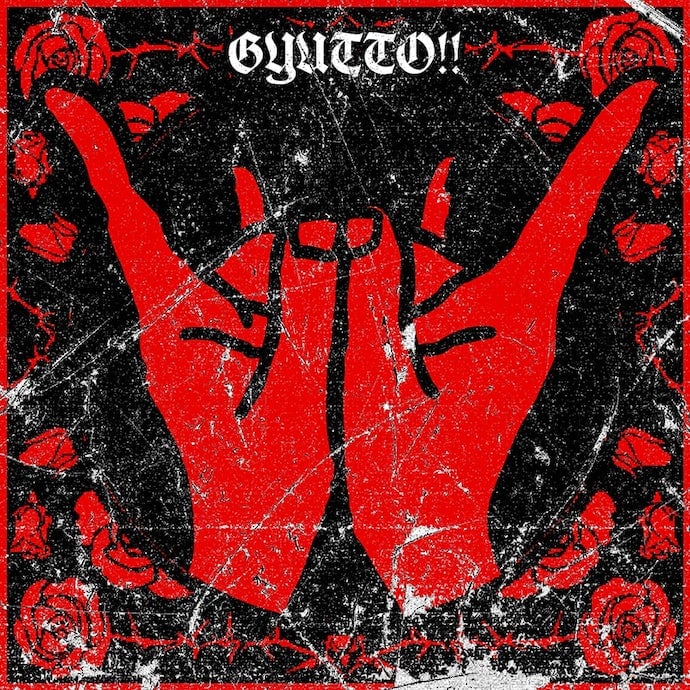
You've praised ASTERISM and collaborated with the trio on the track "GYUTTO!!". What did you hear in their music that made you an immediate fan?
The energy was the first thing I noticed, and their playing ability was out of control. They also have a very youthful energy. I've worked with them a lot in Japan: we've written a song together, done TV shows and videos, played concerts, and done all kinds of things. They're very young, with a lot of energy and talent, but the most important thing is that they're hungry. They work hard to keep doing new things and taking on new challenges, and that's very important to me. I find that a lot of older musicians, or people my age, tend to stick to their back catalog. They don't want to do anything new; they just want to rest on what they've done in the past. It's very nostalgic. But young musicians like Asterism, who are in their early 20s, are hungry. I've always been exactly like that: I'm hungry for new things.
So, playing new material from Drama and songs people haven't heard yet, alongside material from my past, including the Scenes album, will make for a very unique night that brings together the past, present, and future. Asterism is a huge part of that, and I strongly believe their energy will connect with the Brazilian audience.
Do you recognize in this generation a relationship with technique and instrumental energy similar to what you and Jason Becker were pursuing with Cacophony?
As a matter of fact, yes. Jason Becker and I were just trying to do something that had never been done before. There have always been a lot of great guitar players, but we wanted to try something different. To be honest, we didn't care so much whether it was good or not; we just wanted to hear something new. That was the main thing. So there were a lot of hits and misses in that kind of music, but sometimes golden accidents would happen. That's what we were aiming for.
Asterism is the same way: they're constantly challenging themselves. Another thing that makes them similar to Jason and me is that music was all we cared about. We lived and breathed music. When Jason and I were doing it, we were around Asterism's age. I feel exactly the same way now as I did back then, which is kind of unusual for a guitar player my age. Most guys my age want to settle down, and I understand that, but I just get excited about new challenges and new musical experiences. Every opportunity to do something new is great for me.
Last year, for example, when I came to Brazil with Kiko, that was something new. I learned and performed Brazilian songs alongside a great Brazilian guitarist, right there in Brazil. That was a whole new set of challenges. When I heard there was a chance to do that, I thought, "Yeah, man, sign me up!" It's all about that kind of energy. I have it, Asterism has it, and Jason Becker and I had it when we played together, too.
Your song "For a Friend," dedicated to Jason Becker, usually closes Live Drama's shows. What does this composition mean to you today?
When I first wrote it, it wasn't necessarily about Jason. It was about all my friends and missing them because I live so far away from many of them. I still feel they're a very important part of my life, and I know I'm not the only one who's separated from friends. Especially as you get older and leave high school, people move away. Those bonds between friends are very important.
The song was a way of putting into music the feeling that, even though we don't see each other as often as we did when we were in school, you're still important to me. I still think of you and of what our time together meant. No one has replaced you in my life. You know what I mean? Each friend has a unique place in our lives, and the song was simply an expression of that feeling.
Then, when I started playing it live, I began to feel that Jason was the person I had written it for more than anyone else. When I started telling the audience that, the response was very positive, and people understood. Hopefully, I made everyone in the audience think of a friend of their own, because we all have a Jason in our lives — a friend, family member, mentor, teacher, or someone else we miss. I think explaining that the song was about Jason made people understand it even more clearly.
When Scenes was released in 1992, you were already in Megadeth and had just taken part in Countdown to Extinction. While the band was working with heavy riffs and concise structures, your solo album followed a more contemplative, atmospheric direction. Did you see these works as complementary expressions of your musical personality or as completely separate universes?
Both. That's a great question, Marcelo. It's because I was in Megadeth, one of the top heavy metal bands in the world, and we were playing heavy metal music at pretty much its peak. It doesn't get much better than that. So, when it came time to make a solo album, there was no point in trying to play metal because I was already in a great metal band. Instead, I wanted to explore a more personal side of my music, something that wouldn't resemble Megadeth at all: a very romantic, orchestral, and atmospheric side.
I've found that in Brazil and throughout Latin America, hard rock and heavy metal fans, even death metal fans, also seem to have a romantic side to their musical tastes. Perhaps that's because music is so deeply rooted in the culture of Brazil and other Latin American countries, where people aren't afraid to embrace romantic music as well. In America, we don't really have that same foundation. It's mostly metal, with very little else to draw from. Being able to express that romantic, orchestral, and passionate side of my music in a place like Brazil, alongside my heavier material, gives me a freedom of expression that I don't really experience in other countries. It makes me very, very happy.
Kitaro's involvement in the production of Scenes is particularly interesting, given his background in electronic and new age music. What did you learn from that collaboration about arrangements, tones, and the creation of atmospheres that you might not have discovered working exclusively with metal musicians?
Great question again. What Kitaro contributed to the album was a lot of atmospheric sounds, percussion, and rhythmic synthesizer elements. Not big beats or anything like that, just subtle details, like raindrops in the background and little synth arpeggios that brought out melodic possibilities I wouldn't have thought of on my own. I did all the arrangements myself, but he handled much of the synthesizer work, which is where the album's overall sound was finalized. A lot of its final flavor came from him. I learned a great deal about adding small rhythmic elements to certain parts, sometimes as simple as a tambourine. These were little things I would never have thought of before, and I've been using his ideas for decades ever since.
Do you agree that Drama revisits elements of Scenes?
Absolutely. But I've evolved so much since then that Scenes now feels like a very, very primitive version of Drama. So, as a guitar player, performing both albums in the same concert presents an extremely unique challenge. I have to step back into the person I was 35 years ago while also being who I am today, in 2026. It's exciting to be able to do that as a guitarist in front of an audience.
At what point did you realize that technical mastery of the instrument wasn't enough to express everything you wanted to convey musically?
That's a great question to end on. I'd say that when you audition for a band — any band — that's when you realize it's not so much about technical mastery. It's about things you can't practice. Technical mastery should be taken for granted. Every artist and musician should have a good grasp of what they can do on their instrument. You don't have to be a virtuoso, but you do have to be good at what you do. What actually gets you gigs in the real world, though, has more to do with your personality, your personal approach, your work ethic, and how well you interact with and listen to other musicians. I learned that pretty early on, in my mid-20s.
 90
Discography


Upcoming Releases
- Eyes Of Agony - When They Return - Nov 20
- Azarath - Scorn Eternal - Nov 20
- Maceration - Mercy To The Miserable - Nov 20
- Mara - Sadistic Hallucinations - Nov 20
- Golgothan Remains - Born From Darkness Absolute - Nov 20
- Berlial - Des Crevettes Sans Tête - Nov 20
- The Foreshadowing - Ozymandias - Nov 20
- Korpsesoturi - Korplish Sedamon - Nov 20
- Whiplash - Roar - Nov 27
- Savage - Malignant Reveries - Nov 27
- The Aeons Torn - Void Artefakkts - Nov 27
- Devastator - Goathammer - Nov 27
- Necroshade - The Last Dawn - Nov 27
- Repentance - Retaliate - Nov 27
- Kalt Vindur - The Void Of Time - Nov 27
- Ulthima - Midnight's Call - Nov 27
- Mystic Prophecy - In Metal - Nov 27
- Void Chant - Threnody Of Stars - Nov 30
- Panzerfaust - The Lucifer Principle - 10th Anniversary Redux Edition - Dec 04
- Haxprocess - Endlessly Flowing Cascades Of Grief - Dec 04