From Kaos - Interview
Fractal Generator are the new force in space death metal right now, with their sophomore album Macrocosmos gaining a ton of traction online. By informing their classic Morbid Angel-styled riff base with a modern sense of cosmic atmosphere, they've created something with a really different and unique that's capturing a lot of ears - mine absolutely included. After listening to this album two or three times, I knew I wanted to get more information about what it was and where it came from. I managed to link up with the generator known only as 040118180514, and the mysterious entity was kind enough to provide me with some source data. Below are my findings.
Nathan

What is the mission statement of Fractal Generator?
Our mission really is to create a certain type of sound that we don't think exists. A dark death metal sound that can be open to incorporating many different styles and ideas and creates an atmosphere that transports you into the cold reaches of space.
From what I've gathered, the early material of Fractal Generator (The Cannibalism of Objects etc.) was written with a loose, improvisational approach, but Macrocosmos sounds much more focused and structured (correct me if I'm wrong). Tell me about the songwriting process for the new album and how the creative process differed compared to previous works (if it did differ much).
The band has changed A LOT since the demo. The demo was a quick improvisational experiment that got some attention online. When we restarted in 2013, we had a very different approach in mind, mainly to write more thought-out and refined material. With each album release, we continue to grow as musicians together and improve our song writing processes, and each member brings unique skills and background that are indispensable to what we do.
To follow up on that, it's been six years since your previous album came out - what took so long? What's the band been up to since the release of Apothosyntheosis?
We did have a lot going on in our personal lives around that time, but I won't get into that. We make sure that our albums are perfect before releasing them, so it takes as long as it takes. It's important to us that each song we release is something special. You could say it is also part of our mission statement.
What were some of the main influences for Macrocosmos (musical or otherwise)?
040118180514: Gorguts, Emperor, Augury, Strapping Young Lad, Mayhem, Deicide, Morbid Angel, Timeghoul
102119200914: Deicide, Timeghoul, Myrkskog, Morbid Angel, Teleport
040114090512: Der Weg einer Freiheit, Ne obliviscaris, the Faceless, Ulcerate
We're not really influenced by any band lyrically/thematically, we just write about stuff we think is cool and suits the music. I guess you could say we're inspired by science/technology/science fiction/horror etc.
One thing that any listener should get out of your music is the suffocating, cosmic atmosphere. That being said, one might say space death metal is in vogue right now, with bands like Blood Incantation, Artificial Brain and Wormed getting recognition. What do you think makes Fractal Generator unique?
It comes back to wanting to create a certain sound because it doesn't exist. So, when you start from that standpoint, you're likely to end up with something original in the end. I think that shows in our music. We get compared to bands and most of the time I have trouble seeing the similarities.
How important are lyrics and the literary themes behind Macrocosmos? Do they indicate greater meaning and depth or are they mostly just vocal placeholders?
Admittedly we put more time into our music than our lyrics, but I would still say that they are important for telling the story and conveying the meanings we wish to intend.
How did you come into contact with Everlasting Spew and how has the partnership been so far?
They contacted us in early 2017 after we digitally self-released our first album, Apotheosynthesis. Since then they've grown a lot and we can't say enough good things about them. It's been a great experience and they are very professional and hard working. Releasing the new album has really shown us how much experience they've gained over the last few years and we're proud to be part of their roster.
Being from Ontario myself, I can't say I've heard of you guys or seen you live, so it blew me away when I found out you were based in Sudbury. Prior to the pandemic, did you play live often?
We don't play live very often. We have probably played 20 shows or so, a few of which were outside of Sudbury. Mostly southern Ontario.
I appreciate how each member of the band seems to have their own side-projects that have cool things going on themselves, even though they're very different from Fractal Generator. To diverge a bit, tell me more about these other outlets for your creative juices. Any other new music you're working on I should keep an ear out for?
For people into black metal, 040114090512 plays in Symbiotic Growth who released a self-titled EP and is currently writing a new album.
For those into djent he also plays in Tides of Aurora who released an EP and is currently working on a new album as well.
For those into grim, folky post-black metal you can check out Finnr's Cane, who have a new album ready to release soon, or if you're more into old-school symphonic black metal there's Wolven Ancestry which features 2 members from Fractal.
Are there plans for shows and/or touring in the future, once the pandemic ceases?
We will play a few shows to celebrate the album release, but there are no official plans yet.
What is the best way for fans of your ridiculously dope new album to support you (and give you money) during the pandemic?
You can get our album via Everlasting Spew Records https://www.everlastingspew.com & https://everlastingspewrecords.bandcamp.com/album/macrocosmos .
We'll also have the album and merch available through our Bandcamp page in the near future https://fractalgeneratorofficial.bandcamp.com
Thank you for your time in answering these questions. The closing statements are all yours.
Thank you for the interview.
The year is 1891. The members of the Gentleman's Club of A FOREST OF STARS, an exclusive brotherhood of English Victorians, consider themselves to be exponents of their glorious and pompous, at times decadent era characterized by extreme opposites. Sounds interesting? So, cast your other stuff aside and enter their unusual world. We're talking to The Gentleman & Mr Curse. Enjoy!
Kubiccy
"Opportunistic Thieves of Spring" should be the focus of this interview, but according to fresh news you've just started to work on your third record. Could you disclose any details? What kind of sounds can we expect there?
Curse: We are indeed hard at work producing a new set of recordings. I won't say too much on the subject except that we are very pleased with how things are progressing up to now.
Gentleman: We start work properly on it next week. And I think it's fair to say we're all extremely excited about it. But then, what band wouldn't claim that about their own material? In terms of sound, it is still very much "us", but as different from "Opportunistic Thieves" as that was from "Corpse", if you take my meaning? Or maybe not - it may sound just the same as always to someone outside the band!
How did you find a concept of Gentleman's Club of A Forest of Stars, and why your image refers to Victorian era? Why, in your world, year of 2011 is a counterpart for 1891?
Gentleman: That is, as I have gone on record stating many a time, entirely my fault. I am hopelessly obsessed with Victoriana. That said, I'm not entirely sure how we connected that with the band - we just did. And as soon as we started down that road, the two managed to complement each other surprisingly well. At least, to our collective mind. As for relative years, the answer is decidedly prosaic: When we started this band in 2007, if you subtract one hundred years, you end up in Edwardian Britain, so we just deducted another twenty and bingo, you had 1887. From then on, we've simply run concurrently with the present date. It's all meant to be a bit a fun.
Time of XIX century in Europe, and in Great Britain under the government of Queen Victoria, was a period of great rise of spiritualism and spiritualist associations. Why, in your opinion, did it happen at that time actually? Was it a result of huge technical progress made by humanity, I mean people surrounded by science began to turn toward more 'spiritual' direction?
Curse: I would say that the reason would most likely be due to the fact that people were seeing their world turning increasingly towards automation. Folk may have perceived that matters of the spirit were being overshadowed by matters of the laboratory, and felt a need to attempt a return to more fleshy endeavours.
Gentleman: Just to add, one of the more widely accepted theories around this subject talks about lack of faith in the old religions. Specifically Christianity as that was the dominant religion in late 19th Century Britain. As science became more and more powerful, it revealed an increasing amount of hitherto unknown "secrets" as bare, explainable facts, and it was expected that it would only be a matter of time before science finally revealed the true nature of god and his existence (obviously this was nothing new, Newton, Kepler, etc had all been trying to do that 2/300 years earlier, and indeed throughout recorded history). Of course, it didn't, and quite a few people began to question if there really was a god, or whether it could be found somewhere else. So, to that end, they started searching other avenues, one of which, of course, was Spiritualism. And thus a market to accommodate it grew - both for genuine and monetary (or indeed both) reasons.
Do you believe in communication with the nether world? Referring to the heroes of old times, would you put yourself by side of Arthur Conan Doyle or rather of Houdini, who exposed spiritualists with unconcealed pleasure?
Curse: I will say that I have been known to participate in such communication. As regards the second part of your question, I will stand firm against spiritual frauds, and proudly with those who would see through them. It tends to be easy to disperse the sorry smokescreens put in place by the former.
Gentleman: I don't think it's fair to simplify the question as such - Arthur Conan Doyle is an excellent example of someone who really, really wanted to believe. There was no sinister aspect, or fraud to what he was doing (although, there was of course fraud in some of the activities he supported, but if anything that was fraud against him.) So I would say I support both the wonderful search for knowledge, and for seeking out occult truths, or whatever it is that your heart desires - and if it turns out not to be true, fair enough, you still learn valuable lessons on the journey. And, in fairness, it is no less likely to be true than any other religious belief, merely that they are better established and ingrained in the hearts and minds of hundreds of generations of entire countries and continents. As for people who expose fraud, I applaud them vehemently. It is always important to puncture pomposity, denounce and ridicule those who would seek to mock and separate people from their money for such base reasons. But anyone who is doing what they do for the sheer love of it - however we may view it as wrong, or false - if they are causing no harm to anyone, why not leave them to it? What is there to be gained - truly - other than spoiling their enjoyment?
Your website is also linked to the old times. Actually, it reminds mi old PC adventure games. Who's behind this idea?
Gentleman: That would be a combination of myself and our talented contributer, Lord Grum. I came up with the idea, and he made it actually work. I just wanted something that reflected what we did musically. It was important not to have something half-arsed, or worse, generic.
UK seems to be a country deeply attached to its historical tradition, but at the same time the one the most adopted to the American way of living, in many areas of life. Do you notice any symptoms of this contradiction around yourselves? Is your image a specific form of reaction to the surrounding reality?
Curse: I have to say that I do my damnedest to actively distance myself from the trappings of the modern mass produced society. I feel most uncomfortable when surrounded by plastic and falsity. I do notice the symptoms you mention all around, and yes, perhaps part of our visualisation is prompted by an urge to turn away from this fickle, often thoughtless way of life.
Gentleman: I have a very schizophrenic love/hate relationship with the modern world. And, equally with Victorian times. For the most part, I tend to maintain a rather positive point of view on most things, much to the annoyance of, well, everyone else around me, but particularly the band. If anything, my sadness with the modern world is less what it is, and more me growing up, realising that it isn't what you hoped it would be: that humanity would stop making war, that we could all be happily integrated, that oppression would end. Of course, that will never happen, simply because war, segregation and subjugation are natural human traits. And that makes me very sad. In all honesty, it was pretty much the same in Victorian times, and not as much has changed as we would like to think (or hope). And so it will be in the future, long after we're all gone. So, there was no desire to return to some mythical earlier time when things were apparently better, because they weren't. We did it simply because it was fun, and it allowed us to explore different themes, and do something a little different. That is all!
Did you play anywhere else before joining A Forest of Stars?
Curse: Nothing more than a little busking and pub singing with a dearly departed friend. He has gone on to trouble the gods with his twisted wisdom and ringing chords, whilst I have ended up here amongst my fellow n'er do wells!
Gentleman: I have been playing in numerous bands (and as a session musician) for various styles of music, all with varying degrees of success (but mainly lack of it...) for about 22 years now.
A Forest of Stars is one of the most extraordinary moves on black metal scene at the moment, not only 'cause of the concept followed. What came first? the idea of music you're going to play or the image? What had a decisive impact on your band's current shape?
Curse: For me personally, the music always comes first. Any and all 'image' is secondary. However, each of us is rooted in the past in some way or other - which aptly contributes to our love of days long gone. Since we are quintessentially English, the Victorian aesthetic is not so far removed from everyday reality as some may allow themselves to think.
Gentleman: The music most definitely came first, long before the image. That said, they integrated themselves together so well (to our minds, at least), it's hard to remember how or when we did it! And that is not to say that image isn't important - we all really believe that the art, the website, the stage performances - we really believe that they should all be treated with as much import, due care and attention to detail as the songs. The band is not just music, it is all those things, and probably more. We try very hard not to disappear up our own arses, and I think I just failed spectacularly.
How does the composing process look like in the band? Who's responsible for music side and the lyrics?
Curse: All of the musicians in the band take care of the musical side of things proper, whilst I turn my hand to the lyrical aspect. I have little experience of instruments, and have only ever been a singer. Having said this, we all have a say in what makes the final cut, and maintain an open forum amongst ourselves during the writing process. All are welcome to contribute and criticise - and so far, we have come out of each recording with only superficial scars!
Gentleman: I couldn't have put it better. The music is a very democratic process. Usually, one or two of us will come forward with the basic idea for a song, and then we all work on it together. And we tend to be quite ruthless when it comes to getting rid of something that isn't quite working. You'd wouldn't think it, judging by the length of our tracks or indeed albums, but there you go...
Generally speaking, the violin or the flute are nothing extraordinary in metal music, but you use those instruments in a really specific way. The atmosphere created that way is pretty unusual. Does Katie Stone has a free hand here?
Curse: I think they are an utterly intrinsic part of our sound. Personally speaking, being somewhat addicted to Jethro Tull I'd like to think that we can conjure a little of that spirit into our meanderings. You would really have to ask Katheryne her opinion on such matters to get a proper answer, I'm just waxing lyrical!
Gentleman: Katheryne has an entirely free reign to do what she does best. Occasionally, someone will present her a melody that is intrinsic to the song, but most of the time, it's all her. Believe me, it's not worth arguing with her!
To Mr. Curse, you're the owner of very interesting and unique vocal, but you don't even try clear singing. As for me, that's cool, in particular taking into account that Katie takes over this role when necessary. Have you ever tried/checked any other vocal manners?
Curse: There do exist recordings of myself utilising a clean vocal approach, though these have not seen the light of day quite yet. The reason there is no clean singing from myself on our albums up to now, is simply because it hasn't seemed right at the time. In all truth I'm more atuned to so-called harsh singing, as it is what comes naturally in the live environment. Having said this, these things can vary from one day to the next. I will say that the new recording features some spoken / sung passages, but whether they would be considered 'clean' is perhaps another question! We also fairly recently recruited a few very good friends into our ranks who have contributed several styles of voice, amongst many other things, to our new recordings.
What did you use in "Delay's Progression" - vocoder or auto tune? Frankly, I don't like this stuff too much... Do you really think it fits to A Forest of Stars' music?
Curse: Vocoder! I completely agree with you as regards auto tune - there is absolutely no excuse in the world for it. Like polishing the proverbial turd. As for the vocoder - yes, I think it fits very well with our music. Perhaps because we have the tendency to veer into space rock territory here and there. I feel that use of a vocoder can be very effective when utilised at the right times. Complementary rather than destructive. Of course - to each his own! I don't see it as a masking instrument, more an accenting instrument.
Gentleman: Good gods, I absolutely LOVE the vocoder. It's one of my favourite instruments. It's one of those things you have to use sparingly (otherwise it loses its impact), but it gives me a shiver down my spine every time I hear one. Of course, as with everything, it's not everyone's cup of tea, and that's perfectly fine. Auto tune, (which I sincerely believe does have a place in certain styles of music) can suck my balls. It is over-used nowadays, and simply placed on anything without questioning whether it is actually required or not, merely for the sake of it.
This year German Prophecy Prod. re-released your debut "The Corpse of Rebirth" and "Opportunistic Thieves of Spring" originally released in 2010 via Transcendental Creations. How did you get under Prophecy wings? Are you fully satisfied with the job Germans do for the band?
Curse: Prophecy approached us at a mutually convenient time, and we thought it wise to sign to a European label who are most genuine in their approach. It must also be said that they are highly professional, very friendly and genuinely musically enthusiastic people. We are privileged to be on such a roster.
Gentleman: I do not think we could be any happier than we are with Prophecy. They do a superb job and DO NOT interfere with our band on any level. I remember quite recently, we sent them the final demos of the new album, just so they didn't think we'd be pissing their advance up against the wall, and as soon as I hit "send" I became incredibly nervous. The new record was too different from the last two, that we weren't AFOS any more but some other band instead, that they would ask us to start from scratch again after 18 months of work. Of course, they loved it, and when I confessed my fears, they simply said that the reason they signed us was to watch us grow, flourish and be creative - not just to churn out the same album endlessly. It's all very obvious, but nonetheless very much appreciated!
"Opportunistic Thieves of Spring" is one of the best about-black metal records of 2011. I really couldn't tear away from it. As it has been recorded some time ago, how do you judge this stuff from today's point of view?
Curse: Personally speaking, I don't tend to judge music upon the time frame in which it was recorded / released. I think that the best music will speak for itself regardless of what time it was produced. Having said this, I'm not suggesting that our last recording is worthy of such praise, just raising the point - but thank you for your kind words! On the subject of time, I don't really think it matters when a record was released -if- it is a good record, it will stand both the test of time, and its ravages.
Gentleman: From my point of view, I'm very, very proud of it, but it's not my album anymore, it belongs to all the people that bought and listen to it now. And therefore they should be the judges, not me!
"Opportunistic Thieves of Spring" also sounds way better than your debut. Both the unique atmosphere and the songs level. What's your opinion? Did you realize all your goals you were going to achieve with this album?
Curse: I have to say that I think both have their merits. The first recordings have more of a do-it-yourself approach, but I find this more endearing than derogatory. I had never recorded a metal album at the time when we first started thinking about recording The Corpse of Rebirth. I threw the kitchen sink at it, and I think that I like that approach best over all. Then, on the subject of '...Thieves...' it was for me lyrically, a very poisonous album, I had a lot of bile to try to get out of my system, and this may have made that recording seem more direct vocally, perhaps - and also maybe a little less diverse.
Gentleman: Indeed, the two main differences between the albums is firstly "Opportunistic Thieves" was much more organised and executed (because we actually had a budget that time!) and secondly, we weren't just doing this as a bit of fun between friends - there were people waiting for the album, and expecting something from us. When we did "Corpse" no one even knew we existed.
The opening track called "Sorrow's Impetus" clearly reminds me your first album. It's full of rapid black metal parts, but further you move away from this style, reaching for more doom metal elements. Do you still consider yourself as a black metal band? Does music labeling make any sense regarding this sort of sounds, in your opinion?
Curse: Good question. I don't think there has ever been any attempt by ourselves to write songs to sound like a certain style, or that we have intentionally sat down and written a 'doom' song. The music just tends to flow in whichever direction seems the most natural at the time. Of course, I would be lying if I tried to say that we didn't have very diverse influences! It's more that we don't have a pre-prescribed plan to our song writing - I think we follow our hearts.
"Raven's Eye View" video is quite piquant piece of art. And, of course, hold by proper convention. Who's behind this concept and how did you work on it?
Curse: As ever, it is the work of the band as a whole. The music was cunningly written, I slapped some irreligious bile and bodily fluid riddled lyrics on it. Our cohort The Projectionist then set about creating a most artistic video of one of our botched séances with help from a certain talented pianist!
What kind of drum gear has been used on the album? It's clearly audible in "Raven's Eye View".
Gentleman: I take you are referring to the percussion? That would be a quite a few things, actually, mostly Middle-Eastern/African/Asian stuff, like doumbeks, or djembes. I've spent a lot of time in belly dancing circles, playing at classes, haflas, festivals and so forth, and developed quite a taste for that style of music. I like how it's a completely different way of approaching music - totally different in many respects from the western world. It all gets watered down by my ineptitude and then deposited unceremoniously into the big melting pot that is our band!
How your music work playing live? What're your plans for the nearest future, any live shows schedule?
Curse: We are currently concentrating on recording our third album, however we will be playing a short set at this years Damnation Festival in Leeds, England on November 5th. Next year will certainly yield further gigs, with a little luck of the following wind. I am currently suffering with a damaged spine, and am hoping that there will be some possibility of finding some resolution to the problems in the near future. Here's hoping.
Gentleman: We've quite a bit of European touring shaping up for next year around the release of the new album. By hook or by crook we'll wheel Curse on to the stage!
Don't you afraid that need to follow your specific image will drive you in a blind corner someday? People may got used to it and one day it won't be intriguing anymore?
Curse: I can't say so, no. It is a natural intrinsic part of the music, and most likely isn't going to go away until we hit the 1960s and start cracking out the bad acid tabs and dubious infected mushrooms.
Gentleman: Absolutely not. The main point being that we are not singing about Victorian England "Here I am in my hansom cab, underneath a gas lamp, ooh yeah", type drivel. That'd just be boring. But we do take the whole (stupidly vast) period as a jumping off point to explore lots of things. And I really don't see how we can exhaust that; I am under no illusions that it will outlast us! In the end though, it is the music more than anything that matters, so as long as we can keep that fresh, everything else will probably fall into line. Of course, I'm speaking with without the benefit of hindsight, but for now, I genuinely believe that to be the case. Time, of course, shall be the judge!
Thanks guys, last word is yours!
Curse: Thank you for the interview, it is always a pleasure to answer interesting questions!
Gentleman: Indeed, it has been most engrossing. Thank you for taking the time to challenge us to actually think!
When someone mentions German heavy metal, so many significant bands come to mind within a matter of seconds. There are too many great heavy, speed, power and thrash metal bands that left a big mark on the scene and have since ruled the world. One of the veterans of the German metal scene is still rocking out the tunes of war after so many years with pure heavy metal breakdown, fantasy and historic concept albums, with the grim reaper as the band's mascot. Yes indeed, I am talking about none other than GRAVE DIGGER. The band has a large catalog of classic albums that are still relevant to this day, constantly releasing new albums with the latest one being "Symbol Of Eternity" from 2022 and as of recently, they announced a new single 'The Grave Is Yours' which will include two tracks, the title track and the re-recording of 'Back To The Roots' from the "Symphony Of Death" EP. They recently had a lineup change as their longtime guitarist Axel Ritt had left after 14 years of performing in Grave Digger, and has since been replaced with Tobias Kersting who is also in Chris Boltendahl's solo project Chris Boltendahl's Steelhammer, which released its debut album "Reborn In Flames" this year. Grave Digger has released a total of 21 albums and are constantly working on new material with a plethora of concepts that fuel their creativity. For this occasion, I had the pleasure to speak with the man who is one of the founding members and only original member of the band, that being none other than legendary vocalist Chris Boltendahl. Join us as we speak about the upcoming single, the band's frequent activity, their cult status and many other things that might interest you.
Vladimir

Hi Chris! First of all, I'd like to wish you a warm welcome on behalf of MetalBite. To start things off, tell us a bit about your new single 'The Grave Is Yours' and the decision behind the re-recording of your older track 'Back To The Roots' from "Symphony Of Death" EP. What made you want to revisit that track in particular?
Yes, we had the idea directly after Axel Ritt left the band and we started working with Tobias Kersting, also on our live shows and we thought that it is a good idea to present our new guitar player with a single track and with an older one before we start touring more or less in 2024. And yes, then we wrote the song 'The Grave Is Yours' and decided to do this 'Back To The Roots' re-recorded version. And yes, it's a typical Grave Digger song I think in the vein of The Reaper album or Symphony Of Death.
Is the new Grave Digger single hinting that the band will be aiming to go for a darker musical approach for the upcoming album?
No we are not aiming for a darker musical approach, we are just writing more or less. Also the new songs are currently in the songwriting process for the new album. And it does not seem that it will be very dark. I think it's, yeah, really a straight heavy metal record. You will be excited about it.
I admire the fact that Grave Digger is frequently recording and releasing new material in just a couple of years span, which is not a common thing with bigger metal bands. What is it that fuels Grave Digger's engine of infinite energy and constant activity?
Yeah, we are really having fun writing new music and we don't need any five/six years to create an album. Our creativity is on a full level I think, and the engine is running more or less better than one year ago and also we see a new guitar player with new skills, he has brought a very good atmosphere in the band and I think we are more back to the original Grave Digger as you saw that we change the logo again to the older one and therefore it's a reason why Grave Digger is back.
Your longtime guitarist Axel Ritt has recently left Grave Digger and was replaced with Tobias Kersting who is also in your other band Steelhammer. Has this lineup change affected the band in any way and do you believe that Tobias has rightfully earned his place amongst the rest of the band?
Yes, every lineup change affected the band and as you listen to my solo record you find more or less a touch of what Tobias is able to play and what kind of music he likes and me too. But the Grave Digger stuff is also different, and Grave Digger is more straight, more typical German, more true.
I always wanted to know how you guys came up with the decision of Grim Reaper being the band's mascot from your fourth album "The Reaper" and onwards? What did you find about the reaper so fitting to be the central figure of the band and kept it like that for 30 years?
Yeah, when we made the return of Grave Digger in 1993, we had this cover on The Reaper album and then we established the Reaper with the Symphony Of Death album and we thought that's a good idea to have some kind of mascot and this mascot is guiding us till nowadays and it will be also a main factor on the next cover, so yeah, be prepared because I think the next cover idea is awesome. And the Reaper will be shown in a different way again!
Out of curiosity, is there any album from the classic Grave Digger discography (from "Heavy Metal Breakdown" all the way to "Rheingold") that holds a special place in your heart for a certain reason or does each album in your catalog represent a crucial part of your life?
Yeah, for sure. Of course, I'm very familiar with the self-titled album The Grave Digger, also with Tunes Of War, and I also like Heavy Metal Breakdown and I think this album shows Grave Digger in the way when I founded the band. Since this time we carry on with this kind of music and we never made such big changes, more or less.
Something that I found interesting about your unique style of singing still holds up after so many years, and yet I have not heard any other vocalist try to replicate your technique. I have two questions regarding that topic: What do you do in order to keep your voice in such a stable condition, is there a secret ingredient behind it? And also, has there ever been a moment where you realized that your singing voice is exceeding its limits?
I have no idea, it came from the bottom of my heart to start singing this way, because the first time with Grave Digger I think it was in 1983, when Peter Masson, the first guitar player of Grave Digger, was the singer and I was the bass player. And then Peter Masson stopped because his voice was broken and I started singing, but I could never play bass and sing at the same time, that is not possible for me. So I hung up the bass guitar and started singing. And I never made any thoughts about how it is coming, but it's coming from the deepest side of me, and if you can hear my normal voice it's not very rough, you know. So, yeah, I think it's a typical Grave Digger voice.
Grave Digger has had many interesting themes from horror, death and darkness to medieval history, religion, fantasy, mythology and war, whereas some themes have also spawned outstanding conceptual albums that are important to the band's discography. Tell me, do you always try to implement new conceptual themes to the band?
The next one is not a concept album because we did a lot of concept albums in the past. The next one is more or less in the vein of The Reaper album or Symphony Of Death and I like to deal with this historical stuff too, but this time I want to write not a specific topic and I want to give my ideas directly to the fans, my typical song lyric ideas and not following a special concept, you know.
Has there ever been a conceptual theme that you wish you had done earlier in your career or perhaps thought that you could expand upon more in the future?
No, definitely not. I don't know what the future will bring, but at the moment I don't think that we are carrying on with some concept ideas, because we did so many in the past and I want to enjoy a little bit of freedom, and yeah, we carry on with some typical cliché metal lyrics. I love that because when I grew up in the early '70s, '80s, that was it more or less, nobody made a concept CD and I think that was familiar with Queensyche and perhaps also with Pink Floyd. And then we followed it with Tunes Of War. So the next one is not a concept CD.
What I always respected about Grave Digger is that despite what direction you were going with every album, you managed to naturally evolve and constantly expand your creativity as a band while always remaining true to yourself without chasing any genre trends like many bands did during the 90's and early to mid-2000s. Even to this point, you are still very much in that same position and you are still a successful band, even more so than before. How did you guys manage to avoid the temptation of selling out for the sake of survival throughout so many years? Do you think that it is of crucial importance that a band such as yourself maintains that strength within the music?
Yeah, we are always following my intention. Grave Digger is my baby, and it will be until the coffin is closed, then Grave Digger will be dead, but until that I will carry on with my inspirations and to my ideas and Grave Digger is a straightforward heavy metal band. We love to entertain the people, we never told any political messages and I think I'm the driving force behind the band, nobody else is as long as I am in the band. We will carry on definitely and if I have the energy and the power to carry on, then Grave Digger will be reaching 50-55 years of the band existing.
Tell me how do you personally feel when you see that there is still love and support from fans towards Grave Digger and other respected German metal bands such as Accept, Blind Guardian, Helloween, Gamma Ray, Running Wild? Have you ever thought that the band would still be standing on a high pedestal among so many new coming artists and various sub-genres?
The fans are the essence of a band, and we love to play for the people outside. And yesterday evening, I made a stand-up show here in Cologne in my hometown, together with my buddies from Accept. And for the first time I sang "Balls To The Wall" and "I'm A Rebel" together with this band and it was awesome. And the fans enjoyed it so much. If you are on stage and you feel the energy of the people, you can't stop making music, you know? So yeah, the band had many more good years than before. And yeah, we are heading out for a couple of festivals next year and going on the cruise in January and doing Sweden for the first time, more or less three shows in a row. And every time we are looking for new experiences and we carry on, we are metal.
So far, what can your fans expect in the near future? Is there anything that fans should be looking forward to with Grave Digger's 22nd full-length album?
Yes, they should look out for Grave Digger, because on the 12th of January we are releasing a new single called 'The Grave Is Yours' and the B-side more or less is 'Back To The Roots', the new version, and in the very first moment, if you listen to it in the first 20 seconds, you will see it's Grave Digger and it's a riff monster, but on the other side it's a little bit melodic in the chorus, but it's a typical Grave Digger forward heavy metal song.
Thank you so much for doing this interview, Chris! I am really looking forward to seeing Grave Digger someday. Are there any final words you'd like to say?
Vladimir, thank you for the interview, I enjoyed it!
"These have been the best days of my life," said Jeff Becerra, lead singer of the legendary band Possessed, in the interview you are about to read. At 55 years old, Becerra has been in top form since the group returned to the spotlight with the acclaimed "Revelations Of Oblivion" in 2019 and acts as a bastion of death metal, bringing to the stage the old school vibe that won over fans around the world. Despite this legendary status, he emphasizes the importance of supporting new artists, highlighting that they are the future of metal. For him, giving space to new bands is essential to keep the genre alive and constantly evolving. Finally, in reflecting on Possessed's trajectory, Becerra expresses the hope that the band will be remembered as a genuine and passionate force on the music scene, who fought relentlessly to bring their art to the public - and their continued commitment to releasing new work and performing live demonstrates their determination to keep the group's spirit alive and relevant for future generations.
Marcelo Vieira

Possessed is often credited as the pioneering group of death metal. Can you tell us about the creative process behind developing this distinctive sound, particularly on the "Seven Churches" album?
To be honest, we were just kids. I wrote 'Burning In Hell' when I was 11. At that time, I read a lot of Edgar Allan Poe and the Book of Revelation [from the Bible]. I always liked references to Lucifer and Satan in music. I was a very dark and rebellious kid. I grew up in a Catholic church, going to Mass three times a week from an early age. I did catechism and had a deep understanding of what the Bible meant to people and what it really was. Catholics are very scholarly, and this has nothing to do with handling snakes or exorcising demons. My parish was quite academic, with Latin Masses, and the priest had studied at Harvard. I even seriously considered becoming a priest, but I wanted to have children and loved metal, so it didn't make sense. My struggle with God and my 17-year journey to truly find Him are present in my lyrics. I believe that by deconstructing religion, I found God in a different way, looking at people and seeing that if there is a God, He is in them. We should respect each other, regardless of politics or religion. If we were kinder, the world would be much better.
"Seven Churches" was highly acclaimed for its speed and brutality, but "Beyond The Gates" (1986) received a mixed reception. Can you share more about the creative decisions and challenges that influenced the direction of the second album?
Possessed is very controversial because we were the first death metal band. When I got shot, many people started boasting about being the first, but no one does that in front of me. I know what we did. While Venom had black metal and there was speed metal and thrash metal, we decided to establish ourselves as death metal because that moniker hadn't been used yet. I wrote the song 'Death Metal' as an anthem and promoted ourselves as the fastest, most satanic, and heaviest death metal band on the planet. At that time, we achieved that. After we released our demo, other death metal bands started to emerge, and then we realized we were part of a movement. After I got shot, I felt like I was kicked out of the movement I created and had to fight to get back in. It's not that I want praise, I just don't like lies or historical revisionism.
Would you like to discuss the impact of the traumatic event in 1989, when you were shot and became paraplegic? How did you navigate through this difficult period and continue to contribute to the metal scene?
I dealt with it like anyone else would: you either live or die. First, I tried to kill myself with drugs and alcohol for five years. That doesn't help the recovery process, as PTSD is real. I spent some time in a shelter, then rented a small house and isolated myself, playing bass and writing music. It was like a bad drug experiment, but since I didn't die, I quit. I enrolled in a community college; took an IQ test while detoxing and got a scholarship. I got high grades, became class representative, joined honor societies, and became a webmaster. This brought my soul back. Before, I felt like I was crawling through the desert without water. After college, I felt a thirst for life and was ready to start again, optimistic. I'm an eternal optimist. We all have our rock bottom, and I believe we can relate to that. Everyone has their spiritual journey, and hopefully, we come out of it stronger.
Physical and mental health is crucial for musicians to continue making music and performing live. How do you see the importance of taking care of your health as a touring musician, and what does it mean to you personally?
I don't know if I'm the best person to talk about this because at home, I don't drink, don't do anything, I'm quite calm. But I can say that it's important to take care of yourself. You can't drink and party every day and then go on tour, or you'll collapse. Touring is the hardest job in the world. I've worked in construction, but touring is even harder. It's exhausting, challenging, and brutal, especially for someone my age. You have to love it. Many bands break up because they can't handle touring, but a band is only truly a band when it hits the road. That's what makes metal unique and authentic.
After a long hiatus, Possessed returned to the spotlight with the release of "Revelations Of Oblivion" in 2019. How has the band's music evolved over the years?
Mostly, Daniel Gonzalez [guitarist] and I wrote that album. We're kind of like [Paul] McCartney and [John] Lennon. It's been an honor and quite an experience because I'm very influenced by the musicians around me. Daniel is amazing. He's a trained sound engineer and extremely professional. It's always a pleasure to work with him. Everyone in the band is a veteran, except for Chris [Aguirre II], our drummer, who had his first European tour. This brought new and fun energy to the band. Of course, it's hard work and sometimes frustrating, but it's like making a movie or any other difficult project.
Can you give us any updates on the progress of the new Possessed album mentioned in your recent interviews?
I'm not halfway through yet, but if I weren't touring, I could finish it in six months. I don't want to rush things and also depend on the other band members. Sometimes I feel like they are an obstacle, but other times I feel like I'm the one holding things back. I'm trying to release it this year, but I'm not sure.
What can fans expect in terms of musical direction and themes?
It's different, but still Possessed. It's more similar to "Beyond The Gates" than "Seven Churches". It's like a fusion of the last two albums. I'm experimenting with vocals and harmonies while still keeping the characteristic growl. It's a "headier" album, and I think it's turning out very well.
Looking at Possessed's career, what do you believe is the band's legacy within metal?
I hope people know that we won't live forever. When I die, I want to be remembered as a genuine guy who loved playing music and fought his whole life for it. I hope they build a shrine in my memory! [Laughs.] Jokes aside, I want to be remembered and not forgotten. That's why we need to release these albums.
What do you hope fans take away from the band's music?
I hope they have a lot of fun. I want the money they pay to see us to be rewarded with an unforgettable experience. For me, I would do [shows] for free. I'm definitely not in this for the money. I want people to be happy, enjoy the music, and leave their troubles behind, headbanging with Possessed.
What is the importance of giving space to new bands and helping to promote local scenes?
I strongly support new artists. I love new bands because they are the future. Many people say that extreme metal always sounds the same, but that's because they keep listening to the same old bands. However, the future lies in the new bands, and there's always that new band that could be the next Megadeth or Sepultura. The importance of new bands is that they are the future. We need them to keep the music alive and ensure it never dies.
Finally, is there anything you'd like to express gratitude for or acknowledge about your time in the band?
I want to thank everyone who buys tickets and supports Possessed. Without the fans, I would be lost. I received thousands of letters asking when I would be back. Those letters were like a ray of hope in moments of uncertainty. I think the prospect of coming back with Possessed brought me back to the light of music, life, and family. It's been a journey, an odyssey. The fans have always been there guiding me. These have been the best days of my life.
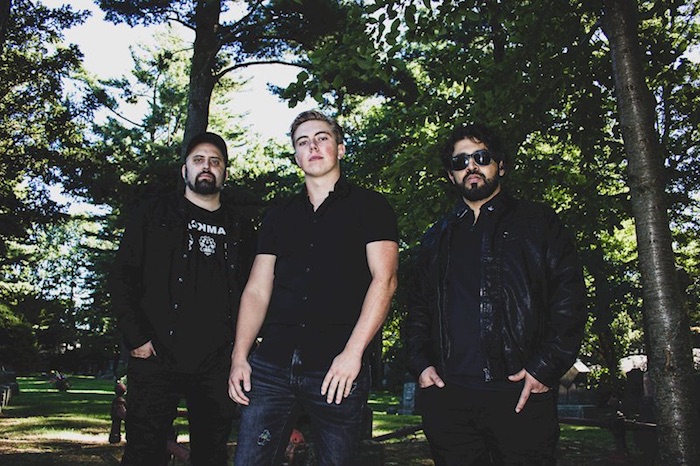
As a longtime fan of Dissection, still sharing the same level of love I have for that band after so many years, it was a real honour to chat with someone such as Brice Leclercq, who was their bass player between 2004 and 2005, and also contributed his bass duties on Reinkaos. After Dissection, he was briefly active in Satyricon as their live/session bassist, but ever since he left the band, he wasn't really active anywhere else, up until recently when he announced his new project From Kaos with Dark Funeral's drummer Janne Jaloma. When the debut single "The Outskirts of The Mind" was published on Spotify and Apple Music, I was really impressed with what I had heard, because it sounded like a real return to form for someone who was once a part of a great and important band in melodic black/death metal, and all of extreme metal in general. Along the way, Brice had also launched his YouTube channel where he frequently posts bass covers and Dissection playthroughs, as a great way of helping other bass players around the world, while attracting more interest in learning the songs he covered. During our conversation, we've discussed a variety of subjects from his recently started project From Kaos to hiring Janne as the drummer, while also deeply discussing his experiences regarding Dissection and Satyricon, his YouTube channel and the importance of maintaining musical freedom. If you are a longtime Dissection fan such as myself, I truly hope you will find this conversation incredibly engaging and enjoyable, and I suggest that you also keep an eye out for Brice's new project From Kaos, because you might like it.
Vladimir

Hey! How are you, man? It's good to see you.
Good to see you too. Doing great. I'm launching a new band, so I'm pretty excited. A lot of work behind me last year on this all year long every day. So, it's like it feels like it's good to put it up. Let's put it this way, it feels good to put it up now and see the reaction and see if people are gonna like it or not. And I feel I like what I hear, so I'm satisfied with myself and how people will like it as well. We'll see.
You were fortunate to send the link to the new single on Spotify this morning. I got your email, and I was like "Wow!", I didn't even know you were working on a new project. As soon as I got it, I had to listen to it. I just need to hear what's going on because I wasn't even aware if you were musically active anymore outside of you doing your usual YouTube covers and such. So, when I heard that, I was like "Damn". This really reminded me of oldschool Dissection and the good oldschool melodic black metal with a kind of that kind of heavy metal feel to it. And I really loved it. I have to say, I'm so curious to hear more stuff from you. I hope that we'll get the first full length album in the near future.
I would do the second one. I'm already thinking about it, about the second one, obviously. I don't know how long it would take me for the second one, but it took me around a year to do this one. So, I guess next year, I would be able to do at least one single or singles, because I'm surprised myself, but when I focus and sit to write music, it didn't used to be that way, but now, it kind of just comes up, and I don't just focus on making music, and it works. And then the riff just appears, and then I record myself, and I move on. And it feels great, sometimes I don't even remember what I composed, I'm like not here anymore. It's almost like a spiritual thing. I just write it and then I don't know what I did, and then, I work on it later on. Sometimes I have a hard time finding out what I was playing, really, but it's me. It's me playing everything on top of it. People didn't know that I could play guitar as well, and then I didn't know that I could scream or sing as well. And, it seemed to work out. So, I'm happy, and I'm really, really, really satisfied with it and happy with Janne's drumming as well. I must say that he really contributed to making this record sound like it does, and I'm grateful that I could have Janne on this album because it just did it perfectly. I had a vision before, and I wanted to ask him because my vision was with him. I mean, with that kind of drumming, and I asked him, and he said yes right away. He was very interested, very, very into it. So, I know him from way back. I knew him before Dark Funeral as well. I mean, even though I know him from Despite because we had a common friend. The guitar player is a friend of us both, and that's how we got to know each other. And I saw that he joined and I was happy for him, and he seemed to do very well. And so, when the question came to a drummer, I thought about it right away. I mean, it was a choice that came to my mind right away. And I'm very, very happy that it's him, actually, because I think he plays very well on the fast stuff, he's very used to that. But he plays very well on the slower stuff as well because I like my music to be slow and very fast and very aggressive. I like contrast all the time, and that's what I'm used to with Dissection as well. We used to have this kind of contrast all the time. I was of course influenced by Dissection, but I wanted to do my own thing as well. I didn't want to do a second Dissection. To me, Dissection was Jon's band and I respected that it's Jon's band. It was Jon's band, period. And it was his baby, and he put so much into this band that I did not want to make it sound exactly like Dissection. I mean, of course I'm influenced by it and because I played in it and I loved it. And still today, I love the music of Dissection. I still listen to it. So, it was logical that you could hear a little bit of it in my music as well.
Was this your first musical project that you're working on, or have you tried to do that in the past as well?
Yep. But it didn't work out. In the past, when I was pushing myself to write music, I didn't like what I was hearing, so I just forgot it, and then I kept playing all these years. I played bass all the time, because it's my thing. But last year, when I sat down and tried again because it just popped up, a lot of the planets were aligned kind of, and it was the right time to start writing music. It felt like it and then, when I sat down, I bought a guitar, I started playing and all the riffs came up, and then I recorded everything.
Similar thing happened to me, because when I used to play in my first band, I was only the bass player, and the funny thing was I never grabbed the guitar and I never tried to make riffs. I didn't even know how to make riffs. And it wasn't until like maybe 6 years ago when I bought my first guitar. It was a PRS guitar with bat inlays. It is the model that the former Cradle of Filth guitarist Paul Allender used in the days when he played in the band, and it's such a nice smooth guitar that I even quickly started learning chords and then started writing riffs and melodies. Back in the day, I was heavily influenced by Dissection and influenced by a lot of Swedish black metal bands even more so than the Norwegian ones. Even then I tried to actually learn the classic Dissection songs from The Somberlain to Storm of The Light's Bane and even something from that kind of very mid-tempo stuff on Reinkaos. The funny thing is, I think that I should give credit to Dissection for the fact that now I can write riffs even when I'm not making black metal stuff or death metal stuff, whatever it is, I think I should always give credit to a band such as Dissection for giving ne a wind in the back to start writing riffs on the guitar, even though I am primarily a bass player. So, I think it's great that we both have that in common.
Yeah, and Jon was an awesome guitar player and great composer. I mean, the guy was a genius. I played with the guy, and I can tell you he was a genius. He really was a natural talent. He didn't think much of what he was playing, he just played it. I mean, the time I remember from Dissection is that Tomas, Jon and myself, we could play anywhere anytime, and it was always sounding the same. I mean, I had a great time playing with those guys. Every day was a pleasure because everybody was giving 200%, and then we could rely on each other and not think "oh, he's gonna fuck up or he's gonna fuck up". Everybody just went for it, and it was great. It was really a good time. It was a special time, a very special time. I can tell you many stories, but very special times. Many people don't know that the interest the band had back then in 2004 was incredible. I think it was before doing Stockholm, Sharon Osborne called our manager to do Ozzfest. The manager from Iron Maiden called our manager to open for Iron Maiden in the United Kingdom and they were like within the same week. I mean, we couldn't do the Maiden thing because we had already booked the European tour and we couldn't do the Ozzfest because of Jon's record, and he couldn't get into the US. So, we couldn't do any of that, but it was impressive. When we did Rebirth of Dissection, there were buses coming from all over Scandinavia and people coming from Chile and from Japan. And it was all the labels, all the magazines back then were there. It was our 1st gig together as well. So, the pressure was pretty intense, but the atmosphere was very special to this day and a great memory. Very good memory.
When you joined Dissection 20 years ago, what was your relationship with other members of the band at the time?
Good question. I didn't know anybody, neither Jon or Tomas or Set. Back then, on the official Dissection website, John put an ad saying that they were looking for a bass player and a drummer and a guitar player. At the time, a friend of mine was filming me, and then I played "Unhallowed", and sent the tape to the address that was on the website, and one week after that, Jon called me and he told me that he liked what he saw. He told me that he wanted me to meet him. And so I went to Stockholm, and we talked for maybe 4-5 hours. We only talked. He wanted to know me. I looked at how I saw things in general, religion or not religion, in general, if I was maybe committed enough, all that kind of stuff, but it was a nice talk. It was really not difficult. He didn't put any pressure when he talked. Jon was not like that, he was not that kind of person, and he liked the conversation and he told me "Okay. We will do 4 or 5 songs next week. You come back and then we do with the drummer", which I just joined a few weeks before, I think. And when I got there, I remember we played the first song and I looked at Jon and I said "What did you think?" And then he laughed, he smiled and he told me "Like a glove, man. Like a glove". That's all he said. And, we kept playing maybe 8, 9 or 10 tracks. I mean, we just kept playing because he felt good and then the week after that, it was not over. The last thing of my audition for Dissection was to put bass on "Black Dragon". And so, he told me "Listen, I couldn't come up with any basslines because I didn't get inspired. Put down your bass, just do whatever you want". There was no bass on the track and then we went to the studio together. And then I recorded the basslines you heard, I remember when I heard the track, I thought too much "I hear an AC/DC bassline, man". I'm not sure that it's gonna fit with Dissection, and he told me "No. Just do what you feel. Just do how you would do it". And Jon loved it right away. He told me "That's exactly what I wanted to have". So, then I got in.
That's a great story. I mean, speaking of AC/DC basslines, I always think about Cliff Williams as a very proficient bass player. His playing is so simple yet it's always on the beat and it works flawlessly. The funny thing is, somebody even said "You know what's the best job in the world? Being a bass player for AC/DC. There's no easier job than that".
AC/DC's music really is not that easy to play. On paper, it's easy, but if you want to play it right, it's not. And Williams is a really good bass player. It's difficult. After having studied a few of his bass lines, some of them are more complicated than they seem to be. They are very good musicians and I love Cliff Williams, and I love his sound as well. I played pretty much with the same equipment, kind of. I have an Ampeg now. A cool story about the AMPEG, I didn't want to use it because I was looking for an SVT 350 or 450 transistor, because I didn't want a tube bass amp. It's easier with a transistor when you record yourself then and I didn't want any amp sims whatsoever. So, I wanted real amps. No samples, real amps, no tricks on the kicks. That's all. And then, I found this amp on the second hand in France. And then when I came to pick it up, when I went there to pick it up, I got to know that it was the amp of a French band called Magma. They mix jazz with all kinds of styles. It's a very weird sounding band, but that's the amp that belonged to the bass player and I'm very happy that I got this. I had the vision right away, but for this album, I wanted this album to sound more like a studio rehearsal, also in the studio's environment. Something very authentic, very raw. Not too raw, but authentic because I don't like the way metal is, the path is taking at least sound-wise. I don't like too polished, compressed, clean clinical sound. I don't like that. I think it's not a matter of taste. It's a matter of if you're a musician, you want subtleties and little nuances to be heard. That's what makes the music great, I think. And I cannot have that if I use that kind of sound and even on the bass, I bought the Darkglass stuff, and it sounded like everybody else and I sent it back. I don't like it. You basically just sound like everybody else if you use it. And I get creeped, I'm like "No. I sound like everybody else". Back in the days, I remember in the nineties, bands had one goal, it was not to sound like the other band. Everybody was very eager to have their own sound and now it feels like it's the other way around. Everybody is trying to sound like everybody else, and I fucking don't like it. I mean, it's a risk of course, when you don't want to sound like everybody else, because I might have some people that would say "Hey. It sounds like shit", but I'd rather take this risk and enjoy what I'm making as music, instead of trying to pass and do like everybody does.
Yeah. I mean, imagine if Dissection did Reinkaos with Andy Sneap. It would not be that great. Andy Sneap just completely ruins that feeling, especially with the great bands like Saxon, Judas Priest and Accept, they're all great bands. They still made great albums, but the problem with the production is the fact that they're missing that authentic raw live feeling. Because when I listen to Invincible Shield by Judas Priest and I compare it to something like Screaming for Vengeance, you could say that it's the same band, but it's not the same feeling.
That's right. And once again, it's not a matter of taste. I mean, you can have preferences, and some people like it heavier, and some people like it lighter or whatever. It's not about that. It's about being able to hear the subtleties of the musicians playing the music, and that's what it's all about. And I understand these bands. For example, you're naming Judas Priest. Judas Priest has been playing for so many years. I think they're a little bit afraid to sound as if they cut out an album with the sound from the eighties, you know, because they did it. They did it a lot. It's a bit difficult. For me, at this point, I thought that "No. I want my sound, how I had a vision", and I wanted to go all the way to the end of this vision. I wanted to do something pretty raw. That's about the idea. A little bit like a rehearsal, a good rehearsal.
Speaking about Reinkaos, what were your initial thoughts on the whole album? Were you a bit surprised that the band's direction was a major stylistic difference from what their album sounded like in the nineties?
No. I got to hear the demo of the album very early when I auditioned, and I really liked it. And I agreed with the evolution of the band. Jon did not want to be a part of the black metal scene anymore and he was clear about that. He was clear about that and he told me "No. I don't want to be a part of that. I don't like the way it became, and I don't wanna be a part of it". So, he wanted to do his own kind of style of dark heavy metal, you know, satanic music. I really liked the way it sounded. But, one of the reasons why I left Dissection was because I did not agree with the main choices when it came to a label, when it came to the manager, when it came to the producer as well. I thought that we needed to have somebody kicking our ass sometimes. We were good at our instruments, but it's always good to have somebody pushing and trying to get the best out of you, and I don't have this feeling on my end. So, I think we could have done even better than that. But that being said, I really like the music, and I really like how the album sounds. The only difference I would have if I was alone, I would have a producer that would have pushed the thing a little further. That's the only thing I would change. But I had one mindset when I recorded. I wanted to make it sound as dark as I could and nice as black and dark as I could. That was my main goal when I recorded it. I remember clearly. I did very quickly. I recorded, I think, in one and a half days, something like that, so it went fast and I think that drums went fast as well. I mean, it didn't take that long because we were very well prepared. We got used to the album quite a lot. We knew what we were going to do and it went well. But, yeah, if I could have changed something, I would have changed that. It's delicate when it's not your band. It was Jon's band once again, and I respect that. So, when I understood that things were not going to go the way I thought they were going to go, I jumped up. And, it was very difficult to jump up. It would have been a lot easier to stay, I can tell you that. It would have been a lot easier, for it took me 3 years to touch my bass again after Dissection. So, it was a tough choice, but I know I did right because things went to hell for them at least when it comes to the financial side of things. But I knew this was going to happen, and that's why I wanted to be surrounded with people that knew what they were doing, and we were not business minded people, neither was Jon, Tomas or I. We were not that kind of people. We played music and we needed those kinds of people around us that could think business. That's what I thought at least, but at the same time, with the age maybe and looking back at it, I can understand why Jon didn't want to sign with any record labels and stuff. And I kind of understand better now that I had my own band, how it feels to kind of give your music away to some label. It's tough. When you make your own music, it's your own, you don't want to give it away when you sign contracts with labels. I mean, he got screwed a few times. He didn't like it and he didn't want this to happen again. That's for sure.
The thing is, before he ended up in prison, they were signed to Nuclear Blast. It's a very major record label and you still have great bands signing to that label. You still have bands signing to Century Media as well as Napalm Records. When I spoke to musicians who are still part of those labels, when they were signed to those labels in the nineties, they didn't really have so many great things to say about them. Nowadays, they say it's a completely different story when you have other people managing those labels and being more cooperative in that sense because you don't really have labels screwing you up. But nowadays, labels have changed. Labels don't really accept everyone under the wing. It's hard to find a record label and it's really hard to find somebody interested, to even listen to your music, especially if we're talking about a record label. I'm talking about this from my own personal experience because when I had my second EP finished, I sent it out to at least 50+ labels. Only a couple of them responded, and everybody said no. We're not talking about major record labels; we're just talking about very small underground record labels with pretty good band rosters. In hindsight, I think it's good that Dissection didn't put out the last album over Nuclear Blast or any of these major labels because on the other hand, these labels would insist that they go on tours, that they do more promotional work and that's how things work out. For a band such as Dissection, it's not really like a mainstream rock star kind of band. It's more like a band that maintains its raw feeling, its very kind of intense energy. Whatever people may think about how Dissection changed their sound, at least they did not change their approach and their mindset. It's authentic and it's not bullshit.
Yeah. And I think the fans love Dissection a lot because of that, because they knew it was not bullshit. Nobody was bullshitting, plus, Jon was really talented. I think Tomas was very talented as well. I mean, he still is, but I think he was great for Dissection. I mean, I never had a bad concert with Tomas. He always played very steady and very solidly, I had a great time on stage with Tomas all the time, and Jon as well. Of course, he was very natural. He was very natural and nothing was forced, and everything was very authentic. That's what I remember about Dissection. That's how I remember Dissection. Everything went very smoothly and even when I play today, I do covers of Dissection on my YouTube channel. When I play them today, it's easy for me to play Dissection stuff, it feels like I'm at home. I don't force it and from the first day it was like that. I never forced myself to play that stuff. It really came just naturally. And I felt like it was like this for Jon, and it was like this for Tomas, and it just worked naturally.
Do you still keep in touch with any members of Dissection that are from the latest lineup, or did you even make contact with any of the previous members from the classic 90's period?
Sure. I'm still friends with Tomas. I'm still in contact with Thomas and he's recording Dawn right now. I also know Johan Norman and Ole very well. I lived with Ole for 2 months actually, after I joined Dissection. So, I know him very well. I've had some problems and he was very helpful. I'm good friends with Johan, I've never met Peter Palmdahl, but I heard Jon met him sometimes when I was in the band, and we talked about it. And he was open again. And I met Tobias as well, once or twice.
Awesome that you're still keeping touch with other members, you even mentioned that Tomas is now working on a new Dawn album as well. I wasn't even aware of that.
Yeah. I liked what he did. He did 2 albums with them and he recorded them because he was interested in music production, which I was as well at the same time in Dissection. And then I went and studied sound engineering in Sweden for 3 years and I have a license. That's how I could do my own thing as well, and now he's doing a bit. He has been doing it for a few years now. He's trying to finish the new album this year, that's what he told me. I know some of the guys in Dawn and Hellbutcher as well.
I just remembered the Rebirth of Dissection video because the twins from Nifelheim even appeared in the front row and I remember Hellbutcher going fricking nuts.
I'm also a fan of Maiden, so we got along quickly because they're the biggest Maiden fans in the world. I mean, they have everything, so it was great.
I really have to ask you about the whole Rebirth of Dissection thing, because it is widely regarded as one of the greatest comeback shows in metal music history and even to this day, 20 years later, it's still regarded as one of the comeback events in metal history. I mean, how do you look back on the whole event? Do you look at it as a once in a lifetime experience?
Yeah. Definitely. Magical once in a lifetime experience. That's how I would put it. When I came to the show, I took the bus to the place and I had my backpack. When I came, it was all empty, and there were guys building the stage. It was enormous. It was big, man. And, at this time, I was aware that this is gonna be a very, very big show. And then from this point on, the pressure kept on building, but at the same time, it was such an honour to be there with Jon and see that after so many years he came back with Dissection in such good form. And I remember, we were talking about the old members coming up to me after the sound check and telling me "Man, I'm gonna tell you one thing. Dissection has never sounded that good as today. Never. And I know Dissection". And I was like "Okay, man. Thank you". I was very nervous, because Tomas and I worked a lot on the stuff as well. I mean, during the time Jon was still in prison, we worked on this stuff and we could rehearse only every 15 days. So, the rest of the time, we rehearsed on our own, Tomas and I, and worked on the stuff. And then Jon would come back sometimes and tell us "Okay. Cool. Sounds good", and then we would rest 15 days later. Remember, he was very confident with us, we had freedom, and he was very confident, and sometimes fans wonder what he was like as a person. I think many believe that he was very hard and tough, but he was not alone, man. Not with us, not with the people he had around him. Once he knew somebody, Jon was very reliable and very nice. The only time I thought it was shit, it's when I left, and I found out after a year that my bass was on the album, and that was not what we agreed on. When I left the band, it was not totally finished. I told them "Okay. You've got a choice. Either we make a contract and you keep the bassline as I recorded it, and it's fine by me. Or, you re-record everything, but in that case, you erase my bassline, and you do something totally different". And they told me that they wanted to erase it. But, when I found out that it was my bass, it was too late. And you won't see who played the bass if you look on the album, because they didn't write it. It's a shame. I found it had a little bad taste, but I moved on. I don't stay in the past and move on. So, I moved on. I turned the page, and I thought he was fucked up, but I turned the page. And now, I think Jon took it quite badly when I left, and I understand. We don't always agree on everything. That's why I say these things. It was harder to leave Dissection than to stay in Dissection. That's for sure. Because I didn't need Dissection to join another band. You didn't see me much. So, I'm not that kind of person. I didn't join Dissection to make a career during Dissection because I like the music, and I thought that I would fit in the band. And I respected it, and I did my best to the end. So that's the way I see it.
It's good you still have fans identifying you as the bass player on Reinkaos.
Yeah. And I was very surprised by it when I heard the album to hear my bass so loud in the mix. I mean, for a heavy, dark metal album, the bass is very loud in the mix, and I was surprised. There again, I did my best, to work on the stuff, and I remember what I used. I used the Warwick from '87, handcrafted in Germany, as a bass. And I used it because I could go very low, we were tuned down to C, I think, at some point, on some songs, and then I used the 5th string. So, it was very good and I used an Ampeg SVT 4. I'm an Ampeg guy, so that's what I used, it's very heavy. That's what we wanted to have. I wanted very heavy, dark sounding, melodic basslines. That's how I wanted to make it sound.
Speaking of the basses that you used, I've seen you play various basses from Warwick to Spector to Ibanez, and even in your YouTube videos, I've seen you use the Sterling Stingray and even the Squier Precision bass. Which of the basses that you own or that you owned in the past are some of your favourites?
The Music Man.
Ah, yeah. I knew it.
By far. I never had a bass where I was more comfortable with than this one. It just works perfectly and I like the role of The Music Man. I like when the bass has a little bit of rolling, and The Music Man is good for that. A little better than the Fender or another brand. Warwick was pretty good. Spector is good at rolling as well, but the neck was a little too thick on the Spector, I thought. But I like the Music Man better.
It really takes time to get used to it, because I use a Yamaha, and it's a 5-string bass. The funny thing is I bought this bass like almost 10 years ago and back then I wanted to use the 5th string because I needed some songs for the very low ends. And now I'm like "Okay, this 5th string is completely useless right now". I don't even use it. And the worst part is now because the neck is very thick and because you don't really get a nice grip, it's not like a relaxed grip, but I still kinda manage to get into it.
Yeah. I understand. I'd like to put a cover of "Black Dragon" actually or more tracks from Reinkaos, but I need the 5-string bass, I only have 4 string basses. I have two 4-string basses, and I need a 5-string to be able to do so because it's not gonna sound right if I do it otherwise but I'll do it, and especially "Black Dragon". I would like to show people how I composed it back then, it's very important track for me, "Black Dragon" and it's probably my favourite from Reinkaos.
Mine too. It's my favourite from Reinakos. I love the song. I keep listening to it.
Every time I go back to it, Jon sings things incredibly well. Jon sings extremely well on this track, and he plays very well. And, there is a groove that I like on this track, and everybody is on it. So, it's really a good track indeed.
Since we talked about your YouTube channel, I was very fortunate to discover that you post videos on there. I don't even know how I came across that, maybe it was Dissection playthrough videos or whatever. I really gotta ask you, what made you start that YouTube channel?
Good question. First, I thought that some bass players in metal didn't get the recognition they should have. And I'm thinking about it. And I think especially Jimmy Bain. I mean, he played great stuff, this guy. He really was an awesome bass player, but for some reason, bass players are always the last wheel. So, I wanted to make a channel showing the playing of these guys at the beginning. And then at the same time, I wanted to give people the desire to play the bass because I see many guitar players doing this on YouTube, but bass players in metal not that many. I think it's a shame because bass is a really interesting instrument if you take it the right way and that's what I wanted to show. I wanted to focus more on the bass learning aspects of things in metal. That was the goal. Of course, people were asking me about Dissection and Dissection playthroughs, so I started to put in some Dissection tracks as well, and now it's evolving more and more. And now I'm doing some comments, as well on my covers where I try to help people that are trying to play this on bass to give them tips and give them help on special tips or helps according to my experience, according to what I know, and try to share this information with some people that would be interested in. That's all.
That's very good. I presume that the Dissection playthrough videos are the ones which have the most views. Am I right?
You're wrong, hahah.
Really?
Yeah. I'm surprised as well. The interest is here. But you know, not many people know about this channel. I don't have many subscribers, and I think with From Kaos, I think there will be more people, reaching out and checking in at least.
I was actually gonna ask you, do you often have Dissection fans reaching out to you and expressing how much the band means to them?
I have a few now. I recognize them. I have few fans that always come back to the Dissection stuff, and I'm very grateful that I put this out, but not that many. The ones that I find that I like my covers are of course fans of Dissection, but I didn't reach out to everybody yet. It takes a bit of time, I think there will be interest if people know about it, but many don't. And it has to do with the algorithm and YouTube and that shit, then we'll see.
I could help out to spread awareness of the new project From Kaos because it wasn't until today that we all got the news that you were working on this new project. So, hopefully more people, especially if they are Dissection fans, will reach out to you and that they will keep an eye on this project, that they will listen to it.
For sure. I think they might like From Kaos, if they like Dissection, but it's not exactly the same thing. But we stay in the raw melodic field, having dark metal which is a good thing. I wanted it to be a little faster. Like I told you before, I had the vision of very fast drumming sometimes, and I needed a drummer that could deliver that, and Janne was definitely the right choice. He did some stuff that he could do however he wanted. He asked me "Can I play whatever?" and I said you should play what you feel. Because the way I see things, and you would be surprised, with some bands, the leader tells others how to do the stuff and I find it stupid for the sake of the music, because if I asked to play drums, it's because I liked how he played drums, and I want him to put himself in the music. Otherwise, I would ask somebody that I would pay and just do as I tell him to do or even use fake drum stuff. But I wanted him because I like how he plays, and I wanted him to put his personality in the music.
Speaking of musicians who only want what they want, rather than having some sort of communication as to what would work well in the song, that's the case of Ritchie Blackmore. If we're talking about Rainbow in this case, he always pushed what he wanted, as opposed to what everybody felt like. That's why you had three albums with Ronnie James, and then you had one album with Graham Bonnet, and then there was Joe Lynn Turner. After a while it starts to feel more like a job rather than a passion.
That's right. And, I don't really understand that because he cannot be very constructive in the long run. I mean, the guy, sooner or later, was gonna get the fuck out from the band and do his own thing or do something where he's gonna have more freedom, instead of doing what somebody tells him to do. And I came to realize that I didn't want to play in a band anymore as well in the sense that I didn't want that bullshit anymore. I cannot stand to have somebody telling me what to do and not do. I cannot stand it. That's the way I am. That's the way I always was. And so, I decided that it would be better taking this in consideration to start my own band instead where I wouldn't have this kind of problem. And, that's why I started From Kaos as well. I mean, I could compose music and at the same time decide what to do and how.
I'm very happy that you are still musically active even though you're not playing in a band, because you even expressed yourself in one interview that you don't really want to play in a band because the overall band chemistry just kills everything.
Actually, very often, playing in a band is not only about musical chemistry. And especially at a certain level, it becomes very complicated. And you live with all 14 other people all the time on your tour, and I have a hard time doing that. I really do.
Speaking of bands that you were a part of, you were also a live bassist for another great black metal band, which is obviously Satyricon from Norway. You were their bassist for 2 years, from 2009 to 2011. How did you get involved with the band?
I think I did less than that, but I'm gonna tell you. I saw that they were looking for a bass player. Same thing on the website and I applied for it, and I auditioned, but it was not at all the same audition as this. The old adventure was not at all the same thing. I had eleven tracks to work on in one week to play. I did the audition one time and added another eleven tracks to play the weekend after that audition. It was very tough auditioning for Satyricon, but it went well, obviously. And I got the gig, and then I did the American tour and a part of the European tour, but not completely. But, as I told you before, I was not made to be in that kind of band. Simple as that. I'm not made for that. I'm made for playing music, and I did well when it comes to playing music. I was playing differently in Satyricon than I was in Dissection because the music calls for another plane in Satyricon. And I played a lot harder with Satyricon. I used to break strings every day on the bass, I broke picks and strings every day, but I played very hard. And then it all depends on the music you're playing. I can play very hard, and I can play very soft, and I like when there is both. That's what I tried to do with From Kaos, actually. I tried to have a big contrast with very aggressive fast parts and slow parts, very melodic slow parts and I tried to put everything together. You will hear the album and you will see what I mean. But there are some songs on the album that are more or less a blast beat from start to finish, and others where there are no blast beats in the tracks. So, it's very different.
Since we already mentioned Satyricon, I really gotta ask this. How was your relationship with Satyr and Frost? Were you good friends with them?
No. I think we were not made to be in the same band. Let's put it that way. I have a certain temperament, and I take it on me. As I told you, I don't like being told what to do and not do, and I don't take anybody to tell me that. I don't give a shit about the consequences. I don't give a shit if it's Metallica, I wouldn't accept this for anything. I'm free and I will stay that way. That's why I'd rather start my own band than join any band.
You really keep it to yourself, I'm very happy for you that you're confident in that sense that you don't really let people push you around. It's a very common thing in the musical world. A lot more common than people would think.
Exactly. You're exactly right. If you knew the numbers of musicians, I know still today that accept things I would never accept, you would be surprised.
Yeah. I mean, if I could have more frequent conversations with a lot of bands, maybe I could probably tell if one of them is telling the truth like yourself or if somebody is trying to sugarcoat everything and just give a nicer story for the press rather than say how things are. Even if it's an ugly picture, I would prefer to see the truth rather than see things as people would want them to see. Think about bands like Cradle of Filth. How many members were in that band? There were probably over 40 members. Imagine if you were part of that.
No, I cannot. I wouldn't even apply. I'm not gonna name drop anybody, but I've been asked to play bass in bands. You would be surprised. But I say no every time. I'm not interested. I don't do it for the wrong reason. Many musicians do things for the wrong reasons. They do it for the money, the fame. I'm not interested in that. If I didn't do much in 20 years since Dissection, it's because I'm not interested in that. Otherwise, I would have known it. And I've been asked to play bass in pretty big bands and turned down the offer, most of the time.
I think it would have been crazy to see if you ended up playing as a live bassist for Watain, for example, instead of Alvaro. But Alvaro has been a long-time bass player for those guys, because as we all know, Erik did the bass on most of their albums apart from the last two, and he even did gigs for Dissection when the band was still around. That's probably around the time when you left the band.
That's right. I don't know who does what or doesn't do nowadays, to be honest. So, I don't know. But when I left, I think, there was a Norwegian guy for a while and then Erik.
Yeah. There was that one guy, this Norwegian bassist, whom I read that he started some sort of National Socialist movement. And I was like "Well, this goes against what I would imagine for somebody playing in Dissection". But I was like, I'm not gonna judge. It was weird just to read that bio of a musician.
Yeah. It is. It was indeed.
Before we wrap this up, I just wanted to ask, what are your current plans for the project From Kaos? Can we expect a new single anytime soon?
Yes. The current plans, the first single "The Outskirts of The Mind" will be released on November 19th, Tuesday next week, officially, on the digital platforms, like Spotify, iTunes, and so on. On December 3rd, a second single called "Point of No Return" will be released. And on 18th December, the entire album called Synchronicity one will be released.
Brice, thank you so much for taking your time. It's been such a pleasure and I'm looking forward to hearing this new project, and I am honoured to have you here both as a long-time fan and a follower of your work, as well as for Dissection. All I can say is best of luck to you, brother.
Thank you very much. Very highly appreciated. Very much appreciated.
Just for closure, are there any final words you'd like to leave?
Check out From Kaos. You might like it, really.
Upcoming Releases
- Hexagraf - Walsen Van Hoop - Dec 18
- Lychgate - Precipice - Dec 19
- Funeral Vomit - Upheaval Of Necromancy - Dec 19
- Bloedmaan - Vampyric War In Blood - Dec 19
- Gravetaker - Sheer Lunacy - Dec 22
- Hologramah - Abyssus.Versus.Versiculos. - Dec 31
- Sardonic Allegiance - Coast II - Jan 09
- Deadwood - Rituals Of A Dying Light - Jan 09
- Total Annihilation - Mountains Of Madness - Jan 16
- The Eternal - Celestial - Jan 16
- Ov Sulfur - Endless - Jan 16
- Viserion - Fire And Blood - Jan 16
- Sad Whisperings - The Hermit - Jan 19
- Barbarian - Reek Of God - Jan 23
- Asaru - V.O.I.D. - Jan 26
- Viamaer - In Lumine Lunae - Jan 29
- Skulld - Abyss Calls To Abyss - Jan 30
- Profane Elegy - Herezjarcha - Jan 30
- Mors Verum - Canvas - Feb 06
- Enterchrist - We Are Just Getting Started - Mar 19