
Draconian - Interview
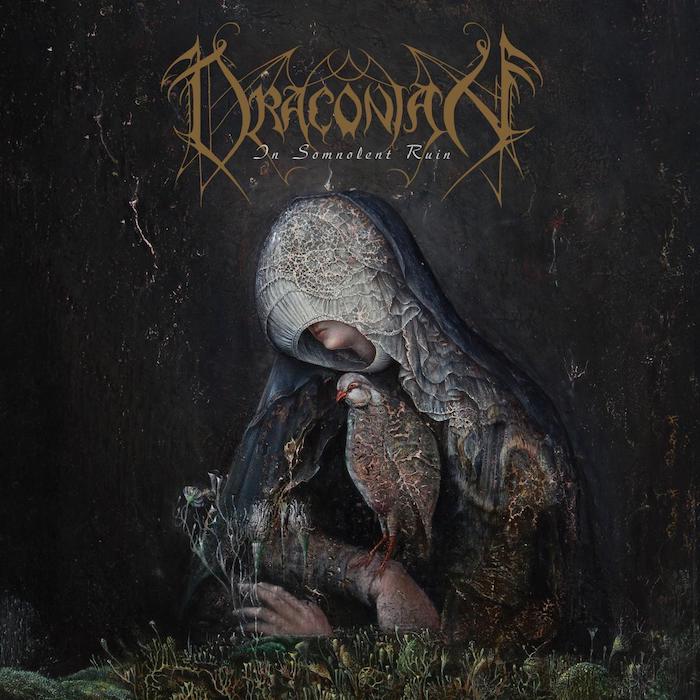
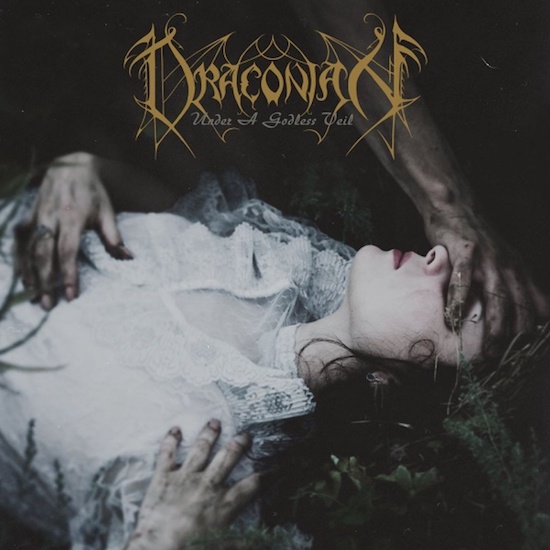
With the release of "In Somnolent Ruin", the Swedish masters of gothic/doom metal Draconian begin a new chapter in a career built upon melancholy, existential reflection, and emotional intensity. Released on May 8, 2026, via Napalm Records, the album arrives six years after "Under a Godless Veil" (2020), widely regarded as the band's most successful and acclaimed work to date — and Brazil will be the first country to witness this new era live.
The sextet returns to São Paulo this Saturday (May 16) for a special performance at Carioca Club, promoted by Mirror/AM and Sellout Tours. The event will also feature a rare Brazilian appearance by Emma Ruth Rundle, whose dark folk atmosphere makes her a fitting companion for Draconian's emotionally dense universe.
More than simply a new album cycle, "In Somnolent Ruin" also marks the return of vocalist Lisa Johansson, an original member closely associated with the band's classic era. Her comeback restores one of Draconian's defining characteristics: the haunting interplay between ethereal female clean vocals and the cavernous growls of founding vocalist Anders Jacobsson.
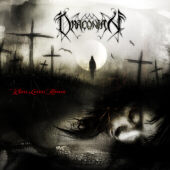
Since emerging in the mid-1990s, Draconian have established themselves as one of the most respected names in gothic/doom metal, crafting a discography centered on sorrowful atmospheres, crushingly slow riffs, and poetic meditations on alienation, spirituality, loss, and the human condition. From their 2003 debut "Where Lovers Mourn" onward, the band has cultivated a sound that balances oppressive darkness with fragile beauty — a duality that remains at the heart of In Somnolent Ruin.
Critical reception has reflected that impact. Blabbermouth.net described the record as one of the strongest releases of Draconian's career, highlighting Lisa Johansson's return as the element that reignites the band's "romantic electricity." Meanwhile, Metal Hammer praised the album's fusion of doom, death, and gothic metal, emphasizing its balance between "absolute darkness" and "glimmers of light," as well as standout moments such as "Anima" and Johansson's performance on "Cold Heavens."
In the interview below, Anders Jacobsson reflects on the philosophical and emotional foundations of "In Somnolent Ruin", the organic creative process behind the album, Lisa Johansson's return, the influence of Gnosticism and existential thought on Draconian's art, and why, after more than three decades immersed in darkness, he still feels unable to stop creating.
Marcelo Vieira (@marcelovieiramusic)

Your return to São Paulo comes after a sold-out show in 2023. From your perspective, what explains this consistent connection between Draconian and Brazilian audiences?
Well, I think that connection has always existed. For maybe 20 years before we finally came to Brazil, there was this constant demand on our social media — even back in the early 2000s, when there was something called MP3.com. Even then, people were constantly commenting: "Come to Brazil!" It took decades, but I must say that when we finally arrived, I'll never forget the feeling.
When we got to the venue in São Paulo for that first show, the reception from the fans was incredible. After so many years of anticipation, finally being there felt like an instant connection. So yes, we absolutely can't wait to see you all again next week. We've really been looking forward to it.
In such a fragmented global landscape, is it still surprising that a doom/gothic band can build such strong bonds with specific tropical regions?
I wouldn't really know, since I'm not from a tropical region myself. (laughs) But I think music like this deals with very heavy and deeply human subjects — the kinds of things that keep us awake at night. Questions about life and death, mythology, religion, philosophy, and what any of it actually means.
I think that's what connects us, regardless of whether we live in the tropics or not. Scandinavia obviously has a strong tradition of black metal and death metal, and I think part of that is connected to our nature and to old folklore. But ultimately, what binds people together through this music are those universal themes and this sort of stream of consciousness that transcends borders.
We've had fans in Syria, Iraq, Israel — all over the world. That proves to me that music can cross barriers because, at the end of the day, we're all human beings. We all think, we all feel, we all believe we have souls. And music becomes a way of connecting through that.
In Somnolent Ruin has been described as one of the most personal albums in the band's career. At what point did you realize this record would become something more intimate than just another chapter in Draconian's discography?
I think it started sometime during the COVID period. Our tours for the previous album kept being postponed, and the whole atmosphere of those years affected everything. It felt like the next album needed to become some kind of culmination of everything we had experienced — or at least everything I had experienced emotionally.
But it wasn't until early last year that I really began organizing the lyrical direction I wanted for the songs. Then, when Johan and I sat down to choose the material for the album, we had around 20 songs to pick from. We started realizing that certain tracks naturally belonged together thematically and conceptually, so we selected the ones that pushed the album in that direction.
Even during the recording process, things were constantly changing. I kept editing and rewriting lyrics almost until the very last second. So even though the album had been developing for years, the creative process remained alive all the way through the final stages.
The concept associated with Plato's theory of the soul wasn't originally planned from the start. What does that reveal about the way you organize — or perhaps don't organize — your creative ideas?
Actually, there's a bit of a misconception there. Some press materials suggested that the album was directly about Plato's philosophy, but that's not really accurate. The album isn't centered around one specific philosophical doctrine or worldview.
When we spoke with the label during the press campaign, they kind of framed it that way, but I never consciously sat down thinking: "Now I'm going to write an album about Platonism." It's more about this recurring feeling of alienation — the sense that maybe we are strangers in this world, that this reality somehow doesn't fully belong to us.
That's something Draconian has always explored. The difference is that over the last ten or twelve years, I've started expressing those ideas through more philosophical and mythological language. I use references to Gnosticism or Platonism, but if you remove those labels, the themes themselves have always been there.
I suppose the difference now is that the writing has become more poetic and more sophisticated because I've evolved as a person. I read more, I've learned more, and I don't want to repeat myself endlessly. I want the material to feel deeper and more impactful.
Do you see these themes as reflections of a broader collective moment or of a more personal process?
I think it's both. It depends on how you view life and humanity itself. On one hand, I can be quite misanthropic when I look at certain aspects of the world. But at the same time, I also feel a strong connection between people, because many of us share the same suffering, the same dreams, and the same feelings of alienation.
I realize this especially when I travel and meet fans around the world — or even through interviews like this one, reading reviews and hearing people's interpretations. There are clearly experiences and emotions we all recognize in one another, even if we don't openly discuss them in everyday life.
Of course, I can't claim everyone shares that awareness. Maybe some people really do go through life on autopilot. (laughs) Just look at the world around us. But I think much of the darkness we see today comes from the fact that humanity remains trapped in what I would call a "somnolent ruin." We haven't fully awakened to our potential yet. Instead, we focus too much on our differences.
While composing the new material, did you feel the need to respond to Under a Godless Veil or to move away from it?
I'm not moving away from it at all. I've read some reviews suggesting that I distanced myself from Gnosticism after Heike left the band, but that's simply not true. Those themes are still there. The difference is that this album is more personal in the sense that I'm approaching different subjects through a more philosophical lens.
The lyrics are also written in a more poetic way. Some songs are more direct — like "Lethe", for example — where I wanted to explore the idea of the "disincarnation matrix" and the fact that there's actually an ancient philosophical and spiritual tradition behind those concepts.
So I never felt any obligation to continue exactly where the previous album ended. But I've learned things since then that will always remain part of me. Gnosticism was a major influence on Under a Godless Veil, and now I can't "unsee" that perspective anymore. It became part of who I am. In one way or another, it will always inspire me because it shaped my worldview and my life.
That doesn't necessarily mean I'll keep writing directly about Gnosticism itself. It's more about the way I perceive existence now.
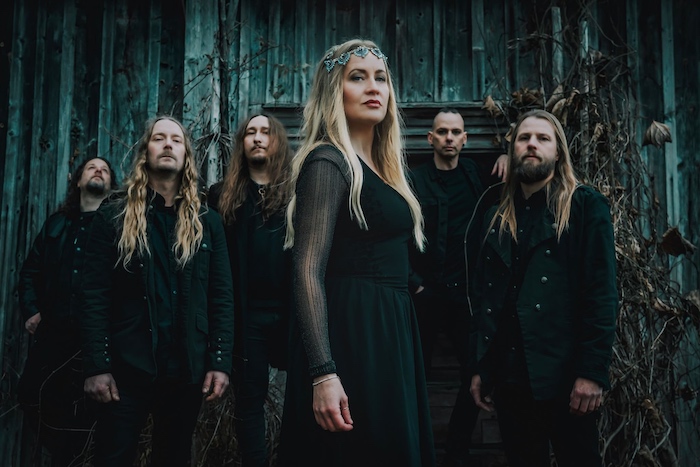
What has Lisa Johansson's return changed in the creative dynamic of the band?
Well, we had already started writing the songs before Lisa officially came back. 2022 was a very transformative year for the band because we were trying to figure out what Draconian was going to become. There was a lot of back-and-forth, a lot of discussions, trying to balance what the band wanted with what Heike wanted. Eventually, she decided to leave.
Lisa initially returned only as a touring/session member, but very quickly it started feeling natural for her to become a full member again. After having so many session musicians over the past fifteen years, we really wanted a stable lineup where everyone could focus fully on the band together.
Honestly, I think this is the best lineup we've ever had. Not because we're all Swedish, but because there's something familiar about Lisa's presence while, at the same time, everything feels renewed and updated. We also realized — especially through touring and live performances after COVID — that the band is stronger than ever now.
I don't know if that comes specifically from the lineup changes, but I do know that once the world reopened after the pandemic, Draconian finally felt ready again. We were finally able to properly promote the previous album, and everything simply clicked. Lisa genuinely wanted to be part of the band again, which was something we didn't even know when we first contacted her about touring.
In the end, I think Heike also realized it would become difficult to keep everything working long-term if we wanted to rehearse and tour regularly while she had other plans, other bands, and wanted to live elsewhere in the world. So, ultimately, everyone got what they wanted.
And for the fans who miss Heike — I completely understand that. But she has four other bands now, and they're all great, so I hope people can still find something positive and inspiring in that as well.
There's a recurring idea in your answers that the album "emerged" almost involuntarily, as an organic process. To what extent do you feel in control of the work — and to what extent does it impose itself on you?
Those are really good questions. I think that when you begin working on an album — maybe three or four years before it's finished — you always have an initial idea of what you want it to become. But this is a very long and slow process. You could even call it "doom-like" in that sense. (laughs)
You start with a vision, but as the songs evolve, the material gradually transforms into something else. At a certain point, it almost feels like the process has a life of its own, something you don't fully control anymore. The album becomes different from what you originally imagined.
That's just the nature of creative work in a band, I think. It wasn't until very late in the process that we truly understood what the album should focus on thematically and emotionally.
So I think it's both things at once: we allow ourselves to be open to whatever the universe channels into the music, but at the same time we still shape and sculpt those ideas consciously. In the end, it's really just a stream of consciousness taking form.
In an era of fast consumption, how do you see the reception of long, dense, and emotionally demanding music?
I only allow myself to read reviews and comments occasionally, but fortunately the reactions have generally been very positive. Our fans are incredibly humble and beautiful people. Even when they dislike something, they usually express it respectfully.
At this point, Draconian has become something of a veteran band, and over the years we've built a very solid foundation. We've always remained true to our identity as a gothic doom band. Of course, our influences sometimes make certain songs more varied or progressive — like you can hear in the three singles from the new album — but the core has never changed. And it never will.
I think our listeners know what to expect from us, but at the same time they still allow themselves to be surprised with each release. Maybe that's partly because there are usually many years between albums, so people become deeply immersed in the atmosphere of each one.
For casual listeners, this type of music can probably feel very dense and emotionally heavy. We're not a funeral doom band — that would honestly be too extreme even for me if we only operated in that territory — but the essence of Draconian will always be doom and gothic metal, with progressive elements surrounding it. That's the foundation people can always count on.
Of course, every fan has their favorite albums. Some may prefer older records, while others may connect more strongly with this one. But I think listeners know they can always rely on us to remain faithful to the emotional core of our music.
What still drives you to create — the need to say something new, or simply the impossibility of stopping?
Honestly, at this point, making music is so deeply ingrained in who we are that I don't think we really have a choice anymore. Even if I left Draconian tomorrow, I would still keep writing music. Even if I never joined another band again, I would still write. And I think Johan would do the same.
It's simply part of who we are as people. We are artists whether we have an outlet for it or not. That's why, when many big bands retire, the musicians often branch out into other creative projects — because they still need that artistic expression in their lives.
For us, it's the same thing. Creativity isn't optional anymore; it's a necessity. Without it, I'd probably be even more miserable than I already am. (laughs)
 2.22k
2.22k
Discography
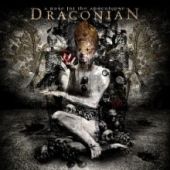
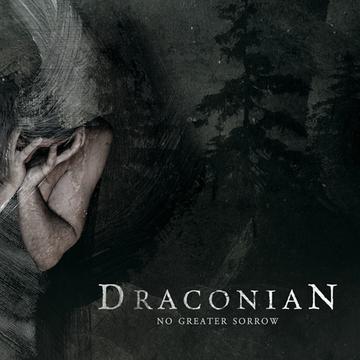
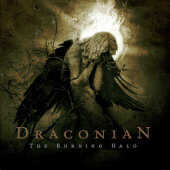

Upcoming Releases
- Insomnium - Netherworlds - Oct 16
- Night Hag - Great Dismal Darkness - Oct 16
- Master - Among The Seeds Of Death - Oct 16
- Lugubrious Garment - In The Wide Vale Of Uncreated Night - Oct 16
- Carnation - Symphony In Flesh - Oct 16
- Throneum - Love Is The Law But Death Is The Frame - Oct 16
- Leadbelcher - Heaven's Bloated Corpse - Oct 16
- Anagnorisis - Caregriever - Oct 23
- Wolves In The Throne Room - Estuary - Oct 23
- Critical Defiance - Bloodsurge - Oct 23
- DET - Bloodsurge - Oct 23
- Bokkerijders - Crush Kill Destroy - Oct 23
- Fvneral Fvkk - Indecent Idols - Oct 23
- Messier 16 - Shouts From The Cliffs Of Heterodoxy - Oct 23
- Ereboros - From Oblivion To The Grave - Oct 30
- Cryptorium - Through The Bowels Of Ceaseless Dissonance - Oct 30
- Xentrix - Allied With The Enemy - Oct 30
- Deathwards - Realms Of Sin - Oct 30
- Paara - Laulut Tulen Ja Jään - Oct 30
- Eldfödd - The Night Belongs To The Dead - Oct 30