Klaïton - Interview
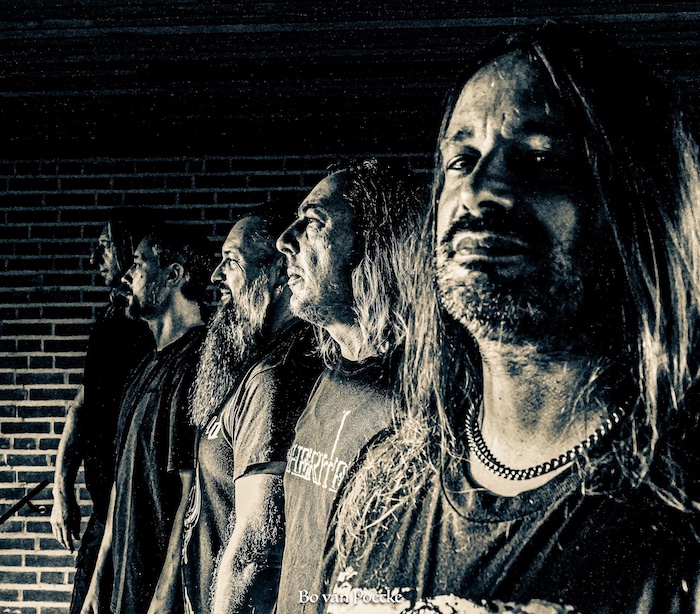
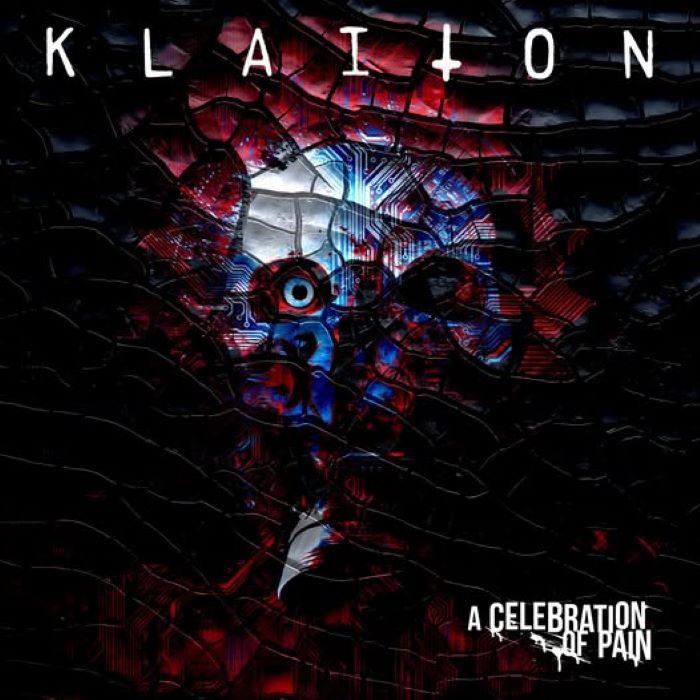
Dutch death metal veterans Klaïton are back with "A Celebration Of Pain", a six-track EP that builds on the foundation laid by their 2024 debut, "Behind The Ritual". Rooted firmly in old-school death metal but delivered with a clear, powerful production and plenty of groove, the new material shows a band that knows exactly what it wants to do. We caught up with Ronald Camonier (drums), Gratiën Versijpt (vocals), and Erwin Wesdorp (guitars) to discuss the band's beginnings, the new EP, lineup changes, influences, and what lies ahead. Crank it up, check out our review, and get to know Klaïton a little better!
Tomek

Klaïton was formed back in 2013 by musicians who had already spent years playing in bands such as Polluted Inheritance and Burial. How did the band originally come together, and what made you decide to start a new project rather than continue with your previous bands or move on to something completely different?
Ronald: By 2013, Polluted Inheritance and Burial had already split up or had at least been inactive for a few years. And as happens with most musicians, I think, after a while you just get that itch to make music again. Erwin and Stefan ran into each other at a party (we're all from the same area...), and that's where the seed was planted to start a band. The hunt was on for a drummer, bass player, and singer. It didn't take too long to find a bass player, Steven Vrieswijk (former bass player for Polluted Inheritance), and a drummer... me (former singer and guitarist for Polluted Inheritance). So, as you can see, they didn't have to look very far to complete the lineup. It took a bit longer to find a vocalist, but we eventually found Gratiën Versijpt. The goal wasn't to become a Polluted Inheritance or Burial clone, but to start fresh and see where we'd end up stylistically. In the end, this turned out to be quite a long process because, as you know, our first EP didn't come out until 2024. That was really the point when we were all happy with the direction we had taken.
You spent many years building a reputation in the Dutch underground before releasing your debut EP, "Behind The Ritual", in October 2024. How do you explain that long gap between forming the band and finally releasing your first official material? Was it a conscious decision to take your time, or did life simply get in the way?
Ronald: Like I said before, it was a real search for a style that everyone was happy with. We also played our earlier live shows in those different styles, and even though we weren't completely satisfied ourselves, the crowd was always enthusiastic! In the meantime, I started looking into home recording, which made it a lot easier to simply record something. Things kept getting better and better, and that definitely fueled our desire to record the EP. Everything just clicked around that time.
Gratiën: But I guess it also took us a while to become confident enough and satisfied with the songs before taking the step toward recording them. We wanted to take our time and offer the best we had in us at that point. In that respect, it was good that we could record at Ronald's place, without time pressure or budget constraints, and in an environment where we felt comfortable and had enough time to experiment. That helped a lot in reshaping the songs we had.
Where does the name Klaïton come from? Is there a particular story or meaning behind it, and does it have any connection to the band's musical identity?
Ronald: The name Klaïton comes directly from forgotten chthonic mythology — the ancient cult of deities that dwelled deep beneath the earth. The name itself is a corruption of the Old Greek "Klito" or "Klaito," meaning "the enclosed one" or "he who is hidden in the mire." In ancient texts, he wasn't just a generic devil, but the God of Weeds: the brutal, unstoppable primal force of nature that reclaims everything the moment humanity lets its guard down. While other gods claimed the marble and the light, Klaïton was the entity of the pitch-black void and the roots beneath the altar. We deliberately chose this name because it perfectly captures the atmosphere of an ancient, inevitable threat that is always slumbering just out of sight.
"Behind The Ritual" received positive feedback, and you mentioned in an earlier interview that the physical edition was almost sold out. How did the response to that debut EP compare with your expectations? Did it change anything for the band or give you a different perspective on what Klaïton could achieve?
Ronald: To be honest, after all the positive reactions to the "Behind The Ritual" EP, we had hoped for more shows and interest from venues or festivals. Unfortunately, that didn't really happen. We're not entirely sure what the exact reason is. Social media is a must nowadays, and I have to admit we've fallen a bit behind in that department, mostly because everyone in the band has a busy family life. So maybe that was the reason?
You're now preparing to release a new EP on November 4. What can you tell us about the new material? How does it compare with "Behind The Ritual", and have you deliberately tried to push your sound in a different direction, or is this simply the next natural step for Klaïton?
Ronald: Yes! The new EP, "A Celebration Of Pain", drops on November 4. It's truly an evolution of our first one. Sound-wise, we tried to make it a bit more modern, but not too modern. We love that old-school vibe, and we feel it's definitely still there. I think we all share the feeling that this is the exact style we've been searching for all this time. "A Celebration Of Pain" is something we're incredibly proud of!
Gratiën: We also spent more time working on the vocals, experimenting a bit more with different approaches and making them as clear as possible without losing brutality and power. We also mapped out more precisely how things should sound and how we wanted them to sound. I think, as Ronald said, that we really succeeded in achieving that goal this time. For me, some of the songs turned out almost exactly as I had imagined them.
When did you begin writing the new EP, and how did the songwriting process develop? Steven mentioned that Ronald and Erwin usually bring in nearly complete songs for Gratiën to work on lyrically. Is that still how things work, or has the creative process changed over the years?
Ronald: We started writing new material around September 2025, and by late May or early June, we officially started recording. There is one track on the EP, though, that is as old as the band itself. 'Godforsaken' is the very first song ever written for Klaïton. We've always thought it was a really strong track, and we've been playing it live all these years. We felt it was finally time to record it and see if it would hold up on a record. Well, it's on the EP, so there you go! It's still the case that Erwin and I write the songs and deliver them pretty much complete to Gratiën so he can write the lyrics and vocal lines. Nothing has changed in that regard, and it works perfectly for us.
Your music combines raw, old-school death metal aggression with intricate guitar work, relentless drumming, and plenty of technical detail. How do you strike the right balance between brutality and complexity? Do you consciously avoid overcomplicating things, or do the songs naturally end up sounding the way they do?
Ronald: You hit the nail right on the head! We try to keep things as accessible as possible, but we secretly throw in a few technical twists here and there to keep things interesting, both for the listeners and for ourselves. As we said before, we didn't want to become clones of our former bands, but rather create a blend of the two. In our opinion, that's exactly the kind of music we're making right now, and we're really happy with it.
Gratiën: I think the songs naturally turn out the way they do, although there's also a conscious effort involved. They're not overly complicated or technical, but we deliberately try to make them as catchy as possible without losing their heaviness and brutality. The songs may sound pretty straightforward at times, but they definitely have that hidden technical twist. So, while they may seem accessible at first listen, you might only notice the technicality after a couple of listens. That's when the songs really open up.
Gratiën is responsible for the lyrics; Steven explained that much of the inspiration comes from the darker side of humanity and the state of the world. Does the new EP continue exploring those subjects? Are the lyrics based on specific events, personal observations, or more abstract ideas?
Gratiën: Well, between the first EP and the new one, not much has changed for the better when it comes to world affairs! So you could say that, lyrically, it's a continuation of the topics from the first EP. However, I think there are differences in approach and scope.
On the "Behind The Ritual" EP, the lyrical themes dealt more with institutional violence and abuse in general, as opposed to "A Celebration Of Pain", where they deal more with the effects that such abuse has on people, on the human psyche, and on their surroundings. Whereas the first EP focused more on institutions, this one is more concerned with the systemic aspects of control and indoctrination, how victims of systemic oppression are shaped, and how they end up craving that particular type of control and abuse and, in turn, applying it to their own surroundings.
We seem to crave institutional and systemic control because, as a species, we've evolved to a point where we can no longer conceive of an era in which that type of control didn't exist. As a result, we need some form of controlled violence to be able to function "normally." Hence, "A Celebration Of Pain".
Without necessarily expressing a political viewpoint, I simply try to relate what I see and read and pour it into some fancy death metal lyrics. But it's cool that different people have different ideas about what the lyrics deal with. I think everybody should be entitled to their own interpretation without me telling them what or how to read into them. Maybe they don't express happy thoughts, but I think people can definitely draw some strength from them.
I take writing lyrics pretty seriously because I believe good lyricism can enhance the quality of a song and contribute to its overall feeling and seriousness. I think that's also why we've included the lyrics with the physical releases this time.
Is there a particular song on the new EP that you feel best represents Klaïton as it stands today? What makes that track special, and is there anything about it that might surprise listeners who discovered you through Behind the Ritual?
Ronald: That's a tough question. We're truly proud of every single track on this EP, so picking just one that best reflects Klaïton is difficult, especially since every song is different from the rest. What I can say is that we chose 'From Blood To Muscle To Bone' for the music video. We all think it's a really strong song, but it isn't necessarily the one track that represents Klaïton as a whole. It has heavy riffs, great drum parts, and a solid chorus that I think will work really well live.
The band's roots are closely connected to the Dutch death metal underground, particularly through your history with Polluted Inheritance and Burial. How much of your musical upbringing still influences Klaïton today? Are there particular albums, bands, or periods of death metal that continue to inspire you?
Erwin: I certainly believe we're still influenced by bands like Morbid Angel, Death, Meshuggah, and other great acts, both from the past and the present. Polluted Inheritance also remains part of our DNA. We try to channel all of that into the sound of Klaïton as much as possible.
Gratiën: As a vocalist, I get a lot of inspiration from non-metal bands, especially when it comes to phrasing and timbre, but also the atmosphere and emotions I want to convey in a song. It's not all about sounding as brutal as possible, but rather about creating an underlying sense of impending dread and uneasiness. For me, that's a constant process of invention and reinvention.
At the beginning of 2026, Steven stepped away from Klaïton after 13 years, with Jan Verdoorn taking over on bass. How has this lineup change affected the band, both personally and musically? Has bringing in a new member introduced fresh ideas or changed the dynamic within the group?
Ronald: Steven's departure came quite unexpectedly. However, we respect his decision, and it won't stand in the way of our friendship. As for Jan... Jan Verdoorn is a childhood friend and, as it happens, Stefan Verdoorn's big brother. By the way, Steven Vrieswijk is Stefan Verdoorn's (and, of course, Jan's) nephew... We like to keep it in the family!
To be honest, Jan wasn't our first choice to replace Steven! The reason was that Jan plays in several other projects, so we figured there was no way he would have the time. Through the grapevine, we heard that Jan was wondering why we hadn't contacted him for an audition yet. Once we heard that, the choice was made pretty quickly, and that's how Jan became part of the Klaïton family. Right now, Jan is focused on learning the songs from both Behind the Ritual and the new EP, so everything will be locked in for the live shows.
In an earlier interview, Steven described finding time to rehearse as one of the band's biggest challenges, especially with several members working irregular shifts and balancing family life. Has that situation changed at all? How do you keep a band active and creative when music has to compete with so many other responsibilities?
Ronald: Yeah, it's definitely not easy, but it's not impossible either. Since we've all been in the business for a very long time, our wives have learned to live with the fact that they don't always come first (hahaha). Sometimes it's a bit difficult to find a date for rehearsals, but overall we manage to get together about three times a month. You just have to make time for it!
Gratiën: And, of course, nowadays we have the internet, so even when it's not always possible to rehearse together physically, we can still practice and prepare the songs at home.
You've built a loyal following largely through live performances, even before releasing your debut EP. What does playing live mean to you at this stage of your career? Do you prefer the immediate energy of the stage, or is the process of writing and recording new material just as rewarding?
Erwin: Yes, we certainly have a loyal fan base, and we're very grateful to everyone for that. We believe that writing our music, as well as recording and releasing it, is incredibly important. It's what truly gives us a sense of fulfillment. And, of course, that's complemented by an energetic live show into which we pour everything we've got.
Ronald: Playing live is the main goal, and seeing the crowd enjoy your music is, of course, very rewarding. For me, recording is equally rewarding. I find the process of creating a song absolutely fascinating. During recording, things sometimes happen that can truly bring a song to life. I can get a real kick out of that.
The Dutch death metal scene has produced plenty of great bands, both established names and newer acts. How do you see the current state of the scene? Do you feel that old-school death metal still has plenty of room to grow, and is there a band from the Netherlands that you think deserves much more attention?
Erwin: The Netherlands has always produced great bands (Pestilence, Thanatos, Dead Head, Gorefest...), and the death metal scene has never really disappeared. I believe there's definitely still room for it. In this context, I'd really like to draw more attention to Klaïton. Even though we've been receiving some really positive feedback, the live shows just haven't been coming our way.
Looking ahead, what would you like the next few years to bring for Klaïton? Is a full-length album something you're considering, or are you happy to keep releasing shorter records and playing shows whenever circumstances allow? And finally, what would you like listeners to take away from the new EP when they hear it for the first time?
Erwin: As for what the future holds, we'll have to wait and see. For now, we're very curious to find out how the new EP will be received. We're also looking into the possibility of releasing a full-length album. Naturally, we'd love to keep playing shows as well, within the limits of our busy lives, of course. Hopefully, our listeners will be excited about the new EP, come out to our shows, and see just how energetic and tight our band is on stage.
 154

Upcoming Releases
- Klaïton - A Celebration Of Pain - Nov 04
- Wingless - Vision Beyond Form - Nov 06
- Chronochromie - Profusion - Nov 06
- Beenkerver - Doodlot - Nov 06
- The Mosaic Window - Answered Prayers - Nov 13
- NervoChaos - Chaosmongers - Nov 13
- Asgrauw - Solips - Nov 14
- Eyes Of Agony - When They Return - Nov 20
- Azarath - Scorn Eternal - Nov 20
- Maceration - Mercy To The Miserable - Nov 20
- Mara - Sadistic Hallucinations - Nov 20
- Necroshade - The Last Dawn - Nov 27
- Repentance - Retaliate - Nov 27
- Kalt Vindur - The Void Of Time - Nov 27
- Ulthima - Midnight's Call - Nov 27
- Mystic Prophecy - In Metal - Nov 27
- The Aeons Torn - Void Artefakkts - Nov 27
- Devastator - Goathammer - Nov 27
- Whiplash - Roar - Nov 27
- Savage - Malignant Reveries - Nov 27