Drift Into Black - Interview
There are still four months to go, but anticipation for the joint Latin American tour featuring Testament, Municipal Waste, and Immolation is already sky-high. Brazil will host five dates: Curitiba (Dec 5), São Paulo (Dec 6), Limeira (Dec 8), Belo Horizonte (Dec 10), and—to the surprise of many—Rio de Janeiro (Dec 13). This will mark the fifth visit to the country by these death metal veterans. Although their previous tour was recent, this new run serves to promote the newly released and acclaimed "Descent". Guitarist and founder Robert Vigna discusses the album with the excitement of a child who has just received a new toy.
Marcelo Vieira (@marcelovieiramusic)

"Descent" is Immolation's twelfth studio album, yet the band still sounds unmistakably like Immolation without simply repeating the formulas of the past. How conscious are you of the balance between preserving the band's identity and finding new territory as a songwriter?
I guess, yeah. Well, you have to be. You have to watch out for repeating yourself or trying to sound like anything else. It becomes more difficult the more songs you write and the more albums you release, you know? It gets harder and harder. But luckily, I just try to write stuff that sounds cool. Then, once I'm done with certain things and I send them out to the guys, I rely on Ross or Alex, who are more in tune with the older stuff, you know, and Steve, of course. If it sounds like anything else, they're kind of like my police, so to speak.
But, you know, you just try to do the best you can to come up with interesting-sounding stuff and go from there. I mean, there's really not too much of a formula in the sense of, like, "Okay, we're going to try this now. We're going to try something like that." It's just, "What do we come up with?" And then, if something sounds cool, we make it work. Or if it's something like, "Okay, this is a little different, but I think this could be cool," then we're good, you know?
But that's it. It's not like we go out of our way to say, "Okay, we're gonna do this. This record's gonna sound like this now." You know, it doesn't work that way.
The album title, "Descent", suggests a movement downward, while songs such as "False Ascent" and "Bend Towards the Dark" seem to reinforce that imagery. What does "descent" represent to you in the broader conceptual world of the album?
Yeah, well, the concept basically runs through the whole record, but mainly that song as well, which wraps up the record. It's really looking at everything going on around us today, as we always do. We're always just looking at what we see in the world and kind of reflecting on it, talking about it, bringing it to light, bringing the darker side of mankind to light.
In general, the song "Descent" just looks at really where we are today and how we've kind of... We're at a place now where, I know, we're starting to repeat stuff from the past that we shouldn't be, but we're also heading into some areas that we've not quite been before, I think. And that's kind of what that song is about. It's just about saying, "Hey, what are we doing here?" Because, you know, it seems like these days the world is a very... Everywhere you go and every subject, it just seems like everyone's at opposite ends of everything. Everything has become extreme, you know what I mean? Way too much. Less talking, more hatred, more anger, you know. So it's just a crazy place.
And I know we've done plenty of that in the past in our history, but it just seems like we're repeating certain points of that that people should realize by now never got us to a good place. So why are we doing that again, you know?
So, basically, that's roughly, in a nutshell, what the album looks at.
Immolation has always dealt with religion, power, humanity and the darker aspects of existence, but the band's lyrics have never felt like straightforward political or religious statements. After more than three decades of writing within this universe, where do you still find new ideas to explore?
I guess it's a little bit of both, but at the same time, there's a lot of stuff out there, so it's easy in that respect. It's just a matter of, well, you know, there are times when you're like, "What angle are we going to take? What are we going to do a little differently?" You know what I mean?
So, like, "The Ephemeral Curse" was cool because that kind of looks at humanity in general, basically explaining how small we are, you know? All the stuff we go through, but we mean nothing in the universe. You know, that's kind of what that song's about, in a nutshell.
So, you know, there are certain aspects you try to take different turns on, but I mean, there's plenty of the basic ideas and other darker things to go around to come up with stuff. Trust me.
I think, with the music, the more you've done, the harder it gets. But Ross and I always keep a lot of different ideas and concepts around, whether it be a title, one word, or a line or lines I've come up with when I'm writing the stuff. And then you take those and say, "Okay, what fits with what song?" Or, "This idea sounds cool. This song's a good song for this." You know?
So we just take it from there. That kind of makes it easier, and then we bounce things back and forth to each other. And that becomes the more... As stressful as it is, it's still the fun, the more fun part of writing, because the music—the hard part of the music—is done. The ideas and things we want to explore are there, so it's just a matter of kind of connecting them to the songs and then coming up with the lyrics.
Luckily, with that, you can do things at the last minute, or you can just brainstorm and come up with a bunch of stuff in one shot. So it's a little easier for me to write that stuff than it is the music itself. The music is always a little harder for me.
Immolation's guitar language has always been remarkably unconventional, with dissonant intervals, unexpected chord movements and riffs that often seem to work against traditional death metal structures. When you are writing, do you approach the guitar as a source of melody first, or are you primarily thinking in terms of atmosphere, tension and rhythmic movement?
It's usually more about the atmosphere, the feeling, you know what I mean? Like, whether I'm writing riffs, it doesn't matter if it's basic, if it's technical, or if it's something else. It's like, whatever sounds interesting or cool to me, that's what I go with.
It could be the most basic of things, but if it sounds cool, I'm like, "Okay, that sounds kind of basic, but it also sounds very cool, so I'm just gonna..." On my computer, I'll put drums to it to get an idea of what I want it to sound like, and then I'll put it to the side. And I'll do that with all the other parts, too, and eventually find parts that connect together. Or you come up with a part that you think can carry a song, and then you take that as your main thing and work around that.
But yeah, to me, it's more about the feeling. That goes for the solos as well. I've never been one to be like, "Okay, I have to really do some crazy solo here. I gotta show off," or whatever. You know, it's not that for me. It's more about what fits the music.
There are a lot of times when I do solos that are more rhythmic, that go along with the rhythm to carry a song to a certain point. Or if Alex and I are working on solos, he might do a solo and take a certain approach to it. So if he's doing that, I'll answer it with something a little different. This way, you have a little... You know, it's not like, "Okay, he's doing something crazy, I gotta do something crazy." It's like, "Okay, he did that. It's got a lot of emotion, so let me do something that's more laid-back," or vice versa, you know? So they kind of carry each other.
That's all it is to me. It's always about the feeling, no matter what it is—rhythm, solo, or anything else.
"Adversary" was the first song released from the album, and you also directed its video. Did you already have a visual concept in mind while writing the song, or did the music inspire the imagery afterward?
We had the music first, obviously, and then that was one of the first songs we put lyrics to. I happened to see "Adversary" written down in one of our notes, you know, and I said, "Okay, that's a pretty aggressive song. It kind of would fit that, I think." So I was like, "Let's go with that," and then just started writing from there.
And then, once the song was done and we were thinking about video tracks, that one came up, obviously. And yeah, we did have a couple of concepts in the sense of, "All right, I think we could put us in this kind of scenario." So that was my thought for that song.
You know, the videos—we actually shot all three of them together in the same weekend. So we had to kind of have somewhat of a concept. Luckily, the Adversary concept was there, so I was able to get the lighting to work for that particular concept. And then I did different lighting and looks for the other two songs, kind of not knowing what I was doing exactly for those.
But I tried to, you know, basically, when filming the band, I wanted to at least have three different looks so I could create three different videos with that. But yeah, Adversary—we kind of had the fire idea for sure, and then, you know, brought it on from there.
Luckily, it worked out, because when you're shooting and you're doing something specific—which I normally don't do—I'll shoot with certain lighting, but I won't do something as specific as we did with that kind of flame look. So that was kind of hit or miss. You know, if it didn't work, we're like, "All right, well, we're gonna have to figure something out here." But it worked out really good, and the video, you know, everything kind of came together on that one.
You also directed the videos for "Attrition" and "Bend Towards the Dark." What do you find creatively satisfying about working with images in addition to music?
It's interesting. I mean, it's something I slowly got into because I worked for a production company in Brooklyn, New York, for many years, where I not only programmed moving lighting fixtures and did that kind of production work, but we also did some minor video stuff on a small scale.
But then, as I worked with other video guys like Tommy Jones, who did our first couple of videos with Nuclear Blast, and saw how he did things, and then worked on other videos... Little by little, we had to do one with a project Ross and I were working on called Gospel for the Witches with Karen Crisis from Van Crisis, from back in the day. She and her husband had this new band, and Ross did some vocals on the first record, and I played guitar live. We played a few shows live, but she wanted to do a video, and they had ideas and a concept.
So, at that point, I said, "Okay, let me give it a shot." Because I'd done minor video stuff for weddings and events and things like that, so I knew roughly what the tools were and had some basic knowledge. But going forward, I just kind of thought, "Let me just give it a shot." So we did it, and it came out pretty decent.
And then, from that point on, when Atonement came out, that's when I started working on videos for the band.
And yeah, it's fun. You know, we kind of do everything on our own. We'd help some friends and stuff, but for the most part, it's just us recording everything. I'll come up with some ideas, but a lot of times I'll... We'll film the band, and I'll figure the rest out later, you know?
But it's interesting. It's fun. I enjoy it. Like, same thing with the music, it's kind of fun to try and create stuff for the music that you've created, you know what I mean? And try and create some kind of visuals.
So I find it interesting. There's always stuff that I wish I had done better or whatever, but it's a learning process for me. And over the years, it's gotten a little bit better, and I've been able to learn more. But I still have a lot more to learn, especially with all the new technology out there now. So I have a little catching up to do.
But, you know, I try and keep as current as possible. It's always a learning process, though, but it's a fun one.

"Descent" features Zack Ohren as producer, mixing engineer and mastering engineer. What did you want to achieve sonically this time that perhaps you felt was missing from previous Immolation records?
Well, the last two records we liked a lot. I mean, I thought Atonement came out really cool. It had a really good... You know, Kingdom of Conspiracy, and I think Atonement was a good... You know, kind of like, from that point on, it was better in the sense that we had a more organic sound on Atonement, and that came out really good. It was a little darker-sounding, and then Acts of God was also very cool.
Different from Atonement, but also a really good production. It had a very cold sound to it, which fit the music well. But Zack Ohren, you know, as the years go by, Zack kind of has been more and more familiar with our music.
And with this record, we recorded it very differently. We normally would all go into one space, into a studio, and spend time with each other, etc. with Paul Orofino, who we've worked with since the third record. He had moved the studio down to Tennessee, and we also had a lot of stuff going on in our personal lives at the time. So, you know, it was like we couldn't really all go and meet in one spot.
So we had a local guy here, Justin Passamonte, who has a studio, and we went and did the rhythms, vocals and bass here. Steve recorded his drums close to home, about an hour away from his place in Ohio, with Noah Buchanan, who has Mercenary Studios. He was familiar with him and comfortable doing it there.
So Steve would record his drums and then he'd send us the tracks, and then we'd record to the stuff here. I even drove down to Virginia and got some of Alex's solos and stuff when he was down there. So everything was done in different spots.
But what we got sounded very good. And even though we were still under the gun to get the stuff done, it was a more relaxed feel because I would just go for a few hours a day and come home, you know? It didn't feel like there was the event of being in the studio, which, although we've enjoyed that many times over the years and had great times, this was more like, "All right, I'm gonna go record guitars for three hours and come back," you know? It was very nonchalant like that.
But we had the EVH head in there, and it was nice. It had a good sound, and I just... You know, it was very simplistic. We just jammed stuff out to Steve's drums, and yeah, all together it came out great.
And I think Zack, although we had very little time and we didn't really bug him too much, he did his thing, and he just did a phenomenal job. I mean, it's one of the biggest-sounding records we've had. It's very strong and powerful and very large-sounding.
And I think, production-wise, the music, and then the artwork for the cover came out amazing from Eliran Kantor. You know, everything just kind of came together, even though it was a tight window to get it done. But everything came out really, really well, and I'm super happy with it.
One particularly interesting aspect of "Descent" is the participation of Dan Lilker on vocals on "Host" and the title track. What made you choose him for those songs, and what did his presence bring to the material that you couldn't have achieved with the regular lineup?
Just a fun thing we do. He did it on the last record, I know, and he might have done it on... I can't remember. He did something on Atonement, but, you know, I think on the last record he did something at the end of one of the songs. And I think he did it on his phone, and he said, "Oh, you know, maybe you could use this," or something like that.
And then I heard it, and we put it in a certain spot, and I said, "Oh, that's cool. Tell him to do a longer one." So he did it on his phone again, like, whatever, and he just sent it to us, and it worked out.
But it wasn't... It was there, but it wasn't as present as these two are. These were kind of cooler because you can really hear them a lot better on this one.
So we had the last song, "Descent," where I thought it was really cool for him to do a nice scream together with Ross at the end. It was just kind of a cool thing. It added a different layer, you know, because Ross has the heavier side, and Danny likes... I mean, the guy's a thrash legend, but he also loves black metal, and he's into that kind of thing. He wanted to do some of those kinds of vocals, and I was like, "Yeah, go for it, man." And it sounded sick.
So it was that one, and then there was another part in one of the other songs that Ross thought of as well. He's like, "Ah, this would be a cool part for Dan to do something as well." So I was like, "Yeah, awesome."
So those two little parts... They were very quick. He just came by the studio because, again, we were here in Rochester, so he just came by with his wife, Heather, and we just came in. It was very quick. He sat there by the mic, did a couple of things, and it was done.
But it was just fun. It's like a fun thing to do, and it just adds a nice little... Just kind of like a cool little thing to add in there. It just adds what they call "ear candy," you know? It's like a nice little change there for certain parts.
And yeah, it sounds awesome. He did a great job, so it just added a nice little layer to a couple of those vocal lines, which was awesome.
Looking back at the band's discography, do you hear "Descent" as a continuation of the path that began with "Acts of God", or does it feel like the beginning of a new chapter for Immolation?
It just feels like where we are now, you know what I mean? Every album feels that way. I don't think it's the beginning or end of anything.
I mean, I would say more so the last three records—Atonement, Acts of God and Descent—are kind of like... I guess those two led up to Descent, so to speak. But I think after the many years of writing songs and being on the road, we've just gotten more into a certain place where I think we need to be as far as the writing and everything.
And, you know, we're going to take it to the next level with the next one, I guess. You know, it's always crazy to get down to a record and start writing when we had Atonement, which we thought was a really good record, and a lot of people liked that one. And then the last record, same thing. You're like, "You know what? Now what do we get here?" Because you always want to try and be at least as good as the last record, you know what I mean?
So you can't really do anything but just do your best and hope for the best, you know?
But yeah, that being said, I think it came out awesome. And it's good to be able to have that twelfth record and just say, "Wow, you know, this is a good one." We love playing the stuff live, and we're super happy about playing all the songs live, you know? It's great.
After twelve albums, countless tours and decades of surviving changes in the metal landscape, what still gives you the feeling that Immolation has something genuinely new to say?
I guess because there's still all these things out there that we see, and, you know, someone else is gonna say them, so why don't we say them? You know what I mean?
There's always gonna be other bands, new music, talking about everything that's going on. So we just continue to do that. And I think with every record, you know, you think, "Well, I don't know what to do here." And then we'll come out with a record like this and think, "Wow, we wouldn't have these nine songs now if we didn't go out there and get it done." You know what I mean?
So it's... It's always cool. Because I'm always happy with the stuff, especially this record. It's like thinking, "Wow, these are great songs. Like, it's cool. We have these now," you know?
And, you know, there's always something to say. There's always something out there. There's always that dark side of humanity. That's always there. And a lot of it keeps happening over and over again.
So we'll continue to talk about those types of things from different angles and everything, because all these things that are out there have gotten progressively worse over the years. So yeah, there's always that inspiration, for sure.
And then just the love of the music, you know? Because in the end, we love music. We love what we do. And it becomes a positive thing, even though we're talking about darker subjects.
You know, ourselves as a band, and I'm sure the bands and the fans that come out to all the shows that go on... I mean, I think it's just nothing but a unifying and positive experience for everybody in the end. So it's always a more unifying thing than anything else.
We talk about all the things that are going on that are separating people, and I think that kind of unifies us because we all have the same ideas.
Sometimes life is a bitch and it doesn't work as it should. This interview was already done in spring but unfortunately I just found the time to write it down by now. My apologies for that but I hope that my questions about Hellripper's new album (read full album review here) are still actual and interesting. So, maybe you might still enjoy reading my questions I asked James McBain.
Michael

Hi James, I hope you're doing fine?!
I'm doing very well, thank you very much!
You new album "Coronach" is going to be released next month. First of all, what is this title about?
The title is an improvised song for the dead. It's a vocal lament that will be performed at funerals in Scotland and the Scottish Highlands to honor the dead. I think the word sounds cool and it fits the theme of the album.
Is it Gaelic?
Yes it is. But I think it's also used in English but I'm not too sure about it (laughs).
It took me some spins to fully get into it, maybe it is because of the kind of bulky opener, did you try to get out of your comfort zone a little bit this time with this song?
Yeah, there's lot of new things I wanted to try, different things and trying to get out of my comfort zone. I was trying different vocal styles, different mixing techniques, different instruments and stuff like that. The first track starts off with a change in time signature between the first couple of bars. Each bar kind of changes the time signature a little – not too complicated but it's not something I've done previously. So that was something new and I like the chaotic feel of it and thought it was fun to open the album just with chaos and no room to breathe or time to get ready as the listener. It just blasts you in the face with dissonance and craziness (laughs).
The last album was on #12 in the British album charts, if I am correct – so what do you think about when they buy the new album and listen to that track and think "what the fuck"?
Haha, yeah! I think it's fun and it's always fun to think of an album. I always think of an album as a whole thing and I think of an opening and a closing track of side a and b and I'm always trying to make sure that it's some sort of journey and difference between atmospheres and styles of songs. For example the first track is very chaotic and a bit complex structure-wise and there's blast beats and punk parts, spoken word parts and five guitar solos happening and in the next song is a little bit more straight forward rock n' roll vibe. It's kind of contrast between these songs, trying make the full album experience as effective as I can.
You said you try to play a lot of different instruments on the album – did you have any guest musicians or did you just do it all on your own?
Both. I did a lot of piano and synthesizer on the album and I had some session musicians for bad pipes and violins. I had my friend Joseph (Quianlan; M.) who is the live guitar player in Hellripper. He performed two or three guitar solos on the album and he's done that for the past few albums as well. I had our drummer Max (Southall; M.) contribute some cow bells because this is very necessary I think.
Cowbell?
Yes! So it was lots of fun, both playing new instruments myself and figuring out how to incorporate them, how to make them sound good and how to make them work in Hellripper and even for the instruments performed by the other people just to write things on these instruments and trying to make it work in Hellripper. Also to add some things, I don't like things just to be there for no reason, I need to have a reason for them to be there. They've got to improve the song in my view, it's all very well bragging about having something different but if it's not improving the song it doesn't matter how different or unique it is.
How can we imagine the bagpipes when you will perform live? Will it be like Saor did with guest musicians?
Unfortunately not. Usually the bagpipes and things, to be fair, all of the non-traditional Hellripper things are usually there for texture ad atmosphere. They can be adapted to the live show, the vibe of Hellripper live shows is quite chaotic, fast and aggressive. Usually if there's something like a bagpipe part that needs to be in the song we translate it guitar so it still works. We like the studio side of recording – I love having all the textures, different instruments, vibes and atmospheres and some experimentation but the live side of things I really like it stripped back and raw, fast and rock n'roll so it's kind of two different sides to me which I enjoy.
Also the title "Hunderprest", as many others on the album, are not easy to understand if you don't have a very specific knowledge in Scottish history. Maybe you can fill me in a little bit more into the background of these songs with Gaelic titles?
This album every song is based on Scotland in some way. There are things like "Hunderprest" which is based on the legend of Hunderprest, the vampire of Melrose Abbey. There are also historical events like in "The Art Of Resurrection" which is about the body snatchers and grave robbers in Edinburgh in the 19th century. It's also about creatures from folklore like the Banshee, there's horror stories in there – "Blakk Satanikk Fvkkstorm" is based on a story by Robert Louis Stevenson called "Thrawn Janet" which is a cool horror story about possession and witchcraft. There are things inspired by some poetry like in the title track and some more of my personal experiences. So it's all based on Scotland in a way and it's cool to be able to do that. It kind of fits the vibe of Hellripper: about good and evil, horror stories, dark lyrics but kind of seen through the Scottish lens which allows me to use different settings, atmospheres and words. It keeps me creative and inspired much like using different instruments and different types of songs. It want to keep myself creative and learning and exploring new things which allows me to do that.
How can I imagine you are writing the lyrics about Scottish history? Do you dive deep into the material with reading a lot of stuff about it or is it more superficial?
Usually I do try and write the best lyrics I can. Obviously I am more a musician than a lyricist so the music is the most important thing. But I put a lot of effort into the lyrics. When I'm coming up with song ideas or titles, I just kind of anything I hear or read about I make a note of. I just have random documents, random quotes and folklore stories, legends, whatever. When I'm writing songs, some of the music suggests to me the vibe I want to go with the lyrics. Then I dive deeper into it, do more research and write the song that way. A lot of stuff are stories I've heard of while growing up and some I'm very familiar with. But some stuff is new to me as well. I enjoy the learning process of hearing new stories or historical things and writing a song about it. Again, it just keeps me creative and it's fun to learn new this as well, that's an additive little bonus.
Is the Scottish history and the heritage connected to it very important for you? I mean, people like Sean Connery always held the banner high and of course there is this difference between England and Scotland….
It's not really important to me. I mean, I do like Scotland and I enjoy being in Scotland but it's not a massive part of my identity. It's just a part of my life but I'm not engaging in all the traditions and celebrating every occasion, making a big deal of things. It's just kind of something that is a part of me. For the band the Scottish themes where we always explore horror stories and stuff like that, it's never based on historical wars or so, it's just to fit the Hellripper aesthetic and imagery.
Can we expect a Nessie song in the future, haha?
Haha, if I can come up with an evil story involving Nessie, I'm more than happy to, haha!
Could you imagine to write a complete song in Gaelic lyrics?
No, I don't speak Gaelic. There are some words I understand or that may be more part of our everyday use but I don't speak it at all. It's not a very common language spoken in Scotland actually but where I live right now a lot of people speak it. It's cool to have these words and titles and it adds to the theme.
Am I wrong when I state that Motörhead and Cathedral were some of the influences you had this time while writing the music? There is one specific riff in "Baboahn Sith" that sounds so much like Cathedral …
Okay! That wasn't something I was listening to but I'll take it. They're a great band. It's cool that it can be heard, it's a different aspect to the sound. I like hearing what people can hear in the music because sometimes it's exactly what I was meaning, exactly what I was listening to or I was influenced by. Sometimes it's something I wasn't consciously influenced by and it's really cool that this can be evident, that Cathedral might have been a subconscious influence.
"Kinchyle (Goatcraft and Granite)" is another very untypical track, quite slow and doomy in some parts and full of energy and party vibes in others. Could this become a new band anthem?
Maybe. That's why it was released as the first single from the album because to me it is the most appealing, most accessible song of the album with the chorus and it has more in common with songs of mine already like "All Hail The Goat" where you can shout the chorus along. It is one of my favorite songs on the album and I hope people like it. We've been playing it live a few times over the past few months and it seems it's gone damn well.
The last words belong to you!!
Check out the new album. There's a bunch of different vinyl, cassettes, CD versions of the album. Come to our shows throughout the whole year and all hail the goat, of course!
For some time now, Azeroth has been more than just one of Argentina's leading power metal bands—they've also built a strong connection with Brazilian audiences. After opening for Angra in Brazil, paying tribute to Viper, and strengthening ties with the country's metal scene, the band now presents Trails of Destiny, the English-language counterpart to Senderos del Destino (2022), furthering its international ambitions. In this interview, vocalist Ignacio Rodriguez discusses rewriting the album's lyrics for a new language, working with Fabio Lione, the challenges faced by South American metal bands, the influence of Brazilian metal, and the excitement of sharing the stage with Helloween at Buenos Aires' Movistar Arena.
Marcelo Vieira (@marcelovieiramusic)

"Trails of Destiny" is the band's first album entirely in English, but it stems from a reimagining of "Senderos del Destino". What motivated this language switch?
Actually, it wasn't the first. We had already done that with Beyond Chaos, the English version of Más Allá del Caos. While working on that album, the idea came up to do the same with other records. Shortly after, we received an invitation from Angra to play in Buenos Aires, followed by an opportunity to tour Brazil. We realized that if we wanted to reach more people and play in other countries, it made sense to release English versions of our songs.
Did the lyrics need to be completely rewritten to work in the new language?
Yes. There is no such thing as a literal translation. We kept the same message, but all the lyrics were rewritten from scratch. You have to respect the rhythm, melody, accentuation, and the way words sound when sung. Translating word-for-word simply wouldn't work.
Did you feel that any emotion or nuance from the original versions was lost during the process?
I wouldn't say it was lost, but it certainly changed a bit. Singing in English is different from singing in Spanish, which is my native language. Even so, I've been singing in English for about fifteen years, so I'm quite used to it. In fact, for some songs, I actually prefer the sound of the melodies in English. Each language has a different sound, and that influences the interpretation.
Does that preference also have to do with the fact that power metal is a genre traditionally associated with English?
Definitely. The biggest bands and key influences in power metal sing in English. When you start listening to the genre, it's almost always through bands that use that language. In Argentina, we have important groups—like Rata Blanca—that lean toward power metal but don't exactly embody the style. So, we grew up listening to our idols singing in English, and it ends up becoming something very natural.
Since "Senderos del Destino" is still a relatively recent album, was there any temptation to use this new version to correct or change anything you would do differently today?
Senderos del Destino brought us many achievements. It was with this album that we had the opportunity to play in Brazil for the first time, and now we're taking this work to Chile as well. So, it didn't make sense to change much about it. Of course, there's always something you'd do differently, but we prefer to save that evolution for the next album. The band has grown a lot since those first international tours, and all that experience is naturally being incorporated into the new songs we're writing.
I often say that Brazilian audiences only start to value a domestic band after it gains recognition in Europe or the United States—as if foreign approval acts as a seal of quality. Does the same thing happen in Argentina?
Yes, exactly the same thing happens. There's this common idea of saying, "This band sounds like a foreign band." But why should that be a compliment? We're an Argentine band and we want to sound like an Argentine band, while still doing professional work. I think this is a common problem across South America. If local bands had the same financial resources as European ones, they could reach the exact same level. That prejudice needs to end.
In your opinion, what is needed to change this mindset?
We need to strengthen the scene as a whole. In Europe, there's much greater unity among bands, record labels, and the market. Just look at Finland: Nightwish, Children of Bodom, Sentenced, Amorphis, Sonata Arctica, and Stratovarius all grew up around the same time because there was a structure supporting multiple bands simultaneously. When there's room for many artists, the entire scene gets stronger. We also need audiences to give a chance to the local bands that open for international acts. There are a lot of people doing excellent work.
Interestingly, you mentioned only bands that sing in English. Ultimately, does this issue come down more to language than geography?
That could be it. In Argentina, there's a strong barrier regarding English due to historical reasons—mainly the Falklands War. When we started, a lot of people asked why we sang in English instead of Spanish. There's a strong cultural component to it. I don't know if it's the same in Brazil, but here, that debate has always been present.
Power metal is often associated with virtuosity. How do you prevent technical skill from overshadowing the emotion of the songs?
That's a great question. Many people think power metal is just about playing really fast or showing off technique, but we believe the music needs to go beyond that. Acero was born out of passion ...by heavy and speed metal. We are heavily influenced by the early era of Sepultura and by bands like Blind Guardian, who manage to combine aggression with memorable melodies. In our music, melody always comes first. All arrangements are built around it, which prevents technical skill from becoming an end in itself.

Speaking again about that "foreign validation," the album features Fabio Lione. What did his presence add to the work artistically?
First of all, it was a great opportunity. We met Fabio when he was in Argentina with Rhapsody and Angra. We had a brief chat; he listened to the band, liked what he heard, and said we could talk more later. Since we were already planning to record an album in English and invite an internationally recognized musician, his name came up naturally. Beyond the artistic contribution, observing his work process was a very enriching experience. It also showed us that the band is capable of operating at an international level.
Did you feel extra pressure having a world-renowned musician working directly with you?
Not really. Everything happened very naturally. The band is currently going through a phase where many important things are happening, including collaborations with big names in power metal. Fabio is a world-renowned artist who does incredible work, but at the end of the day, he's a musician just like us. We worked together as equals. Plus, he's an extremely humble and pleasant person, which made the whole experience very smooth.
Another striking aspect of the album is the Viper cover "Prelude to Oblivion", which brings the band even closer to Brazil. What does Viper—and Brazilian metal more broadly—represent in your development as a musician?
Acero was founded by our bassist, Fernando Ricciardulli, and it all started because he heard Soldiers of Sunrise here in Argentina. I think it was in the early 90s, when the album first arrived here. That left a deep mark on his life. In 2018, we decided to pay tribute to Viper, and after André Matos passed away, that idea took on even greater significance. We released an EP before our first tour of Brazil and included that cover specifically to celebrate that legacy.
What makes Brazilian audiences different in terms of energy and receptiveness?
What impressed us most was the reception we got at the band's very first show outside Argentina—in Curitiba. We didn't know what to expect, but as soon as we started playing, the crowd sang along, got involved, and responded in an incredible way. Back in Argentina, that usually only happens when a foreign band is playing. In Brazil, it was different. We finished the first song, and the reaction was so intense that it took us a while to even start the second one. It was an indescribable feeling—a mix of achievement, gratitude, and fulfillment. It's been a few years now, but I remember that moment as if it happened yesterday.
Sharing the stage with Helloween at the Movistar Arena—one of the bands that helped define power metal—carries enormous symbolic weight. What was it like to receive that invitation?
Without a doubt. We had already worked with the same promoter on shows for bands like Stratovarius and Powerwolf, so they mentioned the possibility of us playing with Helloween the following year. At the time, it was just a possibility. When I got the confirmation, I was at my parents' house. Shortly after, I saw the official poster on Instagram with our band's name on it. It was an incredible thrill. A whole movie of memories flashes through your mind because you remember all the struggles you've faced since the beginning. Sharing the stage with one of the bands that created the genre we play, in a venue like the Movistar Arena, is priceless. There is, of course, a greater sense of responsibility, but above all, it's a moment of celebration.
Are experiences like that what help keep the band's creativity and motivation alive, even after lineup changes and so many challenges?
Absolutely. Ever since we started playing outside Argentina—especially in Brazil—everything has entered a very positive phase. We're also heading to Chile now and are in talks with producers and musicians from various places. All these experiences help the band grow and directly influence our new music and even our visual identity. We have a lot of new things planned for 2026, and I believe the highlight of this period will be the show with Helloween at the Movistar Arena. We are living through a very special time.
It was supposed to be a farewell, but it became a manifesto. Epitome's new album was conceived as a symbolic finale, yet it ultimately marked the beginning of a new chapter—brutal, unapologetic, and bursting with fresh energy. "Goodbye My ROT" is the sound of a band fully aware of its legacy and strengths, but still hungry to make noise and push boundaries. In this conversation with Kiszka (Bass, Backing Vocals) and Młody (Guitars), we look back to the moment when the end seemed inevitable and go behind the scenes of a lineup that, instead of falling apart, found a new, (un)fresh breath of life. We talk about grindcore's uncompromising spirit, experimentation that still makes sense, and how, after more than three decades, Epitome continues to play as if everything were only just a beginning. Rather than closing a chapter, the band has added the filthiest footnote to its discography.
Levi

It was supposed to be ROTend, yet here we are with a brand-new album. What emotions accompany the release of "Goodbye My ROT"? Does it feel like you've come back from the grave, or more like a defining turning point for the band?
Młody: We're incredibly excited about the final result, which, to be honest, we weren't completely sure about until the very end. Everything happened very quickly. Besides, not everyone may agree with me, but whenever you're making music, even if you have a clear vision in your head, you never really know how it's going to sound once it's actually pressed onto a record.
I joined the band in the autumn of 2023, and from the very beginning, I was told that the plan was to record Epitome's final album and play a handful of farewell shows. As a guitarist, I had always played completely different styles. Technical thrash and death metal were much closer to me. Grind wasn't really my thing, although I always admired how powerful and effective bands playing that style could be.
And here we are—after twenty years of wandering through different bands, I finally found my home. Once I settled in and found my place within this style—and this may sound a little immodest—I think my enthusiasm rubbed off on the rest of the band. At that point, the idea of ending Epitome's career simply stopped making sense. We want MORE!
Kiszka: (laughs) That's right. ROTend was very close to becoming reality, but we managed to put together a fantastic lineup, and the results speak for themselves. I don't know if I'd call it a breakthrough, though. The atmosphere in the band is just fantastic, and that naturally translates into the music. You can hear it on the album, but even more so at our live shows. Every new member has brought something valuable to the band. There's huge enthusiasm and a ton of new ideas, so we're pushing forward.
The album sounds remarkably confident and cohesive. Is that mainly the result of this lineup having played together for a while, or did you approach the songwriting differently this time around—even though we're talking about such an experienced band and seasoned musicians?
Młody: Every one of us brings a lot of experience to the table, so we simply know what we're doing. We officially started writing the album on January 1, 2025, when Kiszka came to visit me in Przemyśl. In just two days, we came up with and recorded a huge pile of riffs. From that collection, Rafał Chruścicki and I spent the following months—up until around August—turning everything into actual songs. At that stage, everyone contributed something, whether it was complete songs or individual ideas and arrangements. Rafał wrote several tracks himself, including the opening 'Goodbye...' and my personal favorite, 'Crepitating Flesh'.
Kiszka: I also think it comes from the fact that each of us comes from a completely different musical background. That had a huge impact on the writing process. At the same time, there was enough room for everyone's ideas to find their place. Of course, everything had to be put together tastefully and in the right proportions, and that was mainly Młody's and Rafał's job. The final result is something we're all genuinely happy with.
Apart from the greater confidence and tighter chemistry, what has changed the most in the band's internal dynamics since the previous release? Even though the current members of Epitome come from seemingly very different musical backgrounds, it's obvious there's a real spark between you, and you're all operating on the same "Epitome wavelength."
Młody: Definitely the sound, but also a much more thoughtful and meticulous approach to everything. I'm a perfectionist, and even though this album is far from perfect, it simply sounds good. Whether it's better or worse than our previous releases isn't for me to judge, but it's certainly different. Most importantly, our entire approach has changed.
I have a different musical sensitivity and a different skill set, and I tried to fit my own ideas into Epitome's style as naturally as I could. On top of that, the atmosphere within the band is excellent. There aren't two assholes like Kiszka and me anywhere else; you won't find a better drummer than Rafał or a better vocalist than Dyvan. What more could you ask for? It's a dream lineup.
Kiszka: I think Młody summed it up perfectly, so there's really nothing for me to add.
Your music has always balanced between grindcore and death metal, but this album also introduces plenty of experimentation—samples, saxophone, and other unexpected elements. How did you decide what still felt like "Epitome" and what pushed beyond your comfort zone? Was the experimentation spontaneous, or was it part of the band's vision from the very beginning? I know this isn't the first time you've experimented, but sometimes certain ideas work in one context and fall flat in another. In your case, though, it's obvious—or rather, audible—that "the wolf always wants to return to the forest." Looking back on more than thirty years as a band, how do you view your evolution? Early Epitome was raw, wild, and almost recklessly fearless. Today you sound like a perfectly tuned machine.
Kiszka: A lot of the samples were planned from the start, while others came together much more spontaneously. Right from the beginning, we knew we wanted to include additional instruments and samples. I've always been drawn in that direction because I come from that era when we were creating all those twisted, sick sounds. The guys really did an incredible job because we managed to make all those elements work together.
Comparing the early days to where we are now? Back then, it was all about learning and making a lot of mistakes. But it was also a time of unlimited ideas, total freedom, and pure fun. I think we still draw heavily from that spirit today, only now we're much more aware of what we're doing and far more experienced, which is probably something you can hear in the music.
It's impossible not to bring up the classics. How do you look back today on releases like "Auto e'ROT'icism"? Do you feel you've carried some of that fearless attitude into the new album, or is this a completely different story?
Kiszka: If you hear any similarities, that's great, but we all know they'll only be minimal because that record simply can't be recreated. That's just the way it is. Today's Epitome is a completely different band, although it still carries that unmistakable identity—something that immediately tells you it's us. Whether you're listening to our albums or watching us live, you know it's Epitome. I'd describe it as a new, pathological formula for our sound. (laughs)

As I mentioned earlier, "Goodbye My ROT" sounds like a perfectly tuned machine. What was your approach to the production? Were you aiming for rawness, or for carefully controlled chaos?
Młody: Both. We wanted it to sound coarse, dirty, and brown—yes, sounds have colors—but never without control. We divided the work between us. I was responsible for the production and overseeing the rhythm section, while Kiszka and Dyvan handled the vocals. The lyrics and vocal lines were all Dyvan's work. The final stage—mixing and mastering—was Kiszka's responsibility. Everything was constantly discussed with the rest of the band, but in the end, it was Captain Kiszka who squeezed the final result out of the engineer.
Kiszka: Everyone had their own vision, and Haldor—Haldor Grunberg from Satanic Audio, who handled the album's mix and master—had to somehow make it all come together. As Młody mentioned, I stayed in constant phone contact with both him and the rest of the band. Through countless discussions and a few necessary compromises, we eventually achieved the sound you hear today. I wouldn't call it my achievement, as Młody jokingly suggested. It was a team effort from beginning to end. Sure, I oversaw the final result, but there's no way I'd take sole credit for that "success."
I'd also like to ask about the album cover. It's very personal, yet incredibly stylish and bloody at the same time. Where did the idea come from to use a photograph of you and your wife, and what's the story behind it?
Kiszka: There's no dramatic story behind it, really. I simply had a clear vision for both the album title and the cover, and I wanted to make it happen. At first I considered hiring someone to create my concept, but that proved difficult—and probably way beyond my budget. So I asked my wife if she'd be willing to do it. You can probably guess her answer. In the end, we did everything ourselves and only hired a photographer. The photo session lasted about three hours, and we achieved exactly the effect we were after. After that, I sent several versions to the rest of the band, and together we chose the final one. Nothing particularly extraordinary. (laughs)
Today, you're the longest-running active band on the Polish death/grind scene. What still drives you—ambition, the hunger to play, or perhaps the desire to prove that you still belong in the top league?
Kiszka: Probably a bit of everything, although we don't feel we have to prove anything to anyone anymore. We still enjoy doing this; we're still hungry for it, and hopefully it'll stay that way for a long time.
After delivering such a strong album, what's next? Do you see yourselves pushing the experimentation even further, or refining the style you've already established?
Młody: We're moving forward. New songs are already taking shape, and some of the ideas sound even more extreme than anything we've done so far. We have an enormous hunger to play live, write new music, and explore new sounds. We don't set any limits in advance. Whenever I come up with something new but I'm not entirely sure whether it fits Epitome's style, I send it to the guys and ask what they think. Kiszka's answer is usually: "Everything fits in Epitome." (laughs) As for our release plans, I'll let Kiszka answer that.
Kiszka: We have plenty of ideas, and we're definitely planning to bring them to life. I don't want to reveal too much just yet—we'd rather not jinx anything. We know that not every plan works out, so for now I'd prefer to keep a few things under wraps. We'll keep everyone updated as work progresses.
We already have several split releases planned. The first will be with Neuropatia, followed by another split with Austria's Disharmonic Orchestra. Those are our immediate goals, and that's what we're currently focused on. Looking a little further ahead, we're also planning a brand-new full-length album, although it's still too early to talk about it in detail. I can reveal one thing, though—we already have the title, and the concept for the cover artwork is finished.
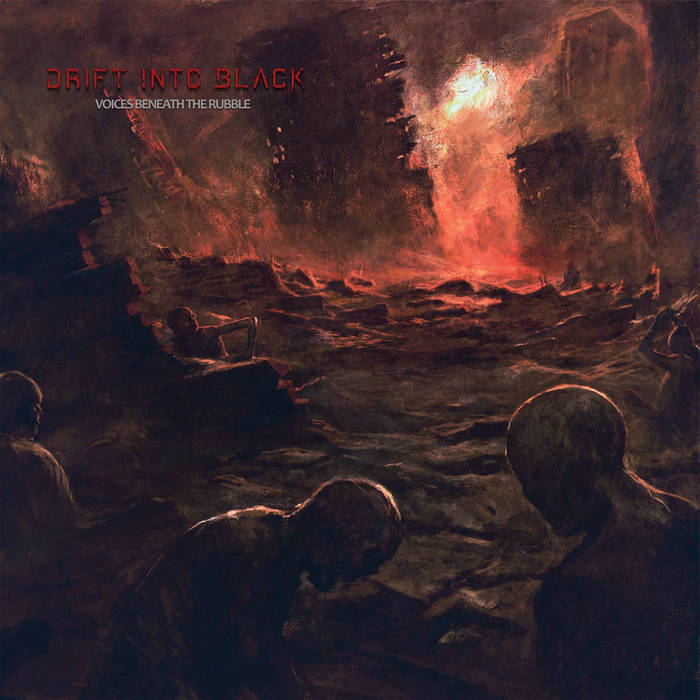
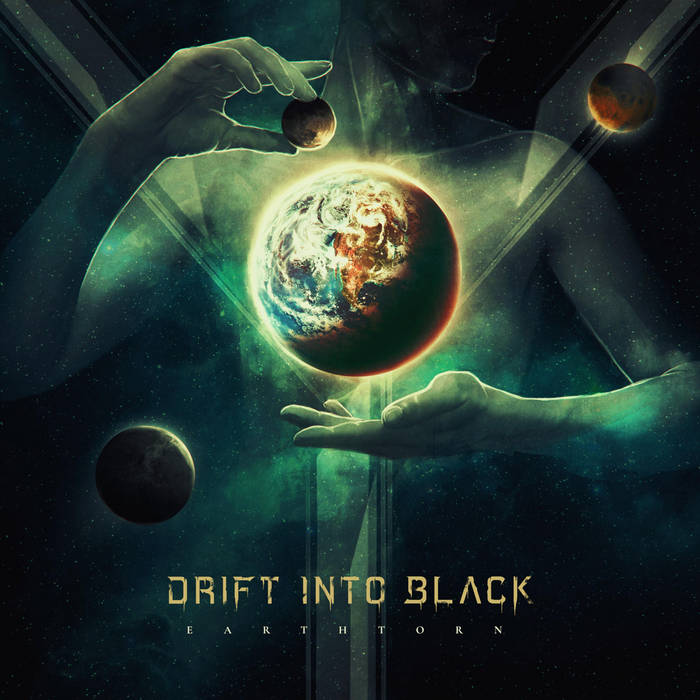
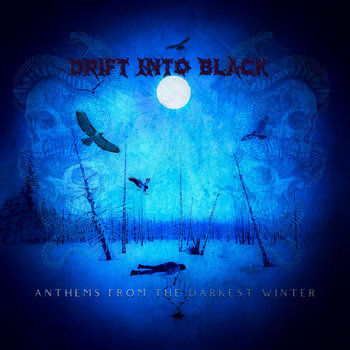
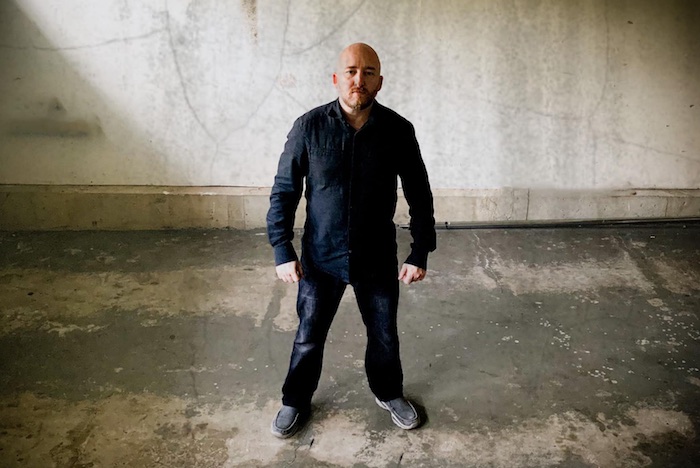
Drift Into Black is the brainchild of ex-Grey Skies Fallen keyboardist Craig Rossi and "Patterns Of Light", is the fourth release from the band in the same amount of years. Not knowing much about the project, I decided to investigate and here are the results. Thanks for your patience Craig.
Tomek
Thanks for taking time to do this, how is everything going?
You're very welcome. Everything is pretty good. I've been slowly but surely revealing more and more from the new album Patterns Of Light but now it's out and I can't wait for everyone to hear it in its entirety.
Drift Into Black sounds like a name taken from a song title, where did it come from?
To be honest these days it's not about choosing a band name with meaning. The real challenge is picking a band name that hasn't already been taken. I picked the name Drift Into Black because 1. It sounded cool 2. Because I want my listeners to tune out the world for 40 - 50 minutes..........and Drift into Black
What can someone that never heard the band expect from the new album?
I think they can expect a dark ride. Not just musically but psychologically. The tracks range from melodic doom to melodic death metal with a hint of prog.
When I was doing a bit of research on Drift Into Black it came out in Gothic and Doom categories, you are saying that we should expect "melodic doom to melodic death metal with a hint of prog". What do you think about all this categorizing and putting tags on music?
Even though Drift Into Black tends to touch on different genres it tends to stay primarily in the doom metal genre. I think putting tags on music can be misleading because if you are going to listen to Drift Into Black wanting a total doom experience then you're going to be disappointed.
Let's switch places for a minute. What do you expect from the listener?
People tend to have short attention spans nowadays so if you're going to listen to a Drift Into Black song then listen from beginning to end. You never know you may want to listen to track 2 next.
Let's talk about your newest album. How long was the whole writing and recording process? Can you tell us about it, about the recording itself, and how satisfied are you with the outcome?
It took about 11 months to finish the new album and that is including the mixing and mastering process. The process was fun because I had a plan going into the recording and I am VERY satisfied with how it turned out. I started writing and recording guitars for Patterns Of Light in November 2019. By March I was writing and tracking keyboards. March - August I wrote lyrics and laid down all the vocal tracks. Klemen had drums recorded in a week and Paul had his bass parts done in a week as well. So, I would say 10 months in total not including mixing and mastering. The process for writing and recording albums has become very systematic but also enjoyable as well especially when I'm feeling creative.
Why did you name it "Patterns Of Light"?
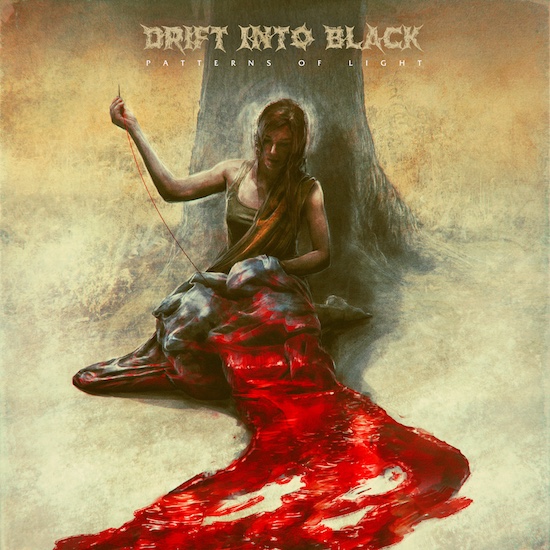
Patterns Of Light is a concept album. The shortened version is a young girl and her mother living under the roof of an abusive husband/stepfather. The young girl is deaf and mute. Her only means of communication is through sign language. Her mother is the only person she signs with. The young girl sews tapestry......it's her hobby. She then begins to sew patterns into her work implicating her stepfather for the slow death of her mother while he slowly poisons her. She sews her own mother's burial gown revealing more patterns that implicate him. With no one to run to and no one to communicate with she has to make the grim decision to take her own life before he does.......but before she does, she sews her own burial gown. In the end her blood-stained past and years of abuse are revealed through her tapestries and her and her mother's burial gowns. The man is hung from his neck by the people in her town. "Light" meaning truth hence Patterns Of Light.
That is such a sad story, did you come up with it?
I had the vision of the young girl in my head along with the storyline. I contacted Alex from Mayhem Project and explained to him the entire story and when he revealed the album artwork to me it propelled me and ignited my inspiration even more. I like to have the artwork done fairly early when I have a concept for an album. Sort of like when a composer scores the soundtrack for a movie. They need the images in front of them to play too.
How long did you work on the new album? Can you tell us about it, about the recording itself, and how satisfied are you with the outcome?
It took about 11 months to finish the new album and that includes the mixing and mastering process. The process was fun because I had a plan going into the recording and I am VERY satisfied with how it turned out.
While composing and writing was there anything that influenced you differently, were there any non-metal influences?
Nothing influenced me differently but when you are writing a concept album you need to switch up the mood of the songs to match the tone of the parts of the story. There are always non-metal influences when I write. I wouldn't want to write an album that has no non-metal influences.
Do you create for yourself or for others? Which emotions do you have plenty of and which not enough?
I create for myself mostly. I share my music with the public. If you like it then great if not, then there are a million other bands out there that you will like. Emotions? Definitely plenty of depressive emotions in the music but I'd like to add some more dark and evil tones in the future.
What would you do without music?
That's something I don't want to think about. When someone tells me (which is very rare) that they don't listen to music I have to question if they're human.
What's next for Drift Into Black, is there a plan in motion?
No plan at all. I just plan on writing, recording, and releasing albums and just want to build a real nice discography with Drift Into Black. I want to evolve as a musician and as a songwriter.
CD, vinyl and cassette. What is your opinion about the physical media?
Well considering the new album will be released on vinyl I finally bought a turntable and all of a sudden, I'm starting to put together a nice vinyl collection. As far as a physical format vinyl is by far the best.
Thanks a lot for taking time to answer all the questions, last word is yours.
Thank you for inviting me for this interview. Thank you to all the people that have supported Drift Into Black! The new album Patterns Of Light was released on vinyl May 28th on Black Doomba Records!!!

The World Rock Day celebration in São Paulo will mark the return of Riot—or Riot V, to be precise—to Brazil less than a year after their last visit. However, the band is not the same lineup that toured here in September 2025. Vocalist Todd Michael Hall, prevented by his wife from touring, left his bandmates in the lurch, forcing them to turn to Italian musician Valentino Francavilla, who underwent a trial by fire on European stages. Yet, the person discussing the upcoming show with me—sharing several setlist spoilers along the way—is veteran bassist Don Van Stavern. He is responsible for preserving the legacy of the late guitarist and founder Mark Reale and keeping the group among the top classic metal acts still active today. Enjoy the read!
Marcelo Vieira

Riot V is returning to Brazil less than two years after its last appearance in São Paulo. What stayed with you from that experience that made you want to come back so quickly?
The women! (laughs) No, I'm kidding. It's the people. Everyone always asks if touring is about the money, but for me it's about meeting people, experiencing different cultures, trying the local food, and seeing the country. Brazil is always amazing. The fans are among the best in the world—they sing every song, know every lyric, and have supported Riot for decades. When our Brazilian promoter, Silvio, told us people wanted us back so soon, I immediately said, "Let's go!" We can't wait to return. We'll be playing all the classics, but we've also added a few songs we haven't performed in a while, so it's going to be a special show.
The setlists often focus on Riot's classic years, but many fans believe the later albums deserve the same status. Which post-1988 Riot songs do you consider genuine classics today?
Putting together a Riot setlist is always difficult because we have 18 studio albums. If we played just one or two songs from each record, we'd be onstage for three hours! I'm sure the fans would enjoy that, but we're not getting any younger. (laughs)
Naturally, we have to include songs from the albums that defined the band's legacy, especially Fire Down Under and Thundersteel, which remain our biggest records. We also go back to the early albums with songs like "Warrior" and "Road Racin'." From Fire Down Under, tracks like "Swords and Tequila" and "Outlaw" are essential.
One song we're bringing back is "Altar of the King," which fans have been requesting for a long time. The Rhett Forrester era was also important. His voice had a much more rock 'n' roll approach, so that material has a different feel. Over the years we've alternated between songs like "Hard Lovin' Man," "Heavy Metal Machine," and "Restless Breed." Right now we're leaning toward bringing back "Heavy Metal Machine."
Of course, Thundersteel is always heavily represented with songs like "Thundersteel," "Johnny's Back," "Flight of the Warrior," and "Bloodstreets." From The Privilege of Power, we've been playing "On Your Knees" and "Storming the Gates of Hell."
Then there's the Mike DiMeo era. Those albums had a different style, with Mike bringing more of a David Coverdale-type vocal approach. We've been discussing bringing back "Angel Eyes," and this tour we'll also be playing "Nightbreaker" and "Destiny." I won't reveal the entire setlist, but we're definitely revisiting that period.
As for the Riot V albums, fans have asked us to bring back "Metal Warrior," so that's returning to the set. We'll also play songs like "Victory," "Thundersteel," "Devil's Reign," and we're bringing back "Wings Are for Angels" from Immortal Soul, the last album Mark Reale completed before he passed away. We'll include a couple of songs from the newest records as well.
In total, it'll be a set of around 20 to 22 songs, running about an hour and a half. Building the setlist is never easy, but we've added four songs that we haven't played live in quite some time, and I think the fans will really enjoy them.
More than three decades later, Thundersteel continues to appear on lists of the greatest heavy metal albums of all time. What do you think that record got so right?
It really is one of those albums. Riot has such a long history. The original lineup emerged in the late '70s and released a couple of excellent records, then Fire Down Under became the band's breakthrough in 1981. But, as you said, Thundersteel ultimately became Riot's most iconic album. Whenever we tour Europe, people certainly appreciate Fire Down Under, but what they really want to hear is Thundersteel. That's why our setlists always lean heavily on that record. We always play songs like "Thundersteel", and we've traditionally included "Swords and Tequila" to represent Fire Down Under. This time, we've added another track from that era as well. In my opinion, Thundersteel is definitely Riot's defining album.
Do you agree with fans who consider it the definitive Riot album, or is there another record that better represents the band's essence?
That's a difficult question because Riot has gone through so many lineup changes over the years. Almost every album featured a different combination of musicians. The band evolved from a hard rock sound into power metal when Thundersteel came along.
Before joining Riot, I played in Mark Reale's solo band while still performing with San Antonio Slayer, alongside Dave McClain, who later joined Machine Head. Mark would rehearse and write with us, and around that time bands like Iron Maiden and Judas Priest were defining the New Wave of British Heavy Metal. We realized Riot needed to raise the bar and embrace a heavier, more powerful direction. That's how the Thundersteel sound was born.
If I had to name the two albums that best represent Riot, I'd say Thundersteel and Fire Down Under. Some fans also have a special affection for records like Nightbreaker, but those two remain the cornerstones of the catalog.
Personally, I was already a Riot fan before I joined the band. I owned Rock City, Narita and Fire Down Under. In fact, Mark Reale and I were friends long before I became a member. I even helped him go through demo tapes when he was looking for a replacement for Rhett Forrester. Later, when Kip Leming left, Mark called me and I joined the band.
Out of the early albums, Narita has always been my favorite. Songs like "Road Racin'", "49er" and "Kick Down the Walls" were among the tracks that first made me fall in love with Riot.
That said, most fans today gravitate toward the power metal era. The Mike DiMeo period produced some excellent albums, but when Mark reunited the Thundersteel lineup for Immortal Soul, people immediately felt that classic spirit had returned. They kept telling us, "This sounds like Thundersteel again."
That reaction played a big role in my decision to continue the band after Mark's passing. I wanted Riot V to carry on the musical direction that began when I joined: the Thundersteel era. That's why albums like Unleash the Fire, Armor of Light and Mean Streets are written with that same philosophy in mind. I write the way I wrote during Thundersteel, and fans have really embraced those records.
In the end, I'd say the two essential Riot albums are still Thundersteel and Fire Down Under. Interestingly, American audiences tend to prefer Fire Down Under because of its more hard rock-oriented style, while European and South American fans generally gravitate toward the power metal sound established on Thundersteel.
Do you feel the band's more recent albums are receiving the recognition they deserve, or is there still a natural tendency for fans to focus primarily on the past?
Riot has such a long history that people will always have a deep connection with the classic albums. The band was a cornerstone of the heavy metal scene back in the day, so that's only natural. But ever since Mark Reale passed away, I've tried to keep us focused on the Thundersteel spirit. While he was living with me during his final days, I told him I wanted to continue the band, and he encouraged me to carry on in the style we had developed together.
That's why, even on our latest albums, I still write with that Thundersteel approach in mind. On Mean Streets, for example, I wanted to bring together different eras of Riot. Songs like "Hell to the Warriors" are pure power metal, while "Feel the Fire" is more straightforward heavy rock—people have even compared it to "Grinder" by Judas Priest. We also included songs with that classic Narita vibe, while Mike Flynt contributed material that reflects the Tony Moore and Mike DiMeo eras. The title track, "Mean Streets", is my tribute to Riot's roots on the streets of New York City.
Honestly, we've received more recognition than we expected. When Mark passed away, we were unsure whether fans would accept Riot V. We even took a couple of years off before deciding to continue, but Mark's father gave us his blessing. He told us, "Keep my son's memory alive. Don't let his music die with him." That meant everything to us.
Once I started writing for Unleash the Fire, Mike really liked the direction, and we found Todd Michael Hall, whose voice reminded us of Tony Moore's. We also brought in Frankie Gilchrist, and when we released that first album and played our comeback shows, the reaction was incredible. Fans embraced the new lineup immediately. Armor of Light received the same enthusiasm, we played major festivals, and then recorded Mean Streets with exactly the same lineup—something Riot had never done before. Throughout the band's history, the lineup changed constantly, so making three consecutive studio albums with the same musicians was actually unprecedented.
We've also been fortunate to have strong support from our record labels, first Nuclear Blast and later Atomic Fire and Reigning Phoenix Music. They backed us with professional videos directed by Tom Flynn, who has worked with bands like Buckcherry and Lamb of God, so we really felt we were moving in the right direction.
Of course, we recently had an unexpected setback when Todd decided to leave the band. It was a real shock. He had already committed to all of our 2026 touring plans—Latin America, Greece, Paris, the UK, everything. Then one day he called and told us he couldn't continue because of personal family issues. We respected his decision, but it put us in a very difficult position because contracts had already been signed and fans had bought tickets.
Canceling was never something we wanted to do. Riot has always believed that the music comes first, regardless of lineup changes. Mark always had that philosophy: if someone no longer wanted to continue, you wished them well and found someone who was committed to moving forward.
So we started looking for a new singer. We considered Harry "The Tyrant" Conklin, who had been associated with Riot years ago, but we felt we needed someone with a vocal style closer to Tony Moore and Todd. We also contacted Mark Boals, but he was busy touring, and Marc Lopes, who ultimately felt the material sat a little too high for his voice.
Then Mike reminded me of Valentino Francavilla, an Italian singer who had been signed to our Japanese label and had even joined us onstage once. I asked him to record himself singing our entire setlist, and after watching the videos we knew he was the right choice. We made a few adjustments, rehearsed together, and took him on the recent European tour.
Naturally, everyone was a little skeptical at first, but the tour was a huge success. Every headline show sold out, we played three festivals, and the response was fantastic. Valentino is a lifelong Riot fan—his favorite album is Thundersteel—so he already knew every song. That passion really came across onstage.
We've been through lineup changes before, and we've always found a way to keep going. That's part of Riot's history. We sincerely wish Todd and his family all the best, but as long as there are fans who want to hear these songs, we'll keep honoring Mark's legacy and moving forward.
When writing new material, do you consciously think about what Mark Reale would have approved of, or do you believe the best way to honor his legacy is simply to move forward without that kind of filter?
Mark still helps me write these songs. His spirit is always with me.
When we wrote together, we'd sit in a room with our guitars, and one of the greatest lessons he ever taught me was how to write a truly memorable song. Before Riot, when I was in Slayer, everything was heavy, but melody wasn't the priority. Mark showed me that every song needs "a melody within a melody." The vocal line has to stand on its own, and the guitar solos should be memorable enough to sing along with. That's why so many of the dual guitar harmonies and solos on Thundersteel have stayed with people for decades.
For example, when I wrote the music for "Flight of the Warrior," Mark loved it, but he immediately said, "We need something people can sing." That was always his philosophy. The riffs could be powerful, but the melodies had to be unforgettable. That's still how I write today.
I think about that every time I compose. Songs like "Victory" follow the same approach: strong riffs combined with vocal hooks that people can remember. Mark's guitar solos were songs within songs—you could hum them just like the vocal melodies.
I honestly feel his spirit guiding me. His grave is only about five minutes from my house, and I still go there from time to time. I'll sit beside him and say, "We've got another Riot album coming out, brother. I wish you were here. Send us some good vibes." I even took one of our albums there and photographed it beside his headstone.
I loved the guy. He's no longer with us physically, but he was one of my heroes, and I still do this for him. People sometimes say we're only continuing Riot for the money, but that's simply not true. We're certainly not getting rich. We do this because we love the music and because we want to preserve the legacy of Riot and Mark Reale.
Is there a song in Riot's catalog that you rarely listen to today because it brings back especially strong memories or emotions?
There are a few.
Thundersteel will always be special because it was my first Riot album. Even before that, though, Mark and I were already writing together in his solo project, Narita. Songs like "Fight or Fall," "Heavy Metal Machine," "Gunfighter," and "Running from the Law" were originally written during that period before they eventually became Riot songs. Those tracks mean a lot to me because they represent the beginning of our songwriting partnership.
"Sign of the Crimson Storm" is another one. We actually wrote it back in 1982, when I first joined the band, which is why there are old demo versions with Rhett Forrester on vocals. Those songs bring back incredible memories because I was helping Mark keep the band alive during a difficult period.
Joining Riot was an enormous honor. I had grown up as a fan, buying Rock City, Narita and Fire Down Under. Suddenly I found myself playing alongside Mark, Rhett Forrester, Rick Ventura and Sandy Slavin—musicians I admired long before I joined the band.
Later, of course, a lot happened. We lost Rhett, the lineup kept changing, and there were difficult moments. But Thundersteel always reminds me of Mark in the best possible way.
The songs that affect me the most emotionally actually come from the earliest Riot records. I still remember walking into a record store after hearing "Warrior" and "Tokyo Rose" on the radio and thinking, "Who is this band?" That was my introduction to Riot—and to Mark. Now that he's gone, hearing "Warrior," or especially "This Is What I Get for Loving You," can really hit me. We never play that one live because it's still hard for me to listen to. Sometimes, if you watch me on stage, you'll notice I have to look away for a moment because I get emotional.
Every night before the show starts, I walk onstage with a shot of tequila. I toast the audience, look up toward the sky, salute Mark, and pour a little onto the stage because, to me, it's still his stage. That's something I'll always do. It means everything to me.
Discography
Upcoming Releases
- Flotsam And Jetsam - Rats In The Temple - Aug 28
- Exumer - Death Mask Messiah - Aug 28
- Miscreance - Reminiscence - Aug 28
- Witchburner - Black Raging Flames - Sep 04
- Sworn - Null Crowned The Infinite - Sep 04
- Sněť - V Bažinách Vědomí - Sep 10
- Godslave - Godslave - Sep 11
- Terrestrial Hospice - Omnicide - Chapter I - Sep 11
- Neolith - Inbir - Sep 12
- Blodtår - Monark - Sep 18
- Game Over - When Darkness Falls - Sep 18
- Revel In Flesh - Flesh For The Kult Of Death - Sep 18
- Runemagick - After Chaos: Nocturnal Vigil - Sep 18
- Massteron - Second In The Spheres - Sep 24
- Tombstalker - Chaos Monolith - Sep 24
- Wharflurch - Mycodeath And Rebirth In The Outer Clusters - Sep 25
- Noctule - Extinguish Thy Flame - Sep 25
- Draugr - Ahnenfeuer - Ginnungagap Chaos Pt. I - Sep 25
- Deconsekrated - The Inexorable Transcendence Of Death - Oct 02
- Amon Amarth - The Allfather Awakens - Oct 02