Emperor - Interview


"Womb Of The Word", Qrixkuor's second full-length album appears to be one of the most interesting together with one of the most disturbing albums in death metal for some time. With its interesting string instrument orchestrations which seem to be more abhorrent than anything else this is for sure no easy-listening but a challenging experience. I sent S. (vocals, guitars) a bunch of questions, enjoy the interview and check the band if you haven't done yet!

Michael

Hey, I hope you're doing fine?

Splendid, with the UK seemingly accumulating enough consecutive days of rain to achieve the Great Flood. It provides some atmosphere while simultaneously keeping a few of the idiots indoors and out of the way.

Before we start to dive a little bit deeper into the band and music, could you tell me what the meaning of "Qrixkuor" is? I guess many listeners wonder about that.

It is drawn from the name of creature within the Kenneth Grant canon - while this world is somewhat inspirational in its lurid fantasy, the ambiguity of the word was a quality that we found especially attractive by way of allowing us to charge it with our own energies - a bizarre and unusual moniker for bizarre and usual art. Thus, the definition of Qrixkuor is simply our work to date.

With "Womb Of The World" you have composed a nightmarish and very intense horror trip through the abysses of the deep. Where did you get the ideas for such ill-fevered abominations?

Standing at the edge of the world at the 13th hour, dwarfed by the restless and relentless energies of the heavens above and of the oceans below. Consumed by the endless serenade of the moribund stars and the primordial growl of the bottomless seas, once formed, they were never still again. I don't have to use my imagination because this is my shrine to the Devil.

A lot in the songs is more or less chaotic; how do you write a song like" Slithering Serendipity"? Was there a lot of improvisation during the recording process or was everything more or less planned and written?

Nothing is improvised structurally. Certain embellishments may be left more open than others, but it is a very small percentage of the overall content that has not passed significant trials and tribulations to be rewarded with its inclusion far in advance of that final recording sessions.

What I personally like in the songs is the use of sting instruments and choruses. Usually one connects harmony and positive feelings with them but you use it more as a prolonging strain the nerves of the listener even more than it would be without them. Was that the intention or did I catch you on the wrong foot here?

Yes - the jovial manner in which orchestral instrumentation within extreme metal has generally been utilised throughout its history could not be more antithetic to the context, save for some notable and obvious exceptions. The intention of introducing them into Qrixkuor's soundscape was to achieve the exact opposite of that.

Nevertheless it seems that you have a certain penchant for classic music, I guess?

I'm not entirely sure whether you mean classic or classical, but I suppose that both are equally applicable. Modern (since the beginning of the 20th century) classical music harks back to a time when structures were not yet dumbed down to verse-chorus formats, when experimentation was rife and intention and emotion were all. It is promises these principles, along with many others, in which we find kinship and which have most deeply affected our work.

Classic is also the artwork of the album. It reminds me of ancient Greek and so does the music also at a certain point, all the drama and the arc of suspense. Are you somehow inspired by ancient history?

It is the first time that I have heard that particular observation, but I can certainly see the angle that you're coming from. Indeed - all that has passed is alive until the last time that it is mentioned by name. Much lies forgotten that should we be remembered.

Looking at "The Womb Of The World" as a whole – is there a certain concept behind the entire album or do we just dive into four different stories?

The album concerns the return of matter to the beckoning soil of its birth upon death and the fragments left behind - or otherwise - in the process, and the blessings and curses of an existence bound to walking the ever-thinning tightrope between madness and genius, never quite knowing on which side you will fall until the fall happens. The four chapters of the album convey this rise and fall and rise and fall in sequence. 

Musically you are deeply rooted into cavernous death metal like Krypts, Grave Miasma and stuff like that. What are the bands that mainly had an influence on you?

That wave of death metal spearheaded by the likes of Grave Miasma and Teitanblood, sure. Looking further back, I would mention the likes of Morbid Angel, Immolation and The Chasm, as well as Demoncy and Von, both of whom we covered live back in the day. The old coffin spirit still lives even if things have progressed somewhat on every level since that period. Outside metal, the most notable and obvious names might be Elend and Dead Can Dance, as well as Penderecki, Schoenberg and Shostakovich, in addition to many others that I have named at different times in other publications.

Performing "The Womb Of The World" live would be a great challenge, I guess and an amazing experience for the audience. Are there such plans for the future?

A great challenge indeed, and I am afraid that it will likely always remain logistically impossible at our underground level to reproduce ‘The Womb of the World' at anything close to the extra-metallic textural density of the original recording. Whether there exists another way to achieve this does not disservice the recorded material is a question that I do not currently have the answer to, but one that remains open.

Now that 2025 is over, what were your favorite albums of that year and to which album are you looking forward to be released in 2026?

Probably Sijinn, Omegavortex…maybe Blut Aus Nord. I'm usually well behind the curve and what was released in which year has less relevance than the actual time that it made it to my ears. As far as 2026 goes, I share the hope of many that the dream of another Dead Congregation is finally made flesh.

Thank you very much for answering my questions – now the last words are up to you!

Thank for you the interview, and to all readers and listeners.

Entered: 3/4/2026 12:47:16 PM

Send eMail 256
Previous Interview
Alchemist with Roy (guitar)

Rising from years of persistence and creative evolution, God Against Humanity stands as the culmination of a long and determined journey. Founded by guitarist and vocalist David alongside drummer Simon, the band represents their second attempt at building something lasting after earlier lineup struggles. With the eventual addition of Benjamin on second guitar and Maxime on bass, the group solidified into a stable unit that has now been together for six years - long enough to refine their identity both on stage and in the studio.

Their debut album, "The Judgement", captures the essence of a setlist that has matured through four years of live performances. What began nearly eight years ago with a single song written before the band even formally existed has grown into a fully realized body of work shaped by collaboration, patience, and shared vision. Initially rooted more deeply in black metal, the band's sound gradually evolved into something heavier and more grounded in death metal, with lower tunings, weightier vocals, and a more refined sonic approach guided by a "less is more" philosophy.

Lyrically, the album navigates the harsh realities of the modern world through allegory and poetic imagery rather than overt political positioning. Drawing on themes of societal tension, personal isolation, and existential reflection, "The Judgement" - inspired by the tarot card of the same name - confronts humanity's tendency to look outward for blame rather than inward for accountability. Recorded entirely in a DIY fashion, often under challenging and unconventional conditions, the album preserves the raw, live energy that defines the band's character.

With this release, God Against Humanity closes one chapter while already moving toward the next. If "The Judgement" serves as a document of where they have been, it also signals a shift toward a more melodic yet still dark and intense future — one that promises growth, exploration, and perhaps new roads beyond their borders.

Tomek

How did the band come together, who plays in it, and when did the whole thing start?

The band was formed by me (David) and Simon (drums). We had been trying for some time to build a stable lineup, with more or less success. God Against Humanity is our second attempt. Once again, it took some time to find a solid and stable lineup. Eventually, Benjamin (2nd guitar) and Maxime (bass) proved to be the right people. The current lineup has existed for about six years.

How did you decide on the band name? Is there a story behind it?

The goal of a band name is to be unique (which isn't that easy when you consider how many active or inactive bands exist on the planet), and also to have a name that stands out with a strong meaning. There isn't a very precise idea behind it, except for a name that approaches most of our lyrical themes in a mystical way — namely, the harsh reality in which humanity lives.

When did you start writing the material, and how long did it take?

I wrote the first song about 7 or 8 years ago, before the band even existed. I composed it in around two hours; generally, I don't take much longer than that to write the basic structure of a song. After that, it's like wine — it needs time to age and improve.

All the songs are written following the same process: I write a first draft with the complete structure, then everyone adds their own spices and transforms it into the final result.

What does this first album represent for the band?

It mainly represents a setlist that has followed us for four years while the band has been playing live. It was time to seal it forever in an album. It is therefore the end of a chapter, and the second one is already well advanced in terms of writing.

Was there a clear vision for the sound from the beginning? How did it evolve?

At the beginning, we were much more black metal, even with the idea of having keyboards everywhere. But eventually, the sound became heavier, leaning more toward death metal. The guitar tuning went from E to B, and the vocals became less shrill and heavier. It all happened naturally.

Which song was the hardest to finish — and why?

Not really. There were never any technical challenges imposed. It's better to stay in your comfort zone to feel as comfortable as possible

Is there a track that best represents who you are right now?

Horizon, the last song written, announces a shift toward a more melodic death metal direction. At this point, there are already three rough drafts of new songs. They are more live-oriented and more energetic, with catchier riffs and less of a dreamy feel — while obviously keeping that dark and depressive side. We also tried to strip the sound down and make it more refined, following the artistic principle of "less is more," removing the superfluous to focus on what really matters.

Did anything unexpected happen during recording?

Nothing special, except that Benjamin had to sleep for two hours in his car because he was stuck 5 km from my place, where he was supposed to record, due to a bicycle race — the Tour de France.

Are there any risks or experimental elements on the album?

Not really, apart from a few arrangements. The songs had been played live so much that we improvised very little. Still, there are some small, previously unheard gimmicks here and there.

Are the lyrics personal, fictional, political, or a mix?

Most of the songs deal in an allegorical way with current societal issues. However, there is no taking sides, as there will never be any political stance from us. The lyrics are also somewhat personal — Castle of Dust, for example, talks about isolating yourself in a bubble to cope with the stress of the outside world. We believe that music should be something fantastical and imagistic, and that reality needs to be interpreted through poetry.

Is there a concept tying the songs together?

Yes, as mentioned above, the issues of our world. The album is called The Judgement, in reference to the tarot card. It depicts humanity facing God, facing itself — or rather the act of blaming God so as not to take responsibility.

What do you hope listeners take away after hearing it?

We don't have greater ambitions than hoping to offer the listener a pleasant moment that helps them disconnect a little from harsh reality.

Where did you record the album, and why did you choose that studio? Did you work with a producer?

The album was made entirely in a DIY way, with very limited resources. It was recorded at home in my humble home studio, and mixed and mastered by our friend Wicket at the Wicket Factory (Arras), who also brought his own touch to the album. He mainly works with post-rock, pop, and grunge, and gave the album a very "analog" feel — warm, slightly garage-like — which I absolutely love.

What was the biggest challenge in making this record?

Doing all of this ourselves, with very little means, was the biggest challenge. As an anecdote, the vocals were recorded between mattresses, by building a makeshift isolation booth to avoid any reverb, using a very cheap microphone, and in 32-degree heat. The vocals were recorded in a very live, no-cheating way, to stay as close as possible to the band's live energy. Sometimes you need special conditions to capture a specific emotion ;)

What are your expectations for this release?

The goal is first of all to seal the set we've been touring with and to turn the page toward new compositions. It might also allow us to tour a bit more outside our borders and go on a bit of an adventure. Once again, many thanks to MetalBite for taking the time to support our small band, and thanks to its readers as well. Hopefully, we'll be back soon with news about the next album.

Entered: 3/3/2026 2:14:30 AM

Send eMail 577
Previous Interview
Alchemist with Roy (guitar)

What does virulent mean in medical terms? Virulent (VEER-uh-lent) refers to the ability of a virus or a bacterium to cause damage to its host. Virulence can be defined as the quality of being poisonous or injurious to life (i.e., virulent). For an organism to be virulent, it must be able to infect its human host, reproduce, and/or cause a disease. Well, I definitely got infected by their ability to play kick-ass death metal and being a bunch of awesome dudes. Tampa, Florida band Virulence was formed in 2020 and released an EP called "Necrosis" in 2022. According to their own info, they'll pummel you with relentless death metal with technical precision and dark atmosphere. (For fans of Decapitated, Vital Remains, Edge of Sanity, Deicide, and more). After watching them live a few times, I figured it's time to ask a few questions. Chris Defaut (vocals/guitars) was kind enough to answer my call.

Tomek

Hey Chris!! How's it going? What's the weirdest thing ever that you witnessed at the show?

Oh man, that's tough… We all see weird things at metal shows, and it typically doesn't faze us. I'd have to say, while seeing Morbid Angel in Tampa at the Orpheum in 2023 and seeing Trey fall over while he was playing… No one knew what was happening or if he was OK, so it definitely struck me and the audience as weird. There was genuine concern from everyone, and I'm glad Trey is doing well now.

Virulence is a rising star on the Florida death metal scene, and you are pretty well known around here, but not much is out there about the band to be found. Please introduce the band to our readers and tell us about the band's beginnings.

I appreciate the kind words and thank you. We're proud of what we do and how we represent real, authentic Florida death metal in a place that is so rich with death metal history. We look to those Florida death metal icons in our history and understand we'll never touch them and their contributions, but we consider many of them friends and do everything we can to do our Florida death metal history proud. Virulence was started in late 2020, in the middle of the world being shut down during the pandemic. I hadn't played in a band for a number of years, and I reconnected with Kevin Gibbons after I moved to Tampa, since he was in St. Pete. We used to play in a band called Infernaeon all the way back in 2004 or 2005, and we always worked great together. While catching up, we talked about jamming together and writing some music, as we hadn't played together for over 10 years by that time. He was getting musical ideas together with a friend of his who also used to be a former member of Infernaeon, but at a different time than me, so we never crossed paths in that band. His name is Steve Harger, and the 3 of us naturally started comparing notes and writing some stuff. The only missing piece was the drummer, and my friend Mike Petrak was the perfect person for it, as we had also talked about jamming together separately since we already worked together. From there, we took time to jam, write, and perfect what we could about our sound during a time in the pandemic when all we had was time. Instead of being buried in our phones with our eyes glazed over by TikTok and other bullshit, Virulence was created. We made our live debut in 2022 and released our first EP entitled "Necrosis" in November of that year. In 2024, we welcomed our new guitarist, Vince Dibona, into the band, and he was a perfect fit to continue to round out our sound. He's a gifted lead guitarist and an even better guy. Since then, we've been supporting some great tours in Florida while playing all over the state and growing our home fan base. We're also working on our full-length album, which we anticipate a 2026 release probably during the summer.

I watched Virulence play a couple of times already, and every time, you looked and sounded better than the last. How often do you meet up and practice?

When we started the band, we were getting together probably twice a week as a band. More recently, it's more sporadic as we work hard to meet up when we can, but also take care of our families and day jobs. Good news is we all write and practice individually and collaborate our ideas in-person where we can to make sure something new we're putting together has everyone's touch in some way.

Are you being strict and professional, or are you messing around and seeing what happens when amplifiers are on?

Typically, rehearsal is our time to tighten up our set and do what we can to be as accurate as possible when we play live. That doesn't mean we're not having fun and telling jokes or messing with each other. It's a brotherhood, and we get together to do this and have fun while playing some fucking death metal. What more can you ask for? Haha…

Do you listen to metal only? What are your choices when it comes to music?

Typically, I'm listening to metal, but I appreciate and enjoy a lot of different types of music. Classic rock from my dad is where is stated with me, and it evolved further from there. I listen to quite a bit of classical music as well and have some specific composers I'm drawn to.

For some, music is just a word. What is it to you?

Music is so much more than that… It's raw emotion and gives us the ability to express ourselves in ways that can't be done in any other way. A single piece of music can convey a completely different reaction from different people in a very special way.

Your deep growl is commendable, but you also use screams and some other singing techniques. What made you decide on various or maybe different ways instead of sticking to one only?

I love all sorts of metal, and with that comes a lot of different styles. I have always been drawn towards layering vocals, and Glen Benton is vocal perfection when it comes to that style. I'll never forget the first time I heard 'Kill The Christian' from "Once Upon The Cross", and I was hooked in every way. One of my biggest influences for my high-style scream vocals is Shagrath from Dimmu Borgir. "Entrone Darkness Triumphant" is the first album I heard from them, and I was blown away!

What about a guitar? How did it start?

I got my first guitar from my parents when I was 12 and haven't put it down since. I had an Epiphone Les Paul Special II in black that I played till my fingertips bled. Neither of my parents was very musically inclined playing wise but my grandmother played the ukulele and the organ.

From what I've seen, the stage doesn't particularly intimidate you; you're not self-conscious, you talk, you joke. A true leader. How do you feel about being a frontman?

That's the running joke in our band (laughs). I'm comfortable on stage and love interacting with our fans. Virulence is intended to be memorable for someone seeing us for the first time, and I hope that turns into them seeing us again and again. I actually say all the time how I wish I weren't the vocalist and I could just focus on my guitar playing. But my bandmates won't let me get a singer and say they're happy with how my vocals perform, so I'm stuck… HAHA! I have some specific ideas for vocal ideas, and I have already written all the lyrics, so it's fitting, I suppose.

"Necrosis" came out in 2022. Steven Harger left in 2024, and Vincent DiBona joined right after. The line-up seems to be quite steady, so when can we expect a new release? Will it be a full-length or EP?

We're putting out a full-length that will be entitled "Epidemic Unleashed", and I expect it to be released in its entirety in summer 2026. Who knows… maybe we'll get a single out there early.

The last two shows you played new music. How advanced are the works on new music? Can you tell us about the new songs?

I would say we're evolving in our sound, but we definitely still sound like Virulence. Musicality and technicality are going up, but still being memorable and making sure we're still our brand of Florida death metal. We've gotten some great feedback from fans who have heard some of the new tunes and appreciate that so much.

Is there a primary composer in the band, or do all members contribute ideas?

I would say we all contribute our ideas to make a cohesive idea. I contribute a lot of riffs, and we'll get together and piece them together with what our instruments are. I may have an idea of what drums sound like in my head, but ultimately, Mike decides what works for him and the best thing for the band. Kevin is a very articulate bass player and tries not to just match the guitars all the time. There are times when it's needed, but there are many times he adventures around the fretboard and writes his own music and flair into the piece we're working on. Vince has contributed quite a bit to the new record with many riffs, all his solos, and helping with music arrangement. We all arrange the songs together, typically to come up with something we're happy with.

What is the absolute priority while composing new material?

Make music that we like and hope that also translates to the listener out there. Virulence is a collection of musical works we're proud of and enjoy performing. It's not for everyone, and that's OK. But we think any fan of metal can get into it and enjoy it.

Virulence is your main band, but you also play in Malignancy, Bludgeoned, and Dripping. Is music from those other bands sipping into new stuff being created in any way, or do you shut out and keep anything and everything away while composing?

I don't have a lot to say about Dripping. Bludgeoned was very fun stuff to play on bass, and Sean is a killer guitarist. Some of the most technical stuff I've played, and it was certainly fun to jam with those guys. Malignancy is a band I have loved since high school, so having the opportunity to jam with those dudes was a dream that I got to live. "Intrauterine Cannibalism" is one of my favorite albums! I can confidently say you can hear some Malig vibes on the new album, even though Virulence and Malignancy are very different musically. Much love to Ron, Danny, and Nikhil.

2026 is here. How was 2025 for the band? What do you consider to be the biggest achievement?

2025 honestly was a tough year for the band. We played some great shows, but our writing process severely slowed down. My girlfriend and I welcomed our daughter into the world in November, and we couldn't be happier. But that meant sacrifice for my family and less time to play/write music. But overall, I can't complain as I have the best bandmates I could ask for, and we'll release this record when it's truly ready.

Best of 2025 lists are popping everywhere nowadays. What's your best 5 of last year?

That's tough to say because people are releasing singles a lot nowadays and fewer full albums, but I'd probably have to say these 5…
Unmerciful - "Devouring Darkness", Ominous Ruin - "Requiem", Primitive Man - "Observance", Testament - "Para Bellum", Wrath Of Logarius - "Crown Of Mortis"

Well. That is all I got. End credits belong to you.

Check out our upcoming album "Epidemic Unleashed" coming this year, and thank you to the fans, new and old. Give Virulence a follow on our IG and other socials for updates and new news.

Follow Virulence here:

https://www.facebook.com/virulence.official
https://www.instagram.com/virulence.official/
https://virulence.bandcamp.com/

Entered: 2/26/2026 2:59:59 AM

Send eMail 733
Previous Interview
Alchemist with Roy (guitar)

With "Dark Dogma Embrace", released in April 2025, Revengin opened a new chapter in its trajectory within Brazilian symphonic metal. Denser, darker, and emotionally visceral, the album represents a clear turning point for the band — not only in sonic terms, but also in how its ideas, emotions, and artistic identity are presented. The maturity gained over the years, combined with the chemistry of the current lineup, results in a cohesive, contemporary, and deeply personal work that firmly establishes the group as one of the most consistent names in the genre in Brazil.

In this interview, vocalist Bruna Rocha speaks openly about the creative process behind the album, the themes explored in the lyrics, the vocal and musical challenges faced during recording sessions, and the impact of international touring on the band's professional and artistic mindset. She also reflects on the Brazilian symphonic metal scene, the importance of visual aesthetics in contemporary music, and Revengin's next steps — which already include new releases and another chapter of their journey across European stages.

Marcelo Vieira (@marcelovieiramusic)

Photo by Ian Dias (@diasphotograph)

What does Dark Dogma Embrace represent for you personally and for Revengin's trajectory?

Dark Dogma Embrace is literally a turning point — not just for me, but for the band as a whole. Today, we are more mature, not only in terms of age, but musically as well. After so many years since the release of our first full-length album (Cymatics, 2011), I believe DDE arrives to establish a new milestone in our journey.

The current lineup has a very natural chemistry, where all the "pieces" fit and complement each other. Everything flows organically.

How has the creative dynamic of the current lineup been, and how does it reflect in the compositions?

We don't have a fixed formula for composing. Generally, I write the lyrics, almost always based on something I'm thinking or feeling — and the same applies to the orchestrations. The instruments we choose, when they enter or leave, or when they are highlighted, are all part of expressing those emotions.

It's also common for Thiago [Contrera, guitars and growls] or Themys [Barros, guitars] to come up with a riff idea, and from there we transform everything into a new musical line. The experience and professionalism of each member contribute greatly to the final result.

What differences would you highlight compared to the band's first album? Were there changes in the way you compose or produce?

I believe this album is heavier, darker, and incorporates more modern elements into the orchestrations, which have always been the foundation of our compositions. Today, we know exactly what we want and how we want it.

On Cymatics, for example, we were still experimenting with how to convey messages and emotions. Everything was much more experimental back then.

The lyrics address feelings that are often silenced. What reflections or messages will listeners find on this album?

Dark Dogma Embrace is a very personal album. It explores feelings we often try to hide or ignore. It talks about love, hate, overcoming, and transcendence. It's a more visceral and darker work, where everything was carefully placed exactly where it is because of the message it carries.

How do you balance Bruna the artist and Bruna offstage? Does everyday life directly influence the lyrics and your vocal approach?

Bruna on stage and Bruna off stage are pretty much the same person. Everything is learning and experience, and that naturally ends up reflecting in the compositions. That's why I'm not afraid to experiment with new ways of singing, composing, or even slightly changing our sound — as long as it makes sense to us.

Our main principle is always to remain true to what we feel and believe.

Which track was the most challenging to record, and why?

"Caught in Dark," without a doubt. I sing in a range that is completely outside my comfort zone, in a lower register than I'm used to. Despite being a huge challenge, it's one of my favorite songs. It completely breaks away from our "standard," both vocally and musically.

Is there a song with a particularly special meaning for you?

"Wish You the Same but Worse." It's extremely visceral and translates exactly what we wanted to express. It talks about the mental battle we all face when dealing with injustice or betrayal. It doesn't mask its meaning — it is the message.

The recordings took place at Tellus Studio, which has hosted major names in metal. What stood out most in that experience?

I love being in the studio. And being in the studio with friends is something hard to put into words. It's a very special experience.

The album was produced by the band in partnership with Caio Mendonça and Rômulo Pirozzi. What were the biggest challenges and advantages of that process?

The entire process felt very natural. I learned a lot from the guys. Rômulo has been with us since Cymatics — he's practically a band member already.

Caio, with all his expertise, care, and professionalism, added an incredible amount to the project.

The biggest challenge at first was understanding how to evolve our sound without losing our identity — making that transition without sounding forced or artificial. They were essential in achieving that. The greatest advantage was having everyone fully committed to the same goal.

The music videos have a strong cinematic identity. How do you approach the visual aspect today?

The visual side is an extension of the musical experience. The biggest challenge was blending the essence of people who were born in the 1980s with contemporary aesthetics, without making it feel forced. The result feels very natural, and I'm completely in love with the videos.

How have experiences at festivals like Rock in Rio and international tours influenced the band?

We've learned a lot from all of them. Over time, we understood how important it is to be prepared and to professionalize ourselves within metal. On our first European tour, we went in with sheer courage and came back with a completely expanded perspective.

Rock in Rio was also a real crash course. And I can't fail to mention the show in the Maré community, which ended up being decisive for our first trip to Europe. That day, everything happened — including our keyboard player bringing only a MIDI keyboard because the other one was in a different car!

What were the main professional lessons learned from playing outside Brazil?

We learned a lot, especially about professionalism. Even in the underground scene, we are treated as musicians and service providers. Once you understand that, everything changes. Beyond the musical exchange, experiencing different cultures greatly expanded our horizons.

What does a European tour demand that differs from a national run?

Above all, it demands a professional attitude. It's not a "hangout" — it's work, with schedules, logistics, and agreements. Everywhere we played, everything worked exactly as planned. That posture makes all the difference.

Were there any particularly memorable moments or "tour mishaps" on the last European run?

There are always mishaps on tour. Our van almost got towed, and we even got fined at one point. But the most important thing is that everyone stays focused on the same goal.

As for the band's identity, we grow more connected every day. Live, we sound even heavier and more energetic. The show in Austria was especially emotional, particularly because we met Ukrainian refugees there. In Hungary, people who had seen us back in 2014 showed up again. And in Romania, the interaction with the audience was indescribable. Every show brought a new lesson.

How do you see the Brazilian symphonic metal scene today?

There are many excellent symphonic metal bands in Brazil. What I notice is a preference in promotion for certain niches and bands, which reinforces the idea that the genre is "small." But this goes far beyond audience size — it involves interests, closed circles, and established structures between bands, media outlets, and producers.

Still, we see a positive movement supporting new bands, and that's essential. A scene isn't built with just a handful of names. A continental country like Brazil cannot be reduced to three or four bands or genres.

What are Revengin's priorities moving forward?

We're preparing for our November tour, driven by the great reception we had in Europe. The second leg of the Dark Dogma Tour will include three additional countries, and we'll be announcing everything soon.

Besides that, we're already working on our next album, scheduled for release in late 2026 or early 2027. So there's still a lot coming our way.

Entered: 2/23/2026 12:38:28 PM

Send eMail 326
Previous Interview
Alchemist with Roy (guitar)

After defining themselves with almost programmatic precision in their own Facebook bio — "Thrash Metal band formed in 1990, still strong and thrashing all around" — Distraught reaffirm that spirit with inVolution, an EP that goes far beyond musical aggression to propose a direct and uncomfortable reflection on human regression, denialism, and environmental self-destruction. The band transforms real-world events — such as floods and wildfires — into artistic raw material, structuring the work around the five elements of nature and consolidating it as a closed conceptual piece, where form, content, and urgency move together.

In this interview, vocalist André Meyer and guitarist Ricardo Silveira detail the creative process behind inVolution, explain how the concept naturally imposed itself throughout the compositions, and comment on metal's role as a tool of resistance in times of social collapse and information overload. The duo also discuss the visual identity created by Marcelo Vasco, the choice of a physical CD release as an almost manifesto-like gesture, and the EP's place within the band's discography — not as a rupture, but as a synthesis of everything Distraught have built so far, clearly pointing toward the future.

Marcelo Vieira (@marcelovieiramusic)

inVolution is based on the idea of human regression. At what point did you realize this was no longer just a recurring social critique common in metal, but a concept that needed to be structured as a closed work?

André Meyer: It all started with no intention of making a conceptual album. The first lyric I wrote was "Bloody Mines," linked to the earth element and to illegal mining in Serra Pelada — yet another Brazilian environmental crime that couldn't be ignored. [Serra Pelada was one of the largest open-pit gold mines in the world during the 1980s, located in northern Brazil. It became internationally infamous for its extreme working conditions, environmental devastation, and human rights abuses.] The initial idea was simply to react to a specific fact. But when I talked to Ricardo, he suggested that we continue, addressing other themes based on each element. From that point on, things started to gain another dimension.

Ricardo Silveira: Unfortunately, a large part of humanity doesn't evolve — it has been involuting for centuries. It keeps repeating the same mistakes, the same neglect, the same negligence in every area. It's a process of self-destruction. In 2024, when we were in the pre-production stage of inVolution, the news simultaneously showed the floods in Rio Grande do Sul [In 2024, the Brazilian state of Rio Grande do Sul faced catastrophic floods that caused widespread destruction, displacing thousands of people and becoming one of the country's worst climate-related disasters] and the wildfires in the Pantanal. [The Pantanal is the world's largest tropical wetland, located mainly in Brazil, and one of the most biodiverse ecosystems on the planet. In recent years, it has suffered record wildfires linked to climate change and land exploitation.] André had already written "Bloody Mines" and was developing "Extermination of Mother Nature" under the impact of the floods. That's when I suggested a lyric about the wildfires. At that moment, the album's concept stopped being loose and became a closed work.

The EP organizes its tracks around the five elements. Did this concept come before the musical composition, or did it solidify as the songs took shape?

Ricardo Silveira: It solidified as the songs were taking shape. In the beginning, we weren't sure whether it would be just a single, an EP, or a full-length album. The idea of a "concept EP" started to emerge with the lyrics to "Extermination of Mother Nature." Up to that point, we had three songs: "Bloody Mines," "Extermination of Mother Nature," and "Truth Denied." The first two already had lyrics, while "Truth Denied" existed only as some drum ideas and riffs. Another curious detail is that the track order on the EP is exactly the order in which we created the songs — it happened completely naturally, with no prior planning.

Each element carries different symbolic meanings across cultures. Was there any symbolic or philosophical research behind this choice, or did the concept emerge more from an intuitive reading of the current collapse?

Ricardo Silveira: Once the EP's concept was fully defined — meaning that we decided each lyric would relate to an element, even indirectly — I started to deepen that idea. The songs don't carry the names of the elements, but they symbolically dialogue with them. From there, I had several conversations with a close friend of mine, Felipe Karasek, who holds a PhD in Philosophy. These exchanges helped expand the meaning of the elements beyond the obvious and connect today's environmental and human collapse with broader symbolic and existential interpretations.

The title inVolution suggests a movement opposite to the idea of progress. Musically, do you see this EP as a return to thrash roots or as an evolution that takes on more aggressive and direct forms?

André Meyer: We never work with the idea of repeating formulas. With every release, we seek evolution — in arrangements, production, themes, and communication. Even when the sound is rawer and more direct, it comes from a process of maturation.

Ricardo Silveira: Musically, I see inVolution as a natural evolution within our own style. We always try to extract the best from what the band is today. Thiago Caurio's (drums) participation in the compositions added many ideas as well. On this EP, several songs originated from rhythmic ideas created on the drums.

In terms of composition, was there any track that required a more delicate balance between message and sonic impact, so that one wouldn't overpower the other?

Ricardo Silveira: The track that required the most balance was the instrumental "Aether." As an interlude, it needed to fulfill a structural role within the EP. So the message had to be conveyed through timbre choices, harmony, rhythmic flow, and dynamics — not lyrics. We worked a lot with tension and release, texture variation, and transitions so it could connect two songs without breaking the album's narrative flow.

After more than 30 years of career, what has changed in the way you channel indignation and social criticism into music? Is there more rationality today, or more urgency?

André Meyer: Distraught have been writing for 35 years about everything that causes us discomfort: environmental neglect, all forms of violence, political hypocrisy. What has changed isn't the indignation — it's the scenario. Today, the world is in a permanent red alert state. So maybe there's more awareness, more clarity… but there's also much more urgency.

The EP's production is dense, clear, and extremely direct. To what extent were studio decisions made to serve the concept, rather than just sonic aggressiveness?

Ricardo Silveira: In our sound, concept and aggressiveness are inseparable — they feed off each other. The idea was always to make the production sound like the lyrics. We wanted pressure in the social criticism and pressure on the ears. Every studio decision was made to make the message more evident, more uncomfortable, and impossible to ignore.

Working with experienced producers and engineers tends to refine ideas. Was there any moment during recording when an external suggestion significantly changed a song's direction?

André Meyer: Our producer, Renato Osório, is practically the band's sixth member. We feel completely comfortable working with him.

Ricardo Silveira: Since we started working with Renato back in 2015 on Locked Forever, there have always been many suggestions during recording. A producer's perspective is essential precisely because it's external to the band — he listens from a different place. Sometimes, a single different note, a change in execution or dynamics, can alter the entire structure of a song. In the studio, that makes a huge difference.

The lyrics of "Extermination of Mother Nature" and "Truth Denied" directly address denialism and environmental crisis. Do you feel metal is still an effective space for this kind of denunciation in an information-saturated world?

André Meyer: Metal remains a territory of resistance. It's where we expose what power tries to sweep under the rug: environmental crimes, institutional denialism, and the logic of profit over life. As long as people are being silenced and nature is being exterminated, metal will continue to be a tool for denunciation.

The release of inVolution gained new symbolic weight when associated with events like COP30. [COP30 refers to the 30th United Nations Climate Change Conference, scheduled to take place in Brazil. The event has intensified discussions around environmental responsibility, climate policy, and global inaction.]pDo you see the EP as a document of its time, or as something that will inevitably remain relevant?

Ricardo Silveira: I see it as both. If after thirty COPs there's still been no real evolution, then this discourse becomes timeless. There's a lot of talk, a lot of promises — but very few concrete actions that truly change the scenario.

The cover artwork by Marcelo Vasco [Marcelo Vasco is a renowned Brazilian graphic artist known for his work with major metal bands such as Slayer, Kreator, and Machine Head, as well as numerous influential South American acts] carries strong visual impact. How does the graphic identity dialogue with the EP's narrative and Distraught's visual history over the years?

Ricardo Silveira: Marcelo Vasco is a close friend. I met him in 2008 through our brother Fabiano Penna (in memoriam) from Rebaelliun. [Rebaelliun was an influential Brazilian death metal band formed in the late 1990s, recognized internationally within the extreme metal underground.] The first artwork he did for us was on Unnatural Display of Art. Since then, whenever we start a new cover, we send him the lyrical concept, the album's atmosphere, and the core ideas — and he creates from that. Then we refine the details together. In the case of inVolution, the visual identity directly dialogues with the EP's narrative: it's an image of collapse, regression, and human and environmental wear.

Do you believe inVolution speaks more to the current Brazilian metal scene or to the band's historical trajectory? Or does it function as a bridge between both worlds?

Ricardo Silveira: I think it functions exactly as a bridge between those two worlds. inVolution carries the identity built throughout our trajectory, but it also dialogues with the energy and urgencies of the current Brazilian metal scene. It respects the band's past without being trapped by it, while still connecting with the present.

Looking back, where do you place inVolution within Distraught's discography: a point of synthesis, rupture, or artistic reorientation?

Ricardo Silveira: I see inVolution as a natural continuation of our creation. It doesn't break with who we are, but it also doesn't repeat things out of inertia. It's a point of synthesis: it carries everything we've built so far and, at the same time, points to where the band is heading.

The physical CD release almost feels like an act of resistance in digital times. What does this format still represent to you — aesthetics, nostalgia, manifesto?

André Meyer: Personally, I really like having a physical format of a finished work in my hands. Unfortunately, most people are moving away from valuing this kind of acquisition. Our last physical release was in 2024, Southern Screams Live. Today, releasing a CD is almost a manifesto.

What do you hope listeners take away after hearing inVolution: reflection, discomfort, catharsis — or all of these at once?

André Meyer: We hope listeners experience all of that at the same time: reflection, discomfort, and catharsis. Our lyrics exist to provoke thought. The speed at which the planet is becoming uninhabitable due to human negligence is frightening — and pretending this is normal is part of the problem. If inVolution makes people uncomfortable, it's doing its job.

To wrap up, what does 2026 hold for Distraught?

André Meyer: The inVolution EP was released recently, so there's still a lot of work ahead with this material. In 2026, we want to play more shows and show our fans how this work translates live.

Entered: 2/16/2026 8:26:25 AM

Send eMail 592
Previous Interview
Alchemist with Roy (guitar)

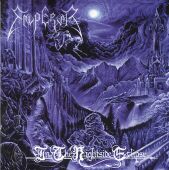
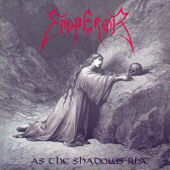
Emperor's latest album "Prometheus: The Discipline of Fire & Demise" is definitely one of the biggest music events of this autumn, if not the whole year. Being entirely written by Ihsahn, "Prometheus" is the most complex album in Emperor's discography but also less extreme due to influences from what is now his main project, Peccatum. With this release the most prominent black metal band of the last few years decides to end this incredible run at the peak of their career to solely concentrate on members' solo projects. While Emperor's frontman, Ihsahn, explains the reasons for a break up, one thing is certain, the black metal scene won't disappear but it won't be the same without them...

Chris


Did side the projects become more important than Emperor?


It all depends on how you see it. If people think that the most important band is the band that you work in the most, it's a very commercial way of looking at it. I take priority in all music I do, and I keep on working with what I feel is the most interesting.

Why did you decide to break up, couldn't Emperor become a side project?

No, we feel we've come to a very natural end. We've grown very much apart musically and I think at the end we were glad that we made this decision ourselves, that we'd rather stop it while it's still good instead of going on for the wrong reasons and basically destroying what we've had together for these 10 years. So, it was quite natural for us to go our separate ways but we wanted to end it in a proper way and that's why we did this album and recorded one music video... and that's the consequent end of it.

How are relations within the band? Are they this same as they were 5 years ago?

Of course those are different every year but general relationships are very good. Musically and ambitiously, we didn't have common goal in creating work. That, I think, is important in creative process... not just to go on because Emperor sells well. [laughs]

Usually bands want to have members that are 100% dedicated and we can't say that about Emperor. Are you mad, pissed about that?

Yeah... I think it's important to have dedicated members but I think, from my experience working with musicians who are open-minded, that's also important to have the urge to widen their musical horizon. I think that we've done other things that not only improved Emperor but also contributed to how we work with music in Emperor because from all the musical processes you're in you'll always learn something and you'll grow as a songwriter and a musician. For me personally, that has made a huge difference.

Isn't Emperor's break up another step toward what seems like an end of black metal popularity?

I don't see it as that.

Well, after all we are talking about one of the greatest black metal bands of the last decade. Didn't you feel any pressure with this decision?

No, not at all. Since we started, we tried to be very understandable, compromising and we tried to keep focus on what we want to do and that's how we ended it too. We haven't seen our musical career as some kind of competition or being a role model. We've done what we wanted to do by trying to do our best. Emperor as a band has some kind of integrity and that's probably because we haven't really tried to do anything else to compromise in order to become a bigger band. Of course, we have grown commercially and that has its own obligations in the sense that you have to do more interviews and so on and so forth but all of us have done, especially musically, exactly what we wanted to do regardless of any outside pressure.

With that decision one thing will stop for sure, talk about selling out and the commercialism of Emperor. As any successful band you had as many enemies as fans...

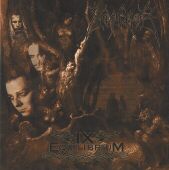
I've heard especially after "IX Equilibrium" album that we are sellouts and becoming commercial. Commercially I think it's a very bad moment for a breakup. [laughs] Money and record sales got nothing to do with our decision.

Throughout the years you've changed your image drastically. Few years ago you wore ammo belts, make up, now it's all replaced by leather jackets and sunglasses. Why?

We stopped using regular corpse painting like in 1993 but we've always had different visual expressions of the band. With time there was just less imagery around it and hopefully more focus on the music itself. Now we do promo pictures that we feel comfortable with, it's more or less how we look in everyday life. Spikes, painting, swords wouldn't feel natural anymore.

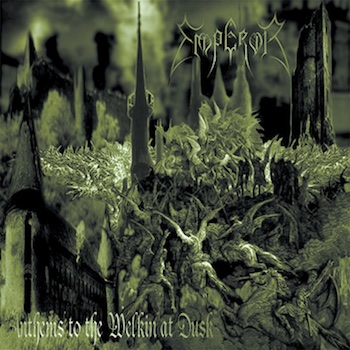
You wrote this entire record by yourself. How was that different from working on "Anthems..." or "IX Equilibrium"?

It was different in a sense that this is purely a studio album. For me personally this is the best way of working, this is when I achieve the most. I did full pre-production of the album in my own studio and Samoth and Trym had CDs, tablatures... I think Trym's drumming has done a lot for this album as he, for example rehearsed the stuff on his own interpreting this music with his drumming instead of having any second opinions or anything. So, working in a studio is a perfect situation for me because you can reevaluate and reconsider every part of the music at any given point and also be able to co-write all the instruments in the music with keyboards, vocals, guitar and drums as a whole rather than do the basic tracks during rehearsals and than add the keyboards and vocals on top of that. I feel much more complete with this album as not so many compromises were made due to bad timing or time limits in the studio or being dependant on engineer or anything like that. For me it's kind of getting the best of both worlds to be able to work in my own studio, with my own equipment, at my own time and then getting the expertise of Thorbjorn at the Akkerhaugen Studio for the drum recording and also the final mixing.

Why did you write all the material alone, didn't the rest of the band want to do anything at all or didn't they have time?

You would have to ask them... this was not the part of the plan. Of course writing and pre-production was very much in my studio but also Samoth and Trym were pretty much occupied with Zyklon at that time so... it was open during the whole process but it just happened that when all songs were finished there were no contributions in form of the musical element. It turned out that I wrote it all...

There is a lyrical concept behind "Prometheus: The Discipline of Fire & Demise", right? What is it?

Yes, there is. It's also more chronological, in order, as a concept album to what we've done before so you're quite right. I know that the title in itself might be a bit misleading because this is not a concept about the Prometheus myth. It is however, quite similar in essence as the album is generally about breaking with conventions and situations you're in and viewing this things in a different light and adopting to that and being not too comfortable with what you already know.

Emperor's music was never easy on the listener, each album needs at least five tries to get to every detail and I'm not sure that's even enough. Do you always challenge yourself to write this way or does it come naturally?

It is not intentional to make difficult music but when I write I always challenge myself to write better music. It seems to meet a general perception of the album that it takes a little bit of time and from my experience with music that I really like, the albums that I really appreciate are the albums that challenge me as a listener, that I would have to listen to it over and over again and notice every detail and grow with the album. The albums that I like the first time I've heard them are often the albums that I also most likely get bored of. So, if people perceive our albums and also this last album as something that they will have to discover I think it's a very positive thing.

Speaking of the albums you like, what are you listening to right now? Do you listen to metal at all?

I hardly listen to metal. Occasionally I do, but not very much. While doing this interview I'm having David Silvian in the background and... I'm listening to all forms of music; jazz, some electronic, contemporary, classical, rock, pop... I'm quite open to anything right now. There are so many things to learn from all forms of music that I don't want to limit myself by listening to just one type.

Might you change your minds so that for one last time we can see Emperor live? A farewell tour?

We did consider doing some final live shows, but Emperor has never had that kind of continuity where performing live was a natural consequence of writing the new material. Most band's projects look like they write stuff together they record it together in the studio and then they play this material live, whereas for us it always has been two different projects, writing and recording an album and then hiring session musicians and rehearsing the live set and doing it that way. Since this ending period has been so long for us already we think that exceeding it with yet another project doesn't really make sense and there is no reason to drag it for even more.

How are your relations with Candlelight? Even your other projects are under this label. Did they give you best offers or do you just not want to shop around, thus deciding to stay with your old friend?

Basically we have an artistic freedom, which is the most important for us. We also have very good communication and we manage to come around compromises so Candlelight has been definitely a good label for us.

At the end tell me what's new in Peccatum?

We have just recently started working with Ihriel on the new album however we have left Candlelight because we are out of the contract so there is no unfinished contracts for any of us. The next Peccatum album is pretty much my first priority right now and I'm very exiting about that. Since our last album we've been doing a lot of other things; I've been doing the Emperor album, Lord PZ has been doing more work with Source Of Tide and Ihriel for a long time has been working on the solo album. Now we can get together again with a common goal of the next Peccatum and it's quite unpredictable at this point to say what is it going to turn out to be, but I have great faith in our next album and I think it's very exciting.

Entered: 11/2/2001 5:24:41 PM

Send eMail 4.46k
Previous Interview
Alchemist with Roy (guitar)