
Grave Digger - Interview
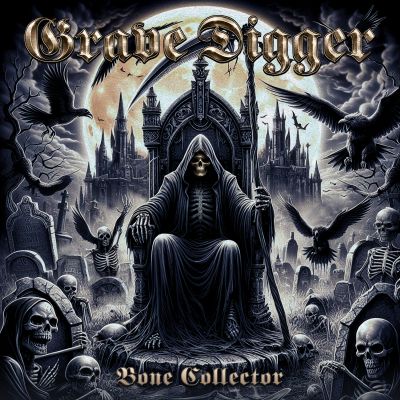
Judging a book by its cover has never been trickier — especially nowadays, when so many covers are generated by artificial intelligence, often signaling laziness, indifference, haste, low budgets… or a bit of each.
The AI-generated artwork ended up drawing more attention than the content of Bone Collector (2024) itself. According to vocalist Chris Boltendahl, Grave Digger's 22nd studio album represents a return to the band's roots — to pre-keyboard times — and a move away from the conceptual and historical extravaganzas that, once groundbreaking, have since been exhaustively copied by newer acts.
Costly shortcuts aside, the record is one of the reasons why the German heavy metal veterans are packing their bags for yet another Brazilian tour — their thirteenth overall.
Reflections on the band's early days — now being rediscovered by Brazilian fans as Rock Brigade Records reissues those long-lost gems in beautifully crafted editions — and on the motivation to keep going, which Boltendahl sums up simply as "love for metal," also surface in the conversation below. At 63, he speaks about the bands of his youth with the gleam of someone who's just gotten his hands on a long-awaited new LP by Judas Priest or Van Halen, after hours waiting in line outside the record store.
Marcelo Vieira

Grave Digger will return to Latin America in 2025 for the Latin America Celebrations tour, including four shows in Brazil. What are your expectations for this new visit?
As usual, we hope that a lot of people come to our shows, that we have fun, and that we can celebrate a big heavy metal party with the people there, because we play a lot of classic stuff from the '80s and '90s, and two or three new songs from the new album. No songs from the Axel Ritt [guitarist (2009-2023)] era, so we're in good shape, believe me. We're really crazy, and the band sounds better than it did 20 years ago.
This will be the band's 13th time in Brazil. What makes the Brazilian audience so special for Grave Digger?
Because they are so enthusiastic, so wild, and they live heavy metal with every part of their bodies, you know, and that's something I really like. We have something similar here in the south of Europe, you know.
The itinerary includes cities like Brasília, Curitiba, São Paulo, and Limeira. Can fans expect differences in the setlist depending on the city, or will it be a unified celebration across all shows?
No, no, the setlist will be the same in every city.
The new album Bone Collector will be a highlight of the tour. What inspired the title and the concept behind this release?
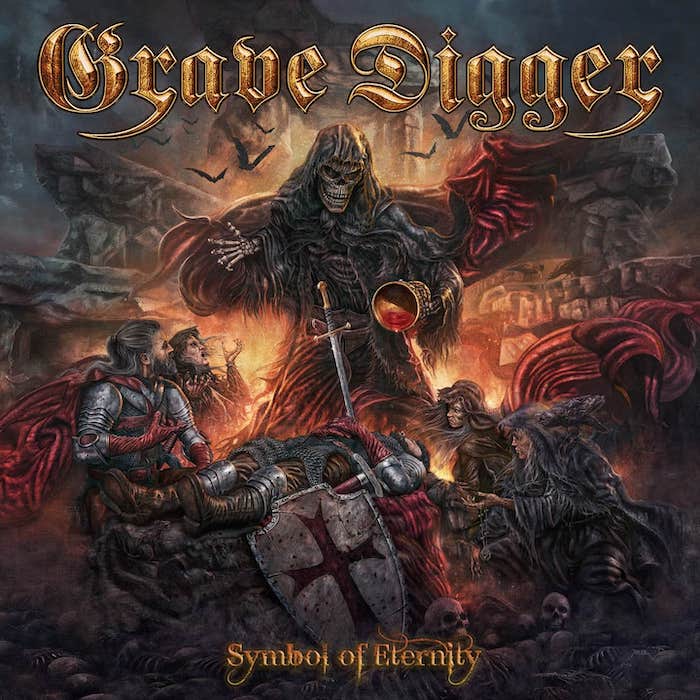
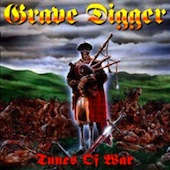
There is... the concept is... there is no concept, you know. We did a lot of concept albums in the past, like Symbol of Eternity (2022), from Tunes of War (1996) to Symbol of Eternity — we did a lot of that stuff. But we're a four-piece heavy metal band. We never had real keyboards on stage, only sometimes with the Reaper. But now we're a four-piece band with guitars, drums, bass, and vocals. We're back to the band's signature sound. When we started with Axel, also in the beginning with Tobias [Kersting, guitarist], we had some keys from the MacBook, you know. But I killed them, because we don't need them anymore. Also, the songs with keyboard sounds sound much better live without keyboards, you know? So yeah, I think with Bone Collector we're back to the basics of Grave Digger.
How does Bone Collector connect with Grave Digger's tradition of blending heavy metal with history and dark themes?
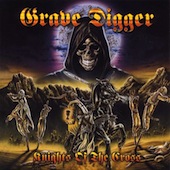
This time we have dark stuff — no history anymore, you know. There are so many bands copying our stuff now, like the Templars, you know? If you see the new Sabaton album, they have all the Templar stuff and everything. Hey, we did this fucking shit back in 1998 [on the Knights of the Cross album] for the first time, you know! Why are they copying now what we did so many years ago? Because we did a whole album about the Templars. Symbol of Eternity is also an album about the Templars, you know. Anyway, we don't need concept albums anymore. We're writing songs right now for the new album, and they're also very different from the concept albums. But we still love horror and dark stories.
Were you in any way inspired by what's happening in the world today — the wars, the killings, the rise of the extreme right in Europe and the US, and so on?
Yeah, for sure. Because if you take a look at the TV, there's nothing else on it anymore — in the U.S., all the war around Ukraine, Israel, and Gaza. It's not inspiring us, but it's a tragedy. I try to take these current themes and put them into some heavy metal metaphor, you know, or place them in another era. But anyway, we're not a political band. We deal with these things, but not directly. I put them in my stories again, change them, and give them a different approach.
The cover art for Bone Collector was created using AI technology. What led you to choose this approach?
It was funny, because when I read about it, I started experimenting with it. I was sitting here, giving it prompts — oh, not bad; oh, another cover; oh, not bad. I sat here for two days just making Grave Digger covers, and one after another was better than the one before, you know? And then, after 600 covers, the one we used popped up. I said, "Oh, that's good, I want to use it." And okay, I'm an old guy, you know — I'm 63 years old — and I wasn't thinking much about what was happening with... I just said, "Oh, that's good, I'll take it." And then we got a shitstorm! Anyway, I like the cover because it represents the music very well. But we already finished the new cover for the next album, and that one is painted again.
How do you see the role of AI in the creative process of music and visual identity?
I think you can't stop it, you know. Tobias and I, when we're writing songs, we don't use AI to give us ideas or anything. Also, we write the lyrics ourselves. But I think many young people will use it, you know. We have the gift of being creative guys from the past. We've seen so many heavy metal bands, we've heard so many heavy metal bands, and we have a very good database in our heads to create new music. But for younger people, it's really hard. Maybe they'll use AI. But anyway, if they use AI, in 10 years everything will sound the same, you know?
When it comes to writing a new Grave Digger album, is it a matter of giving the fans what they expect to hear?
No, first we write the music we like, you know. And second, we think about what the fans will love, you know. But first, we do something for ourselves. We say to each other, "Hey, let's maybe write a song like Kill the King in Grave Digger style," you know? We also have our idols, the ones we grew up with, like Deep Purple, Rainbow, or Black Sabbath. And we use these influences for our music, you know. So we don't need AI for that — we have a lot of data in our heads.
Some fans in the metal scene have mixed feelings about AI-generated art. How do you respond to those who believe album covers should always be made by human artists?
I know that a lot of human artists also use AI, so... But the new cover looks different. It's very dynamic, with beautiful colors, and it's totally different from the last one. I think people will see that it's not an AI cover. You can use tools — you can put the cover inside, and the tool will quickly find out if it's AI or not, you know. And with the new one, it's not possible, because it's 0% AI, you know.
This tour also celebrates Grave Digger's 45th anniversary. Looking back, what moments in the band's career are you most proud of?
I think it was the 25 to Live show in São Paulo. It was an amazing event. I also remember when we started in the '80s — '81, '82 — when we played small shows for 15 people. I played guitar, I had a very cheap guitar, and I burned it. I played on stage like Jimi Hendrix, you know. So many funny things happened in my career. Also, the 45th anniversary we celebrated this year at Wacken, where my son was on stage with us, and Uwe Lulis joined us again for two songs — that was great. It's always the small things in life, you know, that are really cool.
What do you think has been the key for Grave Digger to remain strong and relevant for nearly five decades in heavy metal?
We love heavy metal. That's a very, very short answer. We believe in heavy metal. We love heavy metal. And I think heavy metal can heal a lot of things. Making music, being creative, keeps you young. That's all. There's no special magic behind it. I think heavy metal is magic — so that's cool.
You've been the voice and face of Grave Digger since the beginning. How has your relationship with music and with the fans evolved over these 45 years?
The relationship with the fans is more or less the same. But the spirit has changed a lot these days, you know. When I was a kid, a young boy, I went to the record shop and waited in front of it for the new Judas Priest or Van Halen record or something like that. It was like the Holy Grail — putting the vinyl on the record player and listening to it. I think when I was young, music was more of a culture. Nowadays, with all the streaming stuff, it's more like McDonald's, you know. Yeah, it's a bit more than fast food because you can listen to everything on Spotify, but the magic behind the music is lost a bit. But I think in the heavy metal scene, we're really happy that it's still more present than in the rap or pop scene. Heavy metal fans are more dedicated to their idols and their bands.
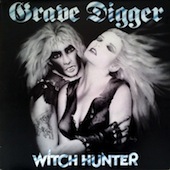
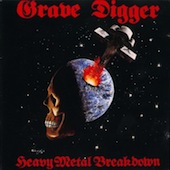
Rock Brigade Records recently reissued Grave Digger's first three albums on CD in Brazil. Could you share your thoughts on each of these albums today — what Heavy Metal Breakdown (1984), Witch Hunter (1985), and War Games (1986) meant to the band at the time, and how you feel about them looking back after all these years?
Yeah, we were young and always drunk. It was a really, really funny time. There are so many stories I could tell you about the recordings that would fill an entire evening, you know. It was a good time — a different time. And I don't want to miss that time because it was so much fun. It was unbelievable. I'm an '80s guy, and I'm so happy. If I die tomorrow, I can say, "Hey, I had the best time of my life."
Beyond the tour, what are the band's next plans? Can fans expect new recordings, special releases, or perhaps a live album from this celebration?
Yes, there will be a live album. We have our last show of the year on December 27. It's already sold out with 750 people. It's in Glauchau, in Germany, and we'll celebrate it. It's the last show in the club [Alte Spinnerei], which will be closed after that. We'll be the last band on stage there, and we'll record it live. It will be released as a bonus CD in 2027 when we release the new album.
Finally, what message would you like to leave for the Brazilian fans who have been with you for so many years and are now preparing for this special tour?
If you want to hear songs from the '80s and '90s, plus a couple of new ones, come to the show. You won't be disappointed, because we're in the best shape of our lives.
 2.73k
2.73k
Discography

Upcoming Releases
- Messier 16 - Shouts From The Cliffs Of Heterodoxy - Oct 23
- Bokkerijders - Crush Kill Destroy - Oct 23
- Fvneral Fvkk - Indecent Idols - Oct 23
- Critical Defiance - Bloodsurge - Oct 23
- DET - Bloodsurge - Oct 23
- Anagnorisis - Caregriever - Oct 23
- Wolves In The Throne Room - Estuary - Oct 23
- Iommi - From The Dark - Oct 23
- Eldfödd - The Night Belongs To The Dead - Oct 30
- Mastic Scum - Void - Oct 30
- Αχεροντας - For The Blood Of Tiamat - Praxis I - XXX Years Anniversary Of Magick And Metamorphosis - Oct 30
- Vigil - Primordial Rites - Oct 30
- Deathwards - Realms Of Sin - Oct 30
- Paara - Laulut Tulen Ja Jään - Oct 30
- Ereboros - From Oblivion To The Grave - Oct 30
- Cryptorium - Through The Bowels Of Ceaseless Dissonance - Oct 30
- Xentrix - Allied With The Enemy - Oct 30
- Arckanum - Beswærilsin - Oct 31
- Powermönger - Powermönger - Oct 31
- Boor - The Stones Hold All Echoes - Oct 31