Blind Guardian - Interview
In search of information on Crocell I stumbled upon this text in Wikipedia: "In demonology, Crocell (also called Crokel or Procell) is the 49th spirit of the Goetia, manifesting as an angel with a tendency to speak in dark and mysterious ways. Once a member of the Powers, he is now a Duke of Hell who rules over 48 legions of demons. When summoned by a conjuror, he can warm bodies of water, create the illusion of the sound of rushing waters, and reveal the location of natural baths. He is associated with water". After reading this I started wondering if it would be safe to say that this is the one that inspired name of the band? If so, why him? Let’s find out.
Tomek

Thanks for taking time to do this, how are things in Crocell camp right after the release of the new album?
Andreas: Things are great just now! We have been really busy these last months in order to prepare for the release, and at this point it begins to bear fruit, reviews are coming in, and the feedback has been really good so far.
Is Denmark still cold this time of the year?
Andreas: You bet - winter has come, and it isn’t over yet. A couple of days have had this slight scent of spring, but now it’s all freezing again.
What inspired name of the band?
Kussen: Finding a (decent) band name is hard, and almost every name that you can come up with, is already taken by some shitty rapper, German heavy metal band or Japanese techno ensemble. In all honesty I don't remember exactly why we chose "Crocell" but I think it was a combination of a wish for something sinister sounding (Crocell, as mentioned earlier, is a demon) and something not too hard to remember/pronounce.
All of you play or played in a bunch of other bands, what was the catalyst for the creation of Crocell all those years ago, do you even remember?
Andreas: Well, Ken Holst (now in Illdisposed) and I used to play together in the melo-death band, Compos Mentis. In 2007 he decided to start a new band with the explicit aim to play some faster and more brutal stuff. He quickly gathered Magnus, Tommy, Onkel Kusse and I, and it turned out to be a good match, so a year and a half later we released our first album. Since then Asbjørn has taken over the vocal duties, and Rasmus Hexen Henriksen has replaced Ken on guitar.
I was wondering how you handle working on new songs. Is there a decision maker/leader/tyrant that picks and chooses the best bits, or is everything being peacefully agreed on?
Andreas: "peacefully" might not be the right word, and sometimes something is veto’ed through, but usually we don't have any problems discussing our way to the best bits.
How about actual creating of the music - is it a bunch of guys actually in the practice room, files being shared, or is it something else entirely?
Andreas: usually one of us brings a handful of ideas or a half-finished track to the rehearsal room, and then we finish the rest as good old fashioned heavy metal hippies in the rehearsal room.
Was there anything that you did differently in the writing process of Relics compared to the previous albums?
Andreas: Maybe we have started up some more songs via file sharing this time, and most of the songs on Relics have been composed by only two or three of us, before all five of us finished them during the pre-recording sessions. I think you can actually hear that on the album, in so far as the single songs are really focused.
How did you make your decision when choosing the album cover - tell us about the process?
Andreas: Actually we didn't do much to choose the design ourselves, apart from insisting that our C icon should be a central element. We talked to BF.B, who had previously made some cool stuff for Metal Magic Festival, Vomit Angel, Ligfaerd and Departed Souls, and we left it to her to come up with something. A myriad of crayon dots later, we had the perfect sinister artwork to complement the music.
Whose work do we see on the album cover, how does it correspond to the lyrics and music?
Andreas: I would say that the music is the darkest and aggressive stuff that we have ever made, and therefore the artwork should be dark and dismal as well. The connection between the lyrics and the artwork lies in the album title, Relics, a word which shows up a couple of places in the lyrics.
I don't own the album just yet and there's no lyrics sheet, so can you tell me about the words a bit?
Asbjørn: Well… the lyrics are a sinister view into the future based on today's planet-choking agenda. All of the lyrics, in one way or the other, take its shape in the world that the humankind is creating through wars, tyranny, religion, politics, etc. We use a lot of references to both ancient history of religious laws and how this still affects modern politics and the affairs between world leaders. I think that this is one of the reasons why we chose the title Relics for the album.
Andreas: The title can either be understood in its literal sense (as supported by the album cover), or as a symbol of all the destructive and life-denying values that have been handed down to us through the history and that we for some reason can't let go of.
In your opinion, is 'Once Called Slaves' the best representation of Relics and the new album? Is it why it ended up being your promo video?
Asbjørn: We decided to use 'Once Called Slaves' because it holds both fast blast parts and grooves from the world of death metal combined with an eerie intro of rhythmic power. I think that these elements capture a lot of the stuff that forms the album, and that this makes a great prime for Relics. So yeah, 'Once Called Slaves' is definitely one of the best tracks to represent Relics.
Who is the axe swinging chick in the video, what is the whole thing about?
Andreas: the whole video storyline is written by the director, Lasse Frisk from Frisk Film. We met with him to discuss some ideas, and after that we gave him our music, lyrics and graphics and let him loose. After spending hours and hours creating the puppets and shooting and editing around 15000 stills, this was the result - and needless to say, we were stoked when we first saw it! As for the chick, my personal interpretation is that she is the hero of the story, in so far as she succeeds in revolting and turning her back on all the lies and horror that is fed to her - and all of us - by the powers that be, the priesthoods and the mass media.
While we are on the subject of your videos, what is being shared throughout the entire 'Tyrant Of Iron' video and how can I get in on it [laughs]?
Andreas: Ha, that would be Onkel Kusse's infamous schnapps, flavored with all kinds of secret stuff. Should you ever get to see us live, you will surely get the chance to have a taste.
Will you follow the release of the new album with some touring; are there shows on the agenda yet, and most importantly - any USA dates?
Asbjørn: Yes, we've got some shows in the calendar and there are still more to come. We will be doing shows in Denmark and hopefully some shows around Europe as well. We don't have any shows in the USA but if the opportunity comes up, we will be glad to take the trip across the pond.
As I mentioned before, most of you are currently members of other bands; between all the bands you are in, all the things that you do, and all the promotion you do for all of it - what do you do to unwind?
Onkel: We all have jobs. Nothing better than a bit of nine-to-five relaxation to unwind from the busy heavy metal lifestyle...
[laughs] Now from a slightly different angle: Andreas, on the latest Phantom album you're credited with drums, keyboards and ….. Cello!!! Do tell more please!
Andreas: Well, I have always been "musically curious" and at some point in the mid-twenties a friend and I got the idea to start playing the cello. After having spent years playing metal drums (faster, harder, louder!), it was a great challenge to try to play classical music on a cello. I think I got to being ok, but it has been way too long since I have played the cello, so it would most likely sound terrible if I gave it a try these days.
What other instruments do you play; can they be heard on any of the other Crocell albums?
Andreas: I can get sounds out of a lot of instruments, but I wouldn't say that I can actually play any other instruments than drums. I do write some guitar riffs, and on the Crocell albums I have played a few piano things here and there, but that's about it.
Thanks for your time and good luck with everything. Last line belongs to you.
Andreas: Well, thanks for taking the time to talk to us. We are really looking forward to going out there to present the new material live, and my fingers are crossed that we will get the opportunity to visit the States at some point.
I guess that the German band Kreator doesn't need any further introduction here. These days the guys released their 15th album "Hate Über Alles" (read review here) which is a really old-school thrash wrecking ball. Nevertheless the guys let flow some more unusual influences into some of the tracks which makes the whole thing pretty much interesting. I got the chance to do an interview very spontaneously (1 ½ hours after getting the reply) and of course you don't say no to such a thing. So I had a very nice and funny chat via Skype with their guitarist Sami Yli-Sirniö about all this and many more. Thanks again for this and enjoy reading!
Michael

Hi Sami, thanks for doing the interview that spontaneously! How you're doing?
Everything is fine! We wanted to rehearse twice because we are flying to Czech Republic the day after tomorrow for a festival and we haven't played that many shows yet this year and we wanted to warm up a bit and play through a set for our condition. Today went well, tomorrow hopefully better and then at the show hopefully really well (laughs).
How often do you rehearse together, probably not that often because you live in Helsinki, right?
For the albums we rehearsed a lot. We always had two-week sessions where we recorded demos, then we took a two-week break and then it started all over again. That was before we went into the studio in Berlin. We rehearsed a lot, but that was also during the pandemic. Before a tour or before festivals, whenever we want to try new stuff, we rehearse. Helsinki is not that far away either, it's a 1 ½ hour flight.
On the 10th June you're going to release the new Kreator album "Hate Über Alles". Until now, except in the Deaf Forever, the biggest German metal zine, there weren't any reviews about it. What are your expectations towards the reception?
This is always a question. We did our best and worked on the songs for 2 years. We had a lot of time and we used it well. As a musician you do your best and you can only hope that people like it. This time the approach is more direct and spontaneous than on the two albums "Phantom Antichrist" and "Gods Of Violence" before. There we worked with Jens Bogren as a producer, who is very good, though sometimes you get the feeling that he is a perfectionist (laughs). We thought that for the kind of music that Kreator makes, we'd try it with a different producer this time, which is Arthur Risk from Philadelphia. He's a younger guy and I think that was the right decision because the music is straight in your face and very spontaneous.
What would you say that this is the biggest difference to "Gods Of Violence"?
Okay, spontaneity...we already recorded many demos and when we were in the studio in Berlin, we didn't have so many takes like over and over again. We realized when the feeling was right after recording something and said "this is it, let's keep it like this!". We didn't try to make it too perfect and if there's a little mistake here and there it's not the end of the world because I think that's part of that kind of music and that it belongs there. That kind of difference in the recording was there but otherwise it's like making music as usual, trying to write good riffs and write good songs and make good songs and do your best. Of course for a band that is as old as Kreator the biggest challenge is trying not to repeat oneself. That's what we always have to be careful about, after all it's the 15th album we released. But I think it has a very fresh approach to it and a nice atmosphere not only because we have a new producer but also a new member in the band (Frédéric Leclercq since 2019; M.).
Your new bass player is in the band now for 3 years. How did he settle in very well Kreator?
Yes, but unfortunately we didn't have so many opportunities to play shows. Once we had this livestream for Wacken, in Chile we played a festival together with Slayer and a few weeks ago at the Inferno Festival, but everything worked out great and we know Frédéric from before. In the studio he was there almost all the time; he's also a very good guitarist and has a lot of ideas for me as well (laughs).
I have to confess that some songs confused me a little bit because in my opinion songs like "Midnight Sun" or "Dying Planet" or the almost balladic vocals like in "Become Immortal" remind me a lot of Endorama, which wasn't the most attracting album in the Kreator discography. Did you want to break out of this frame that you set with the last albums?
As I said, we've been around so long that we try not to make the same album twice. With Dying Planet, we tried to write riffs that were as evil as possible (laughs). "Midnight Sun" - "Endorama", I don't know if it's similar to "Endorama", that was more of a gothic record. I think the new album is versatile and it wouldn't be good if every song is like "Hate Über Alles" (laughs). A little bit of variety in the music is always important for me.
Another aspect I noticed is that you have much more classic heavy metal elements in the songs and you are acting much more playful than before. Is this something that you did intentional?
I think it was more unconscious, at least for me. We never think that a song should sound like another band. Sometimes, of course, you notice a riff, for example in "Dying Planet", that could be from Celtic Frost, but then we try to change it somehow.
"Hate Über Alles" is a reference to the Dead Kennedys and a very matching title, especially since the war in Ukraine broke out. I guess this may be, sad but true, the most matching title in 2022. Would you agree with that?
Definitely, unfortunately yes. The title was created before the war, but unfortunately it fits quite well. Some people thought that the title is too crass for a German band. I don't think that at all, it's totally okay. Eliran Kantor, who did the cover, said that if someone thinks the title is too harsh, they should know that Eliran is a Jew. "Über Alles" does, after all, appear in the German national anthem. Everyone who listens to Kreator knows what it's about.
In "Midnight Sun" you're cooperating with Sofia Portanet, a German newcomer who is more into pop music. How this collaboration did come to life? I was pretty surprised that a vocalist like her is taking part in a Kreator song, haha!!!
Sofia lives in Berlin, Mille lives there too and that's where they met each other. When we were in Berlin to record the album - for the drums we went to Hansestudio and guitars and vocals we recorded in a smaller studio in Kreuzberg - we thought that the chorus needs something special. On the first demo I thought the first verse of "Midnight Sun" was totally cool, but with the chorus I thought there has to be something more. Then we asked Sofia if she wanted to sing on the song and tried that with her (laughs).
Can you tell me a little bit more about the lyrical content of the album? Is there a red line between all the songs?
Mille wrote all the lyrics, but the themes are similar. It's about death, the end of humanity, natural disasters or war (laughs). It's kind of a reflection about the time we live in. I think Mille writes very good lyrics, but it's also best if only one person does it. Probably that's why there is a common thread - if everybody would write lyrics, maybe it wouldn't be so good.
You have postponed the album release a few times because of the pandemic. When did you finally finish "Hate Über Alles"?
We had demos of all the songs that we had recorded ourselves in Essen in 2020. But then we took our time because it wasn't easy to fly Arthur Risk in at that time. We recorded the album version in October 2021 in Berlin. It was okay to have that time after the demo recordings, because it gave us time to think about the songs and change something else. You don't usually have that.
You have released three videos from the album so far. Are there some more planned?
Yes, from "Become Immortal". There are kids playing the song and we are not on it at all. Among others, the son of our drummer plays on it.
A lot of fans are eagerly awaiting "Hate Über Alles" - what is the album you're eagerly awaiting in 2022?
Yes, many. If I could remember them all! Finally also shows and festivals. Especially in Finland there are over 30 festivals every weekend and I will go to many of them as a visitor. That's the best thing that can happen.
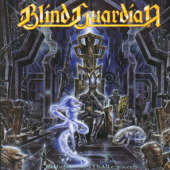
With an incredible career and impressive discography, Blind Guardian is well known to all metal fans around the world. Whether you like power metal or not, you can at least respect the talent and hard work these guys put into every album. From the beginning, Blind Guardian was characterized as a groundbreaking group that sets the standards for this genre and with each release takes it to another level. Their latest masterpiece, “A Night at the Opera”, sports remarkable orchestral harmonies, fantastic melodies, and unlimited musicianship that only strengthens their position as a leader in power/epic metal world. How do they remain true to themselves and stay on top enjoying worldwide success? Recently I spoke with famed Blind Guardian vocalist Hansi Kürsch (vocals/bass) and here’s what he had to say...
Chris
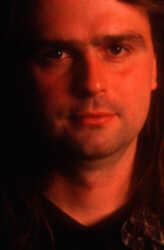
One of Blind Guardian’s goals was to record a metal opera. Did this album fulfill your aspirations?
No. [laughs] People are maybe mislead because of the title but that’s not the opera. I wouldn’t even say that we envisioned writing a straight opera I mean, we work on the stuff that we don’t usually do but that’s not the stuff on the album. This album because of the orchestration of the songs and the vocal harmonies is somehow related to the classical music but it’s more of a raw, energetic and aggressive metal album.
Since one of the main components of the opera is orchestra did you think of using one during the recording of this album?
At one point we did, especially during the recording of ‘And Then There Was Silence’ because there is so much orchestration there but we used a program to record those parts. During the production we really considered having that part played by a real orchestra and we already started writing tabs but at the end we didn’t feel too comfortable with it. And you really need a proper orchestra to work out that shit and that would be too expensive.
Then I won’t be mistaken if I say that there are plans to use a real orchestra on albums in the future?
Yeah, but not with the metal band. That would be something for our musical, operatic stuff we are working on because there would be nothing else but vocals and orchestra.
What is it? Are we talking about your new side project?
We’re not even sure if that’s a side project or we’re willing to record it under the Blind Guardian name because it’s Blind Guardian music but it doesn’t contain the metal part. Vocals are kind of story telling, very characteristic and the music is kind of classical but it’s very entertaining and very melodic. We started working on it years back during the “Nightfall in Middle-Earth” and we’ve composed 8 songs so far but that has been a second priority because we always consider Blind Guardian as more important. We feel that it’s almost the right time to release it but we need at least 4 more songs and then we have to record it and that will take a hell of a lot of time.
If ‘And Then There Was Silence’ took you four months to record how much time did you spend on this album all together and can you give us a glimpse of how Blind Guardian works in the studio?
We spent a whole year producing and mixing this album. How does that work? Well, we’ve started with a production in October of 2000 but haven’t done anything but pre-production up until January, that’s when we finally started with real production. The whole drumming session took about 4 weeks and then we’ve worked on single pieces where each piece usually has 60 to 150 tracks and that takes a lot of time. For example, I’ve done 32 tracks of vocals with almost each song including choir and each single voice that can be heard on the album and then afterwards on top of it we brought to the studio 3 or 4 good backing vocalist and they do this same shit as well. We spent 3 or 4 months just on the vocals!
When you enter the studio do you have at least skeletons of the tracks or everything is developed in the studio?
Theoretically they’re done. You would be surprised how much is done already. [laughs]
So, let me get this straight. You’re done with composing the songs and then you spend a year in the studio recording them?
Yeah, exactly. I mean there is a bunch of stuff, bunch of problems that you are not aware of before you enter the studio. Let’s say you have 60 guitars, 8 vocals, 3 counter vocals and counter melodies... when they all get together you don’t have a chance to figure out what is going on before you actually enter the studio.
Writing so complex and multi-layered songs raises a question; how do you prepare for live shows? How close are your live reproductions of your material? Do you prepare different arrangements for them?
They are really close. We focus on main key elements first and then we check what other elements we can bring or we have to bring to make it as close as original track. That strategy usually works extremely well but of course there are differences on few songs between studio and live version but you’ll still listen to this same song and you’ll feel it this same way because we have the talent not only to present the song but we also have the talent to present them slightly different and still with this same way of attraction.
Can you tell us the story behind the “Night at the Opera”? Is it based on some real events or is it complete fiction?
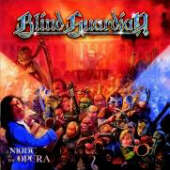
It is complete fiction and it’s not a concept like “Nightfall in Middle-Earth” has been. The title is more connected to the album cover that presents an orchestra pit occupied with fantasy creatures playing in a band and trying to get through a song. There is kind of an autobiographical aspect in the cover as well [laughs] because it reminds me of Blind Guardian.
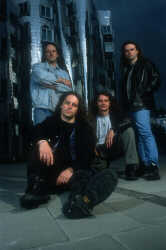
The cover looks like bunch of guys playing pretty chaotic music and you don’t sound like it...
No, we don’t sound like it [laughs] but at the beginning we looked exactly like those guys. Everyone writes something then we start picking up pieces, collecting pieces, trying to match those pieces... [laughs] and final result is great but from certain point of view we can be seen as those guys. That’s how the title got in; we had the cover and we thought if there’s an album cover looking like that and we have so many orchestral and operatic elements in the music why not use something with orchestra or opera in the title. First thing that came to my mind was Queen’s album the “Night at the Opera” and because there is relation between Blind Guardian and Queen ‘cause we are big fans of their music, why not use that title again. So, we took it as a title. The songs itself deal with several topics like religion, mythology, history and pure fantasy.
Compared to your single track ‘And Then There Was Silence’ the rest of the album surprised me because I was prepared for those long epic tracks and instead you delivered tracks half the length where everything is more condensed. How did that happen? ‘And Then There Was Silence’ really stands out from the rest of the album...
That’s true. If you leave out ‘Battlefield’ that probably goes into this same direction but it’s a shorter one, that’s absolutely true. We wrote ‘And Then There Was Silence’ somewhere in between of the songwriting so, it wasn’t the first or last track we did. With the whole album we tried to make a jump away from the “Nightfall in Middle-Earth” because we felt that it was our pick point with regards to such kind of music and we didn’t see too much sense following that root again. But in certain point during the songwriting we had those ideas for ‘And Than There Was Silence’ and that was connected more to “Nightfall...” than any other song for the album. It grew naturally and after a while it was 4-5 minutes long and it didn’t have a chorus at that point so it became obvious that it would be a long song. We of course paid a lot of attention to this song during songwriting and production because we knew if we do a song connected to the “Nightfall...” music wise it must to be better. Just because of that this song got a little more attention than the rest of them. I think it simply blows away the whole “Nightfall in Middle-Earth” record.
Over the years Blind Guardian evolved from power/speed metal to a more epic style band. Was it a natural evolution or did too many clones on the music market have an influence on the direction of your compositions?
No, I would say that everything out of Blind Guardian is a natural development but we always have in our minds to create different albums compared to our previous ones. We’ve done that from album one and as you’ve said we started as more of a melodic power metal band and we just discovered new fields and there was no chance to stick to the old staff and just improving that. Every time after we finished an album we felt that we’ve accomplished something and now it’s time to go into different direction and we really work on it especially on the latest one. We really worked hard to get away from “Nightfall...”.
As a big fan of Tolkien and “Lord of The Rings” what were your reactions to the movie? Did it meet your expectations?
Honestly, it did. I was blown away. I’m a big fan and of course I was well aware of most of the changes happening there and to be honest I don’t care about the changes and I don’t care about changes in characters or how the story was developed. I think that the way he did it was made just perfect for a theater. Some things were featured exactly how I saw them in my mind and I spoke to several people and most of them agreed on it. He did do a great job and I’m anxious to see how he did the second part because from my point of view that’s the most interesting one.
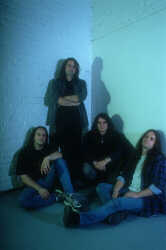
You wrote some material for that movie, is it ever going to be released and how different it is compared to the movie’s soundtrack?
It is completely different from the soundtrack but it would definitely fit in, there’s no doubt about that. That’s the stuff I’ve talked about. That’s the music we’ve done over the last 5-6 years. It’s really interesting, very melodic and entertaining and story telling stuff.
Haven’t you contacted them about doing the music for the movie, what happened?
Yes, at some point after we’ve heard that we’ve won the contest on their web site we did try to contact them but at that time we weren’t able to provide them with a proper version of our ideas and we decided not to send it at all. It would not have been the quality we usually provide people with. That thing is too big just to send out a cheesy demo.
“A Night at the Opera” marks the first time that someone really took care of promotion of your band on this side of the ocean. Did you plan this move or did Century Media pick you up thinking that the American public is finally ready for that type of music?
That’s true. To be honest it was more from the Century Media’s side. We’ve been in contact with them since the beginning of 1998 and they are doing a great job on our back program especially “Nightfall in Middle-Earth” and motivated by that we both figured out that there’s a strong interest in Blind Guardian in North America. They know that we are really successful here and I guess they feel that American underground is drastically growing each year and if they’ll have right bands at the right moment they could be the upcoming company as well.
Did you at any time think of promoting your new album with Iced Earth and at this same time with Demons And Wizards?
Yeah, Jon and I have spoken about it several times but the problem is that their album was released quite some time ago and they’re about to complete their tour activities already. It would be very difficult to put those two bands together on one tour...
Is there a plan for a follow up to Demons and Wizards?
Yes, we had a discussion about it and Jon is already work on the new material and if everything goes as planned the next Demons And Wizards album should be sometime in 2003.
Thank you for this interview Hansi, and since you’re very successful in Europe and Asia I wish you the same success in North America. I hope to see you on a full tour on this side of the ocean.
Thank you, I appreciate that. It was great doing an interview with you and I hope to see you on our tour.

Discography
Upcoming Releases
- Pig's Blood - Destroying The Spirit - Apr 24
- Devoid Of Thought - Devoid Of Thought - Apr 24
- Six Feet Under - Next To Die - Apr 24
- Firmament - Reveries Of A Forgotten Spirit - Apr 24
- Avertat - Dead End Life - Apr 24
- Aurora Borealis - Disillusioned By The Illusion - Apr 24
- Sewer Altar - Fever Dreams Of Vengeance - Apr 24
- At The Gates - The Ghost Of A Future Dead - Apr 24
- Bringers Of Disease - Sulphur - Apr 24
- Poseydon - Time Is A River And The Waters are Red - Apr 24
- Malhkebre - B.A.M.N. - Apr 30
- Grond - The Temple - Apr 30
- Abuser - Blood Marks - May 07
- Goholor - Locus Damnatorum - May 08
- Sacriversum - Before The Birth Of Light - May 08
- Scarab - Transmutation Of Fate - May 08
- Lago - Vigil - May 08
- Chronic Hate - Defeating The Oblivion Of Life - May 09
- Artillery - Made In Hell - May 15
- Desecresy - The Secret Of Death - May 21