Hate - Interview
Greetings, MetalBite legion!
It's always great to welcome a new voice to MetalBite Magazine, and this time around we're very happy to introduce Matt Quiggins, who joins us as a new contributor. Matt is no stranger to the world of music interviews, having been behind the microphone for his own podcast, drumquigpodcast, where he regularly sits down with drummers to talk about their music, careers, influences, experiences, and everything that comes with being behind the kit.
We're always looking for people who bring something different to MetalBite, and Matt's experience and passion for music make him a great addition to our crew. His focus on drummers also gives us the chance to hear from some of the people who are often quite literally keeping the whole thing together!
To kick things off, Matt sat down with Cierra White (@cierradrums), the powerhouse drummer of Emasculator, for a conversation covering her work with the band, her approach to drumming, recording, her other musical projects, and plenty more. Cierra is involved in a number of different projects, so there was certainly no shortage of things for Matt to ask her about.
So, without further ado, welcome aboard, Matt — and let's get into his first MetalBite interview!
We're glad to have you with us, and we're looking forward to seeing where this takes you.


Better late than never: Sanctuary is finally set to make its debut on Brazilian stages. Could—or should—this have happened sooner, back when vocalist Warrel Dane was still alive? Yes, of course. But his replacement, the incredibly versatile Joseph Michael, helps stave off inevitable comparisons as the band looks to the future, with a new album on the horizon and a preview of it already included in their live set. A month after speaking with Joseph , I had the opportunity to have the conversation you are about to read with none other than Lenny Rutledge—guitarist, founding member, and (despite his humility and approachability leading him to reject the label) a true legend of American metal.
Marcelo Vieira (@marcelovieiramusic)

Sanctuary will finally play in Brazil for the first time on August 30, 2026, after four decades of history. How does it feel to finally reach a country where the band's music has had such a long-lasting underground following?
Lenny: Yeah, we're really excited about it. We know there are a lot of passionate fans down there in Brazil. And, of course, we have a lot of connections there because Warrel was down there a lot. I would always talk to him when he was there, and he had his solo band down there and everything. So, yeah, we've heard a lot of great stories about Brazil and the people there.
This will actually be your first visit not only to Brazil but to South America. What have you heard about the Brazilian and South American metal audiences over the years, and what are you expecting to discover for yourself?
Lenny: That they're very passionate and really, really into metal. They really get into it, so we're looking forward to it.
Would you rather approach the Brazilian show as a celebration of the band's history or as the beginning of a relationship with a completely new audience?
Lenny: Definitely both. You know, there's obviously a lot of music that we want to celebrate and share with everybody, from the past and the future. Honestly, we're only going to be playing one song while we're down there, but I know it's a different configuration of the band. There's a lot of stuff that we're going to be playing that we haven't played in a long time, and there were some things that were a little more of a struggle to play. But you're going to hear a ton of old stuff from Refuge Denied and Into the Mirror Black. The bulk of the set is going to be that. You're also going to hear three songs from The Year the Sun Died and one new song from the upcoming release.
Twelve years have passed since "The Year the Sun Died". What made 2026 the right moment for Sanctuary to finally feel that there was a strong artistic reason to return to the studio?
Lenny: Well, we're getting closer. You know, sometimes it takes us a while to finish everything that we've been working on. And so we're getting a whole lot closer to the end. We're actually going to finish it up this year, and it's going to be released toward the beginning of next year. There's a possibility that it's going to be called Transmutation; that's the working title.
"Not Of The Living" is being presented as the first step into a new chapter. What does this song represent to you personally within Sanctuary's history?
Lenny: Well, I mean, it's some growth. Obviously, there are some differences there, too, but we try to do that with every album. We try to show a little bit of growth, from Refuge Denied to Into the Mirror Black to The Year the Sun Died. And I think we're headed down that path with this new record as well. I mean, obviously, the main difference is that Joseph is singing on it instead of Warrel. But we're still trying to retain the legacy of Sanctuary as well.
Joseph Michael has described "Not Of The Living" as one of the more straightforward songs among the new material. Why did you feel this was the right song to introduce this new incarnation of Sanctuary to the world?
Lenny: Well, I don't know. It just resonated with us, and we felt like it was a good song for that. A lot of times, when you have a batch of songs, some of them stick out. We recorded some of this record in sections, and in the first section we did three songs. That song kind of stood out as one of the first songs we'd like people to hear. We felt like it was a strong song and kind of showed where we were going.
This is the first new Sanctuary material since Warrel Dane's death. How do you find the balance between acknowledging his enormous importance to the band and avoiding turning every new step into a comparison with the past?
Lenny: Yeah, it's hard. It's hard to do. I think that, depending upon the person or the listener, there are always going to be comparisons. I'm probably guilty of it myself. But, you know, we're just trying to live up to what we feel is music that we enjoy, and hopefully we can make it so that other people enjoy it as well. That's the first thing for us: we just try to make music that we really like.
At the same time, like I said, we're trying to retain the legacy of Sanctuary. We don't want to go too far out and change the band into anything bizarre or anything. We know that we have parameters that we're going to stick within, for the most part.
Joseph Michael obviously isn't trying to "be" Warrel. What has he brought to Sanctuary that you didn't realize the band needed until you heard him singing these songs?
Lenny: Well, I mean, one good thing is that he has a lot of different vocal qualities. We have some stuff that we're working on that's not as clean vocally. Sanctuary has always had a lot of clean vocals, but we're actually experimenting with some stuff that's not so clean—not a whole lot, but a little bit—just because we think some of that stuff is cool, and we like it.
And we like the fact that Joseph can span the ranges, from all the way back to Refuge Denied to some of the lower stuff on The Year the Sun Died. So we appreciate all the range that we have there.
The enormous gaps between Sanctuary albums are part of the band's history. Does that affect your relationship with songwriting?
Lenny: It probably does, because from 1990, when Into the Mirror Black came out, to 2014 and The Year the Sun Died, obviously some things changed. I was telling somebody this story the other day: from 1999 to 2009, I didn't play electric guitar at all. I only played acoustic guitar for ten years. So a lot of that changed the way I think about things and the way I play as well.
When Sanctuary got back together, I had a different way of looking at things, and I think that kind of shaped the way I wrote after that period. It made me look at things differently. I feel riffs a little differently because of that ten-year break I took, but it was a little bit of work to get back to that point.
Do you feel a greater sense of freedom because you have never been a band that had to constantly produce new records?
Lenny: Yeah, I don't know. I guess we're just a little bit slower. One of the reasons why it took us so long to put out The Year the Sun Died is that we broke up for 20 years. There's that. But this time, we've just taken a long time. There have been some things that have happened along the way—family, COVID, other things, and Warrel passing away. Sometimes life gets in the way, and sometimes those things are a little bit more important. I mean, music and metal are important, but sometimes you have to lean into those other things, I guess.
Is there something specific about the way Warrel wrote, sang, or approached a song that still influences your decisions?
Lenny: Yeah. I mean, he was a bit of an enigma. That was the thing: I was always trying to figure out what he was writing about. A lot of times, he really wouldn't talk about it. Sometimes he would, but there were definitely things that he would explain, especially when they were about a specific topic.
We had a few songs—at least one—that were about a book or a movie, you know, that type of thing. You don't always know that when you listen to them. For instance, "Soldiers of Steel" is actually a song about a book and a movie called The Keep, by F. Paul Wilson. It's a really good movie and a really good book. So, if people are interested in knowing what "Soldiers of Steel" is about, that's it.
I love that kind of thing about Warrel. He always had these really deep subjects. They were very thoughtful and very deep.
There is a fine line between honoring the past and becoming trapped by it. How do you recognize when a new idea is genuinely moving Sanctuary forward rather than simply reproducing a formula that worked decades ago?
Lenny: Good question. I don't know. I'm sure there's a little bit of both. Being the main riff writer, I'm sure there's stuff that I probably inadvertently regurgitate. A lot of times, we go through a process where we'll check ourselves, and somebody in the band will say, "You know, that sounds a little bit too much like this or that." So we do that. In fact, that comes up a lot.
A lot of times, you find out that you may be plagiarizing one of your own riffs. We definitely don't want to plagiarize somebody else's riff, but sometimes you don't even realize it. We've actually had pieces that we've removed from our songs just because they sounded too much like one of our own riffs from earlier in our career.
But there's also the other side of it. You have AC/DC—AC/DC sounds like AC/DC. A lot of their songs sound the same, right? I mean, they do have a brand. So I feel like Sanctuary has a brand as well, and a lot of bands do. You're going to end up having things that sound similar within a certain vein, I guess. So I hope I answered the question.
"Refuge Denied" and "Into the Mirror Black" have become landmarks of American metal. When you write today, can you actually forget those records, or are they inevitably sitting on your shoulder?
Lenny: I love the energy of Refuge Denied. So there are times when I try to replicate that. It's really easy for me to write dark, slow, almost Sabbath-y type of stuff. I could do that all day long. So there are times when I have to remind myself that we wrote Refuge Denied and that we need that energy.
It's the same with Into the Mirror Black. Mirror was a little darker and a little different, with maybe a little less energy but more intensity. So I do think about that at times, yes.
The new album will inevitably be heard in the shadow of "Refuge Denied", "Into the Mirror Black", "The Year the Sun Died", and, of course, Warrel's legacy. What do you want listeners to understand first when they hear the complete new record?
Lenny: All I can say to everybody is: give it a chance. Give it a listen. I always say, give it a couple of listens, because I can't tell you how many times somebody has come up to me and said, "Hey, I heard 'Not Of The Living' and I wasn't sure about it. Then I heard it three or four times, and now I love it."
Sanctuary is celebrating its 40th anniversary at a very particular moment in the band's history. When you look back at this entire journey, what do you still feel Sanctuary has to prove—to yourselves rather than to the audience?
Lenny: Oh, well, I mean, that we can do it. That we can still do it and that we can still survive, still go out there, and make great music. We'll probably do it as long as people come to our shows and continue to support us.
I mean, that's really a lot of it. To go out there and share the music with fans who love it, and to see that happening—that's the magic right there.
Is there any Sanctuary song that you now hear differently because of everything that has happened since Warrel's passing?
Lenny: That I hear differently? I don't know. There are definitely songs that we play that sort of bring up emotions for us when we play them. There are certain songs that Warrel would, you know—we play "Epitaph" right now, and it's a song that we didn't play a lot for many years. We've been playing it, and we're going to bring it down with us to South America, along with "Veil of Disguise."
"Epitaph" kind of brings up some emotions for me because Warrel and I's dads—each of our fathers—passed away when we were younger, and that's kind of what that song is about.
There are still four months to go, but anticipation for the joint Latin American tour featuring Testament, Municipal Waste, and Immolation is already sky-high. Brazil will host five dates: Curitiba (Dec 5), São Paulo (Dec 6), Limeira (Dec 8), Belo Horizonte (Dec 10), and—to the surprise of many—Rio de Janeiro (Dec 13). This will mark the fifth visit to the country by these death metal veterans. Although their previous tour was recent, this new run serves to promote the newly released and acclaimed "Descent". Guitarist and founder Robert Vigna discusses the album with the excitement of a child who has just received a new toy.
Marcelo Vieira (@marcelovieiramusic)

"Descent" is Immolation's twelfth studio album, yet the band still sounds unmistakably like Immolation without simply repeating the formulas of the past. How conscious are you of the balance between preserving the band's identity and finding new territory as a songwriter?
I guess, yeah. Well, you have to be. You have to watch out for repeating yourself or trying to sound like anything else. It becomes more difficult the more songs you write and the more albums you release, you know? It gets harder and harder. But luckily, I just try to write stuff that sounds cool. Then, once I'm done with certain things and I send them out to the guys, I rely on Ross or Alex, who are more in tune with the older stuff, you know, and Steve, of course. If it sounds like anything else, they're kind of like my police, so to speak.
But, you know, you just try to do the best you can to come up with interesting-sounding stuff and go from there. I mean, there's really not too much of a formula in the sense of, like, "Okay, we're going to try this now. We're going to try something like that." It's just, "What do we come up with?" And then, if something sounds cool, we make it work. Or if it's something like, "Okay, this is a little different, but I think this could be cool," then we're good, you know?
But that's it. It's not like we go out of our way to say, "Okay, we're gonna do this. This record's gonna sound like this now." You know, it doesn't work that way.
The album title, "Descent", suggests a movement downward, while songs such as "False Ascent" and "Bend Towards the Dark" seem to reinforce that imagery. What does "descent" represent to you in the broader conceptual world of the album?
Yeah, well, the concept basically runs through the whole record, but mainly that song as well, which wraps up the record. It's really looking at everything going on around us today, as we always do. We're always just looking at what we see in the world and kind of reflecting on it, talking about it, bringing it to light, bringing the darker side of mankind to light.
In general, the song "Descent" just looks at really where we are today and how we've kind of... We're at a place now where, I know, we're starting to repeat stuff from the past that we shouldn't be, but we're also heading into some areas that we've not quite been before, I think. And that's kind of what that song is about. It's just about saying, "Hey, what are we doing here?" Because, you know, it seems like these days the world is a very... Everywhere you go and every subject, it just seems like everyone's at opposite ends of everything. Everything has become extreme, you know what I mean? Way too much. Less talking, more hatred, more anger, you know. So it's just a crazy place.
And I know we've done plenty of that in the past in our history, but it just seems like we're repeating certain points of that that people should realize by now never got us to a good place. So why are we doing that again, you know?
So, basically, that's roughly, in a nutshell, what the album looks at.
Immolation has always dealt with religion, power, humanity and the darker aspects of existence, but the band's lyrics have never felt like straightforward political or religious statements. After more than three decades of writing within this universe, where do you still find new ideas to explore?
I guess it's a little bit of both, but at the same time, there's a lot of stuff out there, so it's easy in that respect. It's just a matter of, well, you know, there are times when you're like, "What angle are we going to take? What are we going to do a little differently?" You know what I mean?
So, like, "The Ephemeral Curse" was cool because that kind of looks at humanity in general, basically explaining how small we are, you know? All the stuff we go through, but we mean nothing in the universe. You know, that's kind of what that song's about, in a nutshell.
So, you know, there are certain aspects you try to take different turns on, but I mean, there's plenty of the basic ideas and other darker things to go around to come up with stuff. Trust me.
I think, with the music, the more you've done, the harder it gets. But Ross and I always keep a lot of different ideas and concepts around, whether it be a title, one word, or a line or lines I've come up with when I'm writing the stuff. And then you take those and say, "Okay, what fits with what song?" Or, "This idea sounds cool. This song's a good song for this." You know?
So we just take it from there. That kind of makes it easier, and then we bounce things back and forth to each other. And that becomes the more... As stressful as it is, it's still the fun, the more fun part of writing, because the music—the hard part of the music—is done. The ideas and things we want to explore are there, so it's just a matter of kind of connecting them to the songs and then coming up with the lyrics.
Luckily, with that, you can do things at the last minute, or you can just brainstorm and come up with a bunch of stuff in one shot. So it's a little easier for me to write that stuff than it is the music itself. The music is always a little harder for me.
Immolation's guitar language has always been remarkably unconventional, with dissonant intervals, unexpected chord movements and riffs that often seem to work against traditional death metal structures. When you are writing, do you approach the guitar as a source of melody first, or are you primarily thinking in terms of atmosphere, tension and rhythmic movement?
It's usually more about the atmosphere, the feeling, you know what I mean? Like, whether I'm writing riffs, it doesn't matter if it's basic, if it's technical, or if it's something else. It's like, whatever sounds interesting or cool to me, that's what I go with.
It could be the most basic of things, but if it sounds cool, I'm like, "Okay, that sounds kind of basic, but it also sounds very cool, so I'm just gonna..." On my computer, I'll put drums to it to get an idea of what I want it to sound like, and then I'll put it to the side. And I'll do that with all the other parts, too, and eventually find parts that connect together. Or you come up with a part that you think can carry a song, and then you take that as your main thing and work around that.
But yeah, to me, it's more about the feeling. That goes for the solos as well. I've never been one to be like, "Okay, I have to really do some crazy solo here. I gotta show off," or whatever. You know, it's not that for me. It's more about what fits the music.
There are a lot of times when I do solos that are more rhythmic, that go along with the rhythm to carry a song to a certain point. Or if Alex and I are working on solos, he might do a solo and take a certain approach to it. So if he's doing that, I'll answer it with something a little different. This way, you have a little... You know, it's not like, "Okay, he's doing something crazy, I gotta do something crazy." It's like, "Okay, he did that. It's got a lot of emotion, so let me do something that's more laid-back," or vice versa, you know? So they kind of carry each other.
That's all it is to me. It's always about the feeling, no matter what it is—rhythm, solo, or anything else.
"Adversary" was the first song released from the album, and you also directed its video. Did you already have a visual concept in mind while writing the song, or did the music inspire the imagery afterward?
We had the music first, obviously, and then that was one of the first songs we put lyrics to. I happened to see "Adversary" written down in one of our notes, you know, and I said, "Okay, that's a pretty aggressive song. It kind of would fit that, I think." So I was like, "Let's go with that," and then just started writing from there.
And then, once the song was done and we were thinking about video tracks, that one came up, obviously. And yeah, we did have a couple of concepts in the sense of, "All right, I think we could put us in this kind of scenario." So that was my thought for that song.
You know, the videos—we actually shot all three of them together in the same weekend. So we had to kind of have somewhat of a concept. Luckily, the Adversary concept was there, so I was able to get the lighting to work for that particular concept. And then I did different lighting and looks for the other two songs, kind of not knowing what I was doing exactly for those.
But I tried to, you know, basically, when filming the band, I wanted to at least have three different looks so I could create three different videos with that. But yeah, Adversary—we kind of had the fire idea for sure, and then, you know, brought it on from there.
Luckily, it worked out, because when you're shooting and you're doing something specific—which I normally don't do—I'll shoot with certain lighting, but I won't do something as specific as we did with that kind of flame look. So that was kind of hit or miss. You know, if it didn't work, we're like, "All right, well, we're gonna have to figure something out here." But it worked out really good, and the video, you know, everything kind of came together on that one.
You also directed the videos for "Attrition" and "Bend Towards the Dark." What do you find creatively satisfying about working with images in addition to music?
It's interesting. I mean, it's something I slowly got into because I worked for a production company in Brooklyn, New York, for many years, where I not only programmed moving lighting fixtures and did that kind of production work, but we also did some minor video stuff on a small scale.
But then, as I worked with other video guys like Tommy Jones, who did our first couple of videos with Nuclear Blast, and saw how he did things, and then worked on other videos... Little by little, we had to do one with a project Ross and I were working on called Gospel for the Witches with Karen Crisis from Van Crisis, from back in the day. She and her husband had this new band, and Ross did some vocals on the first record, and I played guitar live. We played a few shows live, but she wanted to do a video, and they had ideas and a concept.
So, at that point, I said, "Okay, let me give it a shot." Because I'd done minor video stuff for weddings and events and things like that, so I knew roughly what the tools were and had some basic knowledge. But going forward, I just kind of thought, "Let me just give it a shot." So we did it, and it came out pretty decent.
And then, from that point on, when Atonement came out, that's when I started working on videos for the band.
And yeah, it's fun. You know, we kind of do everything on our own. We'd help some friends and stuff, but for the most part, it's just us recording everything. I'll come up with some ideas, but a lot of times I'll... We'll film the band, and I'll figure the rest out later, you know?
But it's interesting. It's fun. I enjoy it. Like, same thing with the music, it's kind of fun to try and create stuff for the music that you've created, you know what I mean? And try and create some kind of visuals.
So I find it interesting. There's always stuff that I wish I had done better or whatever, but it's a learning process for me. And over the years, it's gotten a little bit better, and I've been able to learn more. But I still have a lot more to learn, especially with all the new technology out there now. So I have a little catching up to do.
But, you know, I try and keep as current as possible. It's always a learning process, though, but it's a fun one.

"Descent" features Zack Ohren as producer, mixing engineer and mastering engineer. What did you want to achieve sonically this time that perhaps you felt was missing from previous Immolation records?
Well, the last two records we liked a lot. I mean, I thought Atonement came out really cool. It had a really good... You know, Kingdom of Conspiracy, and I think Atonement was a good... You know, kind of like, from that point on, it was better in the sense that we had a more organic sound on Atonement, and that came out really good. It was a little darker-sounding, and then Acts of God was also very cool.
Different from Atonement, but also a really good production. It had a very cold sound to it, which fit the music well. But Zack Ohren, you know, as the years go by, Zack kind of has been more and more familiar with our music.
And with this record, we recorded it very differently. We normally would all go into one space, into a studio, and spend time with each other, etc. with Paul Orofino, who we've worked with since the third record. He had moved the studio down to Tennessee, and we also had a lot of stuff going on in our personal lives at the time. So, you know, it was like we couldn't really all go and meet in one spot.
So we had a local guy here, Justin Passamonte, who has a studio, and we went and did the rhythms, vocals and bass here. Steve recorded his drums close to home, about an hour away from his place in Ohio, with Noah Buchanan, who has Mercenary Studios. He was familiar with him and comfortable doing it there.
So Steve would record his drums and then he'd send us the tracks, and then we'd record to the stuff here. I even drove down to Virginia and got some of Alex's solos and stuff when he was down there. So everything was done in different spots.
But what we got sounded very good. And even though we were still under the gun to get the stuff done, it was a more relaxed feel because I would just go for a few hours a day and come home, you know? It didn't feel like there was the event of being in the studio, which, although we've enjoyed that many times over the years and had great times, this was more like, "All right, I'm gonna go record guitars for three hours and come back," you know? It was very nonchalant like that.
But we had the EVH head in there, and it was nice. It had a good sound, and I just... You know, it was very simplistic. We just jammed stuff out to Steve's drums, and yeah, all together it came out great.
And I think Zack, although we had very little time and we didn't really bug him too much, he did his thing, and he just did a phenomenal job. I mean, it's one of the biggest-sounding records we've had. It's very strong and powerful and very large-sounding.
And I think, production-wise, the music, and then the artwork for the cover came out amazing from Eliran Kantor. You know, everything just kind of came together, even though it was a tight window to get it done. But everything came out really, really well, and I'm super happy with it.
One particularly interesting aspect of "Descent" is the participation of Dan Lilker on vocals on "Host" and the title track. What made you choose him for those songs, and what did his presence bring to the material that you couldn't have achieved with the regular lineup?
Just a fun thing we do. He did it on the last record, I know, and he might have done it on... I can't remember. He did something on Atonement, but, you know, I think on the last record he did something at the end of one of the songs. And I think he did it on his phone, and he said, "Oh, you know, maybe you could use this," or something like that.
And then I heard it, and we put it in a certain spot, and I said, "Oh, that's cool. Tell him to do a longer one." So he did it on his phone again, like, whatever, and he just sent it to us, and it worked out.
But it wasn't... It was there, but it wasn't as present as these two are. These were kind of cooler because you can really hear them a lot better on this one.
So we had the last song, "Descent," where I thought it was really cool for him to do a nice scream together with Ross at the end. It was just kind of a cool thing. It added a different layer, you know, because Ross has the heavier side, and Danny likes... I mean, the guy's a thrash legend, but he also loves black metal, and he's into that kind of thing. He wanted to do some of those kinds of vocals, and I was like, "Yeah, go for it, man." And it sounded sick.
So it was that one, and then there was another part in one of the other songs that Ross thought of as well. He's like, "Ah, this would be a cool part for Dan to do something as well." So I was like, "Yeah, awesome."
So those two little parts... They were very quick. He just came by the studio because, again, we were here in Rochester, so he just came by with his wife, Heather, and we just came in. It was very quick. He sat there by the mic, did a couple of things, and it was done.
But it was just fun. It's like a fun thing to do, and it just adds a nice little... Just kind of like a cool little thing to add in there. It just adds what they call "ear candy," you know? It's like a nice little change there for certain parts.
And yeah, it sounds awesome. He did a great job, so it just added a nice little layer to a couple of those vocal lines, which was awesome.
Looking back at the band's discography, do you hear "Descent" as a continuation of the path that began with "Acts of God", or does it feel like the beginning of a new chapter for Immolation?
It just feels like where we are now, you know what I mean? Every album feels that way. I don't think it's the beginning or end of anything.
I mean, I would say more so the last three records—Atonement, Acts of God and Descent—are kind of like... I guess those two led up to Descent, so to speak. But I think after the many years of writing songs and being on the road, we've just gotten more into a certain place where I think we need to be as far as the writing and everything.
And, you know, we're going to take it to the next level with the next one, I guess. You know, it's always crazy to get down to a record and start writing when we had Atonement, which we thought was a really good record, and a lot of people liked that one. And then the last record, same thing. You're like, "You know what? Now what do we get here?" Because you always want to try and be at least as good as the last record, you know what I mean?
So you can't really do anything but just do your best and hope for the best, you know?
But yeah, that being said, I think it came out awesome. And it's good to be able to have that twelfth record and just say, "Wow, you know, this is a good one." We love playing the stuff live, and we're super happy about playing all the songs live, you know? It's great.
After twelve albums, countless tours and decades of surviving changes in the metal landscape, what still gives you the feeling that Immolation has something genuinely new to say?
I guess because there's still all these things out there that we see, and, you know, someone else is gonna say them, so why don't we say them? You know what I mean?
There's always gonna be other bands, new music, talking about everything that's going on. So we just continue to do that. And I think with every record, you know, you think, "Well, I don't know what to do here." And then we'll come out with a record like this and think, "Wow, we wouldn't have these nine songs now if we didn't go out there and get it done." You know what I mean?
So it's... It's always cool. Because I'm always happy with the stuff, especially this record. It's like thinking, "Wow, these are great songs. Like, it's cool. We have these now," you know?
And, you know, there's always something to say. There's always something out there. There's always that dark side of humanity. That's always there. And a lot of it keeps happening over and over again.
So we'll continue to talk about those types of things from different angles and everything, because all these things that are out there have gotten progressively worse over the years. So yeah, there's always that inspiration, for sure.
And then just the love of the music, you know? Because in the end, we love music. We love what we do. And it becomes a positive thing, even though we're talking about darker subjects.
You know, ourselves as a band, and I'm sure the bands and the fans that come out to all the shows that go on... I mean, I think it's just nothing but a unifying and positive experience for everybody in the end. So it's always a more unifying thing than anything else.
We talk about all the things that are going on that are separating people, and I think that kind of unifies us because we all have the same ideas.
Sometimes life is a bitch and it doesn't work as it should. This interview was already done in spring but unfortunately I just found the time to write it down by now. My apologies for that but I hope that my questions about Hellripper's new album (read full album review here) are still actual and interesting. So, maybe you might still enjoy reading my questions I asked James McBain.
Michael

Hi James, I hope you're doing fine?!
I'm doing very well, thank you very much!
You new album "Coronach" is going to be released next month. First of all, what is this title about?
The title is an improvised song for the dead. It's a vocal lament that will be performed at funerals in Scotland and the Scottish Highlands to honor the dead. I think the word sounds cool and it fits the theme of the album.
Is it Gaelic?
Yes it is. But I think it's also used in English but I'm not too sure about it (laughs).
It took me some spins to fully get into it, maybe it is because of the kind of bulky opener, did you try to get out of your comfort zone a little bit this time with this song?
Yeah, there's lot of new things I wanted to try, different things and trying to get out of my comfort zone. I was trying different vocal styles, different mixing techniques, different instruments and stuff like that. The first track starts off with a change in time signature between the first couple of bars. Each bar kind of changes the time signature a little – not too complicated but it's not something I've done previously. So that was something new and I like the chaotic feel of it and thought it was fun to open the album just with chaos and no room to breathe or time to get ready as the listener. It just blasts you in the face with dissonance and craziness (laughs).
The last album was on #12 in the British album charts, if I am correct – so what do you think about when they buy the new album and listen to that track and think "what the fuck"?
Haha, yeah! I think it's fun and it's always fun to think of an album. I always think of an album as a whole thing and I think of an opening and a closing track of side a and b and I'm always trying to make sure that it's some sort of journey and difference between atmospheres and styles of songs. For example the first track is very chaotic and a bit complex structure-wise and there's blast beats and punk parts, spoken word parts and five guitar solos happening and in the next song is a little bit more straight forward rock n' roll vibe. It's kind of contrast between these songs, trying make the full album experience as effective as I can.
You said you try to play a lot of different instruments on the album – did you have any guest musicians or did you just do it all on your own?
Both. I did a lot of piano and synthesizer on the album and I had some session musicians for bad pipes and violins. I had my friend Joseph (Quianlan; M.) who is the live guitar player in Hellripper. He performed two or three guitar solos on the album and he's done that for the past few albums as well. I had our drummer Max (Southall; M.) contribute some cow bells because this is very necessary I think.
Cowbell?
Yes! So it was lots of fun, both playing new instruments myself and figuring out how to incorporate them, how to make them sound good and how to make them work in Hellripper and even for the instruments performed by the other people just to write things on these instruments and trying to make it work in Hellripper. Also to add some things, I don't like things just to be there for no reason, I need to have a reason for them to be there. They've got to improve the song in my view, it's all very well bragging about having something different but if it's not improving the song it doesn't matter how different or unique it is.
How can we imagine the bagpipes when you will perform live? Will it be like Saor did with guest musicians?
Unfortunately not. Usually the bagpipes and things, to be fair, all of the non-traditional Hellripper things are usually there for texture ad atmosphere. They can be adapted to the live show, the vibe of Hellripper live shows is quite chaotic, fast and aggressive. Usually if there's something like a bagpipe part that needs to be in the song we translate it guitar so it still works. We like the studio side of recording – I love having all the textures, different instruments, vibes and atmospheres and some experimentation but the live side of things I really like it stripped back and raw, fast and rock n'roll so it's kind of two different sides to me which I enjoy.
Also the title "Hunderprest", as many others on the album, are not easy to understand if you don't have a very specific knowledge in Scottish history. Maybe you can fill me in a little bit more into the background of these songs with Gaelic titles?
This album every song is based on Scotland in some way. There are things like "Hunderprest" which is based on the legend of Hunderprest, the vampire of Melrose Abbey. There are also historical events like in "The Art Of Resurrection" which is about the body snatchers and grave robbers in Edinburgh in the 19th century. It's also about creatures from folklore like the Banshee, there's horror stories in there – "Blakk Satanikk Fvkkstorm" is based on a story by Robert Louis Stevenson called "Thrawn Janet" which is a cool horror story about possession and witchcraft. There are things inspired by some poetry like in the title track and some more of my personal experiences. So it's all based on Scotland in a way and it's cool to be able to do that. It kind of fits the vibe of Hellripper: about good and evil, horror stories, dark lyrics but kind of seen through the Scottish lens which allows me to use different settings, atmospheres and words. It keeps me creative and inspired much like using different instruments and different types of songs. It want to keep myself creative and learning and exploring new things which allows me to do that.
How can I imagine you are writing the lyrics about Scottish history? Do you dive deep into the material with reading a lot of stuff about it or is it more superficial?
Usually I do try and write the best lyrics I can. Obviously I am more a musician than a lyricist so the music is the most important thing. But I put a lot of effort into the lyrics. When I'm coming up with song ideas or titles, I just kind of anything I hear or read about I make a note of. I just have random documents, random quotes and folklore stories, legends, whatever. When I'm writing songs, some of the music suggests to me the vibe I want to go with the lyrics. Then I dive deeper into it, do more research and write the song that way. A lot of stuff are stories I've heard of while growing up and some I'm very familiar with. But some stuff is new to me as well. I enjoy the learning process of hearing new stories or historical things and writing a song about it. Again, it just keeps me creative and it's fun to learn new this as well, that's an additive little bonus.
Is the Scottish history and the heritage connected to it very important for you? I mean, people like Sean Connery always held the banner high and of course there is this difference between England and Scotland….
It's not really important to me. I mean, I do like Scotland and I enjoy being in Scotland but it's not a massive part of my identity. It's just a part of my life but I'm not engaging in all the traditions and celebrating every occasion, making a big deal of things. It's just kind of something that is a part of me. For the band the Scottish themes where we always explore horror stories and stuff like that, it's never based on historical wars or so, it's just to fit the Hellripper aesthetic and imagery.
Can we expect a Nessie song in the future, haha?
Haha, if I can come up with an evil story involving Nessie, I'm more than happy to, haha!
Could you imagine to write a complete song in Gaelic lyrics?
No, I don't speak Gaelic. There are some words I understand or that may be more part of our everyday use but I don't speak it at all. It's not a very common language spoken in Scotland actually but where I live right now a lot of people speak it. It's cool to have these words and titles and it adds to the theme.
Am I wrong when I state that Motörhead and Cathedral were some of the influences you had this time while writing the music? There is one specific riff in "Baboahn Sith" that sounds so much like Cathedral …
Okay! That wasn't something I was listening to but I'll take it. They're a great band. It's cool that it can be heard, it's a different aspect to the sound. I like hearing what people can hear in the music because sometimes it's exactly what I was meaning, exactly what I was listening to or I was influenced by. Sometimes it's something I wasn't consciously influenced by and it's really cool that this can be evident, that Cathedral might have been a subconscious influence.
"Kinchyle (Goatcraft and Granite)" is another very untypical track, quite slow and doomy in some parts and full of energy and party vibes in others. Could this become a new band anthem?
Maybe. That's why it was released as the first single from the album because to me it is the most appealing, most accessible song of the album with the chorus and it has more in common with songs of mine already like "All Hail The Goat" where you can shout the chorus along. It is one of my favorite songs on the album and I hope people like it. We've been playing it live a few times over the past few months and it seems it's gone damn well.
The last words belong to you!!
Check out the new album. There's a bunch of different vinyl, cassettes, CD versions of the album. Come to our shows throughout the whole year and all hail the goat, of course!
For some time now, Azeroth has been more than just one of Argentina's leading power metal bands—they've also built a strong connection with Brazilian audiences. After opening for Angra in Brazil, paying tribute to Viper, and strengthening ties with the country's metal scene, the band now presents Trails of Destiny, the English-language counterpart to Senderos del Destino (2022), furthering its international ambitions. In this interview, vocalist Ignacio Rodriguez discusses rewriting the album's lyrics for a new language, working with Fabio Lione, the challenges faced by South American metal bands, the influence of Brazilian metal, and the excitement of sharing the stage with Helloween at Buenos Aires' Movistar Arena.
Marcelo Vieira (@marcelovieiramusic)

"Trails of Destiny" is the band's first album entirely in English, but it stems from a reimagining of "Senderos del Destino". What motivated this language switch?
Actually, it wasn't the first. We had already done that with Beyond Chaos, the English version of Más Allá del Caos. While working on that album, the idea came up to do the same with other records. Shortly after, we received an invitation from Angra to play in Buenos Aires, followed by an opportunity to tour Brazil. We realized that if we wanted to reach more people and play in other countries, it made sense to release English versions of our songs.
Did the lyrics need to be completely rewritten to work in the new language?
Yes. There is no such thing as a literal translation. We kept the same message, but all the lyrics were rewritten from scratch. You have to respect the rhythm, melody, accentuation, and the way words sound when sung. Translating word-for-word simply wouldn't work.
Did you feel that any emotion or nuance from the original versions was lost during the process?
I wouldn't say it was lost, but it certainly changed a bit. Singing in English is different from singing in Spanish, which is my native language. Even so, I've been singing in English for about fifteen years, so I'm quite used to it. In fact, for some songs, I actually prefer the sound of the melodies in English. Each language has a different sound, and that influences the interpretation.
Does that preference also have to do with the fact that power metal is a genre traditionally associated with English?
Definitely. The biggest bands and key influences in power metal sing in English. When you start listening to the genre, it's almost always through bands that use that language. In Argentina, we have important groups—like Rata Blanca—that lean toward power metal but don't exactly embody the style. So, we grew up listening to our idols singing in English, and it ends up becoming something very natural.
Since "Senderos del Destino" is still a relatively recent album, was there any temptation to use this new version to correct or change anything you would do differently today?
Senderos del Destino brought us many achievements. It was with this album that we had the opportunity to play in Brazil for the first time, and now we're taking this work to Chile as well. So, it didn't make sense to change much about it. Of course, there's always something you'd do differently, but we prefer to save that evolution for the next album. The band has grown a lot since those first international tours, and all that experience is naturally being incorporated into the new songs we're writing.
I often say that Brazilian audiences only start to value a domestic band after it gains recognition in Europe or the United States—as if foreign approval acts as a seal of quality. Does the same thing happen in Argentina?
Yes, exactly the same thing happens. There's this common idea of saying, "This band sounds like a foreign band." But why should that be a compliment? We're an Argentine band and we want to sound like an Argentine band, while still doing professional work. I think this is a common problem across South America. If local bands had the same financial resources as European ones, they could reach the exact same level. That prejudice needs to end.
In your opinion, what is needed to change this mindset?
We need to strengthen the scene as a whole. In Europe, there's much greater unity among bands, record labels, and the market. Just look at Finland: Nightwish, Children of Bodom, Sentenced, Amorphis, Sonata Arctica, and Stratovarius all grew up around the same time because there was a structure supporting multiple bands simultaneously. When there's room for many artists, the entire scene gets stronger. We also need audiences to give a chance to the local bands that open for international acts. There are a lot of people doing excellent work.
Interestingly, you mentioned only bands that sing in English. Ultimately, does this issue come down more to language than geography?
That could be it. In Argentina, there's a strong barrier regarding English due to historical reasons—mainly the Falklands War. When we started, a lot of people asked why we sang in English instead of Spanish. There's a strong cultural component to it. I don't know if it's the same in Brazil, but here, that debate has always been present.
Power metal is often associated with virtuosity. How do you prevent technical skill from overshadowing the emotion of the songs?
That's a great question. Many people think power metal is just about playing really fast or showing off technique, but we believe the music needs to go beyond that. Acero was born out of passion ...by heavy and speed metal. We are heavily influenced by the early era of Sepultura and by bands like Blind Guardian, who manage to combine aggression with memorable melodies. In our music, melody always comes first. All arrangements are built around it, which prevents technical skill from becoming an end in itself.

Speaking again about that "foreign validation," the album features Fabio Lione. What did his presence add to the work artistically?
First of all, it was a great opportunity. We met Fabio when he was in Argentina with Rhapsody and Angra. We had a brief chat; he listened to the band, liked what he heard, and said we could talk more later. Since we were already planning to record an album in English and invite an internationally recognized musician, his name came up naturally. Beyond the artistic contribution, observing his work process was a very enriching experience. It also showed us that the band is capable of operating at an international level.
Did you feel extra pressure having a world-renowned musician working directly with you?
Not really. Everything happened very naturally. The band is currently going through a phase where many important things are happening, including collaborations with big names in power metal. Fabio is a world-renowned artist who does incredible work, but at the end of the day, he's a musician just like us. We worked together as equals. Plus, he's an extremely humble and pleasant person, which made the whole experience very smooth.
Another striking aspect of the album is the Viper cover "Prelude to Oblivion", which brings the band even closer to Brazil. What does Viper—and Brazilian metal more broadly—represent in your development as a musician?
Acero was founded by our bassist, Fernando Ricciardulli, and it all started because he heard Soldiers of Sunrise here in Argentina. I think it was in the early 90s, when the album first arrived here. That left a deep mark on his life. In 2018, we decided to pay tribute to Viper, and after André Matos passed away, that idea took on even greater significance. We released an EP before our first tour of Brazil and included that cover specifically to celebrate that legacy.
What makes Brazilian audiences different in terms of energy and receptiveness?
What impressed us most was the reception we got at the band's very first show outside Argentina—in Curitiba. We didn't know what to expect, but as soon as we started playing, the crowd sang along, got involved, and responded in an incredible way. Back in Argentina, that usually only happens when a foreign band is playing. In Brazil, it was different. We finished the first song, and the reaction was so intense that it took us a while to even start the second one. It was an indescribable feeling—a mix of achievement, gratitude, and fulfillment. It's been a few years now, but I remember that moment as if it happened yesterday.
Sharing the stage with Helloween at the Movistar Arena—one of the bands that helped define power metal—carries enormous symbolic weight. What was it like to receive that invitation?
Without a doubt. We had already worked with the same promoter on shows for bands like Stratovarius and Powerwolf, so they mentioned the possibility of us playing with Helloween the following year. At the time, it was just a possibility. When I got the confirmation, I was at my parents' house. Shortly after, I saw the official poster on Instagram with our band's name on it. It was an incredible thrill. A whole movie of memories flashes through your mind because you remember all the struggles you've faced since the beginning. Sharing the stage with one of the bands that created the genre we play, in a venue like the Movistar Arena, is priceless. There is, of course, a greater sense of responsibility, but above all, it's a moment of celebration.
Are experiences like that what help keep the band's creativity and motivation alive, even after lineup changes and so many challenges?
Absolutely. Ever since we started playing outside Argentina—especially in Brazil—everything has entered a very positive phase. We're also heading to Chile now and are in talks with producers and musicians from various places. All these experiences help the band grow and directly influence our new music and even our visual identity. We have a lot of new things planned for 2026, and I believe the highlight of this period will be the show with Helloween at the Movistar Arena. We are living through a very special time.
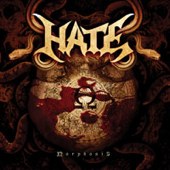
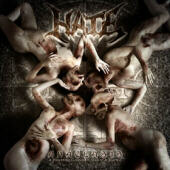
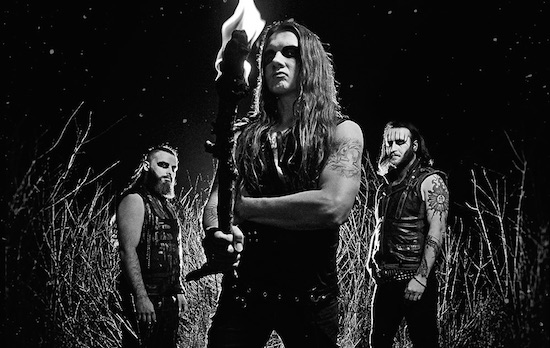
HATE is another export product of Poland which we do not have to introduce, and their more than 25 year history has been already supported by 9 official releases and one DVD. While enjoying 8th edition of the Brutal East Fest I managed to exchange more than a few words with Adam a.k.a. ATF Sinner, front man of Warsaw’s Hate. I did not expect that I will find out so much from The First Sinner at all so without further ado we go to the interview.
Arek
Welcome to Bialystok for, or rather just after, the 8th edition of the Brutal East Fest. How would you judge this visit after not being here for so many years, will you count it as a success?
Yes, Yes, a very successful event, I'll tell you, that after all these years is nice and friendly. I think we're going to come here more often. Reportedly five years have passed since the last visit, no wait, we played in February of 2010, and so it's been 6 years already.
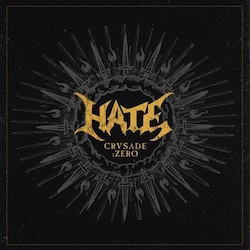
2015 is behind us and so is "Crusade: Zero", how would you rate that year and are you satisfied with the Hate's ninth album?
Artistically I'm happy with this album, but in truth we feel a little unsatisfied. The band underwent various changes and turmoil in this time period you know. Now we have more steady and clarified line up right now and we've been working on new material for a few months. In September we are going to record a new album, because there is a good atmosphere in the band and we want to go with the punch. We want to take advantage of this situation, continue with the momentum and in September we will be in the studio. I think that new album should appear sometime in the spring of 2017. We don't want to miss anything or to have anything missing this time around, so it's simply all hands on deck and we are making the album and it is going to be the best of our aspirations, in our current lineup. Napalm Records will release it, that's already established. We will record in two studios in Poland. We are going to work with Arek "Malta" Malczewski on this album, these are things that I know and I can say this officially.
Change in the position of a sound guy? No more Wiesławski Brothers? All bets go to Arek Malczewski yes?
Yes, we're changing it, it's not going to be Hertz this time. We want to record a different album, we want to do something completely fresh, and we want to jump away from our recent formula, which in a way has expired for us. We got all the way to the dead end with that recent formula and we want to refresh it. Not just musically, but also fresh in the sound department. We want to refresh our message and hence such decisions.
By the way, about new line up, personnel changes are probably natural thing in biographies of metal bands. Tell me how it's been with you?
You know, in some sense, one can say that this is natural, but in this case it wasn't due to the natural progress, because we had such a tragic event happen in 2013 (Mortifer's death caused by cardiac arrhythmia shortly after a concert in Stuttgart on the night of 5 to 6 April 2013) and it was the rock that drew an avalanche. After this everything fell apart, i.e. first Slawek (Mortifer) died, and then our drummer Staszek "Hexen" left the band, whom somehow, this whole situation overpowered. He returned to music now and he's playing drums in a band called Belzebong, but for quite some time he went through a pretty major crisis after what happened back then.
If I remember correctly this whole horrific situation occurred during your tour?
Yes, Yes, it was on the tour with Hypocrisy in 2013, in the spring and a few days before his birthday in April. We can say that whole line up capsized after this event. Now we have a completely new group. I am on vocals and guitar this whole time of course, Pawel "Pavulon" Jaroszewicz, who had previously played in Decapitated and Vader and in several other bands, on drums. He also plays in Antigama nowadays. We still have two other people who are sort of associated with us. It's the bassist-Piotr "Cain" Kolakowski of Neyra and on the guitar "Domin" Dominik Prykiel, who played previously in the band Lost Soul, as well as several other bands.
Is it a permanent squad at this point?
It's a lineup that plays concerts at the moment. It is in fact a live lineup, but it's been there for about a year and a half. With Pawel and Piotr we traveled and played even longer. With this squad we played several tours, and quite a few serious things - HateFest with Six Feet Under, Marduk and Vader; tour with Belphegor not long ago and in a moment we're going to the Balkans with Decapitated for several concerts, and then there will be a few performances in Russia, also playing with this line up this whole time, so we are pushing forward with all our might, but in fact our main focus is the creation of new material and it is already been in progress for nearly a year. There is a lot of it. Even today, we played one new number at the beginning of our set. It was the first song, without any notice. That was a completely new song that's maybe two months old. Well, you know we try and sharpen our fangs and claws for the session with the new material with "Malta" in September. I think that by the end of the year we should finish with the mastering and so on. I think that in the spring of 2017 at the latest it should be released by Napalm Records. In Poland distribution will probably go through via Mystic.
It's very good that in the end there will be a Polish Distributor, because strangely enough it is hard to get your albums here in your country.
Yes, it's hard because, for some time now, we don't have a Polish publisher. All this time we worked together with the French Listenable Records and with Napalm Records lately. This time, too, it will be Napalm, but there will be some distribution in Poland.
By the way, the last two releases were linked to the Austrian Napalm Rec. and before that you encountered a long episode with the French. Are you happy with the cooperation?
Yes I am pleased with the cooperation with Napalm. This is an interesting case in general because it is a label that's never been that interested in this kind of music. As you know there is more heavy metal and folk metal in there. There is also a lot of soft metal with female vocals. We are one of the very few bands with a stronger type of metal. There is us, there's DevilDriver and not long ago Satyricon signed a contract with them also. So generally that label grows stronger and there's more they can do. They expand their hit zone, so to speak. Generally, we had a good correlation with them since the beginning.
How's the touring support?
Touring support, in principle, contracts do not provide. As a rule, you have to collaborate with a tour agency and we, until recently, collaborated with such agency - "Rock The Nation" from Austria. However, we have solved the contract, because they blocked us in some cases. We could not do certain things. Now we have a complete freedom of choice and we operate through our Tour Agent/Manager. Thanks to this we play way more concerts.
So, you're saying that sometimes a single person can have a better grip on things than a huge agency?
Yes, because in a large agency you always compete with someone. You always have to fight for what is yours. That's how it looks like.
To continue on a subject of touring - in April you were set to conquer Balkans with Decapitated and Thy Disease; Russia, Estonia and Lithuania hand in hand with Italians from Fleshgod Apocalypse in May, but when are you planning on going back to back to U.S.?
How do I say it! We had United States sitting in our cross hair for awhile now. We get various offers from there, but these are not the deals that we wished for just yet. At the moment there are two agencies interested in bringing us back over there. We played few tours in United States. We have achieved a lot over there at some point. After the album "Erebos" we played 3 large tours. One of them was 60 concerts. We circled the whole United States twice and we did Canada. Now we are waiting for a good moment to return over there and I do not know whether it will happen in the upcoming months - in the summertime or whether it's going to happen after the release of the new album, but we'll be back there - it is only a matter of time. The United States is a big market, touring costs out there are a lot of money and it must pay back. Not to mention that the work visas to the United States are terribly expensive, so these are simply the costs. We already did such tours, we took a longer break, but as I said, it is only a matter of time when we return. I think that it will be no later than 2017.
Back to "Crusade: Zero" for a little bit, I have to tell you that on this album I've missed a spark that "Solarflesh" had. I can't even answer the question of 'what is "Crusade: Zero" missing' to myself because there's energy, powerful sound, these are blasts and kick ass drumming…however... please tell me what kind of reviews has this album collected?
Album gathered good reviews generally. There are good, sufficient and very good reviews. I have the same feeling about the album as you said a moment ago. I agree with you 100% on that. We have some appetite left after this album. It happened in special circumstances. Drummer has changed and literally 3 months before the studio time came Pawel "Pavulon". All of this happened in a rush. The pressure was too high and maybe we rushed it a little too much. We wanted to finish before the deadline, because the label pressed us quite strongly. I'm not content myself, there are parts of it that I like, but this material somewhat doesn't entirely work. That's why we changed our philosophy in creating the new material. We want to make an album that you'll have to listen to in its entirety, from the first to the last song on one breath. Not too long of an album though. Generally, the songs will be shorter, like 3-4 minutes each. They will not be strongly expanded narrative but still quite functional, simply dynamic. It's going to be a good beating! We also want to completely refresh the sound so it will change a little stylistically too. I do not want to chat about this too much because it is all still in the works. At the moment we have probably about 12 numbers made. A lot of material, but we have yet to separate some of the songs out. We're probably going to record 8 songs.
Eight-tracks 3-4 minutes each, is this supposed to be Hate's version of "Reign In Blood", but on that one there was 10 pieces (laughs).
It's not that all of them will be short. So, probably the first four will be shorter numbers. Then they will lengthen, and perhaps the last two numbers will be combined into one long often changing number. Such is the plan, but it is still too early to talk about it. All this stuff is in the arrangement mode at the time. We've been sitting long hours in our practice spot and we keep deliberating.
How did it happen that you have almost a quarter of a century behind you but we don't see any anniversary releases, DVDs, something extra, some fireworks? Do you have any plans for this matter?
You know what, I'll tell you that there is a plan for anniversary DVD. Even recently, we received an offer from the Polish label Metal Mind Productions. Let's just say that we've been in talks with them for about a year now. It is crystallizing somewhere over there so I think that probably after this album we'll do such a DVD and probably Metal Mind will release it, but these are just guesses, because there is no contract yet. We would like to do something like this, although on the other hand, I'll tell you that we do not specifically like anniversaries. To celebrate all the anniversaries, to look back, to reflect and so on. Don't like it even more so when not all memories are nice which I mentioned already today.
Yes, I agree with you in its entirety. You play a guitar way longer than Hate exists, does the experience gained in playing guitar allow you to fully enjoy the possibilities?
I'll tell you that I am very happy with what I play and how I play it. Of course I am hungry for more but generally I am satisfied with the performance of the songs with the current lineup. It all plays out as it should, or is coming close to this as it should be. It is also nice because there is progress, and there is good direction while it is, of course, the race to catch the bunny. Man learns all his life. At least that's what I have experienced. I want to learn new things; I don't want to get stuck in one place with my music. You'll see it for yourself because new material will be completely different. There will be different music means used. The album "Crusade: Zero" was already close to eating its own tail and we got backed to the wall with our formula and now it's time to backfire and ricochet in a different direction.
Vocals are quite another story however, they're only as strong, as strong your body is, and those 25 years of touring had to have somehow put a stamp on it. Do you do something special, work on it somehow to get it ready for the tour and be prepared every next day?
No, I'm not doing anything special and I got to tell you that technique is something that shapes up over the years. This is a terribly difficult thing. I was very unhappy with my vocals on the first albums by Hate you know. In general, I became a vocalist by accident because no one in the band could do it and the first few releases by Hate come with vocals, which I can't even listen to. They simply annoy me. In fact, my vocals began to please me in the sense of tone and the character sometime around "Anaclasis..." in 2005. From that point on, I think this is a good direction, but of course it is not so, that it seems to me, that I know it all. Of course not. It is just like with playing guitar, you need to look for some new formula all the time. On the new album I will also try to do something distinctive.
We are being seriously rushed over here so let's finish this on subject of faith. I didn't spot an ounce of respect for the Christian faith in the works of Hate and you downright glow with antipathy to it. After the recent financial failures being uncovered and pedophilia investigations, does make sense to still go after them?
It's totally worth it, because I'll tell you what the paradox is despite all this, the church in Poland is very strong and I think that it's strongest that it has ever been. I do not remember church ever being so mighty and powerful institution but now is also assisted by politicians. This year promises to be dominated by Christianity - there are going to be some celebrations, the World Christian Youth Rally, 1050 anniversary of the baptism of Poland, and so on, it scares me. Also, in any case, we do not want to support this and continue to insist that this is something that is quite not needed for any man. Our country is a kind of phenomenon. In general, most of the world seems to leave religion behind and then there's us, quite the opposite - and that's that. Poland is a terribly monotheistic, traditional, religious country and I do not like it very much...
At this point our conversation was brutally interrupted and we had to leave the room with all the of the band’s belongings. Time to wait for new and divergent Hate!

Discography
Upcoming Releases
- Neolith - Inbir - Sep 12
- Blodtår - Monark - Sep 18
- Game Over - When Darkness Falls - Sep 18
- Revel In Flesh - Flesh For The Kult Of Death - Sep 18
- Runemagick - After Chaos: Nocturnal Vigil - Sep 18
- Garota - Strąceni W Ciemność - Sep 18
- Massteron - Second In The Spheres - Sep 24
- Tombstalker - Chaos Monolith - Sep 24
- Noctule - Extinguish Thy Flame - Sep 25
- Draugr - Ahnenfeuer - Ginnungagap Chaos Pt. I - Sep 25
- Wharflurch - Mycodeath And Rebirth In The Outer Clusters - Sep 25
- Stellar Silence - Expeditio - Sep 25
- Critical Defiance - Rivers Of Blood - Sep 25
- Eternal - Conspiracy Of Warheads - Sep 28
- Mørkgrim - Sǫgur Frá Norðfirði - Oct 02
- Deconsekrated - The Inexorable Transcendence Of Death - Oct 02
- Amon Amarth - The Allfather Awakens - Oct 02
- Hell-Born - VII - Oct 09
- Insomnium - Netherworlds - Oct 16
- Night Hag - Great Dismal Darkness - Oct 16