Led Astray - Interview
Six Feet Under is finally embarking on its first-ever tour of Brazil, with four shows scheduled between October 30 and November 2. However, vocalist Chris Barnes didn't seem particularly enthusiastic about discussing the tour, the recently released album "Next To Die", or anything else—or, at the very least, he was simply having a terrible day for chatting. The interview you are about to read was supposed to last between twenty minutes and half an hour. It ended in less than ten. Here’s hoping the fans’ experience doesn’t mirror the one this journalist had. Enjoy the—brief—read!
Marcelo Vieira (@marcelovieiramusic)

Six Feet Under will finally embark on its first tour of Brazil, with four shows in Belo Horizonte, Limeira, São Paulo, and Curitiba. What do you know about the Brazilian death metal audience, and what do you expect to discover when you finally stand in front of them?
I don't, I don't know much about it, actually. I know there's an overall great scene in South and Central America from what I've seen, so I mean, I'm looking forward to getting onstage in front of all the fans that like Six Feet Under.
How will the setlist be put together for this first trip to Brazil? Do you intend to build a set that spans the entire history of Six Feet Under, or will you focus primarily on the more recent albums?
It's really the same setlist we've been playing all summer long on our summer tours of Europe and North America. There's really a lot of the classic material there and a couple of new songs from the past two albums.
Brazil has a particularly strong history within death metal. When you think about the Brazilian bands that have been part of that history, which names or albums immediately come to mind?
Oh, I mean, I don't know, you know, Sepultura, that's pretty much the major one. But I mean, I don't really think Sepultura is death metal, but I mean, they're a metal band from Brazil and stuff, you know.
Besides the shows, is there anything specifically Brazilian that you would like to experience while you're in the country — food, music, a particular place, or simply getting to know the culture?
Oh, I really won't have time to experience anything, really, except for going onstage and being prepared to do so. So, I mean, when I go on tour, I'm not someone who's on vacation or thinks that they're on vacation. I'm really working and doing the job that I've been commissioned to do. So I just really concentrate on being prepared and keeping my head in the game.
The new album's title "Next To Die" suggests a very direct reflection on mortality. After more than three decades of writing about death, do you feel that your relationship with that subject has changed?
I don't think that the album is based on a direct relationship with mortality at all. I think, really, in the songs that I've written on the album lyrically, I'm focused on what I usually focus on, and that's where the music takes me as far as storylines and thoughts that I have about different aspects of life. Do I think that I've had a different relationship with death? I mean, not really. I've kind of always had the same ideas about that, so I just, you know, like to explore my thoughts through music.
"Next To Die" is the third album you and Jack have made together since reuniting. Do you feel that, with each record, this partnership is revealing an identity of its own that perhaps didn't exist when you worked together in the past?
No.
How does your creative partnership work these days? After so many years and so many albums, has the songwriting process changed since you started working together again in 2017?
I think that's a kind of dramatic way of looking at things. We just have a good time writing together.
You began writing extremely graphic lyrics with Cannibal Corpse, at a time when that kind of approach was practically a new language within death metal. After more than 30 years, what can still be explored in that territory without simply repeating imagery that the genre has used thousands of times?
I don't really think of it that way. I just take it one song at a time.
Some of the lyrics on "Next To Die" seem to draw less from fictional horror and more from real feelings or experiences related to death, pain, and loss. What made you bring these two worlds closer together?
Again, I don't think of things like that. I mean, if that's what someone pulls from my writing and my, you know, lyrics and stuff, you know, that's how they experience it, but that's not how I experience it. I've always written every song from subject matter as far as life and death.
Is there a difference between the way you step into a fictional character and the way you write about something that has genuinely affected you?
That's really a dramatic way of kind of perceiving things. I just, I just write what I'm interested in.
Is there a song on the new album whose lyrics you consider particularly personal or revealing, even if that isn't necessarily obvious to the listener?
I mean, I just, if people experience it the way they're going to experience it, I don't want to, like, put any boundaries on that. So I don't, I don't really care how people experience my lyrics. If it interests them in the way they want it to interest them, then that's fine with me.
When you look back at these more than 30 years of Six Feet Under, what has changed the most: the music you want to make, the way you see death metal, or the way you see yourself within it?
What's changed the most over the years in Six Feet Under? Probably the lineup, the musicians that I've been able to work with.
"Haunted", "Warpath", and "Maximum Violence" remain inevitable references when discussing the band's early identity. How do you listen to those albums today?
Oh, I don't really listen to my music, so I don't listen to those albums today unless I'm rehearsing them. So, I mean, that's, that's, again, how other people view things, if they're regarded as references or whatnot. I don't really — every song I've written, every album I've done over the past 38 years, it's all one album to me. So I don't really look at it as, like, sectioned off into albums. It's just one giant work.
Do they still serve as creative references, or do they belong to a period that you prefer to leave in the past?
Again, I don't look at things like that. I look at each song as part of my history and a part of myself.
What does "being extreme" mean to you today?
(interrupting) I'm not extreme.
MUSICALLY extreme. Is it a matter of speed and brutality, or can music be equally extreme through atmosphere, groove, dynamics, and tension?
I don't think any of that's important. I mean, I think what's important is doing what you enjoy yourself.
You have lived through several generational changes within metal. What surprises you most about the way a death metal band is received by listeners who were born decades after its earliest albums?
I think it's really amazing that the style of music has kept going all these years.
After such a long career, what still needs to happen during a Six Feet Under show for you to walk offstage thinking, "This is why we still do this"?
Uh, just seeing people have a good time.
What's your message for the Brazilian fans?
See you soon, and, uh, it'll be a good time. So get your tickets early, because I don't think we're going to be back for quite a long, long time after that. If you want to see the band, uh, now's the time.
 609
Sardonic Witchery is a band that is deeply rooted in the underground scene. The guys have just released a compilation of old songs, as well as a brand-new album called "Hell's Thorns Attack" (read the review here). I had the pleasure of talking to mastermind King Demogorgon, although some technical issues made the interview a little more difficult than expected. Nevertheless, we managed to get everything together and, despite the problems, it was quite fun talking to him. Enjoy reading, and check out the new album – it's a killer one!
Michael

Hails, King Demogorgon! How are you doing?
Good, haha!!
Before we start talking about Sardonic Witchery in more detail, maybe you can introduce your band a little bit more to us?
Well, I started Sardonic Witchery in 2012 by myself after I disbanded the band I had been in for 11 years, called Infernal Kingdom. In that band, I was just a musician and the other member was the singer. So we did that for 11 years, and after that we divorced and said that neither of us would continue with the band, so I started a new band by myself. That was Sardonic Witchery in 2012.
I tried to find a new singer. I wrote the lyrics and, after all, I had some auditions with some guys, but I decided to do it by myself (laughs). So I did the first demo in 2012, Hidden Shadows, on cassette, with a guitar pedal and distortion on the vocals. I liked it, so I decided to stay as the singer. That was the first time in my life I had ever done that. I had never thought about doing vocals; I had always just been a musician.
It must have been quite a busy year for you, having released a compilation called "Under the Sign of the Trident", the upcoming album "Hell's Thorns Attack", plus playing a lot of live gigs with a new and stable band member who has to be trained, right?
This year was crazy. Two years ago, when we released the fourth album, Barbaric Evil Power, my intention was just to be a studio band at that time. I didn't have any intention of playing live anymore. The last show I did before the album was at Mass Destruction Fest in Atlanta in 2022 with some great fucking bands. Gabriel Luis Ruina was already there as the live guitar player.
After that, I did the album, and Gabriel said that we could play some other shows because that one had been so amazing. I said okay, but we decided to do just one more. But more and more offers were coming, so we did them, including Under the Black Sun 2025 in Germany.
Luis said that we could take the musicians from his band because it was easier to work with them. They learn fast, and because I live in Texas and Gabriel lives in Washington, D.C., it made things easier. I met another guitarist living in Texas, but I don't know why, maybe he had problems playing live or whatever, so Luis offered to record the solos and also, because he is a producer, to record the album. Barbaric Evil Power already had some participation from Luis.
After we had been working with him for almost three years and he was so dedicated to the project, I decided that this guy was the right one to work with and that he could improve the band and bring some extra elements to it. I don't want to put somebody into the band just because he is a friend or a nice guy, but I decided to go ahead as a duo now.
I gave him the offer after Under the Black Sun to do the next album together and have him as a permanent member, and he was very enthusiastic about that. So we did the album, which was ready in December 2025, and we decided to do a compilation, Under the Sign of the Trident, just to buy some time to find better labels than the ones I had worked with before because we think that this album is really very good.
We also wanted to have something to play and represent the band at Maryland Deathfest and Darkness Over Cumbria in England. So we re-recorded old songs for that compilation, and Luis already put his own touch into them and made some changes to the songs.
I guess the main focus was the release of the upcoming album, though. What makes the difference compared to your previous releases, would you say?
The previous releases were done completely by myself. Everything was written and recorded by myself; just the guitar solos on the first recordings were done by some other guys. So I did everything else – drums, guitar, I composed everything.
On this album, Luis wrote about 90% of the riffs because he is a lot better guitar player than me (laughs). He's a master on the guitar. I just tell him what I want, and he does the stuff I cannot do.
I heard a lot of old thrash influences on "Hell's Thorns Attack", mainly Slayer from their first two albums. Was this a major inspiration for you?
Of course! That was the idea. I'm really into metal, and my influences come from Slayer, Pantera, Sepultura, Judas Priest. Everything for me started when I was a kid, and later I started getting into more extreme metal.
I cannot remember what the first album was, whether it was Immortal or Dark Funeral, when I started listening to black metal, but I love a lot of metal. I like glam, thrash, black metal, and the idea is to do something like my favourite bands.
These are Maniac Butcher, Destroyer 666, Gospel of the Horns, Nocturnal, Nifelheim – all this black/thrash is what I want to do. So when we talk about thrash, you need to have some more skills on the guitar because you need to have some hell-fucking riffs, which, unfortunately, I don't have. I tried my best on the last album, so I told Luis to do whatever he wanted to.
When I put my lyrics on it, it will sound like Sardonic Witchery. But I never liked to copy a band, just to sound like Slayer. I don't think that it sounds 100% like Slayer. Sometimes it is a little bit Testament. The last album was something in between Manowar and Maniac Butcher – two completely different styles.
On this album, I tried not to sound like Sargeist, Darkthrone, or Satanic Warmaster, but I wanted to experiment a little bit and do some fucking metal with the true Satanic power of steel. It's the spirit of true metal, and I wanted to give that to the maniacs who listen to Sardonic Witchery.
What has changed in a remarkable way is the cover artwork. It is much more detailed and more mature than the previous ones. Who created it?
We worked with Jenglot Hitam from Indonesia. Before that, we worked with Leonard Selzer from Texas for the previous albums. He is a good artist, but for the new one he was very late, so I contacted Jenglot this time because I like his work.
He didn't have to create anything because he already had that one that I love (laughs). It had already been for sale for five or six years, and nobody had taken it. It's crazy.
I saw you for the first time at Under the Black Sun last year. Do you think you have gained some more popularity in Europe since that gig?
I think it was a very good opportunity to show ourselves in Europe. We had already played in many European countries in 2018, and now we came back for shows in Germany, Portugal, and Spain.
This time, most of the people didn't know us, and it was a good show, although it was not 666% of what we can really do. But we worked and improved with the other live shows, and I think we will be doing great at the upcoming shows.
We try to get on as many festivals as we can, but of course it is very hard to get opportunities because there are so many bands.
And coming back to Under the Black Sun, it was fantastic. Not just because we could play there, but also because of the amazing line-up that year. The people there were so nice. Everybody was friendly, and we definitely want to come back!
Coming back to your upcoming album, it is full of blasphemous song titles such as "Unholy Conqueror" or "Cult of a Thousand Horns." How important is the evil, satanic image for Sardonic Witchery?
It's about being a fucking crusher of shit religions, and this album is an old vision of thrash/black metal, a vision of darkness and blasphemy.
All the songs particularly talk about the same things: rebellion, freedom, power, the end of the world. I've been doing this for almost 30 years, and I don't want to do anything new, just take the old spirit of Satanic metal. I don't want anybody to tell me what to do or what my politics are or any shit like that. I think that's what metal means to me.
How is it possible to purchase your albums, and where will fans be able to buy the new album?
Well, we have always done things very underground. Sardonic Witchery already has more than 20 physical releases, including all five full-length albums, demos, splits, and other releases, all released through different underground labels from different territories.
For the new album, Hell's Thorns Attack, we are working with two labels in two different territories. In Europe, the CD and vinyl are being released through Firecum Records from Portugal. In North America, the CD, vinyl, and cassette are being released through Jems Label LLC.
The digital version is being released directly by the band through Ditto Music and will be available on all major streaming and digital platforms.
There are no exclusive agreements for these releases, which gives me the freedom to reissue the album wherever and whenever I want. I already have offers from other underground labels interested in releasing it in South America, Mexico, and Asia.
We also have physical releases available directly through our Bandcamp, so fans can always support the band directly there.
What about promoting the album live? Are there any touring plans for the rest of the year?
You actually asked this at the right moment because we were supposed to start a U.S. tour with Besatt in just two weeks. Unfortunately, we decided to cancel our participation.
With only two weeks left before the tour, our flights still hadn't been purchased, and the communication had become very poor. At that point, we simply couldn't continue relying on promises without having the basic arrangements confirmed, so we decided it was better for us to step away from the tour.
We will still be playing two dates in Mexico in October – Mexico City and León, Guanajuato – and after those shows, our live activity for 2026 will be finished.
Right now, we are already working on our plans and scheduling festivals for 2027. So if any festival promoters are interested in having Sardonic Witchery on their 2027 line-up, they can contact us directly at sardonicwitchery@hotmail.com.
Alright, last one – the five essential albums you would take with you to a deserted island?
Five wouldn't be enough, and honestly, I'd probably need a lot more than five albums to survive!
If I absolutely had to choose, my list would probably look something like this:
SLAYER — Show No Mercy / Hell Awaits / Reign in Blood
CELTIC FROST — Emperor's Return
JUDAS PRIEST — Painkiller
MANIAC BUTCHER — Barbarians / Lucan-Antichrist / Krvestreb / Černá Krev
DARKTHRONE — Soulside Journey
AZAGHAL — Mustamaa
GOSPEL OF THE HORNS — Realm of the Damned
SARDONIC WITCHERY — all five albums, because I really love listening to my own music!
The final words belong to you!
Thank you very much, Michael, for your support and for giving me the opportunity to talk about Sardonic Witchery with the readers of Metalbite Magazine. I really appreciate it, and I hope I can see you again soon so we can have some beers together!
To all the Metalbite Magazine readers: keep supporting the true underground metal bands. Buy physical releases, go to shows, discover new bands, and, most importantly, keep the underground alive!
Check out our new album, Hell's Thorns Attack, and keep supporting Sardonic Witchery!
Let's keep fighting for the underground!
AAARRRRRGGGGHHHHHH!!!
663
Greetings, MetalBite legion!
It's always great to welcome a new voice to MetalBite Magazine, and this time around we're very happy to introduce Matt Quiggins, who joins us as a new contributor. Matt is no stranger to the world of music interviews, having been behind the microphone for his own podcast, drumquigpodcast, where he regularly sits down with drummers to talk about their music, careers, influences, experiences, and everything that comes with being behind the kit.
We're always looking for people who bring something different to MetalBite, and Matt's experience and passion for music make him a great addition to our crew. His focus on drummers also gives us the chance to hear from some of the people who are often quite literally keeping the whole thing together!
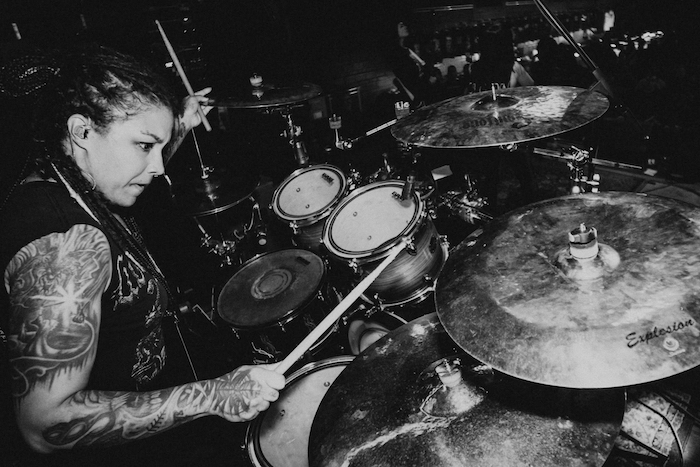
To kick things off, Matt sat down with Cierra White (@cierradrums), the powerhouse drummer of Emasculator, for a conversation covering her work with the band, her approach to drumming, recording, her other musical projects, and plenty more. Cierra is involved in a number of different projects, so there was certainly no shortage of things for Matt to ask her about.
So, without further ado, welcome aboard, Matt — and let's get into his first MetalBite interview!
We're glad to have you with us, and we're looking forward to seeing where this takes you.

843
Better late than never: Sanctuary is finally set to make its debut on Brazilian stages. Could—or should—this have happened sooner, back when vocalist Warrel Dane was still alive? Yes, of course. But his replacement, the incredibly versatile Joseph Michael, helps stave off inevitable comparisons as the band looks to the future, with a new album on the horizon and a preview of it already included in their live set. A month after speaking with Joseph , I had the opportunity to have the conversation you are about to read with none other than Lenny Rutledge—guitarist, founding member, and (despite his humility and approachability leading him to reject the label) a true legend of American metal.
Marcelo Vieira (@marcelovieiramusic)

Sanctuary will finally play in Brazil for the first time on August 30, 2026, after four decades of history. How does it feel to finally reach a country where the band's music has had such a long-lasting underground following?
Lenny: Yeah, we're really excited about it. We know there are a lot of passionate fans down there in Brazil. And, of course, we have a lot of connections there because Warrel was down there a lot. I would always talk to him when he was there, and he had his solo band down there and everything. So, yeah, we've heard a lot of great stories about Brazil and the people there.
This will actually be your first visit not only to Brazil but to South America. What have you heard about the Brazilian and South American metal audiences over the years, and what are you expecting to discover for yourself?
Lenny: That they're very passionate and really, really into metal. They really get into it, so we're looking forward to it.
Would you rather approach the Brazilian show as a celebration of the band's history or as the beginning of a relationship with a completely new audience?
Lenny: Definitely both. You know, there's obviously a lot of music that we want to celebrate and share with everybody, from the past and the future. Honestly, we're only going to be playing one song while we're down there, but I know it's a different configuration of the band. There's a lot of stuff that we're going to be playing that we haven't played in a long time, and there were some things that were a little more of a struggle to play. But you're going to hear a ton of old stuff from Refuge Denied and Into the Mirror Black. The bulk of the set is going to be that. You're also going to hear three songs from The Year the Sun Died and one new song from the upcoming release.
Twelve years have passed since "The Year the Sun Died". What made 2026 the right moment for Sanctuary to finally feel that there was a strong artistic reason to return to the studio?
Lenny: Well, we're getting closer. You know, sometimes it takes us a while to finish everything that we've been working on. And so we're getting a whole lot closer to the end. We're actually going to finish it up this year, and it's going to be released toward the beginning of next year. There's a possibility that it's going to be called Transmutation; that's the working title.
"Not Of The Living" is being presented as the first step into a new chapter. What does this song represent to you personally within Sanctuary's history?
Lenny: Well, I mean, it's some growth. Obviously, there are some differences there, too, but we try to do that with every album. We try to show a little bit of growth, from Refuge Denied to Into the Mirror Black to The Year the Sun Died. And I think we're headed down that path with this new record as well. I mean, obviously, the main difference is that Joseph is singing on it instead of Warrel. But we're still trying to retain the legacy of Sanctuary as well.
Joseph Michael has described "Not Of The Living" as one of the more straightforward songs among the new material. Why did you feel this was the right song to introduce this new incarnation of Sanctuary to the world?
Lenny: Well, I don't know. It just resonated with us, and we felt like it was a good song for that. A lot of times, when you have a batch of songs, some of them stick out. We recorded some of this record in sections, and in the first section we did three songs. That song kind of stood out as one of the first songs we'd like people to hear. We felt like it was a strong song and kind of showed where we were going.
This is the first new Sanctuary material since Warrel Dane's death. How do you find the balance between acknowledging his enormous importance to the band and avoiding turning every new step into a comparison with the past?
Lenny: Yeah, it's hard. It's hard to do. I think that, depending upon the person or the listener, there are always going to be comparisons. I'm probably guilty of it myself. But, you know, we're just trying to live up to what we feel is music that we enjoy, and hopefully we can make it so that other people enjoy it as well. That's the first thing for us: we just try to make music that we really like.
At the same time, like I said, we're trying to retain the legacy of Sanctuary. We don't want to go too far out and change the band into anything bizarre or anything. We know that we have parameters that we're going to stick within, for the most part.
Joseph Michael obviously isn't trying to "be" Warrel. What has he brought to Sanctuary that you didn't realize the band needed until you heard him singing these songs?
Lenny: Well, I mean, one good thing is that he has a lot of different vocal qualities. We have some stuff that we're working on that's not as clean vocally. Sanctuary has always had a lot of clean vocals, but we're actually experimenting with some stuff that's not so clean—not a whole lot, but a little bit—just because we think some of that stuff is cool, and we like it.
And we like the fact that Joseph can span the ranges, from all the way back to Refuge Denied to some of the lower stuff on The Year the Sun Died. So we appreciate all the range that we have there.
The enormous gaps between Sanctuary albums are part of the band's history. Does that affect your relationship with songwriting?
Lenny: It probably does, because from 1990, when Into the Mirror Black came out, to 2014 and The Year the Sun Died, obviously some things changed. I was telling somebody this story the other day: from 1999 to 2009, I didn't play electric guitar at all. I only played acoustic guitar for ten years. So a lot of that changed the way I think about things and the way I play as well.
When Sanctuary got back together, I had a different way of looking at things, and I think that kind of shaped the way I wrote after that period. It made me look at things differently. I feel riffs a little differently because of that ten-year break I took, but it was a little bit of work to get back to that point.
Do you feel a greater sense of freedom because you have never been a band that had to constantly produce new records?
Lenny: Yeah, I don't know. I guess we're just a little bit slower. One of the reasons why it took us so long to put out The Year the Sun Died is that we broke up for 20 years. There's that. But this time, we've just taken a long time. There have been some things that have happened along the way—family, COVID, other things, and Warrel passing away. Sometimes life gets in the way, and sometimes those things are a little bit more important. I mean, music and metal are important, but sometimes you have to lean into those other things, I guess.
Is there something specific about the way Warrel wrote, sang, or approached a song that still influences your decisions?
Lenny: Yeah. I mean, he was a bit of an enigma. That was the thing: I was always trying to figure out what he was writing about. A lot of times, he really wouldn't talk about it. Sometimes he would, but there were definitely things that he would explain, especially when they were about a specific topic.
We had a few songs—at least one—that were about a book or a movie, you know, that type of thing. You don't always know that when you listen to them. For instance, "Soldiers of Steel" is actually a song about a book and a movie called The Keep, by F. Paul Wilson. It's a really good movie and a really good book. So, if people are interested in knowing what "Soldiers of Steel" is about, that's it.
I love that kind of thing about Warrel. He always had these really deep subjects. They were very thoughtful and very deep.
There is a fine line between honoring the past and becoming trapped by it. How do you recognize when a new idea is genuinely moving Sanctuary forward rather than simply reproducing a formula that worked decades ago?
Lenny: Good question. I don't know. I'm sure there's a little bit of both. Being the main riff writer, I'm sure there's stuff that I probably inadvertently regurgitate. A lot of times, we go through a process where we'll check ourselves, and somebody in the band will say, "You know, that sounds a little bit too much like this or that." So we do that. In fact, that comes up a lot.
A lot of times, you find out that you may be plagiarizing one of your own riffs. We definitely don't want to plagiarize somebody else's riff, but sometimes you don't even realize it. We've actually had pieces that we've removed from our songs just because they sounded too much like one of our own riffs from earlier in our career.
But there's also the other side of it. You have AC/DC—AC/DC sounds like AC/DC. A lot of their songs sound the same, right? I mean, they do have a brand. So I feel like Sanctuary has a brand as well, and a lot of bands do. You're going to end up having things that sound similar within a certain vein, I guess. So I hope I answered the question.
"Refuge Denied" and "Into the Mirror Black" have become landmarks of American metal. When you write today, can you actually forget those records, or are they inevitably sitting on your shoulder?
Lenny: I love the energy of Refuge Denied. So there are times when I try to replicate that. It's really easy for me to write dark, slow, almost Sabbath-y type of stuff. I could do that all day long. So there are times when I have to remind myself that we wrote Refuge Denied and that we need that energy.
It's the same with Into the Mirror Black. Mirror was a little darker and a little different, with maybe a little less energy but more intensity. So I do think about that at times, yes.
The new album will inevitably be heard in the shadow of "Refuge Denied", "Into the Mirror Black", "The Year the Sun Died", and, of course, Warrel's legacy. What do you want listeners to understand first when they hear the complete new record?
Lenny: All I can say to everybody is: give it a chance. Give it a listen. I always say, give it a couple of listens, because I can't tell you how many times somebody has come up to me and said, "Hey, I heard 'Not Of The Living' and I wasn't sure about it. Then I heard it three or four times, and now I love it."
Sanctuary is celebrating its 40th anniversary at a very particular moment in the band's history. When you look back at this entire journey, what do you still feel Sanctuary has to prove—to yourselves rather than to the audience?
Lenny: Oh, well, I mean, that we can do it. That we can still do it and that we can still survive, still go out there, and make great music. We'll probably do it as long as people come to our shows and continue to support us.
I mean, that's really a lot of it. To go out there and share the music with fans who love it, and to see that happening—that's the magic right there.
Is there any Sanctuary song that you now hear differently because of everything that has happened since Warrel's passing?
Lenny: That I hear differently? I don't know. There are definitely songs that we play that sort of bring up emotions for us when we play them. There are certain songs that Warrel would, you know—we play "Epitaph" right now, and it's a song that we didn't play a lot for many years. We've been playing it, and we're going to bring it down with us to South America, along with "Veil of Disguise."
"Epitaph" kind of brings up some emotions for me because Warrel and I's dads—each of our fathers—passed away when we were younger, and that's kind of what that song is about.
677
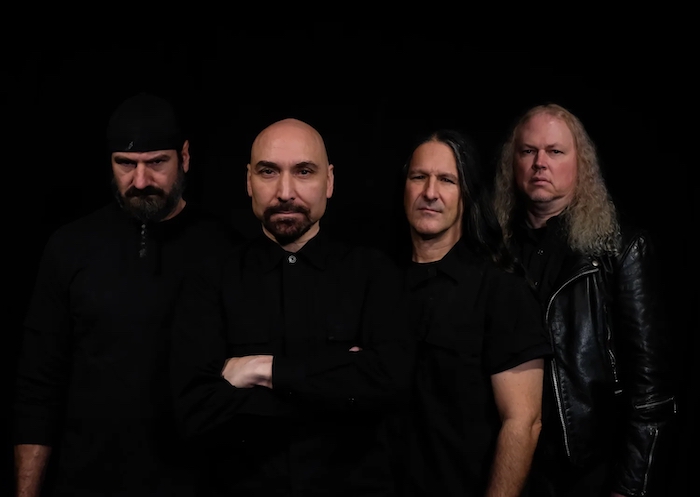
There are still four months to go, but anticipation for the joint Latin American tour featuring Testament, Municipal Waste, and Immolation is already sky-high. Brazil will host five dates: Curitiba (Dec 5), São Paulo (Dec 6), Limeira (Dec 8), Belo Horizonte (Dec 10), and—to the surprise of many—Rio de Janeiro (Dec 13). This will mark the fifth visit to the country by these death metal veterans. Although their previous tour was recent, this new run serves to promote the newly released and acclaimed "Descent". Guitarist and founder Robert Vigna discusses the album with the excitement of a child who has just received a new toy.
Marcelo Vieira (@marcelovieiramusic)

"Descent" is Immolation's twelfth studio album, yet the band still sounds unmistakably like Immolation without simply repeating the formulas of the past. How conscious are you of the balance between preserving the band's identity and finding new territory as a songwriter?
I guess, yeah. Well, you have to be. You have to watch out for repeating yourself or trying to sound like anything else. It becomes more difficult the more songs you write and the more albums you release, you know? It gets harder and harder. But luckily, I just try to write stuff that sounds cool. Then, once I'm done with certain things and I send them out to the guys, I rely on Ross or Alex, who are more in tune with the older stuff, you know, and Steve, of course. If it sounds like anything else, they're kind of like my police, so to speak.
But, you know, you just try to do the best you can to come up with interesting-sounding stuff and go from there. I mean, there's really not too much of a formula in the sense of, like, "Okay, we're going to try this now. We're going to try something like that." It's just, "What do we come up with?" And then, if something sounds cool, we make it work. Or if it's something like, "Okay, this is a little different, but I think this could be cool," then we're good, you know?
But that's it. It's not like we go out of our way to say, "Okay, we're gonna do this. This record's gonna sound like this now." You know, it doesn't work that way.
The album title, "Descent", suggests a movement downward, while songs such as "False Ascent" and "Bend Towards the Dark" seem to reinforce that imagery. What does "descent" represent to you in the broader conceptual world of the album?
Yeah, well, the concept basically runs through the whole record, but mainly that song as well, which wraps up the record. It's really looking at everything going on around us today, as we always do. We're always just looking at what we see in the world and kind of reflecting on it, talking about it, bringing it to light, bringing the darker side of mankind to light.
In general, the song "Descent" just looks at really where we are today and how we've kind of... We're at a place now where, I know, we're starting to repeat stuff from the past that we shouldn't be, but we're also heading into some areas that we've not quite been before, I think. And that's kind of what that song is about. It's just about saying, "Hey, what are we doing here?" Because, you know, it seems like these days the world is a very... Everywhere you go and every subject, it just seems like everyone's at opposite ends of everything. Everything has become extreme, you know what I mean? Way too much. Less talking, more hatred, more anger, you know. So it's just a crazy place.
And I know we've done plenty of that in the past in our history, but it just seems like we're repeating certain points of that that people should realize by now never got us to a good place. So why are we doing that again, you know?
So, basically, that's roughly, in a nutshell, what the album looks at.
Immolation has always dealt with religion, power, humanity and the darker aspects of existence, but the band's lyrics have never felt like straightforward political or religious statements. After more than three decades of writing within this universe, where do you still find new ideas to explore?
I guess it's a little bit of both, but at the same time, there's a lot of stuff out there, so it's easy in that respect. It's just a matter of, well, you know, there are times when you're like, "What angle are we going to take? What are we going to do a little differently?" You know what I mean?
So, like, "The Ephemeral Curse" was cool because that kind of looks at humanity in general, basically explaining how small we are, you know? All the stuff we go through, but we mean nothing in the universe. You know, that's kind of what that song's about, in a nutshell.
So, you know, there are certain aspects you try to take different turns on, but I mean, there's plenty of the basic ideas and other darker things to go around to come up with stuff. Trust me.
I think, with the music, the more you've done, the harder it gets. But Ross and I always keep a lot of different ideas and concepts around, whether it be a title, one word, or a line or lines I've come up with when I'm writing the stuff. And then you take those and say, "Okay, what fits with what song?" Or, "This idea sounds cool. This song's a good song for this." You know?
So we just take it from there. That kind of makes it easier, and then we bounce things back and forth to each other. And that becomes the more... As stressful as it is, it's still the fun, the more fun part of writing, because the music—the hard part of the music—is done. The ideas and things we want to explore are there, so it's just a matter of kind of connecting them to the songs and then coming up with the lyrics.
Luckily, with that, you can do things at the last minute, or you can just brainstorm and come up with a bunch of stuff in one shot. So it's a little easier for me to write that stuff than it is the music itself. The music is always a little harder for me.
Immolation's guitar language has always been remarkably unconventional, with dissonant intervals, unexpected chord movements and riffs that often seem to work against traditional death metal structures. When you are writing, do you approach the guitar as a source of melody first, or are you primarily thinking in terms of atmosphere, tension and rhythmic movement?
It's usually more about the atmosphere, the feeling, you know what I mean? Like, whether I'm writing riffs, it doesn't matter if it's basic, if it's technical, or if it's something else. It's like, whatever sounds interesting or cool to me, that's what I go with.
It could be the most basic of things, but if it sounds cool, I'm like, "Okay, that sounds kind of basic, but it also sounds very cool, so I'm just gonna..." On my computer, I'll put drums to it to get an idea of what I want it to sound like, and then I'll put it to the side. And I'll do that with all the other parts, too, and eventually find parts that connect together. Or you come up with a part that you think can carry a song, and then you take that as your main thing and work around that.
But yeah, to me, it's more about the feeling. That goes for the solos as well. I've never been one to be like, "Okay, I have to really do some crazy solo here. I gotta show off," or whatever. You know, it's not that for me. It's more about what fits the music.
There are a lot of times when I do solos that are more rhythmic, that go along with the rhythm to carry a song to a certain point. Or if Alex and I are working on solos, he might do a solo and take a certain approach to it. So if he's doing that, I'll answer it with something a little different. This way, you have a little... You know, it's not like, "Okay, he's doing something crazy, I gotta do something crazy." It's like, "Okay, he did that. It's got a lot of emotion, so let me do something that's more laid-back," or vice versa, you know? So they kind of carry each other.
That's all it is to me. It's always about the feeling, no matter what it is—rhythm, solo, or anything else.
"Adversary" was the first song released from the album, and you also directed its video. Did you already have a visual concept in mind while writing the song, or did the music inspire the imagery afterward?
We had the music first, obviously, and then that was one of the first songs we put lyrics to. I happened to see "Adversary" written down in one of our notes, you know, and I said, "Okay, that's a pretty aggressive song. It kind of would fit that, I think." So I was like, "Let's go with that," and then just started writing from there.
And then, once the song was done and we were thinking about video tracks, that one came up, obviously. And yeah, we did have a couple of concepts in the sense of, "All right, I think we could put us in this kind of scenario." So that was my thought for that song.
You know, the videos—we actually shot all three of them together in the same weekend. So we had to kind of have somewhat of a concept. Luckily, the Adversary concept was there, so I was able to get the lighting to work for that particular concept. And then I did different lighting and looks for the other two songs, kind of not knowing what I was doing exactly for those.
But I tried to, you know, basically, when filming the band, I wanted to at least have three different looks so I could create three different videos with that. But yeah, Adversary—we kind of had the fire idea for sure, and then, you know, brought it on from there.
Luckily, it worked out, because when you're shooting and you're doing something specific—which I normally don't do—I'll shoot with certain lighting, but I won't do something as specific as we did with that kind of flame look. So that was kind of hit or miss. You know, if it didn't work, we're like, "All right, well, we're gonna have to figure something out here." But it worked out really good, and the video, you know, everything kind of came together on that one.
You also directed the videos for "Attrition" and "Bend Towards the Dark." What do you find creatively satisfying about working with images in addition to music?
It's interesting. I mean, it's something I slowly got into because I worked for a production company in Brooklyn, New York, for many years, where I not only programmed moving lighting fixtures and did that kind of production work, but we also did some minor video stuff on a small scale.
But then, as I worked with other video guys like Tommy Jones, who did our first couple of videos with Nuclear Blast, and saw how he did things, and then worked on other videos... Little by little, we had to do one with a project Ross and I were working on called Gospel for the Witches with Karen Crisis from Van Crisis, from back in the day. She and her husband had this new band, and Ross did some vocals on the first record, and I played guitar live. We played a few shows live, but she wanted to do a video, and they had ideas and a concept.
So, at that point, I said, "Okay, let me give it a shot." Because I'd done minor video stuff for weddings and events and things like that, so I knew roughly what the tools were and had some basic knowledge. But going forward, I just kind of thought, "Let me just give it a shot." So we did it, and it came out pretty decent.
And then, from that point on, when Atonement came out, that's when I started working on videos for the band.
And yeah, it's fun. You know, we kind of do everything on our own. We'd help some friends and stuff, but for the most part, it's just us recording everything. I'll come up with some ideas, but a lot of times I'll... We'll film the band, and I'll figure the rest out later, you know?
But it's interesting. It's fun. I enjoy it. Like, same thing with the music, it's kind of fun to try and create stuff for the music that you've created, you know what I mean? And try and create some kind of visuals.
So I find it interesting. There's always stuff that I wish I had done better or whatever, but it's a learning process for me. And over the years, it's gotten a little bit better, and I've been able to learn more. But I still have a lot more to learn, especially with all the new technology out there now. So I have a little catching up to do.
But, you know, I try and keep as current as possible. It's always a learning process, though, but it's a fun one.
"Descent" features Zack Ohren as producer, mixing engineer and mastering engineer. What did you want to achieve sonically this time that perhaps you felt was missing from previous Immolation records?
Well, the last two records we liked a lot. I mean, I thought Atonement came out really cool. It had a really good... You know, Kingdom of Conspiracy, and I think Atonement was a good... You know, kind of like, from that point on, it was better in the sense that we had a more organic sound on Atonement, and that came out really good. It was a little darker-sounding, and then Acts of God was also very cool.
Different from Atonement, but also a really good production. It had a very cold sound to it, which fit the music well. But Zack Ohren, you know, as the years go by, Zack kind of has been more and more familiar with our music.
And with this record, we recorded it very differently. We normally would all go into one space, into a studio, and spend time with each other, etc. with Paul Orofino, who we've worked with since the third record. He had moved the studio down to Tennessee, and we also had a lot of stuff going on in our personal lives at the time. So, you know, it was like we couldn't really all go and meet in one spot.
So we had a local guy here, Justin Passamonte, who has a studio, and we went and did the rhythms, vocals and bass here. Steve recorded his drums close to home, about an hour away from his place in Ohio, with Noah Buchanan, who has Mercenary Studios. He was familiar with him and comfortable doing it there.
So Steve would record his drums and then he'd send us the tracks, and then we'd record to the stuff here. I even drove down to Virginia and got some of Alex's solos and stuff when he was down there. So everything was done in different spots.
But what we got sounded very good. And even though we were still under the gun to get the stuff done, it was a more relaxed feel because I would just go for a few hours a day and come home, you know? It didn't feel like there was the event of being in the studio, which, although we've enjoyed that many times over the years and had great times, this was more like, "All right, I'm gonna go record guitars for three hours and come back," you know? It was very nonchalant like that.
But we had the EVH head in there, and it was nice. It had a good sound, and I just... You know, it was very simplistic. We just jammed stuff out to Steve's drums, and yeah, all together it came out great.
And I think Zack, although we had very little time and we didn't really bug him too much, he did his thing, and he just did a phenomenal job. I mean, it's one of the biggest-sounding records we've had. It's very strong and powerful and very large-sounding.
And I think, production-wise, the music, and then the artwork for the cover came out amazing from Eliran Kantor. You know, everything just kind of came together, even though it was a tight window to get it done. But everything came out really, really well, and I'm super happy with it.
One particularly interesting aspect of "Descent" is the participation of Dan Lilker on vocals on "Host" and the title track. What made you choose him for those songs, and what did his presence bring to the material that you couldn't have achieved with the regular lineup?
Just a fun thing we do. He did it on the last record, I know, and he might have done it on... I can't remember. He did something on Atonement, but, you know, I think on the last record he did something at the end of one of the songs. And I think he did it on his phone, and he said, "Oh, you know, maybe you could use this," or something like that.
And then I heard it, and we put it in a certain spot, and I said, "Oh, that's cool. Tell him to do a longer one." So he did it on his phone again, like, whatever, and he just sent it to us, and it worked out.
But it wasn't... It was there, but it wasn't as present as these two are. These were kind of cooler because you can really hear them a lot better on this one.
So we had the last song, "Descent," where I thought it was really cool for him to do a nice scream together with Ross at the end. It was just kind of a cool thing. It added a different layer, you know, because Ross has the heavier side, and Danny likes... I mean, the guy's a thrash legend, but he also loves black metal, and he's into that kind of thing. He wanted to do some of those kinds of vocals, and I was like, "Yeah, go for it, man." And it sounded sick.
So it was that one, and then there was another part in one of the other songs that Ross thought of as well. He's like, "Ah, this would be a cool part for Dan to do something as well." So I was like, "Yeah, awesome."
So those two little parts... They were very quick. He just came by the studio because, again, we were here in Rochester, so he just came by with his wife, Heather, and we just came in. It was very quick. He sat there by the mic, did a couple of things, and it was done.
But it was just fun. It's like a fun thing to do, and it just adds a nice little... Just kind of like a cool little thing to add in there. It just adds what they call "ear candy," you know? It's like a nice little change there for certain parts.
And yeah, it sounds awesome. He did a great job, so it just added a nice little layer to a couple of those vocal lines, which was awesome.
Looking back at the band's discography, do you hear "Descent" as a continuation of the path that began with "Acts of God", or does it feel like the beginning of a new chapter for Immolation?
It just feels like where we are now, you know what I mean? Every album feels that way. I don't think it's the beginning or end of anything.
I mean, I would say more so the last three records—Atonement, Acts of God and Descent—are kind of like... I guess those two led up to Descent, so to speak. But I think after the many years of writing songs and being on the road, we've just gotten more into a certain place where I think we need to be as far as the writing and everything.
The writing's gotten better and better, as far as I'm concerned, with the songs, and the albums are getting stronger as we go. So, to me, that's a good thing.
And, you know, we're going to take it to the next level with the next one, I guess. You know, it's always crazy to get down to a record and start writing when we had Atonement, which we thought was a really good record, and a lot of people liked that one. And then the last record, same thing. You're like, "You know what? Now what do we get here?" Because you always want to try and be at least as good as the last record, you know what I mean?
So you can't really do anything but just do your best and hope for the best, you know?
But yeah, that being said, I think it came out awesome. And it's good to be able to have that twelfth record and just say, "Wow, you know, this is a good one." We love playing the stuff live, and we're super happy about playing all the songs live, you know? It's great.
After twelve albums, countless tours and decades of surviving changes in the metal landscape, what still gives you the feeling that Immolation has something genuinely new to say?
I guess because there's still all these things out there that we see, and, you know, someone else is gonna say them, so why don't we say them? You know what I mean?
There's always gonna be other bands, new music, talking about everything that's going on. So we just continue to do that. And I think with every record, you know, you think, "Well, I don't know what to do here." And then we'll come out with a record like this and think, "Wow, we wouldn't have these nine songs now if we didn't go out there and get it done." You know what I mean?
So it's... It's always cool. Because I'm always happy with the stuff, especially this record. It's like thinking, "Wow, these are great songs. Like, it's cool. We have these now," you know?
And, you know, there's always something to say. There's always something out there. There's always that dark side of humanity. That's always there. And a lot of it keeps happening over and over again.
So we'll continue to talk about those types of things from different angles and everything, because all these things that are out there have gotten progressively worse over the years. So yeah, there's always that inspiration, for sure.
And then just the love of the music, you know? Because in the end, we love music. We love what we do. And it becomes a positive thing, even though we're talking about darker subjects.
You know, ourselves as a band, and I'm sure the bands and the fans that come out to all the shows that go on... I mean, I think it's just nothing but a unifying and positive experience for everybody in the end. So it's always a more unifying thing than anything else.
We talk about all the things that are going on that are separating people, and I think that kind of unifies us because we all have the same ideas.
1.05k
Discography


Upcoming Releases
- Ereboros - From Oblivion To The Grave - Oct 30
- Cryptorium - Through The Bowels Of Ceaseless Dissonance - Oct 30
- Xentrix - Allied With The Enemy - Oct 30
- Deathwards - Realms Of Sin - Oct 30
- Paara - Laulut Tulen Ja Jään - Oct 30
- Αχεροντας - For The Blood Of Tiamat - Praxis I - XXX Years Anniversary Of Magick And Metamorphosis - Oct 30
- Vigil - Primordial Rites - Oct 30
- Mastic Scum - Void - Oct 30
- Eldfödd - The Night Belongs To The Dead - Oct 30
- YHWH - Baghavat - Oct 30
- Boor - The Stones Hold All Echoes - Oct 31
- Arckanum - Beswærilsin - Oct 31
- Powermönger - Powermönger - Oct 31
- Dantalion - Dantalion - Nov 01
- Beenkerver - Doodlot - Nov 06
- Wingless - Vision Beyond Form - Nov 06
- NervoChaos - Chaosmongers - Nov 13
- Asgrauw - Solips - Nov 14
- Eyes Of Agony - When They Return - Nov 20
- The Aeons Torn - Void Artefakkts - Nov 27