
Candlemass - Interview
Epic, solemn, and deeply human, doom metal has always demanded more than casual listening—it asks for immersion. Few voices embody that ethos as completely as Robert Lowe. From his defining work with Solitude Aeturnus to his celebrated tenure in Candlemass, Lowe helped shape the emotional and sonic identity of epic doom, forging a style that balances power with vulnerability and grandeur with raw feeling. Now preparing to connect with Brazilian audiences, Lowe reflects on a career built not on trends, but on conviction. In this conversation, he opens up about artistic identity, the evolving nature of heavy music, the realities behind band dynamics, and the enduring importance of emotion in an increasingly digital world. Unfiltered and grounded, his perspective reveals an artist who remains driven not by legacy, but by the simple, relentless urge to create.
Marcelo Vieira (@marcelovieiramusic)

Over the decades fronting Solitude Aeturnus and later singing for Candlemass, your voice became one of the most recognizable signatures in epic doom metal. How do you define your artistic identity today beyond the bands' names?
How do I define that? Okay, I'll keep it quick and simple. I just do what I do. I know that might sound a bit egotistical, but that's not the case at all. It has to be a journey for people—music should feel like something, represent a moment in time. When you listen to something, you want it to capture that feeling.
Doom metal often balances near-liturgical grandeur with stark human vulnerability. How do you personally navigate that tension between monumentality and fragility in your performances?
Navigating that becomes a very personal thing. What I try to do is reflect what I'm feeling. Most of my songs are collaborations with the band members and everything else we do together, but when it comes down to it—when I'm in the booth, so to speak—I just do what needs to be done to make sure the music comes across to everyone else.
If I can't make it connect, then I haven't done my job. My job is to allow people to listen and feel like they're part of it.
You have witnessed the genre evolve from the analog underground of the late '80s and '90s to today's digital, streaming-driven landscape. How has the way audiences consume—and emotionally process—doom metal changed?
You hit a major point right there—the digital side of things. I think what a lot of people might be missing is that you can't just press a button and make a guitar sound good. You can't just hit auto-tune and call it a day.
What really matters is what comes from inside—something natural. That's what we have to do. Sure, anyone can hit a button and say, "I want my guitar to sound like this," and I'm not dismissing those tools—they can be useful—but it all depends on how you use them. You have to shape them into what you want them to be.
Your vocal approach has always carried controlled theatricality without slipping into operatic excess. Was that an intentional aesthetic choice, or something that developed organically from your background?
Honestly, it wasn't something I sat down and planned—like, "I'm going to do this." It goes back to what I said before: it's personal. Everything I do is very personal.
When you hear me sing, or the lyrics, or the music I've written, it means something to me before it's ever, let's say, broadcast. How it's done matters to me—the approach matters. So no, there was never a conscious decision like that. It just comes from within.
From a technical standpoint, how have you preserved power and range over the years? Have you changed your preparation or your mindset toward recording and touring?
Give me a beer and a smoke.
I mean, when you're on the road for four, five, six weeks—playing six or seven nights a week—you just keep doing it. You're on the bus, you're performing every night, and that keeps everything in shape, so to speak. Other than that, there's not a whole lot of preparation involved.
In the studio, do you see your voice primarily as a melodic instrument woven into the sonic mass, or as a narrator standing above the band's foundation?
That's easy. As far as I'm concerned, vocals are just as important as the guitar, bass, or drums. It's all part of the same picture.
Nobody stands above anyone else. The whole point is to create the complete sound together. There's no "turn me up, turn me up." If anything, I'm usually the one saying, "Can you turn me down a bit? I don't want to hear myself that much."
No, not at all. It always comes back to emotion. Whatever your favorite band is, what you're really looking for is emotion—from the guitarist, the singer, whoever is involved.
That never changes. My emotions don't change.
Your entry into Candlemass marked a historic moment, uniting a seminal band with an already established voice. How do you assess that period artistically today?
Yeah, I mean, come on—we both know Candlemass has always been something special, right up there with bands like Sabbath. What Leif, Messiah, Johan, and the others built is something you can always go back to when you listen to that music.
Does it change? I hope not. That's what you want.
Your departure from Candlemass generated speculation and differing narratives. Without delving into personal details, what do you believe ultimately shaped that decision—creative differences, practical circumstances, or diverging visions for the future?
You mean leaving Candlemass? Yeah.
It was just a process—things happen. You see it in documentaries about bands like ZZ Top or ABBA—stuff just unfolds, and you let it be and move forward.
There were no creative differences. Not at all. Leif always had it, and those guys always delivered—Lars, Lasse, Mappe, Janne… I still talk to them, everything's good.
It was just a moment in time when things went in a different direction. Would I play with them again tomorrow? Fuck yeah. Would they have me? I hope so—maybe.
What did that experience teach you about leadership, collaboration, and boundaries within a band that carries such a strong legacy?
It comes down to respect. You respect each other and give everyone their space.
When you do that, collaboration works. That's what it's all about—respecting your brothers and appreciating what each person brings. You take care of each other.
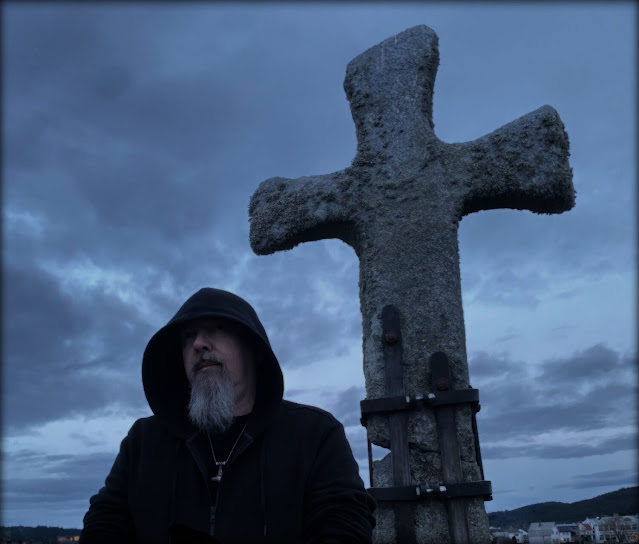
When you reflect on your career, do you feel a sense of completion, or is there still something essential you need to express artistically?
Completion? No—there's no such thing.
I'll be doing this until I'm six feet under. There's always something—every day you hear something new, think of something new, something else you want to try.
When it's part of you, there's no finish line. That's just the way it is.
When your career is examined in the future, would you rather be remembered as "the voice of an era" or as an artist in constant evolution?
That's a great question.
But honestly, that's not how I think. I just want to create something meaningful—like Sabbath, or Dio, or whoever. You hear someone like Bruce Dickinson and you recognize him instantly.
But I'm not focused on being remembered. If people remember me, great. If not, that's not the point.
The point is making good music.
If you could leave one message to the next generation of vocalists who see you as a reference point, what would it be?
Just do your thing.
Whatever that is—if it brings out emotion in you, then do it. That's all that matters.
What can Brazilian audiences expect from these upcoming shows: a celebration of the past, reinterpretations of different phases, or a reaffirmation of a still-restless present?
We're going to crush—it's going to be heavy, it's going to be doomy, and it's going to hit hard.
Celebrate the past? Sure—but I don't live in the past. For me, tomorrow is a new day. It's about what we're doing now.
It's not about singing songs from 40 years ago. It's about what we do today—right here, right now.
 2.58k
2.58k
Discography

Upcoming Releases
- Messier 16 - Shouts From The Cliffs Of Heterodoxy - Oct 23
- Bokkerijders - Crush Kill Destroy - Oct 23
- Fvneral Fvkk - Indecent Idols - Oct 23
- Critical Defiance - Bloodsurge - Oct 23
- DET - Bloodsurge - Oct 23
- Anagnorisis - Caregriever - Oct 23
- Wolves In The Throne Room - Estuary - Oct 23
- Iommi - From The Dark - Oct 23
- Eldfödd - The Night Belongs To The Dead - Oct 30
- Mastic Scum - Void - Oct 30
- Αχεροντας - For The Blood Of Tiamat - Praxis I - XXX Years Anniversary Of Magick And Metamorphosis - Oct 30
- Vigil - Primordial Rites - Oct 30
- Deathwards - Realms Of Sin - Oct 30
- Paara - Laulut Tulen Ja Jään - Oct 30
- Ereboros - From Oblivion To The Grave - Oct 30
- Cryptorium - Through The Bowels Of Ceaseless Dissonance - Oct 30
- Xentrix - Allied With The Enemy - Oct 30
- Arckanum - Beswærilsin - Oct 31
- Powermönger - Powermönger - Oct 31
- Boor - The Stones Hold All Echoes - Oct 31